
Department of Pharmaceutical Technology, Raghu College of Pharmacy, Visakhapatnam
Genetic modification plays a pivotal role in present day agriculture as it allows scientists to add to present traits or to introduce some new characteristics in plants, animals, microorganisms. With a clear idea about India’s perception along with its regulatory background, this review walks around the prime areas and present usage of genetically modified crops. The present article focuses on biotechnological areas such as genetic engineering, microorganism analysis, and also gel electrophoresis equipped in the growth and development of these genetically modified (GM) crops such as golden rice, GM papaya and GM mustard. Some of the case studies are discussed which represent the way in which recombinant DNA technology could address problems including low agricultural productivity, pest infestation, and nutritional deficiencies. The GM foods emerge with remarkable profits such as high productivity, superior environmental sustainability, appreciation with bio safety, biodiversity, socioeconomic implications that persist. This also further emphasized on India’s progression from conventional breeding methods to superior genetic production, which reflects its commitment to agricultural novelty along with global food security
Biology being a scientific discipline that comes with the use of an array of aspects of living organisms, cells and biological systems. This develops products and technologies in order to be used on multiple arrays such as medicine, agriculture and industry. Food comes from purposefully modified organisms that have been imbued with designed traits through the use of recombinant DNA technology. India was able to develop into self-contained in cereal production and thanks to the green revolution of 1970’s. However, some additional concerns which include climatic change, fast population expansion and raising pest pressures have emerged in the 21st century, all of which pose a great threat to the food security. Crop resilience, national value and reliance on chemical inputs could all thus be improved with the aid of modern genetic engineering [1-5]. The Environment Protection act 1989 focuses on their regulations on genetically modified foods in India, thereby ensuring biosafety through stringent reviews and assignments of GM food products and crops. With the employment of microorganisms (yeast and bacteria), biotechnological processes have been employed for several thousand years in order to produce food, bread, yogurt, beer, and, cheese often without the knowledge of its consumer. Of late, particular strains of bacteria and also of yeast have been vigilantly chosen for fermentation commercially to get better product quality and production efficiency. Biotechnology progressions have made it probable to precisely introduce individual genes or gene groups into a variety of creatures [6].
EVOLUTION OF GENETICALLY MODIFIED CROPS
Discoveries in molecular biology such as Mendel’s Law of Inheritance and Watson and Crick’s DNA double-helix model have been marked the beginning of the evoluation of genetic manipulation methods between 1859 to 2025 [7].
Table 1: Crucial steps in the history of genetic modification
|
Time |
Event |
|
1859 |
‘Origin of species’, 1st edition was published by Charles Darwin |
|
1865 |
John Mendel discovered that heredity is transmitted from parents to offspring in the form of discrete units called genes |
|
1869 |
DNA was isolated by Fredrick Griffith |
|
1902 |
Chromosome theory inheritance was introduced by Walter Sutton |
|
1911 |
‘Chromosomes carry genes’ was developed by Thomas hut Morgan |
|
1941 |
‘One gene one enzyme’ was hypothesized by George Beadle and Edward Tatum |
|
1944 |
‘DNA can transform the properties’ was demonstrated by Oswald Avery et al. |
|
1952 |
Genes isolated from DNA was showed by Alfred Hershey and Martha Chase |
|
1953 |
Double helix structure of DNA was described by Francis H. Crick and James D. Watson |
|
1958 |
Semi conservative replication of DNA was discovered by Matthew Meselson and Franklin Stahl |
|
1961 |
‘mRNA carry information from DNA’ was reported by Sydney Brenner et al. |
|
1966 |
Genetic code was cracked by Marshall Nirenberg et al. |
|
1968 |
First restriction enzyme was discovered by Steward Linn and Werner Arber |
|
1973 |
DNA cloning was introduced by Stanley Cohen and Herbert Boyer |
|
1977 |
Introns were discovered by Richard Robert and Phil sharp |
|
1980 |
The first transgenic mice were made by Jon w. Gordon et al. |
|
1983 |
PCR (polymerase chain reaction) was introduced by Kary Mullis |
|
1985 |
First transgenic domestic pig was generated |
|
1987 |
1st human genetic map was discovered |
|
1990 |
Human Genome project was launched |
|
1991 |
First Gene Therapy trials on humans |
|
1992 |
2nd Human Genetic Map of human genome was discovered |
|
1993 |
FDA approved the use bovine somatotropin to increase milk production in dairy cows |
|
1994 |
The Flavr Savr Tomato GM food was first approved by FDA |
|
1996 |
The first cloned animal was Dolly, the sheep |
|
1997 |
The E. coli Genome was sequenced |
|
1998 |
M. Tuberculosis bacterium and roundworm Clostridium elegans were sequenced |
|
1999 |
The First Human Chromosome, chromosome 22 was decoded |
|
2002 |
Mouse Genome working draft was assembled |
|
2003 |
The Human Genome sequence was completed |
|
2010 |
Introduction of RNA interference technology |
|
2011 |
RNA based GM crops commercial expansion |
|
2012 |
Crispr-Cas9 gene editing discovered |
|
2013-2015 |
First Crispr edits in major crops |
|
20016 |
Regulatory discussion on gene edited crops |
|
2017-2019 |
Base Editing, Prime editing introduced |
|
2020 |
Commercial launch of gene edited crops |
|
2021-2023 |
Expansion of gene edited crop varieties |
|
2024-2025 |
Wider adoption and regulatory harmonization |
METHODS
The major biotechnological methods involved in developing GM foods include genetic engineering, microarray analysis, and gel electrophoresis. These approaches facilitate gene transfer, expression analysis, and molecular characterization of transgenic crops.
Genetic engineering
The process involves manipulating genes to add or enhance traits within living organisms. As a result, it enables innovations like gene therapy, genetically modified organisms, cloning, and drug development, leading to progress across agriculture, medicine, and industry [8]. Golden Rice (Figure 1) is named for its golden color which is caused by beta-carotene. Normal rice, Oryza sativa does not express beta-carotene in its endosperm, the starchy and biggest part of the rice seed, which is usually an off-white color. Beta-carotene is part of a class of molecules called carotenoids. The steps involved are a. Gene transfer - It is transfer of specific genes into plant embryos. This is typically achieved using techniques such as agro bacterium-mediated transformation or biolistics (gene gun). Introduction of genes that confer desirable traits such as pest resistance, drought tolerance or enhanced nutritional content. b. Integration and expression - Once the genes are transferred, the plant embryos must incorporate these new genes into their DNA. This integration allows the plants to express the desired proteins encoded by the inserted genes. The embryos are then grown into mature plants that produce seeds, which contain the new genetic material. c. Heritability - Ensure that the modified traits are heritable and that the new genes are passed on to the next generation. This factor is key to achieving long-term results in genetic modification, enabling the continued presence of beneficial traits in subsequent crop cycles [9].
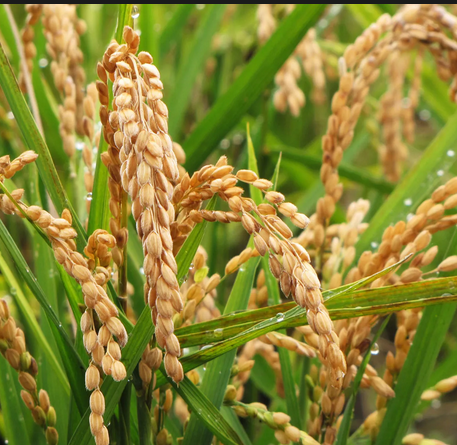
Figure 1: GM Golden Rice [10]
One among the seventeen sustainable development goals which they unfollowed in 2015 is SDG2. ZERO HUNGER is to eradicate hunger and malnutrition by assuring that all have access foe enough whole some food. These objectives focus on promoting sustainable agricultural methods, more funding for rural development and advancements in international food production networks. Similarly, SDG2 emphasizes the significance of developing robust and agricultural methods, more funding for rural development and advancements in international food production systems. SDG2 also highlights the importance of creating equitable and resilient food systems that could successfully deals with all types of malnutrition, protect biodiversity, and adjust to climate change also being crucial in and of itself, achieving zero hunger is also necessary for the accomplishment of larger sustainable development initiatives [11].
Microarray
The advanced laboratory instruments called microarrays being used to examine the expression of several genes. These are made up of thousands of DNA probes which are arranged neatly on a solid surface, typically a silicon clip or glass slide. Researchers could access gene expression levels or identify genetic difference throughout the genome by applying labelled RNA or DNA samples to the microarray, where in they hybridized along with corresponding probes. Micro array technology has been essential gene expression profiling and genomics [12]. Papaya (Carica papaya L.) is an economically important fruit crop that thrives in tropical and subtropical regions. The ripe fruit is characterized by its soft, sweet pulp, which is rich in pro-vitamin A, antioxidants, and essential nutrients. Genetic transformation techniques, such as particle bombardment (biolistics), have been effectively used to convert desirable traits to papaya plants [13].
The particle bombardment method is also called biolistics, is a gene transfer technique that introduces foreign DNA into plant cells using high-velocity microprojectiles made of gold or tungsten. The process generally involves the following steps. Preparation of DNA construct - The desired gene is cloned into a suitable plasmid vector along with selected marker genes such as nptII (neomycin phosphotransferase II) or gus (β-glucuronidase). Coating of microprojectiles - Gold or tungsten particles are coated with the recombinant DNA construct. Preparation of target tissue - Embryogenic callus or regenerable papaya tissues are placed on a nutrient medium suitable for bombardment. Bombardment - Using a gene gun, the DNA-coated microprojectiles are accelerated at high velocity to penetrate DNA into the plant cell wall and membrane and into nuclei. Selection and regeneration - Bombarded tissues are cultured on selective media containing antibiotics (e.g., kanamycin) to identify successfully transformed cells expressing the marker gene. Regeneration of transgenic plants - The selected calli are regenerated into complete plantlets through tissue culture techniques. Molecular analysis - Transgenic plants are screened for stable gene integration and expression using molecular tools such as PCR, GUS assay, or Southern blotting. Through this technique, transgenic papaya plants (Figure 2) have been successfully developed that stably express chimeric gene coding for nptII and gus. Bombarded embryogenic callus (about 50 mg) was able to regenerate minimum two transgenic clones, demonstrating a transformation efficiency nearly 50 times higher than traditional methods. The age and growth characteristics of the embryogenic callus were identified as key factors influencing transformation frequency. Particle bombardment-mediated genetic transformation has been effectively applied in papaya for the development of new traits such as disease resistance, fruit quality improvement, and plant-based vaccine production [14].
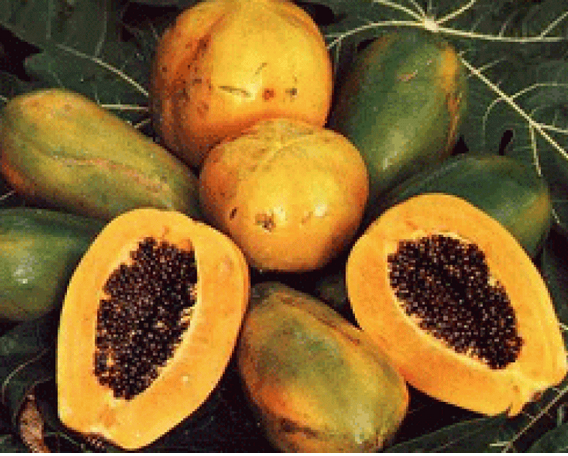
Figure 2: GM Papaya [15]
Electrophoresis
These protein profiling techniques are widely used in the analysis of genetically modified foods Alongside electrophoresis, other analytical methods such as biosensor techniques, wavelength-dispersive X-ray fluorescence (WDXRF), recombinant DNA (rDNA) technology, and gene-transfer techniques also contribute to the detection and characterization of genetically modified crops [17]. Gel electrophoresis plays a key role in the molecular confirmation and validation of genetically modified mustard (Figure 3) during the transformation process. After introducing the foreign genes barnase, barstar, and bar into mustard plants through Agrobacterium tumefaciens - mediated transformation, DNA is extracted from the transformed tissues using standard plant genomic DNA isolation methods. DNA extraction - Genomic DNA is isolated from transformed mustard tissues. PCR amplification - The inserted genes (barnase, barstar, bar) are amplified using gene-specific primers. Gel preparation - Agarose gel (1–1.5%) is prepared with an appropriate buffer such as TAE or TBE. Sample loading - Amplified DNA mixed with loading dye is pipetted into the gel wells. Electrophoresis - The gel is run under a constant voltage; negatively charged DNA fragments migrate toward the positive electrode, with smaller fragments moving faster. Visualization - After electrophoresis, DNA bands are visualized under UV illumination using stains such as Ethidium bromide or SYBR Safe [18]. The list of approved genetically modified foods in India are given in Table 2.
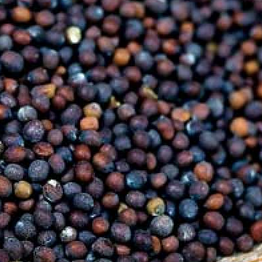
Figure 3: GM Mustard [19]
Table 2: Approved Genetically Modified Foods in India [20-24]
|
Year |
Food name |
Method |
Modification |
Product name |
|
2002 |
Mustard [20] |
Genetic engineering & Gel electrophoresis |
male sterility/restore fertility in hybrids &herbicides tolerance |
Bt. mustard |
|
2003 |
Potato [21] |
Genetic engineering |
Enriched nutritional value - increased protein content and improved amino acid balance |
Protein -rich GM potato |
|
2009
|
Brinjal [22] |
Genetic engineering |
Insect resistance- provides protection against fruit and shoot borer (Leucinodes orbonalis) |
Bt. brinjal
|
|
2010 |
Tomato [23] |
Genetic engineering |
Polygalacturonase gene (responsible for fruit softening during ripening) |
Indian GM tomato |
|
2021 |
Soyabean [24] |
Genetic engineering |
Herbicide tolerance - enables the plant to survive application of glyphosate (round up) herbicide, allowing efficient weed control |
GM soya bean |
ADVANTAGES OF GM CROPS
Genetically modified crops offer several benefits like (Figure 4): Increased crop yield - Genetically modified crops have shown increased yields due to their resistance to pests and tolerance to environmental stressors [25]. Enhanced nutritional value - Golden rice, a GM crop is engineered to produce beta-carotene to help combat vitamin-A deficiency [26]. Environment sustainability - GM crops promote conservation agriculture by reducing the need of tillage and pesticides [27]. Reduced pesticides use and toxic exposure - GM crops like Bt cotton engineered to resist insects, pests, reducing the need for chemicals pesticides application [28].
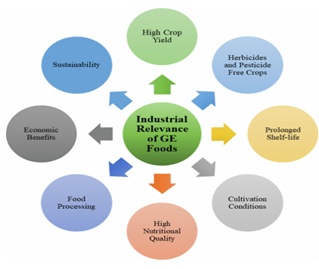
Figure 4: Applications of Genetically Engineered Foods [29]
DISADVANTAGES OF GM CROPS
Despite their advantages, GM crops pose few disadvantages such as Environment risks - The unintentional transfer of transgenes from GM crops to their wild relatives or non-GM varieties through cross-pollination lead to the creation of hybrid plants with novel genetic traits, potentially resulting in loss of biodiversity and ecological imbalance [30]. Socio-economic issue - GM seeds are patented and often expensive creating on multinational corporation. Small farmers in developing countries may face economic issues [31]. Loss of Biodiversity - Large-scale adoption of GM crops can reduce crop diversity leading to genetic erosion and increasing vulnerability to pests and diseases [32].
FUTURE PROSPECTS OF GENETICALLY MODIFIED FOODS
The global population is projected to exceed 8.6 billion by 2030, demanding significant increases in food production. Transgenic technology offers promising solutions for enhancing productivity while minimizing environmental impact. Future focus should include diversification beyond major crops and robust regulation ensuring biosafety [33, 34].
REFERENCES:

Vasavi Imandi, Satya Sree Annabattula, Padma Rama Lakshmi Kona, Rama Devi Korni*, Genetically Modified Crops: Evaluation, Applications and Prospectives in India, Int. J. of Pharm. Sci., 2026, Vol 4, Issue 1, 2075-2083. https://doi.org/ 10.5281/zenodo.18321240
 10.5281/zenodo.18321240
