
Department of Pharmaceutics P.S.G.V.P. Mandals’s College of Pharmacy, Shahada, Maharashtra-425409 India
Injectable cryogels represent a promising and rapidly emerging class of biomaterials in the field of biomedicine. These soft, sponge-like hydrogels are synthesized through a cryopolymerization process, which occurs at subzero temperatures. This unique fabrication technique creates large, interconnected pores that allow cryogels to be highly compressible, mechanically robust, and capable of rapid shape recovery after injection. Once inserted into the body through minimally invasive procedures, they quickly regain their original structure, making them ideal for applications in tissue engineering, drug delivery, immunotherapy, and wound healing. Unlike conventional hydrogels, cryogels can be delivered via syringe without losing their structural integrity or biological function. Their porous nature supports high cell infiltration, nutrient exchange, and vascularization, which are critical for successful tissue regeneration. Additionally, cryogels can be easily modified with bioactive molecules, growth factors, or immune-stimulating agents to enhance therapeutic outcomes. Recent advancements have demonstrated their potential in cancer immunotherapy, where cryogels serve as localized delivery platforms for immune cells or checkpoint inhibitors. They are also being explored for controlled drug release, vaccine delivery, and regenerative therapies for bone, cartilage, and skin repair. This review highlights the key properties, fabrication methods, and biomedical applications of injectable cryogels, emphasizing their transformative role in the future of minimally invasive and personalized medicine. As research progresses, injectable cryogels are poised to become a versatile tool in next-generation healthcare solutions.
Cryogels are a unique class of microporous hydrogels formed at subzero temperatures. Their cross linking can be achieved via physical or chemical styles, enabling precise control over their internal armature and functional parcels. This tunability allows for the design of cryogels with specific mechanical strength, porosity, and declination biographies acclimatized to colorful operations.
Cryogels can be classified grounded on multiple characteristics, including:
Regarding swelling actions, cryogels may respond to external stimulants in distinct ways
These smart cryogels parade dynamic, reversible changes in response to environmental cues, making them especially seductive for operations in medicine delivery, towel engineering, biosensing, and environmental remediation. [1]
Treating these brain diseases is delicate substantially because of the blood- brain hedge( BBB). The BBB's job is to control what goes into the brain and to block dangerous substances from getting in. [2] moment, there's a growing need for injectable biomaterials that can help stop bleeding (hemostatic goods) and support towel form and rejuvenescence. These accoutrements are getting more popular because they reduce the pitfalls and complications that can be with traditional surgery. For these accoutrements to work well in the body, they need to be biocompatible (safe for living apkins) and have the right physical and chemical parcels like being the right hardness, inflexibility, and suitable to break down naturally over time. These parcels help the accoutrements act as a 3D frame, or altar, that supports cells so new towel can grow. Cryogels are a type of injectable altar that are especially useful. They can be filled with specifics or living cells, depending on what is demanded for treatment. Because cryogels have large pores that are all connected, they produce a good terrain for
This makes cryogels an instigative and effective option for towel engineering and medical treatments. [3] The first description of a biomaterial was given in 1976 by the European Society for Biomaterials. Since also, the description has changed as the field has developed. moment, a biomaterial is seen as a material made to work with the body to check, treat, ameliorate, or replace any towel, organ, or body function. [4]
MECHANISM OF ACTION:
Challenges in CNS medicine Delivery
The brain is defended by a hedge called the blood- brain hedge( BBB), which controls what can pass from the blood into the brain. While this protects the brain from dangerous substances, it also makes it hard for numerous drugs to reach the brain. As a result, numerous medicines that work well in the body fail to treat brain conditions because they can not pass through the BBB in enough quantities. [5]
The Blood- Brain Barrier ( BBB)
The BBB is a special sludge that protects the brain and keeps it stable. It blocks large or dangerous motes but allows small or necessary bones like water and nutrients to pass. It also removes unwanted substances using proteins like P- glycoprotein (P- gp). The BBB is made of tightly connected cells, supported by other cells like pericytes and astrocytes, which help control what enters the brain and keep the hedge strong. [6]
Blood- Brain Cerebrospinal Fluid hedge (BCSFB)
The BCSFB is another hedge in the brain, substantially set up in an area called the choroid supersystem. It produces cerebrospinal fluid (CSF) and stops numerous motes from passing into the brain. It also uses special transport systems to remove certain medicines from the CSF, which prevents them from reaching brain towel. [7]
Efflux Transporters
The brain uses efflux transporters (like P- glycoprotein( P- gp) and BCRP) to push out dangerous or redundant substances, including some medicines. These transporters are set up in the BBB and BCSFB and act like a pump. They use energy to shoot substances out of the brain, which can make it hard for drugs to stay outside. In some brain conditions like epilepsy and cancer, these transporters are more active, making the brain resistant to numerous medicines. [8- 11]
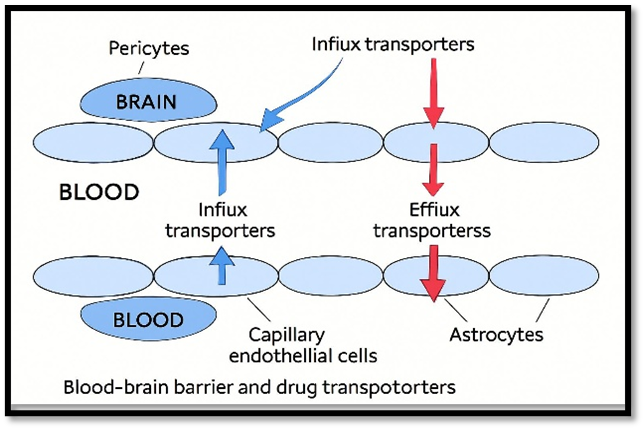
Figure 1: The blood- brain hedge and medicine transporters in the capillary endothelial cells. (Blue arrows Flow of motes through affluence transporters into the brain parenchyma from the blood vessel; Red arrows Outward Flow of motes through efflux transporters from the brain parenchyma to the blood vessel) [12]
MECHANISMS OF ACTION IN CANCER THERAPY:
1. Targeted medicine Delivery .
Cryogels act as localized depots for controlled and sustained release of chemotherapeutic medicines directly at the excrescence point, reducing systemic toxin.
2. Immunotherapy Support
Cryogels can be loaded with vulnerable- stimulating agents (e.g., cytokines, checkpoint impediments) to enhance the anti-tumor vulnerable response. [13]
3. Cell Delivery System
Serve as pulpits to deliver vulnerable cells like dendritic cells or Auto- T cells to the excrescence medium for enhanced vulnerable- mediated cytotoxicity.
4. Tumor Microenvironment Modulation
Modulate the original medium by oxygen delivery or scavenging excrescence- promoting factors, perfecting remedial issues.
5. Thermo/ Chemo/ Bio-responsive Release
Respond to excrescence-specific stimulants (pH, enzymes, temperature) to release medicines in a spatiotemporally controlled manner. [14]
MECHANISTIC FEATURES IN DRUG DELIVERY SYSTEMS:
1. Pervious Structure for Controlled Release
Cryogels have big pores (holes) that hold medicines and sluggishly release them over time.
2. Stimuli- Responsive Behavior
They release medicines only when touched off by body conditions like acidic ph, enzymes, or heat.
3. Injectability & Easy Use
They can be fitted with a hype and go back to their original shape inside the body — no surgery demanded.
4. Targeted Effect
medicines stay at the problem area (like a excrescence) and don’t harm the rest of the body.
5. Multifunctionality
Cryogels can carry further than one drug or indeed effects like cells or proteins together. [15]
PREPARATION:
Cryotropic Gelation as a Tool for the Preparation of Macro porous Balconies
Cryotropic Gelation is a system used to make sponge- suchlike( microporous) hydrogels by indurating ultimate of the soap( generally water) so that gelation happens in the small thawed corridor. When the frozen soap melts, it leaves behind large pores. This system is useful for making biocompatible paraphernalia, especially for medical use. [16] The process generally involves chemical or physical cleave, constantly using acrylate mixes and natural polymers. By changing conditions like temperature and ingredients, the parcels of the gel can be shaped for different uses. [17,18]
Cross Linking
Cross linking is important for the strength, stability, and biodegradability of cryogels. There are different types Physical cross- linking (like ionic bonds and hydrogen cleave) is reversible and not always strong. For illustration, PVA cryogels form through freezing and are used in kerchief engineering but have small pores. Ionic cross- linking happens using substance ions (like Pd ² ? or Ca ²?) with polymers like chitosan or alginate. Peptide tone- assembly can also produce cryogels, but these are generally weaker than those made at room temperature. [19-21] Natural cross- linkers like genipin are biocompatible but can beget unwanted blue color. Enzymatic cross- linking using transglutaminase (TGase) helps gelatin and casein form gels slowly under frozen conditions and improves their mechanical strength. Each cross- linking system has pros and cons, and the choice depends on the final use of the cryogel. [22]
Effect of Composition
The paraphernalia used to make cryogels — like the type and amount of polymers andcross- linkers affect how strong and porous the final gel is. For illustration If farther hyaluronic acid( HA) is used, the pores get lower, the gel swells less, but becomes stronger. However, the gel gets bigger pores and swells more, but it becomes softer, If lowercross- linker is used. [23] Adding farther gelatin to HA increases strength and stiffness, but too important (further than 10) causes the gel to form too snappily before indurating, which makes it weak and brittle. So, the right mix of ingredients is important for getting the swish cryogel for a specific use. [24]
Effect of indurating Conditions
How the gel is concrete changes its severance size and strengths low freezing (advanced temperature) → bigger ice dishes → bigger pores. Fast freezing( lower temperature) → lower ice dishes → lower pores. Also, the gel mustn't form too snappily. [25] If gelation happens before the ice dishes form, you won’t get the proper structure, and the cryogel will be weak. Researchers set up that cryogels are better than regular hydrogels for goods like bone healing because they have better porosity and strength. Freezing direction also matters. In unidirectional freezing, severance sizes vary from top to undermost — lower at the bottom and bigger at the top. This is useful in crack healing because it helps cells move through the material and fit better to the crack shape. [26]
Preparation and parcels of Super-macroporous Cryogels
Sepultures are one- piece porous paraphernalia used in chromatography to separate natural molecules like proteins. They have low resistance to flux and allow fast movement of large molecules, making them more effective than traditional column systems. [27,28] Cryogel sepultures are made by indurating a polymer result, where ice dishes form pores. When fused, a spongy, porous material called cryogel is created. Cryogels are soft, water-rich, and have large, connected pores that make them ideal for handling thick natural fluids like blood or kerchief extracts. They allow easy flux, low pressure, and quick separation. still, they have a low face area, which limits how important can be captured. To break this, scientists add nanoparticles or other patches to increase the face area and meliorate performance. [29]
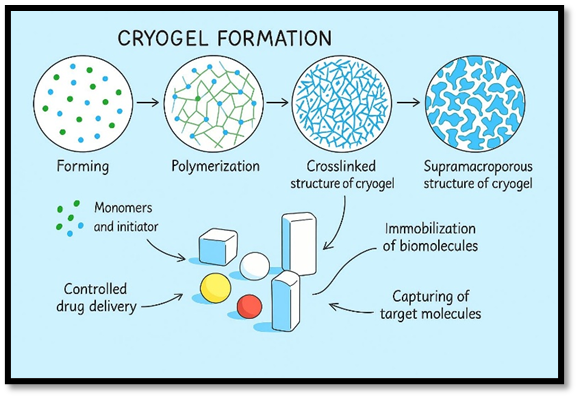
Figure 2: Schematic view of cryogel formation.
Preparation of HAGM (4 w/ v), Ma- Gelatin (4 w/ v), and HA-co-Gelatin (2 HAGM 2MA Gelatin, wt/v) Cryogel:
Cryogels of HAGM( 4), Ma- Gelatin( 4), and a mix of both( 2 each) were made using a cold- convinced polymerization process. The biopolymers were dissolved in water with APS( 0.5) and TEMED( 0.1) as inaugurators. The cold mixtures were poured into small molds and concrete at −20 °C, −50 °C, or −80 °C for 15 hours to form gels. After that, the cryogels were fused at room temperature and washed with water. [30]
Pharmaceutical Application:
Injectable Cryogels in Biomedicine Applications- form operations of Injectable Cryogels in Tissue Engineering
Injectable cryogels are soft, sponge- suchlike paraphernalia used in crack healing and kerchief form. They are easy to fit with minimal surgery, reducing the trouble of infection. [31] These cryogels are strong, flexible, biocompatible, and biodegradable, making them useful in treating injuries caused by injuries, surgeries, burns , or conditions like diabetiesmade injectable cryogels using special monomers and loaded them with cerium oxide nanoparticles linked to miRNA146a. [32] In diabetic mice, these cryogels helped injuries heal hastily and reduced infection. developed antibacterial and conductive cryogels using quaternized chitosan and carbon nanotubes. These cryogels acted as effective hemostatic agents (to stop bleeding) and outperformed traditional bloodsuckers and reek in beast models. created microcryogels loaded with lysozyme, a natural antibacterial protein. [33] These showed strong exertion against dangerous bacteria like E. coli and S. aureus, while remaining safe for cells. Another Zhao study introduced dry injectable cryogels made with chitosan and polydopamine. These had strong antibacterial and hemostatic goods and were effective in beast tests for controlling deep crack bleeding. Designed injectable cryogels using hyaluronic acid and gelatin. These cryogels were easy to fit, had good severance structure, absorbed body fluids well, and supported cell growth — making them suitable for kerchief form and minimally invasive treatments. [34]
Micro-composite and Thermo-responsive Cryogels
Developed special injectable cryogels made from methacrylated hyaluronic acid and calcium peroxide (CP), which can kill dangerous bacteria, contagions, and fungi. When fitted , CP breaks down to release hydrogen peroxide and calcium hydroxide, both of which have antimicrobial goods. These cryogels were tested against strong, antibiotic- resistant bacteria like Pseudomonas aeruginosa and MRSA, and successfully stopped their growth. In mice, the cryogels showed veritably little inflammation after injection, proving they're safe and effective for fighting infections in injuries. Created another type of cryogel that responds to temperature changes and has bettered strength. [35] They used a material called PNIPAAm and added cellulose nanocrystals (CNCs), which help make the gel tougher and further flexible. Two types of CNCs were used, and the final cryogels were studied with advanced ways to confirm their structure and strength. One interpretation, called PNIPAAm25CNC- AA1, showed the stylish performance with enhanced mechanical parcels. These cryogels could be useful in operations where durable and flexible accoutrements are demanded in the body. [36]
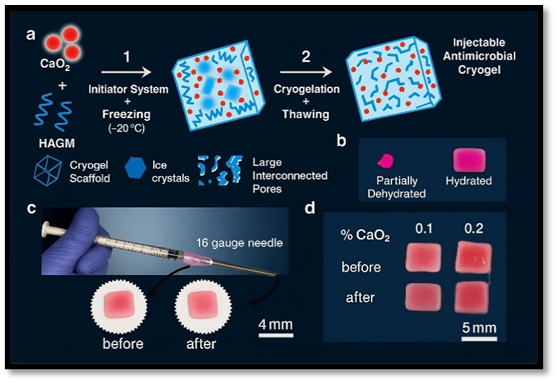
Figure 3: Schematic representationof the entire process involved in forming injectable cryogels [35] a) Cryogelation using HAGM and CP at −20 °C; b) Dehydrated vs. doused cryogels; c) Cryogels ahead and after injection through 16 G needle; d) CP remains encapsulated post-injection.
Cell and medicine Delivery applications of Injectable Cryogels in Tissue Engineering
Injectable cryogels are special soft accoutrements used in drug to deliver medicines and cells safely and effectively into the body. They're made with 3D structures that allow them to hold and sluggishly release drugs or cells where they're demanded, without harming near apkins. [37]
Why are they important?
They help release medicines in a controlled and targeted way. They reduce side goods by avoiding non-target areas. They cover living cells during injection. They can repair damaged apkins and ameliorate treatment results.
Exemplifications of Injectable Cryogel They Uses-
1. Delivering IL Delivering IL-- 13 to the Brain Tiny cryogels with cut and heparin were used to deliver 13 to the Brain Tiny cryogels with cut and heparin were used to deliver interleukin interleukin-- 13( IL13( IL-- 13) to the brain. The medicine was sluggishly released for 7 days, and it helped 13) to the brain. The medicine was sluggishly released for 7 days, and it helped reduce inflammation in brain reduce inflammation in brain cells. [38]
2. Spinal Slice rejuvenescence (IVDD) Microcryogels made with PEGDA and alginate were Spinal Slice rejuvenescence (IVDD) Microcryogels made with PEGDA and alginate were used to carry stem cells for treating spinal slice damage. These cryogels helped cover used to carry stem cells for treating spinal slice damage. These cryogels helped cover cells and reduce slice damage in canine models after 6 month scells and reduce slice damage in canine models after 6 months
3. Growing New Blood V Growing New Blood Vessels (Neovascularization) Vessels (Neovascularization)
4. Cryogels made with gelatin and heparin were created for VEGF( growth factor) Cryogels made with gelatin and heparin were created for VEGF( growth factor) delivery. Cryogels with 1 gelatin had bigger pores and better swelling capability, leading to delivery. Cryogels with 1 gelatin had bigger pores and better swelling capability, leading to better blood vessel growth in mice over 21 days. better blood vessel growth in mice over 21 days. [39]
5. Parkins Parkinson’s Disease Treatment “Neurothread ” cryogels made with on’s Disease Treatment “ Neurothread ” cryogels made with carboxymethylcellulose were used to deliver dopaminergic neurons. They survived carboxymethylcellulose were used to deliver dopaminergic neurons. They survived injection and helped in neural form when carpeted with adhesion motes like laminin injection and helped in neural form when carpeted with adhesion motes like laminin and Matrigel. and Matrigel.
6. perfecting Cryogel Str Improving Cryogel Structure with RGDS Peptide PEG cryogels were preucture with RGDS Peptide PEG cryogels were pretreated with treated with RGDS peptide, which helps cells stick and survive.This increased cell growth and RGDS peptide, which helps cells stick and survive.This increased cell growth and survival rate over 7 days. survival rate over 7 days. [40]
7. Steady Protein Release Proteins were attached to laponite nanoparticles inside algiand Steady Protein Release Proteins were attached to laponite nanoparticles inside alginatenate cryogels using special chemical bonds. This allowed long cryogels using special chemical bonds. This allowed long-- term, controlled release of term, controlled release of proteins without damaging them.
8. Cell Delivery with Shape—Memory Microcryogels Study by. Special Memory Microcryogels Study by. Special cryogels made using a cryogels made using a micro stencil chip were filled with cells.These cryogels were injectable and helped create micro stencil chip were filled with cells. These cryogels were injectable and helped create new blood vessels( angiogenesis) in mice after 2 weak. [41]
Other application of Injectable Cryogels
Sterilization is different from disinfection and is necessary for all medical tools and accoutrements. While numerous sterilization styles live, some can damage the material. Autoclaving (using brume) is a dependable and low- cost system. Studies showed that autoclaving did n't harm the structure or performance of cryogels made from hyaluronic acid, alginate, or gelatin, unlike hydrogels. One study created a strong injectable Mama- alginate cryogel that can be used as a cancer vaccine. This new cryogel, strengthened with calcium ions, could be fitted without breaking and reduced excrescence conformation by 80 in mice with bone cancer. Another study used 3D printing to make cryogels with malleable severance sizes. These injectable cryogels were tested in mice and showed good biocompatibility, pliantness, and structure, making them useful for tissue engineering. [42,43]
Other Cryogel application
piecemeal from their medical uses mentioned before, cryogels are also used in other areas like separating cells, erecting structures for towel growth, and landing specific motes. [44] Cryogels have numerous other possible uses beyond drug. These include Towel engineering – helping grow or repair body apkins Chromatography and separation – filtering useful substances like proteins Water treatment – cleaning wastewater Biosensors – detecting natural signals Selectors – bias that can move or respond to changes Energy storehouse – used in supercapacitors and battery factors Hydrogen storehouse – used in low- pressure hydrogen storehouse bias [45,46]
Biomedical applications
Cryogels are advanced materials used in biomedical research because of their sponge-like structure, strength, and ability to work well with water and living cells. They are better than regular hydrogels for supporting cell growth and can be made from safe, biocompatible materials. [47] Cryogels can be modified after making them to improve how they interact with cells or capture specific substances, making them useful in tissue engineering, purification, and bioreactors. They can hold cells inside them, which can make the structure stronger and speed up pore formation. Cryogels also help with detecting diseases, isolating stem cells, and studying viruses and cells. Because they are elastic and have shape memory, they can be reused, stored dry, and return to their original shape when rehydrated. New uses include 3D printing, injectable therapies, drug delivery, and wound healing. [48,49]
Cryogels in Medical Applications
Cryogels are useful in medicine because they are safe, blood-compatible, and can hold lots of water. They don’t easily break down and work well with thick fluids, making them great for biomedical uses like drug delivery, tissue engineering, and removing specific molecules from the blood.
Immobilization of Biomolecules :
Cryogels can trap special molecules (like antibodies) inside them using two methods:
For example: In autoimmune diseases, harmful antibodies can be removed using cryogels instead of traditional plasma exchange.Acryogel made from PHEMA with protein A was used to remove IgM from plasma. It worked well even with repeated use. Another example used cryogels with anti-CD34 antibodies to catch leukemia cells (KG- 1) from blood. One study also showed thatapoproteinB100 was used in cryogels to remove bad cholesterol (LDL) without affecting good cholesterol (HDL) in patients with high cholesterol [50]
Capturing Target Molecules :
Cryogels are excellent for separating specific molecules from complex mixtures, thanks to their large pores, strength, and sponge-like structure. Unlike traditional gels, cryogels are tough, flexible, and allow fluids to pass through easily, making them ideal for use in bioseparation and chromatography.
Scientists have used cryogels to:
Remove common proteins like albumin and immunoglobulins from blood samples, making it easier to study smaller or rare molecules. Capture albumin using a special cryogel made from HEMA and DIPPER, which reached 40.9 mg/g adsorption through hydrophobic interaction. Purify IgG (a type of antibody) using cryogels with histidine-like ligands (MAH), achieving up to 97.3 mg/g capacity and 94.6% purity. Use metal-based cryogels (with PEI and copper ions) to selectively bind and separate IgG, with up to 72.28 mg/g capacity. Develop thiophilic-cryogels, which bind proteins like IgG using sulfur-based ligands, with capacities up to 68.7 mg/g. Cryogels can also be molecularly imprinted, meaning they’re shaped to specifically recognize and bind target molecules, offering another powerful tool for bio-separation. [51]
Stimulus-Controlled Drug Delivery with Cryogels :
Cryogels are being used as smart materials to deliver drugs in a controlled way. Because they are soft, sponge-like, and highly water-absorbent, they are safe, non-toxic, and good at releasing medicine where it’s needed. Their structure can change in response to things like pH or temperature, which helps control how and when the drug is released. Researchers have used cryogels made with materials like chitosan and clinoptilolite to carry anti-inflammatory drugs like diclofenac sodium and indomethacin. These cryogels released very little drug in acidic conditions (like the stomach) but released much more in neutral pH (like the intestines), which is useful for targeted delivery. Another study used cryogels to deliver mitomycin C (a chemotherapy drug). These were designed to release the drug slowly and in a controlled manner. By adjusting how tightly the cryogel was crosslinked (how many connections there are between chains), they could control how fast the drug was released. Overall, cryogels are promising for delivering drugs safely and effectively, especially for long-term or targeted treatments like cancer therapy. [52]
Cryogels for Tissue Engineering :
The extracellular matrix (ECM) is a key part of tissues, helping cells grow, communicate, and survive. It contains tiny fibers and proteins like collagen and elastin, which guide cell behavior. Cells behave more naturally in 3D environments, so materials used in tissue engineering should mimic the 3D structure of real tissues. Cryogel scaffolds are 3D, sponge-like materials that can act like artificial ECM. To be useful, these scaffolds must: Be biocompatible (safe for cells),Be biodegradable (break down over time), Have good mechanical strength for surgeries, And have interconnected pores to allow nutrients in and waste out. [53]
Bioreactors:
Bioreactors are bias that help grow cells by controlling effects like pH, temperature, oxygen, and nutrients. In towel engineering, they produce the right terrain for cells to grow and form new towel before it’s implanted in the body. Cryogels are great accoutrements for bioreactors because they allow easy inflow of nutrients and waste, and support indeed cell growth in 3D. Studies have shown that cryogels made from HEMA- agarose and gelatin can keep cells like muscle cells( C2C12), liver cancer cells( HepG2), and blood vessel cells( HUVECs) alive and healthy. Another study showed that PVA cryogels could store different microbes at – 18 °C for over to 2 times while keeping them active. [54]
Cell Separation:
Cryogels are useful for separating specific cells from a admixture. Traditional styles like FACS( which uses fluorescent markers) and Mackintoshes( which uses glamorous markers) are effective but frequently precious and complex. In discrepancy, affinity- grounded cryogels are simpler, cheaper, and still work veritably well. Cryogels have large face areas for cells to attach and allow fast liquid inflow with low resistance. For example, Histidine- tagged E. coli cells were successfully separated using cryogels with bobby ions while keeping the cells alive.In another study, cryogels made with special ion- exchange ligands could bind E. coli cells and recover about 70 – 80 of them. Cryogels have also been used to capture contagions, like a biotin- tagged leukemia contagion, using streptavidin- carpeted cryogels in just one step. [55]
As New Drug Delivery:
3D- Bioprinting of Cryogels :
3D bioprinting allows scientists to design accoutrements ( like pulpits) with customized size, shape, and porosity to suit each case's requirements — especially useful in towel engineering. When working with cryogels for 3D printing, it's important to consider how thick( thick) and fit the material is, because this affects how fluently it can be published. [56] For illustration, the hype size and the force demanded to push the material out limit what kind of material can be used. [57] In 2009, experimenters developed a system that combined 3D printing with a cold system. They published layers of collagen that set incontinently on a cold face. To help the snoot from getting blocked, they covered the tip with silicone rubber. These pulpits helped skin cells( keratinocytes and fibroblasts) grow and serve duly, making them useful for skin treatments. [58] They also created special structures using alginate for harder apkins like bone. In 2018, another platoon created a printer with a special snoot that mixed the cryogel constituents just before printing. They could change the size of the pores by conforming the temperatures of both the printing bed and the snoot. These published cryogels were made from carboxymethyl cellulose( CMC) and carpeted with collagen to help cells stick and grow. This was successful for growing fibroblast cells, useful in towel repair. Later, experimenters created injectable cryogels using 3D printing, which can be delivered into the body with minimum surgery. By conforming the printing temperature, they could control how blood vessels grew within the cryogel. More lately, scientists made 3D- published cryogels from gelatin and hyaluronic acid. These did n't need redundant coatings to support cell growth. The published structure was firmed and also dried to form the cryogel. Although this system offered lower control than former bones , it was easier and did n’t need a cold platform during printing. Other studies explored publishing with collagen and chitosan fusions, which formed cryogels through natural( physical) relations — meaning no redundant chemicals were demanded. [59]
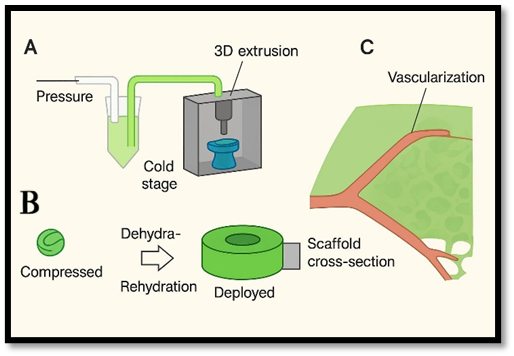
Figure 4:3D-Cryogel Printing and Shape Recovery Mechanism [59]
Super-macroporous Cryogels and Composite Cryogels:
The idea of doing chemical responses in frozen systems dates back to the 1930s, but more serious exploration started in the 1960s. Traditionally, frozen results were allowed to be fully solid, but scientists like Butler and Bruce set up that when a result freezes, not everything turns solid. Some liquid remains trapped between ice chargers, and responses can still be in this bitsy liquid. [60]
How Cryogels Are Made
Uses of Cryogels:
Cryogels are better than traditional polymer globules at separating proteins, nucleic acids, and sugars from natural sources. Scientists can attach different ligands (special list motes) to the cryogels to help with sanctification and junking of specific substances. In the last 10 times, numerous types of ligands like concanavalin A, protein A, tryptophan, histidine, triazine colorings, and essence ions have been added to cryogels for these purposes. [63,64]
Adhesion parcels of Bio adhesive Cryogels:
To test how well the cryogels stick to apkins (towel adhesion), scientists used a standard system( ASTM F2458- 05). They used fresh gormandizer skin (from a botcher), cut into small pieces( 1 × 2 cm ²), and kept it wettish in PBS solution. The skin was fused onto plastic slides, leaving a small gap between them. A cut was made in the middle of the skin to mimic a crack. Cryogels( bitsy sponger- suchlike accoutrements , 10 × 5 × 1 mm ³) were placed on the cut area. They also used a machine( Instron Tester) to pull the setup piecemeal and measure how strong the cryogels held the apkins together. The force at which the gel broke was noted as the tenacious strength. For burst pressure testing( ASTM F2392- 04), gormandizer bowel was used. A bitsy hole was made in the towel, and air was pumped through it. The hole was sealed using cryogels( 1 mm altitudinous and 20 mm wide), and air pressure was increased until the gel burst. This pressure was recorded and compared to marketable surgical sealants like Evicel ® and CoSeal ®. [65]
Mechanical parcels of Bioadhesive Cryogels:
Tenile and Compression Testing Cryogels were soaked in PBS for an hour, also stretched or compressed using a testing machine. In stretching (tensile) tests, they pulled the cryogel until it broke to see how strong and flexible it was.In contraction tests, they pressed down on the gel up to 90 of its height, repeating this 7 times, and also tested it one last time to measure how important energy was lost( by comparing contraction and relaxation angles). [66] lump Test Cryogels were placed in PBS for 24 hours. The swelling rate was calculated by comparing the weight of completely blown gel to the dry bone . Severance Connectivity To measure how well-conditioned water moves through the gel pores, they counted the wet cryogels, gently removed face water, and counted them again. The difference told how connected the pores are. Severance Size and Structure Cryogels were snap- dried and carpeted with a thin subcaste of essence. They were also examined under a scanning electron microscope( SEM), and severance sizes were measured using software called Image. [67]
Cell trial
2D Cell sowing Mouse fibroblast cells( NIH 3T3) were grown in nutrient-rich media. The cells were placed on small cryogels( 4 × 4 × 1 mm ³) and kept in an incubator at 37 °C with 5 CO ?. Cell Viability and Growth A live/ dead cell test tackle was used to see how numerous cells were alive after 1 day. A microscope took images, and software( Image) was used to count live versus dead cells.
Dendritic Cell Activation
To test how vulnerable cells (dendritic cells) respond to cryogels, bone gist cells were taken from mice. These cells were grown in lab dishes for 6 days with special nutrients to turn them into dendritic cells. The cryogels were added to the cells for 1 day, and also the activation( development) of the vulnerable cells was checked using a machine called a inflow cytometer. Special fluorescent markers were used to label cell face labels like MHC II, CD86, CD11c, and CD11b to see how the cryogels affected vulnerable response. [68]
In vivo subcutaneous implantation of cryogel-
All beast testing was approved by the Institutional Animal Care and Use Committee (protocol 15 – 1248 R) at Northeastern University. manly Wistar rats( importing 200 – 250 g) were bought from Charles River( Boston, MA) and kept in a original beast care installation with a regular light-dark cycle and free access to food. The rats were put under anesthesia using 2.5 isoflurane gas, and also given a pain reliever( buprenorphine, 0.02 – 0.05 mg/ kg) through a subcutaneous( under the skin) injection. Small cuboidal cryogels made of 4 HAGM( size 4 × 4 × 1 mm ³) were prepared for implantation. Before edging in, the cryogels were disinfected in 70 ethanol for 20 twinkles and also castrated with UV light (254 nm) for 60 twinkles. The cryogels, suspended in 0.2 mL of PBS( a swab result), were loaded into sterile 16- hand hypodermic needles and fitted into the skin on the reverse of the rats using a 1 mL hype . After 21 days, the rats were humanely euthanized, and the implanted cryogels along with the girding apkins were removed for farther examination under a microscope. The samples were washed with distilled water, and any redundant towel was precisely trimmed down.
FUTURE:
Encouragement- responsive cryogels grease spatiotemporal regulation-
To treat numerous conditions more effectively and with smaller side goods, scientists are using targeted medicine or cell delivery. This means delivering the treatment only to the area where it’s demanded. Changes in the body caused by complaint — like shifts in temperature or pH situations — can be used to guide this targeted delivery. [69] For illustration The pH position changes in different corridor of the digestive system. Inflamed areas frequently have a lower( more acidic) pH. Some diseased apkins may have a slightly advanced temperature. To more control how and when medicines are released, experimenters are perfecting medicine delivery systems. They are also developing special accoutrements called encouragement- responsive cryogels, which can respond to changes like temperature or pH. These cryogels change their structure or geste in response to these conditions, helping release the medicine only at the right time and place. This section gives clear exemplifications of three types of cryogels Temperature- responsive Cryogels pH- responsive cryogels Cryogels that respond to both temperature and pH. [70]
Biomimetic Design of Cryogels-
lately, scientists have been exploring cryogels inspired by nature. rather of using only synthetic accoutrements , they now frequently use natural bones like polysaccharides, proteins, pollen, and amniotic membranes. These accoutrements make cryogels more compatible with the body. [71] Experimenters also mimic natural towel structures by controlling how cryogels indurate, creating aligned structures that help cells move and grow better. For illustration, Deng et al. used pollen to make cryogels with shape memory and strong bleeding control. Sousa et al. made cryogels using amniotic membrane with a special freezing system to produce aligned structures. These cryogels helped cells grow deep outside, unlike arbitrary bones where cells stayed substantially on the face. By day 7, further cells had entered and survived in aligned cryogels compared to traditional bones . These structures also supported better whim-whams( axon) growth. Nature- inspired structures like lotus leaves have also been used to design cryogels for towel engineering. [72] Beyond cell and towel growth, cryogels are being combined with electricity and attractions to ameliorate material control. They can help control the vulnerable system and deliver curatives more precisely than traditional hydrogels. [73] Cryogels are also tough and injectable, which protects cells during delivery — important for treatments like regenerative drug. Their pervious nature supports cell attachment, growth, and movement. [74] unborn work could concentrate on Using further natural accoutrements More control of cryogel structure and direction Improving combined delivery of cells and medicines Understanding how cryogel features affect cell geste the thing is to bring these advances into real- world medical use soon. [75]
Unborn Directions and Challenges in Cryogel –
1. Manufacturing ways Future exploration should concentrate on using ultramodern styles like 3D printing or electrospinning to make cryogels. These ways can help make cryogels with better structure and performance, designed for specific medical requirements. [76]
2. Biomimetic Cryogels Scientists are exploring ways to design cryogels that mimic natural apkins or the extracellular matrix. This can ameliorate how well cryogels support cell growth, mending, and towel rejuvenescence. [77]
3. Stability and Biodegradability further work is demanded to make cryogels that are stable over time and break down safely in the body. Being suitable to control how snappily they degrade is especially important for medical use. [78]
4. Medicine Delivery and Combination curatives Cryogels can be used to deliver medicines or indeed multiple curatives at formerly. Creating cryogels that can release drug at a controlled rate could ameliorate treatment results and reduce side goods. [79]
5. Testing and Clinical Trials Before cryogels can be extensively used in drug, they must be tested in creatures and mortal clinical trials to prove they're safe and effective. For illustration, one study used a gelatin cryogel with bone patches to help save the jawbone after tooth junking, showing promising results. Another trial is presently testing a cryogel with erythropoietin and isosorbide dinitrate to treat diabetic bottom ulcers.
Practical Challenges:
1. Spanning Up product Producing cryogels in large amounts while keeping their quality and function is a big challenge. It’s important to make them in a cost-effective, harmonious, and dependable way.
2. Strength and continuity Cryogels must remain strong and stable under real- world conditions like pressure, temperature changes, and humidity. perfecting their mechanical strength is crucial for practical use.
3. Mass Transfer Issues In some cases, it’s hard for fluids or large motes to move through thick cryogels. working these transport problems is important for cryogels to work well in medical treatments.
4. Biocompatibility and Safety Before using cryogels in people, they must be shown to be safe, with no dangerous goods or unwanted responses. Thorough biocompatibility testing is needed.
5. Integration with Other Systems Cryogels need to be fluently combined with being medical bias or systems. This includes making sure they fit well, connect duly, and do n’t intrude with other corridor of the system.
6. Cost- Effectiveness To use cryogels extensively, they must be affordable. This means developing effective manufacturing styles and using accoutrements wisely to keep costs down. [80]
CONCLUSION:
Cryogels are sponger- suchlike, injectable accoutrements made at subzero temperatures. They're largely pervious, biocompatible, and customizable for numerous medical uses similar as medicine delivery, crack mending, towel engineering, and cancer remedy. Their unique structure allows controlled release of medicines and supports cell growth. Recent exploration focuses on making cryogels more natural, responsive to body signals( like pH and temperature), and compatible with advanced styles like 3D printing. still, challenges like large- scale product, stability, and cost must be answered for wide clinical use. Overall, cryogels show great pledge in the future of regenerative drug and targeted curatives.
REFERENCE



Nikhil Patil, Azam Shaikh, Sunil Pawar, From Cold to Cure Injectable Cryogels as a New Frontier in Biomedicine, Int. J. of Pharm. Sci., 2025, Vol 3, Issue 11, 2708-2724. https://doi.org/10.5281/zenodo.17641678
 10.5281/zenodo.17641678
