We use cookies to make sure that our website works properly, as well as some ‘optional’ cookies to personalise content and advertising, provide social media features and analyse how people use our site. Further information can be found in our Cookies policy
The present study focuses on the formulation and evaluation of a herbal hair shampoo using natural ingredients known for their cleansing, conditioning, and therapeutic properties. Various plant extracts such as Aloe vera, Hibiscus rosa-sinensis, Sapindus mukorossi (reetha), Acacia concinna (shikakai), and Phyllanthus emblica (amla) were incorporated to prepare a mild, eco-friendly shampoo free from synthetic surfactants. The formulated shampoo was evaluated for physicochemical parameters including pH, foam stability, surface tension, dirt dispersion, and conditioning performance. Results indicated that the herbal formulation possessed acceptable cleansing ability, adequate foaming, and balanced pH compatible with scalp and hair. The product demonstrated good stability and consumer acceptability, suggesting that herbal ingredients can effectively replace chemical components in commercial hair care formulations.
Hair care is an essential part of personal hygiene and grooming, with shampoos being the most commonly used products to cleanse the scalp and maintain healthy hair. Commercial shampoos often contain synthetic detergents, surfactants, and preservatives that may cause irritation, dryness, or damage to the hair and scalp with prolonged use. In recent years, there has been growing consumer interest in herbal and natural cosmetic formulations due to their safety, biodegradability, and minimal side effects.[1]
Herbal shampoos are formulated using plant-derived ingredients that provide cleansing, conditioning, and therapeutic benefits. Common herbs such as Sapindus mukorossi (reetha), Acacia concinna (shikakai), Phyllanthus emblica (amla), Aloe vera, and Hibiscus rosa-sinensis are known for their saponin content, antioxidant activity, and ability to promote hair growth and prevent dandruff. These natural agents not only remove dirt and excess oil but also nourish the hair shaft and strengthen follicles.
The formulation of herbal shampoo aims to develop a mild, pH-balanced, and effective product that maintains hair health without harmful chemical additives. The present study involves the preparation of a herbal hair shampoo using selected natural ingredients and its evaluation based on physicochemical parameters such as pH, foam stability, viscosity, surface tension, and cleansing efficiency. This research contributes to the advancement of sustainable and safe hair care products utilizing herbal resources.[2]
Hair is one of the most important features influencing an individual’s appearance and confidence. Maintaining healthy hair and scalp requires regular cleansing to remove dirt, excess oil, sweat, and environmental pollutants. Traditionally, natural ingredients have been used for this purpose, but over the past few decades, synthetic shampoos have dominated the market due to their convenience, high foaming ability, and strong cleansing action. However, continuous exposure to synthetic surfactants and chemical additives such as parabens, sulfates, and artificial fragrances can lead to adverse effects, including scalp irritation, dryness, hair breakage, and color fading.
With increasing awareness of health, safety, and environmental sustainability, there has been a noticeable shift toward herbal and plant-based cosmetic products. Herbal shampoos are particularly popular because they combine cleansing efficiency with therapeutic benefits derived from natural ingredients. They are generally mild, biodegradable, and less likely to cause allergic reactions compared to conventional formulations. Moreover, many herbs contain natural saponins, flavonoids, and essential oils that contribute to hair nourishment, dandruff prevention, and scalp conditioning.[3]
Selection of Herbal Ingredients
The success of aherbal shampoo formulation depends largely on the correct selection and combination of herbs that provide effective cleansing, conditioning, and therapeutic benefits. The ingredients used in this formulation were selected on the basis of their traditional applications in hair care, availability, safety profile, and proven pharmacological properties. [5]
Sapindus mukorossi (Reetha / Soapnut)
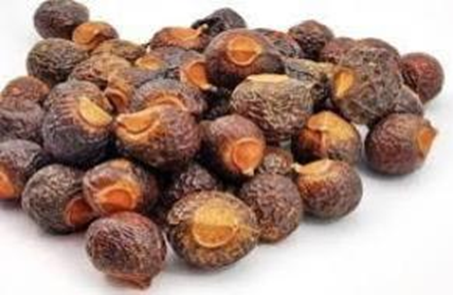
Sapindus mukorossi belongs to the family Sapindaceae and is widely recognized as a natural surfactant. The dried fruit pericarpofreetha contains high concentrations of saponins, which act as natural foaming and cleansing agents. When mixed with water, these saponins form a stable lather that effectively removes oil, dirt, and other impurities from the scalp and hair. Unlike synthetic detergents, reetha cleanses gently without disturbing the natural oils of the scalp, thus preventing dryness and irritation. In addition to its cleansing properties, reetha exhibits antimicrobial and anti-inflammatory activity, helping to prevent dandruff and scalp infections. The presence of sugars, fatty acids, and mucilage also contributes to its mild conditioning effect, making hair soft and manageable. Because of these qualities, reetha is often used as the base ingredient in many herbal shampoo formulations. [7]
Fig 1. Reetha
2. Acacia concinna (Shikakai)
Acacia concinna, a member of the Leguminosae family, has been traditionally used in India as a natural hair cleanser and conditioner. The fruit pods of shikakai contain saponins that produce mild foam and remove grease and dirt effectively. It is rich in vitamins A, C, D, and E, along with natural acids that nourish the scalp and promote hair growth.
Shikakai maintains the scalp’s natural pH, preventing excessive dryness and flakiness. Its anti-fungal and antibacterial properties help control dandruff and scalp infections. It also acts as a natural detangler, reducing hair breakage during combing. Regular use of shikakai-based formulations strengthens hair roots, imparts natural shine, and improves overall texture. [11]
Fig 2. Shikakai
3. Phyllanthus emblica (Amla / Indian Gooseberry)
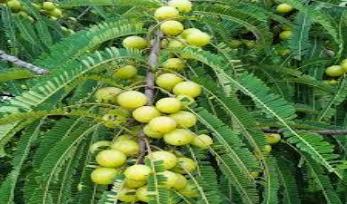
Amla is one of the most valuable herbs in Ayurvedic medicine for hair care. It is a rich source of vitamin C, gallic acid, ellagic acid, and tannins, which act as potent antioxidants. These compounds strengthen hair follicles, stimulate growth, and prevent premature greying. [13]
Fig 3. Amla
Amla nourishes the scalp by improving blood circulation and promoting the supply of nutrients to hair roots. Its antimicrobial properties prevent dandruff, itching, and other scalp disorders. The high tannin content provides a natural darkening effect, enhancing hair color and shine. Moreover, amla helps restore moisture balance and prevents hair from becoming brittle and dull.
4. Aloe vera
Aloe vera is a succulent plant from the Liliaceae family and is well known for its moisturizing and soothing effects on skin and scalp. The inner gel of the aloe leaf contains vitamins (A, C, E, and B complex), amino acids, enzymes, and polysaccharides that promote hair health. Aloe vera helps maintain scalp hydration and reduces irritation caused by dryness or dandruff. Its natural enzymes remove dead skin cells and unclog hair follicles, encouraging healthy growth. The polysaccharides form a thin film on the hair shaft, improving smoothness, shine, and elasticity. Aloe vera also exhibits anti-inflammatory and antimicrobial properties, which protect the scalp and prevent infections. [17]
Fig 4. Aleo Vera
5. Hibiscus rosa-sinensis (Hibiscus)
Hibiscus rosa-sinensis, commonly known as China rose, is widely used in herbal cosmetics for its conditioning and rejuvenating effects. The flowers and leaves are rich in amino acids, flavonoids, and mucilage that nourish the hair and promote keratin synthesis. [19]
Hibiscus strengthens the hair roots, reduces hair fall, and promotes new growth by stimulating dormant follicles. Its mucilage acts as a natural conditioner, making hair smooth, soft, and manageable. The antioxidants present in hibiscus protect the scalp from oxidative stress, while its mild acidity helps maintain scalp pH and shine. Hibiscus also helps in reducing dandruff and delaying premature greying.
Fig 5. Hibiscus
6. Azadirachta indica (Neem)
Azadirachta indica, commonly known as neem, belongs to the Meliaceae family and has long been valued for its powerful medicinal properties. Neem leaves are rich in nimbin, nimbidin, and azadirachtin compounds, which have strong antibacterial, antifungal, and anti-inflammatory effects. In hair care, neem helps in treating dandruff, scalp acne, and fungal infections. It soothes irritation, reduces itching, and maintains overall scalp hygiene. Its detoxifying and purifying nature supports healthy hair follicles and prevents hair loss due to microbial activity. Neem also enhances blood circulation in the scalp, promoting stronger and thicker hair growth. [23]
Fig 6. Neem
Rationale for Selection
Each selected herb performs a specific function, contributing synergistically to the overall performance of the shampoo. Reetha and Shikakai act as natural cleansing and foaming agents; Amla and Hibiscus provide nourishment, strength, and luster; Aloe vera imparts moisturizing and conditioning properties; and Neem ensures scalp protection against infections. Together, these herbs create a balanced, eco- friendly, and effective formulation suitable for daily use. [24]
Steps for Formulation of Herbal Hair Shampoo
Step 1: Collection and Preparation of Raw Materials
Collect fresh or dried parts (fruits, leaves, or flowers) of selected herbs — Sapindus mukorossi (Reetha), Acacia concinna (Shikakai), Phyllanthus emblica (Amla), Aloe vera, Hibiscus rosa- sinensis, and Azadirachta indica (Neem).[25]
Wash thoroughly with distilled water to remove dirt and foreign matter.
Dry the materials in shade at room temperature to preserve active constituents.
Grind the dried materials into a coarse powder and store in airtight containers.
Step 2: Preparation of Herbal Extracts
Weigh around 10–20 g of each powdered herb.
Boil the powders separately in 100 mL of distilled water for 20–30 minutes to extract the active components.
Allow the mixture to cool and then filter it through a muslin cloth or Whatman filter paper.
Collect the filtrates of all herbs and keep them in clean, labeled bottles for formulation. [22]
(Alternative: Hydroalcoholic extraction using 70% ethanol may be used for higher yield of bioactive compounds.)
Step 3: Preparation of Shampoo Base
Take the required amount of distilled water in a clean beaker.
Add a natural thickening agent such as xanthan gum or guar gum slowly under continuous stirring until a uniform gel-like consistency is obtained.
Add glycerin as a humectant to retain moisture.
Maintain the temperature at around 40–45°C to aid proper dissolution and mixing.[21]
Step 4: Incorporation of Herbal Extracts
Add the prepared herbal extracts (Reetha, Shikakai, Amla, Aloe vera, Hibiscus, Neem) to the shampoo base inappropriate proportions under constant stirring.
Continue mixing for 15–20 minutes until the blend becomes homogeneous.
Ensure that no lumps or phase separation occur.
Step 5: Addition of Optional Ingredients
Add natural essential oils (e.g., lavender, rosemary, or tea tree oil) for fragrance and additional scalp benefits.
Include mild natural preservatives such as sodium benzoate or potassium sorbate to enhance product stability and shelf life. [20]
Adjust pH using citric acid or sodium citrate to maintain a pH between 5.5 and 6.5, suitable for scalp compatibility.
Step 6: Filtration and Final Mixing
Filter the prepared formulation to remove any remaining solid particles.
Continue gentle stirring to ensure uniformity.
Check the final appearance, viscosity, and odor of the shampoo.
Step 7: Packaging and Storage
Transfer the final herbal shampoo into clean, dry, amber-colored bottles to protect from light and contamination.
Label each container with formulation details, batch number, and date of preparation.
Store the bottles in a cool, dry place away from direct sunlight for further evaluation. [18]
Evaluation:
Organoleptic Evaluation of Herbal Hair Shampoo
Organoleptic evaluation is the assessment of a product using the human senses—sight, smell, touch, and sometimes taste (though not relevant for shampoos). It provides a preliminary, yet crucial, understanding of the product’s acceptability and quality. For herbal shampoos, organoleptic properties help in evaluating consumer appeal and ensuring consistent formulation quality.
1. Appearance
Purpose: To assess the physical characteristics, such as color, clarity, homogeneity, and presence of particles.
Observations: The shampoo should have a uniform color indicative of the herbal extracts used (e.g., light brown, green, or reddish depending on ingredients like Reetha, Hibiscus, or Amla).
Acceptability Criteria: Free from sedimentation, lumps, or phase separation. A consistent appearance indicates proper mixing and stability. [16]
2. Color
Purpose: Color influences consumer perception and acceptability.
Observations: The natural color of the shampoo should reflect the botanical ingredients. For example, Amla imparts a greenish hue, Hibiscus a reddish tint, and Neem a darker green.
AcceptabilityCriteria: Pleasant, uniform color without discoloration during storage. [15]
3. Odor
Purpose: Odor evaluation determines the fragrance profile and potential masking of any herbal “strong smell.”
Observations: Smell the freshly prepared shampoo and compare it to expected herbal aroma. Natural essential oils (lavender, rosemary, etc.) maybe added to improve scent.
Acceptability Criteria: Mild, pleasant, and refreshing herbal fragrance, free from foul or rancid odors.
4. Texture / Consistency
Purpose: Evaluates the physical feel and flow behavior of shampoo.
Observations: Rub a small amount of shampoo between fingers. Assess thickness, smoothness, and spreadability.
Acceptability Criteria: Smooth, free-flowing, non-gritty, and neither too thick nor too watery. Proper texture ensures easy application and user satisfaction. [14]
5. Foam Characteristics
Purpose: Foam formation contributes to perceived cleansing efficiency.
Observations: Dilute a small amount of shampoo with water, shake, and observe foam volume, texture, and stability.
Acceptability Criteria: Moderate foam formation with creamy consistency that persists for a few minutes, reflecting adequate saponin content from herbal extracts.
6. Overall Sensory Acceptability
Purpose: Combines all sensory evaluations to judge consumer acceptability.
Observations: Evaluate the shampoo on overall feel, aroma, appearance, and ease of application.
Acceptability Criteria: The shampoo should be pleasant and appealing, encouraging repeated use.[12]
Physicochemical Evaluation of Herbal Hair Shampoo
Physicochemical evaluation is essential to determine the quality, stability, and performance of herbal shampoo formulations. These tests assess properties like pH, viscosity, foam, dirt dispersion, surface tension, and wetting ability. Accurate evaluation ensures that the shampoo is safe, effective, and cosmetically acceptable.
1. pH Measurement
Purpose: To ensure scalp compatibility and prevent irritation.
Procedure: Dissolve 1 g of shampoo in 10 mL of distilled water. Measure the pH using a calibrated digital pH meter at room temperature.
Acceptable Range: 5.5–6.5, close to the natural pH of human scalp.
Significance: A shampoo within this pH range maintains scalp integrity and avoids dryness or itchiness.[10]
2. Viscosity
Purpose: To evaluate thickness and flow behavior, which affects application and user acceptability.
Procedure: Use a Brookfield viscometer at room temperature. Record the viscosity in centipoise (cP).
Adjustments: The viscosity can be modified by altering concentrations of natural thickeners like xanthan gum or guar gum.
Significance: Proper viscosity ensures easy application without dripping, while being thick enough to spread evenly.
3. Foam Formation and Stability
Purpose: Foam is an important sensory characteristic and indicates cleansing potential.
Procedure: Shake 2 mL of shampoo diluted in 100 mL of water in a graduated cylinder. Measure initial foam height and stability after 5 minutes.
Significance: Foam stability reflects the saponin content from herbal extracts like Reetha and Shikakai. Stable foam improves user satisfaction.[9]
4. Dirt Dispersion Test
Purpose: To assess the shampoo’s ability to remove dirt and impurities.
Procedure: Add a small amount of finely powdered soil or kaolin clay to 5 mL of diluted shampoo. Shake and observe whether dirt disperses into the foam or settles at the bottom.
Significance: Efficient dirt dispersion ensures effective cleansing without residue.
5. Surface Tension
Purpose: Lowering surface tension is critical for wetting and cleansing action.
Procedure: Use a stalagmometer or tensiometer to measure surface tension of diluted shampoo solution.
Significance: Herbal saponins reduce surface tension of water, facilitating the removal of sebum, grease, and dirt from hair. [8]
6. Wetting Time
Purpose: To evaluate the shampoo’s ability to wet hair strands quickly, reflecting cleansing efficiency.
Procedure: Place a small piece ofcanvas or hair strand on diluted shampoo solution and record the time required to sink completely.
Significance: Shorter wetting time indicates higher saponin activity and better cleansing performance.
7. Viscosity and Flow Consistency
Purpose: To ensure ease of pouring and spreading during application.
Procedure: Observe the flow of shampoo from a pipette or tube. Record whether the flow is uniform and smooth.
Significance: A consistent flow ensures user-friendly application and reduces wastage.
8. Clarity and Homogeneity
Purpose: To assess visual appeal and uniformity of the formulation.
Observations: The shampoo should have a uniform appearance without lumps, sediments, or phase separation.
Significance: Homogeneous formulations indicate proper blending and stability of the herbal components.[6]
Performance Evaluation of Herbal Hair Shampoo
Performance evaluation assesses how well the herbal shampoo functions in real-world conditions. While physicochemical tests determine stability and formulation quality, performance tests evaluate cleansing efficiency, conditioning, hair feel, and overall user acceptability. These tests ensure that the shampoo not only meets scientific standards but also provides a satisfying user experience.
1. Cleansing Efficiency
Purpose: To evaluate the shampoo’s ability to remove dirt, oil, and impurities from hair.
Procedure: Apply a measured amount of shampoo on a small patch of hair or artificial hair strands smeared with sebum or dirt. Massage gently, rinse thoroughly, and visually inspect for cleanliness.
Observation: Clean hair with no residue indicates effective cleansing action.
Significance: Herbal saponins from ingredients like Reetha and Shikakai are primarily responsible for cleansing without harsh surfactants.
2. Foam Performance
Purpose: Foam plays a role in spreading the shampoo and is an indicator of saponin content.
Procedure: Apply shampoo on wet hair, lather for 1–2 minutes, and observe foam volume, stability, and texture.
Observation: Creamy and moderately stable foam is desirable. [4]
Significance: While foam is not directly linked to cleansing, it improves user perception and application ease.
3. Conditioning Effect
Purpose: To assess the smoothness, softness, and manageability of hair after shampooing.
Procedure: After washing and rinsing hair strands or human hair, gently comb and feel the texture. Observe ease of detangling, softness, and silkiness.
Observation: Hair should be smooth, less frizzy, and easy to comb.
Significance: Herbal conditioners like Aloe vera, Hibiscus, and Amla provide natural nourishment, improve hair texture, and reduce static.
4. Hair Shine and Luster
Purpose: To evaluate cosmetic appeal by observing natural shine after shampooing.
Procedure: Compare hair strands before and after shampooing under natural light.
Observation: Hair should appear healthy, shiny, and vibrant.
Significance: Natural antioxidants and vitamins in herbal extracts help restore hair’s natural luster and protect against damage. [12]
5. Scalp Health and Irritation Test
Purpose: To ensure the formulation is gentle and non-irritating.
Procedure: Apply shampoo to a small area of the scalp (patch test) and monitor for redness, itching, or irritation over 24–48 hours.
Observation: No irritation indicates good scalp compatibility.
Significance: pH-balanced herbal shampoos prevent scalp dryness and irritation, making them suitable for long-term use.
6. Wet Comb and Detangling Test
Purpose: To determine ease of combing wet hair after shampooing.
Procedure: Wash hair with the herbal shampoo, rinse, and comb gently from root to tip. Measure the time or effort needed to detangle.
Observation: Less time and effort indicate better conditioning and detangling properties.
Significance: Natural conditioners improve hair manageability and reduce breakage.
7. User Acceptability
Purpose: To assess subjective satisfaction regarding scent, texture, lather, and overall feel.
Procedure: Volunteers or evaluators use the shampoo for 1–2 weeks and provide feedback through a structured questionnaire.
Observation: Acceptable scores for fragrance, ease of use, foaming, and overall satisfaction indicate market readiness.
Significance: User acceptability is a key factor for commercial success, complementing scientific evaluations. [14]
Microbial Evaluation of Herbal Hair Shampoo
Microbial evaluation is an essential step in assessing the safety and shelf-life of herbal shampoos. Since shampoos are water-based formulations, they can potentially support microbial growth, which may lead to spoilage, unpleasant odor, or skin infections. Herbal shampoos often contain natural preservatives, but microbial testing ensures product safety for consumers.
1. Total Plate Count (TPC) / Aerobic Bacterial Count
Purpose: To determine the total number of viable bacteria in the shampoo.
Procedure:
Dilute a measured amount of shampoo with sterile saline or phosphate-buffered solution.
Plate the diluted sample on nutrient agar plates.
Incubate at 37°C for 24–48 hours.
Count the number of colony-forming units (CFU/mL).
Acceptable Limits: Typically, ≤10³ CFU/mL for cosmetic formulations.
Significance: Confirms the formulation is free from excessive bacterial contamination.
2. Fungal Count (Yeasts and Molds)
Purpose: To evaluate the presence of yeast and mold contamination in the shampoo.[25]
Procedure:
Plate diluted shampoo on Sabouraud dextrose agar (SDA).
Incubate at 25–30°C for 3–5 days.
Count the number of colonies.
Acceptable Limits: ≤10² CFU/mL for cosmetic formulations.
Significance: Ensures the shampoo is free from fungal spoilage and is safe for scalp application.
3. Pathogen Detection
Purpose: To ensure the absence of harmful microorganisms.
Procedure: Test for common pathogens such as:
Staphylococcus aureus
Pseudomonas aeruginosa
Escherichia coli
Method: Inoculate samples on selective media (e.g., Mannitol Salt Agar for S. aureus, CetrimideAgar for P. aeruginosa) and incubate.
Significance: Absence of pathogens confirms the shampoo is safe for human use.[23]
4. Preservative Efficacy Test (PET) / Challenge Test
Purpose: To evaluate the ability of the preservative system in the shampoo to inhibit microbial growth.
Procedure:
Inoculate the shampoo with known microbial strains in controlled concentrations.
Store under normal conditions and periodically check microbial growth over 28 days.
Significance: Confirms that natural or added preservatives (e.g., potassium sorbate, sodium benzoate) effectively prevent microbial proliferation during storage.
5. Observational and Sensory Checks
Purpose: Microbial contamination may alter color, odor, or consistency.
Procedure: Observe shampoo regularly for any changes such as turbidity, sedimentation, or foul smell.
Significance: Provides anearly warning of microbial spoilage even before formal testing. [16]
Statistical Evaluation of Herbal Hair Shampoo
Statistical evaluation is an essential part of the formulation and evaluation process. It allows researchers to analyze data rigorously, compare multiple formulations, and determine whether observed differences are significant or due to random variation. Proper statistical analysis increases the reliability and credibility of the results.
1. Purpose of Statistical Evaluation
To quantify the variability in physicochemical, performance, and microbial parameters.
To assess the consistency between different batches of herbal shampoo.
To evaluate the effectiveness of formulation changes (e.g., varying concentrations of herbal extracts or thickeners).
To support scientific conclusions with objective evidence rather than subjective interpretation.
2. Commonly Used Statistical Tools
1. Mean and Standard Deviation (SD)
Purpose: Summarizes central tendency and variability of data.
Example: Average pH of three shampoo batches ± SD provides an understanding of consistency.
2. Analysis of Variance (ANOVA)
Purpose: Compares more than two groups to see if differences in parameters (e.g., viscosity, foam stability) are statistically significant. [2]
Example: Comparing foam stability of shampoos containing 1%, 2%, and 3% Reetha extract.
3. t-Test
Purpose: Compares two groups to determine if observed differences are significant.
Example: Comparing microbial counts before and after preservative addition.
4. Percentage (%) and Confidence Intervals (CI)
Purpose: Used in microbial evaluation and stability studies to express results in a standardized way.
Example: Percent reduction in bacterial growth after preservative testing.
5. Graphical Representation
Purpose: Visualizes trends and patterns in data.[23]
Example: Line graphs for pH or viscosity over storage time, bar graphs for foam height, and pie charts for user acceptability scores.
3. Data Interpretation
Significant Differences: Indicate that formulation changes (herbal extract concentration, thickeners, or preservatives) have a measurable effect on shampoo performance or stability.
Non-Significant Differences: Suggest that changes do not substantially affect quality, ensuring robustness of the formulation.
Reliability and Reproducibility: Low SD and consistent results across batches confirm formulation stability and manufacturing consistency.
4. Software and Tools
Statistical analysis can be performed using software like SPSS, GraphPad Prism, Microsoft Excel, or R.
Proper statistical evaluation ensures that conclusions are scientifically valid and reproducible.[1]
CONCLUSION
The development and evaluation of a herbal hair shampoo provide significant insights into creating a safe, effective, and cosmetically appealing product using natural ingredients. The formulation process demonstrated that herbal extracts such as Amla, Reetha, Shikakai, Hibiscus, and Aloe vera can be successfully incorporated to provide cleansing, conditioning, and nourishing properties without relying on harsh chemical surfactants. Physicochemical evaluations, including pH, viscosity, foam stability, dirt dispersion, wetting time, and surface tension, confirmed that the shampoo is scalp-friendly, stable, and suitable for regular use. Organoleptic studies ensured that the product is visually appealing, pleasantly scented, and user-friendly, which is critical for consumer acceptability.
REFERENCES
Vijayalakshmi A. “Formulation and Evaluation of Herbal Shampoo. ” Asian Journal of Pharmaceutical and Clinical Research, 2018;11 (S4). (Int. J. Applied Pharmaceutics)
Roy S. P., Deka K., Mishra P., Rai S. P. “Formulation of a Novel Herbal Based Shampoo for Hair.” International Journal ofAYUSH, [year]. (internationaljournal.org.in)
Shelar B. G., Chavan D. K., Chavan S. B., Bhoye S. R. “Formulation and Evaluation of Herbal Shampoo.” International Journal of Scientific Research in Science and Technology, [year]. (ijsrst.com)
“Formulation and evaluation of herbal shampoo using Cassia Roxburghii. ” International Journal of Pharmacy and Industrial Research, Vol 12 No 4, 2022. (ijpir.com)
More S., Kumbhar S. “Formulation And Evaluation Of Herbal Shampoo.” International Journal of Pharmaceutical Sciences, 2024. (Zenodo)
Kulkarni C. T., Shirke R. M., Shinde P. B. “Development and Evaluation of Natural Anti-Dandruff Shampoo.” International Journal of Pharmaceutical Sciences and Research, 2025;16(2):502-509. (ijpsr.com)
Pavithra A. S., Muralidharan N. P. “Antifungal Comparison of Sapindus mukorossi and Commercially Available Anti-Dandruff Shampoo against Candida albicans.” Plant Cell Biotechnology and Molecular Biology, 2020;21:21-27. (I.K. Press)
Sidhaye I. “The Effect of Surfactant on Polyherbal Liquid Shampoo and its Comparative Analysis.” International Journal ofAyurveda and Pharma Research, vol10(3). (Ijaprs)
Pal S.-K., Tiwari S., Mishra S., Saran S. “Formulation and evaluation of herbal shampoo. ” International Journal of Life Science Research Archive, 2024;07(02):043-057. (sciresjournals.com)
Dhanure V. A., Dhotre B. G., Nalawade P. P., Burange P. S., Tope R. B. “Research on ‘Formulation and Evaluation of Poly-Herbal Shampoo ’.” IJSCI, [year]. (ijsci.com)
Roopa J. V., Bhargav E., Sudheer A., Pradeepkumar B., Somasekhar Reddy K. “Formulation and Evaluation of Herbal Shampoo. ” International Journal of Scholarly Research in Multidisciplinary Studies, 2023;03(01):069-074. (srrjournals.com)
“Formulation, evaluation & comparison of traditional poly herbal shampoo powders with marketed formulation.” Journal of Drug Delivery and Therapeutics, [year]. (jddtonline.info)
“The application of Sapindus mukorossi extract in sebum-control shampoos.” Journal of Dermatologic Science and Cosmetic Technology, 2024. (Phys.org)
(You may look for additional papers on Acacia concinna (Shikakai) saponins and shampoo formulations.)
Fernandez-Pena L., Guzman E., Leonforte F., et al. “Effect of molecular structure of eco-friendly glycolipid biosurfactants on the adsorption of hair-care conditioning polymers.” [Preprint arXiv], 2024. (arXiv)
BhanushaliM. D., Gavade P., NaikwadiO., PatilS. “Formulation and Evaluation of Herbal Shampoo Enriched with Aqueous Extract of Traditional Indian Herbs. ” KLE Journal of Pharmaceutical and Health Sciences Research, 2025;1(1):47-50. (klejournal.org)
Singh P. “Formulation and Evaluation of Polyherbal Shampoo to Promote Hair Growth and Provide Antidandruff Action Using Poly Herbal Extract. ” International Journal of Medical Science and Diagnosis Research, 2025;9(2):1-10. (ijmsdr.com)
ZankeA. A., KharcheS., TikarV., NavalkarP., KhandareV., GaidhaneY. “Formulation and Evaluation of Herbal Anti-dandruff Shampoo.” Journal of Chemical Health Risks, 2025;15(3). (jchr.org)
Palwe V. D., HingneL. D. “Formulation and Evaluation of Herbal Shampoo from Piper Betel and Psidium Guajava Leaves.” IJRASET Journal for Research in Applied Science and Engineering Technology, 2022. (IJRASET)
GokhaleS., Pawshe A. H., PatilS. P., PitambareR. M., PawarP. S. “Extraction, Formulation and Evaluation of Moringa Herbal Shampoo. ” International Journal of Advanced Research, 2020;8:1392-1396. (Int. J. of Advanced Research)
More S., Kumbhar S. “Formulation and Evaluation of Herbal Shampoo.” International Journal of Pharmaceutical Sciences, 2024;2(8):2733-2739. (Zenodo)
ShelarB. G., ChavanD. K., ChavanS. B., Bhoye S. R. “Formulation and Evaluation of Herbal Shampoo.” International Journal of Scientific Research in Science and Technology, 2025;12(2):973-980. (IJSRST)
Roopa J. V., BhargavE., SudheerA., Pradeepkumar B., Somasekhar ReddyK. “Formulation and Evaluation of Herbal Shampoo. ” International Journal of Scholarly Research in Multidisciplinary Studies, 2023;3(1):069-074. (SRR Journals)
DeshmukhS., DewanganA., Choudhary R. “Formulation and Evaluation of Polyherbal Based Shampoo.” International Journal of Pharmacognosy and Herbal Drug Technology, 2025;2(8):39-53. (AKT Publication)
PalS. K., TiwariS., Mishra S., Saran S. “Formulation and Evaluation of Herbal Shampoo. ” International Journal ofLife Science Research Archive, 2024;07(02):043-057. (Scires Journals)
Reference
Vijayalakshmi A. “Formulation and Evaluation of Herbal Shampoo. ” Asian Journal of Pharmaceutical and Clinical Research, 2018;11 (S4). (Int. J. Applied Pharmaceutics)
Roy S. P., Deka K., Mishra P., Rai S. P. “Formulation of a Novel Herbal Based Shampoo for Hair.” International Journal ofAYUSH, [year]. (internationaljournal.org.in)
Shelar B. G., Chavan D. K., Chavan S. B., Bhoye S. R. “Formulation and Evaluation of Herbal Shampoo.” International Journal of Scientific Research in Science and Technology, [year]. (ijsrst.com)
“Formulation and evaluation of herbal shampoo using Cassia Roxburghii. ” International Journal of Pharmacy and Industrial Research, Vol 12 No 4, 2022. (ijpir.com)
More S., Kumbhar S. “Formulation And Evaluation Of Herbal Shampoo.” International Journal of Pharmaceutical Sciences, 2024. (Zenodo)
Kulkarni C. T., Shirke R. M., Shinde P. B. “Development and Evaluation of Natural Anti-Dandruff Shampoo.” International Journal of Pharmaceutical Sciences and Research, 2025;16(2):502-509. (ijpsr.com)
Pavithra A. S., Muralidharan N. P. “Antifungal Comparison of Sapindus mukorossi and Commercially Available Anti-Dandruff Shampoo against Candida albicans.” Plant Cell Biotechnology and Molecular Biology, 2020;21:21-27. (I.K. Press)
Sidhaye I. “The Effect of Surfactant on Polyherbal Liquid Shampoo and its Comparative Analysis.” International Journal ofAyurveda and Pharma Research, vol10(3). (Ijaprs)
Pal S.-K., Tiwari S., Mishra S., Saran S. “Formulation and evaluation of herbal shampoo. ” International Journal of Life Science Research Archive, 2024;07(02):043-057. (sciresjournals.com)
Dhanure V. A., Dhotre B. G., Nalawade P. P., Burange P. S., Tope R. B. “Research on ‘Formulation and Evaluation of Poly-Herbal Shampoo ’.” IJSCI, [year]. (ijsci.com)
Roopa J. V., Bhargav E., Sudheer A., Pradeepkumar B., Somasekhar Reddy K. “Formulation and Evaluation of Herbal Shampoo. ” International Journal of Scholarly Research in Multidisciplinary Studies, 2023;03(01):069-074. (srrjournals.com)
“Formulation, evaluation & comparison of traditional poly herbal shampoo powders with marketed formulation.” Journal of Drug Delivery and Therapeutics, [year]. (jddtonline.info)
“The application of Sapindus mukorossi extract in sebum-control shampoos.” Journal of Dermatologic Science and Cosmetic Technology, 2024. (Phys.org)
(You may look for additional papers on Acacia concinna (Shikakai) saponins and shampoo formulations.)
Fernandez-Pena L., Guzman E., Leonforte F., et al. “Effect of molecular structure of eco-friendly glycolipid biosurfactants on the adsorption of hair-care conditioning polymers.” [Preprint arXiv], 2024. (arXiv)
BhanushaliM. D., Gavade P., NaikwadiO., PatilS. “Formulation and Evaluation of Herbal Shampoo Enriched with Aqueous Extract of Traditional Indian Herbs. ” KLE Journal of Pharmaceutical and Health Sciences Research, 2025;1(1):47-50. (klejournal.org)
Singh P. “Formulation and Evaluation of Polyherbal Shampoo to Promote Hair Growth and Provide Antidandruff Action Using Poly Herbal Extract. ” International Journal of Medical Science and Diagnosis Research, 2025;9(2):1-10. (ijmsdr.com)
ZankeA. A., KharcheS., TikarV., NavalkarP., KhandareV., GaidhaneY. “Formulation and Evaluation of Herbal Anti-dandruff Shampoo.” Journal of Chemical Health Risks, 2025;15(3). (jchr.org)
Palwe V. D., HingneL. D. “Formulation and Evaluation of Herbal Shampoo from Piper Betel and Psidium Guajava Leaves.” IJRASET Journal for Research in Applied Science and Engineering Technology, 2022. (IJRASET)
GokhaleS., Pawshe A. H., PatilS. P., PitambareR. M., PawarP. S. “Extraction, Formulation and Evaluation of Moringa Herbal Shampoo. ” International Journal of Advanced Research, 2020;8:1392-1396. (Int. J. of Advanced Research)
More S., Kumbhar S. “Formulation and Evaluation of Herbal Shampoo.” International Journal of Pharmaceutical Sciences, 2024;2(8):2733-2739. (Zenodo)
ShelarB. G., ChavanD. K., ChavanS. B., Bhoye S. R. “Formulation and Evaluation of Herbal Shampoo.” International Journal of Scientific Research in Science and Technology, 2025;12(2):973-980. (IJSRST)
Roopa J. V., BhargavE., SudheerA., Pradeepkumar B., Somasekhar ReddyK. “Formulation and Evaluation of Herbal Shampoo. ” International Journal of Scholarly Research in Multidisciplinary Studies, 2023;3(1):069-074. (SRR Journals)
DeshmukhS., DewanganA., Choudhary R. “Formulation and Evaluation of Polyherbal Based Shampoo.” International Journal of Pharmacognosy and Herbal Drug Technology, 2025;2(8):39-53. (AKT Publication)
PalS. K., TiwariS., Mishra S., Saran S. “Formulation and Evaluation of Herbal Shampoo. ” International Journal ofLife Science Research Archive, 2024;07(02):043-057. (Scires Journals)
Jayraj Khedkar
Corresponding author
Ashvin College of Pharmacy, Manchi Hill, Sangamner, Ahilyanagar, Maharashtra 413714







 10.5281/zenodo.17792807
