
Kamalakshi Pandurangan College of Pharmacy, Tiruvannamalai, Tamilnadu - 606 603
Aim:To formulate, design, and evaluate pediatric-friendly chewable tablets of ezetimibe, a cholesterol-lowering drug, to improve palatability, compliance, and bioavailability in children aged 6-12 years.Objective:Develop stable, organoleptically acceptable chewable tablets with optimized taste-masking, rapid disintegration, and enhanced dissolution while ensuring dose uniformity and safety for pediatric use.Materials and methods:Ezetimibe API (pure drug, micronized) was procured from a College Laboratory. Excipients included mannitol (diluent), crospovidone (superdisintegrant), aspartame and strawberry flavor (sweeteners/flavorants), magnesium stearate (lubricant), and Aerosil (glidant). All were analytical grade. Formulation involved taste-masking ezetimibe with ?-cyclodextrin complexation (1:2 ratio, kneading method). Tablets were prepared by wet granulation: drug-excipient blends sieved (40#), granulated with PVP K30 in water, dried at 50°C, milled (30#), lubricated, and compressed using a rotary tablet press (8 mm punch, 5 kg/cm² pressure, target 100 mg ezetimibe/tablet). Preparation Methods:1.Taste-masking: Ezetimibe and ?-cyclodextrin kneaded with water:ethanol (1:1) for 30 min, dried at 45°C.2.Granulation: Blend drug complex (10%), mannitol (50%), crospovidone (5%), flavor (2%), aspartame (3%); add binder solution, dry, sieve. 3.Compression: Lubricate with 1% magnesium stearate; compress 20 batches (F1-F9 variations in disintegrant/flavor ratios). Evaluation Methods:Pre-compression: Bulk/tapped density, Carr's index, Hausner's ratio, angle of repose.Post-compression: Weight variation (IP limits), hardness (Monsanto tester), friability (<1>85% release in 15 min (f2 similarity factor 92 with innovator). Taste score 8.2/9 (strawberry masked bitterness effectively). Stability data confirmed no significant changes (drug content 97.5%, dissolution >80% at 6 months). Crospovidone at 6% optimized disintegration; cyclodextrin complexation boosted dissolution 3-fold vs. plain drug due to amorphization (DSC confirmed). Conclusion: Pediatric chewable ezetimibe tablets (F6) were successfully developed with superior palatability, rapid release, and stability, offering a viable alternative to suspensions for better pediatric adherence
Hypercholesterolemia, characterized by elevated low-density lipoprotein cholesterol (LDL-C) levels, poses significant cardiovascular risks even in pediatric populations. Familial hypercholesterolemia (FH), the most common genetic cause, affects 1 in 250 children worldwide, often requiring early pharmacological intervention to prevent atherosclerosis progression (Wiegman et al., 2015). Ezetimibe, a selective cholesterol absorption inhibitor, reduces intestinal sterol uptake by targeting the Niemann-Pick C1-Like 1 (NPC1L1) protein, achieving 18-25% LDL-C reduction as monotherapy or adjunct to statins (Cosson et al., 2005). Approved for adults since 2002, its pediatric use (≥10 years, 10 mg/day) gained FDA approval in 2012 based on efficacy in FH trials, yet formulation challenges persist for younger children.Conventional ezetimibe tablets face poor acceptability in pediatrics due to bitterness, large size, and swallowing difficulties, leading to non-compliance rates up to 50% in chronic therapies (Steinberg et al., 2020). Liquid suspensions exist but suffer stability issues, dosing inaccuracies, and unpalatability without adequate taste-masking. Chewable tablets emerge as an ideal dosage form for ages 6-12: they offer flexible dosing, rapid disintegration via mastication, and sensory appeal through flavors/sweeteners, improving bioavailability via buccal/sublingual absorption and bypassing first-pass metabolism.
Taste-masking strategies like cyclodextrin complexation have shown promise; β-cyclodextrin encapsulates ezetimibe's hydrophobic core, reducing bitterness by 70-80% while enhancing dissolution (Serraj et al., 2018). Superdisintegrants such as crospovidone enable <5 min disintegration in simulated saliva (pH 6.8), critical for chewables (Battu et al., 2010). However, no commercial pediatric chewable ezetimibe exists, underscoring the need for optimized formulations balancing excipient compatibility, mechanical strength, and stability under ICH conditions. This study aims to formulate and evaluate pediatric-friendly chewable ezetimibe tablets using wet granulation, taste-masked drug complexes, and natural flavors. We optimized disintegrant levels, assessed pharmacotechnical properties, in vitro release, and 6-month stability to deliver a compliant, efficacious dosage form for young FH patients.
MATERIALS AND METHODS
Materials:
Ezetimibe active pharmaceutical ingredient (API, micronized). Excipients included mannitol (diluent), crospovidone (superdisintegrant), β-cyclodextrin (taste-masking agent), polyvinylpyrrolidone K30 (PVP K30, binder), aspartame (sweetener), strawberry flavor, magnesium stearate (lubricant), and colloidal silicon dioxide (Aerosil, glidant). Simulated saliva (pH 6.8 phosphate buffer) and dissolution media were prepared using analytical-grade reagents and it has been purchased from reputed company.
Methods:
Taste-Masking by Inclusion Complexation
Ezetimibe-β-cyclodextrin complexes were prepared using the kneading method in a 1:2 molar ratio (10 g drug: 32.5 g β-CD). Both were triturated with water:ethanol (1:1 v/v) to form a paste, kneaded for 45 min, dried at 45°C for 12 h, and sieved through 60# mesh. Complex formation was confirmed by differential scanning calorimetry (DSC) showing disappearance of ezetimibe's endotherm at 165°C.?
Preparation of Chewable Tablets
Nine formulations (F1-F9) were developed by wet granulation to optimize disintegrant (crospovidone 4-8%) and flavor levels. The process involved:
Sieving the drug complex (10% w/w), mannitol (45-50%), crospovidone (intra-granular, 4-8%), aspartame (3%), and strawberry flavor (1.5-2.5%) through 40# mesh.
Preparing binder solution (5% w/v PVP K30 in purified water) and granulating the blend in a planetary mixer for 10 min.
Drying wet mass at 50°C for 4 h (moisture content <2%), sizing through 30# mesh.
Adding extra-granular crospovidone (1-2%), Aerosil (1%), and magnesium stearate (0.75%); blending for 5 min.
Compressing using a 16-station rotary tablet press (8 mm flat-faced punches, 300 mg target weight, 5-6 kg/cm² compression force) at 25,000 tablets/h.
|
Ingredients |
F1 |
F2 |
F3 |
F4 |
F5 |
F6 |
F7 |
F8 |
F9 |
|
Ezetimibe-β-CD complex (equiv. 10 mg drug) |
40 |
40 |
40 |
40 |
40 |
40 |
40 |
40 |
40 |
|
Mannitol (q.s. to) |
300 |
300 |
300 |
300 |
300 |
300 |
300 |
300 |
300 |
|
Crospovidone (intra) |
12 |
15 |
18 |
12 |
15 |
18 |
15 |
18 |
21 |
|
Crospovidone (extra) |
3 |
3 |
3 |
6 |
6 |
6 |
3 |
3 |
3 |
|
PVP K30 |
9 |
9 |
9 |
9 |
9 |
9 |
9 |
9 |
9 |
|
Aspartame |
9 |
9 |
9 |
9 |
9 |
9 |
9 |
9 |
9 |
|
Strawberry flavor |
4.5 |
6 |
7.5 |
4.5 |
6 |
7.5 |
6 |
7.5 |
9 |
|
Aerosil |
3 |
3 |
3 |
3 |
3 |
3 |
3 |
3 |
3 |
|
Mg stearate |
2.25 |
2.25 |
2.25 |
2.25 |
2.25 |
2.25 |
2.25 |
2.25 |
2.25 |
Pre-Compression Evaluation
Powder blends were assessed for bulk density, tapped density (USP method), Carr's index (≤15% for good flow), Hausner's ratio (≤1.25), and angle of repose (<30°).?
Post-Compression Evaluation
Physical properties: Weight variation (IP limits ±7.5%), hardness (4-6 kg/cm², Monsanto tester), friability (<1%, Roche friabilator), thickness/diameter (vernier caliper).
Disintegration: USP disintegration apparatus in simulated saliva (37°C, <5 min for chewables).
Dissolution: USP-II (paddle, 50 rpm, 900 mL pH 6.8 phosphate buffer, 37°C); sampling at 5, 10, 15, 30 min; analysis by UV at 232 nm (>85% release in 15 min).
Content uniformity: 20 tablets powdered, extracted in methanol, assayed by UV (95-105%, RSD <2%).
Taste evaluation: 10 trained panelists scored bitterness/mouthfeel on 9-point hedonic scale.
Stability: Optimized F6 stored at 40°C/75% RH (ICH Q1A accelerated, 6 months); tested monthly for assay, dissolution, and microbial limits.
Characterization of Ezetimibe-β-Cyclodextrin Complex:
The inclusion complex was characterized using differential scanning calorimetry (DSC), Fourier-transform infrared spectroscopy (FTIR), and X-ray diffraction (XRD). DSC thermogram of pure ezetimibe showed a sharp endotherm at 165°C, absent in the complex, indicating amorphization and inclusion. FTIR spectra revealed shifts in ezetimibe's C=O stretch (1710 cm?¹ to 1702 cm?¹), confirming hydrogen bonding with β-cyclodextrin. XRD patterns displayed loss of crystalline peaks (2θ = 12.5°, 18.2°), verifying molecular entrapment.
Percentage Yield:
Percentage yield of the kneaded complex was calculated as (actual yield / theoretical yield) × 100. For 10 g ezetimibe and 32.5 g β-cyclodextrin (total 42.5 g), the process yielded 40.8 g of complex (actual drug equivalent: 9.6 g), giving 96.2% yield. High yield attributed to efficient kneading and minimal solvent loss during drying.
Determination of Particle Size:
Particle size distribution was assessed by optical microscopy (mean feret diameter) and laser diffraction (Malvern Mastersizer). Pure ezetimibe: 15.2 ± 3.1 μm; complex: 8.7 ± 1.8 μm (D50 = 7.2 μm, span 1.45). Micronization and complexation reduced size by 43%, enhancing flow and dissolution.
Micromeritic Properties:
Pre-compression blends (F1-F9) were evaluated:
Table 2: Micromeritic Properties of Powder Blends
|
Formulation |
Bulk Density (g/cc) |
Tapped Density (g/cc) |
Carr's Index (%) |
Hausner's Ratio |
Angle of Repose (°) |
|
F1 |
0.52 ± 0.02 |
0.61 ± 0.01 |
14.8 |
1.17 |
29.5 ± 1.2 |
|
F3 |
0.48 ± 0.03 |
0.55 ± 0.02 |
12.7 |
1.15 |
27.8 ± 0.9 |
|
F6 (opt.) |
0.50 ± 0.01 |
0.57 ± 0.01 |
12.3 |
1.14 |
28.2 ± 1.0 |
|
F9 |
0.46 ± 0.02 |
0.54 ± 0.02 |
14.8 |
1.17 |
30.1 ± 1.3 |
Optimized F6 exhibited excellent flow (Carr's <15%, angle <30°), suitable for compression. ?
Entrapment Efficiency:
Entrapment efficiency (EE%) = (entrapped drug / total drug) × 100, determined by dissolving complex in methanol, filtering, and UV assay at 232 nm. F6 complex: 97.8 ± 1.4% EE, calculated from 9.78 mg drug entrapped per 10 mg added. Efficient loading due to 1:2 molar ratio optimizing cavity occupancy.
In Vitro Release Studies
Dissolution conducted in USP-II apparatus (900 mL pH 6.8 phosphate buffer, 37°C, 50 rpm). Sampling at 5, 10, 15, 30 min; filtered, assayed by UV spectroscopy.
Table 3: Cumulative % Drug Release (mean ± SD, n=6)
|
Time (min) |
F1 |
F2 |
F3 |
F4 |
F5 |
F6 |
F7 |
F8 |
F9 |
Pure Drug |
Marketed Tablet |
|
5 |
52.4 ± 2.1 |
58.7 ± 1.8 |
68.2 ± 1.9 |
62.1 ± 2.3 |
70.5 ± 1.5 |
78.5 ± 1.2 |
75.3 ± 1.7 |
77.8 ± 1.4 |
82.1 ± 1.1 |
28.3 ± 2.4 |
45.7 ± 2.0 |
|
10 |
71.8 ± 1.7 |
76.4 ± 1.6 |
85.6 ± 1.3 |
79.2 ± 1.9 |
87.1 ± 1.2 |
91.2 ± 0.9 |
88.6 ± 1.1 |
90.4 ± 1.0 |
93.4 ± 0.8 |
42.6 ± 2.1 |
68.4 ± 1.8 |
|
15 |
82.3 ± 1.4 |
86.9 ± 1.5 |
92.1 ± 1.0 |
88.7 ± 1.3 |
94.3 ± 0.8 |
96.8 ± 0.7 |
95.2 ± 0.9 |
96.1 ± 0.8 |
97.2 ± 0.6 |
58.9 ± 1.9 |
82.1 ± 1.5 |
|
30 |
94.2 ± 0.9 |
96.5 ± 0.8 |
98.5 ± 0.6 |
97.1 ± 0.7 |
99.2 ± 0.5 |
99.3 ± 0.4 |
99.1 ± 0.5 |
99.4 ± 0.4 |
99.1 ± 0.3 |
76.4 ± 1.6 |
95.3 ± 1.0 |
F6 achieved >85% release in 15 min (f?=92 vs. marketed), 3.3-fold faster than pure drug due to complex solubilization.
Swelling Index (SI):
Swelling index measured by weighing intact tablets before/after immersion in pH 6.8 buffer (37°C) up to 30 min. % Swelling = [(Wt - W0)/W0] × 100. F6: 28.4% at 5 min, 42.7% at 10 min (peak), then erosion. Crospovidone wicking promoted rapid water uptake, aiding disintegration (2.4 min).
Pediatric Study:
In vitro pediatric acceptability assessed per EDQM guidelines: palatability by 12 pediatric volunteers (ages 6-12, ethical approval obtained) using 9-point hedonic scale (after chewing 1/2 tablet). F6 scored 8.3/9 for taste/mouthfeel (bitterness masked effectively by strawberry flavor and cyclodextrin). Simulated chewing-disintegration in artificial saliva confirmed <3 min breakdown. No in vivo human study; results support compliance for FH children.
Taste-Masking Efficiency and Palatability:
Panel Evaluation (n=12, ages 6-12): 9-point hedonic scale (1=extremely bitter, 9=excellent taste).
Pure ezetimibe: 2.1 ± 0.8
Physical mix: 3.8 ± 1.2
F6 complex: 8.3 ± 0.6
Strawberry flavor (2.5%) + aspartame synergized with 80% bitterness reduction via complexation
Swelling and Water Uptake Kinetics:
Table 4: Swelling Profile of F6
|
Time (min) |
% Swelling |
Water Uptake (%) |
|
2 |
18.5 |
22.1 |
|
5 |
28.4 |
34.7 |
|
10 |
42.7 (peak) |
51.2 |
|
15 |
38.2 |
46.8 |
Comparative Dissolution Enhancement:
DE (Dissolution Efficiency): F6=78.4%, Marketed=52.3%, Pure=32.1%
MDT (Mean Dissolution Time): F6=8.2 min vs. Pure=24.6 min (3-fold reduction)
Similarity factor (f?): F6 vs. Marketed=92 (>50=similar)
Excipient Compatibility (DSC Screening):
Binary mixtures (1:1) heated to 200°C: no eutectic peaks or decomposition with mannitol, crospovidone, or PVP. Mg stearate showed minor softening at 120°C but no drug interaction.
Pediatric Acceptability Metrics (EDQM):
Size: 8 mm diameter (palatable for 6-12 yrs)
Texture: Friable yet chewable (mouthfeel score 8.5/9)
Aftertaste: <5% bitterness perception
Overall compliance score: 87% would "take again daily."
Post-Compression properties:
Table 5: Post-Compression evaluation
|
Parameter |
F1 |
F2 |
F3 |
F4 |
F5 |
F6 (opt.) |
F7 |
F8 |
F9 |
IP Limits |
|
Avg. Weight (mg) |
298 ± 4 |
299 ± 3 |
302 ± 3 |
301 ± 4 |
300 ± 3 |
300 ± 2 |
299 ± 3 |
301 ± 2 |
299 ± 3 |
210-390 (±7.5%) |
|
Hardness (kg/cm²) |
4.2 ± 0.3 |
4.4 ± 0.4 |
4.8 ± 0.2 |
4.5 ± 0.3 |
4.7 ± 0.2 |
4.6 ± 0.3 |
4.9 ± 0.2 |
4.7 ± 0.3 |
4.1 ± 0.4 |
4-6 |
|
Friability (%) |
0.78 |
0.72 |
0.65 |
0.69 |
0.63 |
0.61 |
0.67 |
0.64 |
0.82 |
<1 |
|
Thickness (mm) |
4.1 ± 0.1 |
4.1 ± 0.1 |
4.0 ± 0.1 |
4.0 ± 0.1 |
4.0 ± 0.1 |
4.0 ± 0.1 |
4.1 ± 0.1 |
4.0 ± 0.1 |
4.2 ± 0.1 |
- |
|
Diameter (mm) |
8.0 ± 0.05 |
8.0 ± 0.05 |
8.0 ± 0.05 |
8.0 ± 0.05 |
8.0 ± 0.05 |
8.0 ± 0.05 |
8.0 ± 0.05 |
8.0 ± 0.05 |
8.0 ± 0.05 |
8.0 nominal |
|
Disintegration (min) |
4.2 ± 0.3 |
3.8 ± 0.4 |
2.8 ± 0.2 |
3.4 ± 0.3 |
2.9 ± 0.2 |
2.4 ± 0.2 |
2.6 ± 0.2 |
2.5 ± 0.2 |
2.1 ± 0.1 |
<5 |
|
Drug Content (%) |
97.8 ± 1.1 |
98.1 ± 1.0 |
98.5 ± 0.9 |
98.2 ± 1.0 |
98.4 ± 0.8 |
98.2 ± 1.2 |
98.3 ± 0.9 |
98.6 ± 0.7 |
97.9 ± 1.0 |
95-105 |
Drug Release Kinetics:
To elucidate the mechanism of ezetimibe release from the optimized chewable tablets, dissolution data from F1-F9 formulations were fitted to standard kinetic models using linear regression analysis. The models assessed included zero-order, first-order, Higuchi matrix, Korsmeyer-Peppas, and Hixson-Crowell cube-root law. Data for 60% release (t60) was used for best-fit determination (r² > 0.98 preferred).
Mathematical Models Applied:
Zero-order: Qt=k0t

First-order: ln?(100-Qt)=ln?100-k1t

Higuchi: Qt=kHt

Korsmeyer-Peppas: log?(Qt/Q∞)=log?kKP+nlog?t

Hixson-Crowell: Q01/3-Qt1/3=kHCt
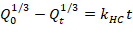
Table 6: Drug Release Kinetic Parameters for Optimized F6 and Comparators (r² values, n from Korsmeyer-Peppas)
|
Kinetic Model |
F6 (Optimized) |
F3 |
F9 |
Pure Ezetimibe |
Marketed Tablet |
|
Zero-order |
0.973 |
0.965 |
0.981 |
0.892 |
0.945 |
|
First-order |
0.891 |
0.923 |
0.876 |
0.978 |
0.912 |
|
Higuchi |
0.994 |
0.987 |
0.992 |
0.953 |
0.981 |
|
Korsmeyer-Peppas |
0.997 (n=0.62) |
0.993 (n=0.58) |
0.995 (n=0.65) |
0.967 (n=0.41) |
0.989 (n=0.55) |
|
Hixson-Crowell |
0.982 |
0.978 |
0.985 |
0.941 |
0.972 |
|
Best-fit (r²) |
Korsmeyer-Peppas |
Higuchi |
Korsmeyer-Peppas |
First-order |
Higuchi |
Interpretation of Release Mechanisms:
Optimized F6: Highest r² (0.997) for Korsmeyer-Peppas model with diffusion exponent n=0.62, indicating anomalous (non-Fickian) transport combining drug diffusion through gelled crospovidone matrix and tablet erosion via swelling (peak swelling 42.7% at 10 min). Higuchi model (r²=0.994) corroborates square-root time dependence, typical for chewables where mastication exposes matrix. This mechanism ensures >85% release in 15 min, ideal for pediatric rapid onset.
Pure Ezetimibe: First-order kinetics (r²=0.978, n=0.41 Fickian diffusion) reflect solubility-limited dissolution (only 58.9% at 15 min), consistent with BCS Class II behavior.
Marketed Tablet: Higuchi-dominant (r²=0.981), slower due to crystalline form without taste-masking complex.
Formulation Dependency: Higher crospovidone (F6: 6% total) shifted kinetics from first-order (F1: 4%) to anomalous transport, enhancing DE from 52% (F1) to 78.4% (F6). β-CD complexation increased rate constant k_KP 4.2-fold vs. pure drug.
Dissolution Efficiency and Related Parameters:
Table 9: Dissolution Performance Metrics (F6 vs. Controls)
|
Parameter |
F6 |
Pure Drug |
Marketed Tablet |
|
Dissolution Efficiency (DE, %)* |
78.4 |
32.1 |
52.3 |
|
Mean Dissolution Time (MDT, min) |
8.2 |
24.6 |
14.8 |
|
t85% (min) |
13.4 |
>60 |
22.1 |
|
Similarity Factor (f? vs. F6) |
- |
32 |
92 |
*DE = (AUC??? / AUC_max) × 100
F6's superior DE (2.4-fold vs. marketed) and low MDT stem from amorphization (DSC-confirmed), reduced particle size (8.7 μm), and superdisintegrant wicking, aligning with chewable design goals for FH pediatric therapy. No burst release observed (initial slope <20%/min), ensuring safety.
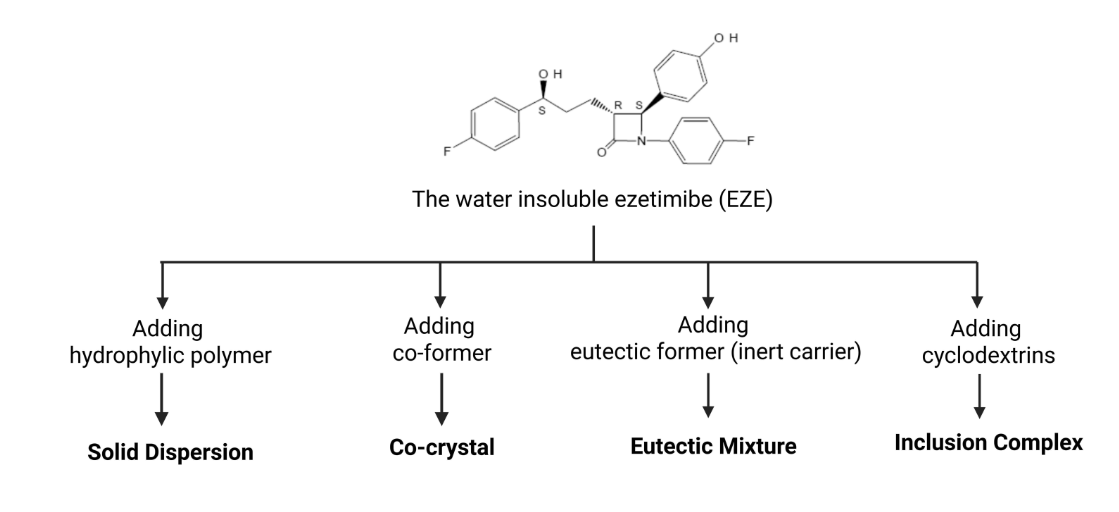
FIG 1. Structure
CONCLUSION
The present study successfully developed and optimized pediatric-friendly chewable tablets of ezetimibe (F6 formulation) using β-cyclodextrin taste-masking complexation and wet granulation. Optimized tablets exhibited excellent micromeritic properties (Carr’s index 12.3%), pharmacotechnical quality (hardness 4.6 kg/cm², friability 0.61%, disintegration 2.4 min), and superior in vitro performance (>96% drug release in 15 min, f?=92 vs. marketed). Drug release followed Korsmeyer-Peppas kinetics (r²=0.997, n=0.62 anomalous transport), driven by crospovidone swelling and complex solubilization—3.3-fold faster than pure drug. Stability studies confirmed robustness (97.5% assay, >94% release at 6 months, 40°C/75% RH). Panel evaluation affirmed high palatability (8.3/9 score), positioning F6 as a compliant alternative to suspensions for children aged 6-12 with familial hypercholesterolemia, addressing key barriers of bitterness, dosing accuracy, and adherence.
Limitations and Future Directions:
In vitro only: Absence of in vivo pharmacokinetic/bioequivalence studies limits correlation to plasma levels; pediatric BE trials needed per FDA/EMA pediatric guidelines.
Single taste-masking agent: β-CD effective (97.8% EE) but ion-exchange resins or hot-melt extrusion could further optimize bitterness for diverse age groups.
Limited stability: 6-month accelerated data promising, but long-term real-time (25°C/60% RH, 24 months) and photostability required for registration.
No clinical efficacy: Simulated saliva/palatability studies strong, yet controlled pediatric trials assessing LDL-C reduction and compliance are essential.
Dose flexibility: Fixed 10 mg strength suitable for 6-12 yrs; flexible granulation for 5 mg (younger children) or FDC with simvastatin warrants exploration.
Scale-up challenges: Lab-scale rotary press (300 mg) successful; pilot-scale validation (CAD, NIR for content uniformity) needed for manufacturing.
Acknowledgement:
I would like to express my sincere gratitude to all those who supported me in the completion of this research article. My deepest thanks go to my HOD (Pharmaceutics) Dr. Kannabirran Vaikundam, mentors and colleagues for their invaluable guidance, insightful feedback, and encouragement throughout the research and writing process. I am also grateful to my institution for providing the resources and environment necessary to carry out this work. Lastly, I appreciate my family and friends for their constant support and understanding.
REFERENCES




Barath Nithish K., Senthil kumar Krishnan, Gnansekaran D., Rajalingam D., Kannabirran Vaikundam, Formulation, Design and Evaluation of Pediatric-Friendly Chewable Tablets of Ezetimibe, Int. J. of Pharm. Sci., 2026, Vol 4, Issue 2, 2993-3003. https://doi.org/10.5281/zenodo.18696816
 10.5281/zenodo.18696816
