
View Article

Abstract

Floating drug delivery systems have garnered significant attention in recent decades as a potential solution to overcome the limitations of traditional drug delivery systems, such as frequent dosing and limited bioavailability. An ideal floating system remains in the stomach for an extended period, releasing the active medication continuously and maintaining its pharmacological effects. This review aims to consolidate recent research on gastroretentive and floating tablets, highlighting their principles, advantages, classification, preparation, and evaluation methods. Additionally, it provides an overview of marketed floating tablets and explores the formulation and evaluation aspects of effervescent floating drug delivery systems. The review also discusses factors influencing gastric retention and offers insights into the pharmaceutical formulation of these systems, providing a comprehensive understanding of this promising drug delivery approach.

Keywords

Floating drug delivery systems, gastroretentive systems, hydrodynamically balanced systems, gas-generating systems, low-density systems, bioavailability, therapeutic efficacy

Introduction

The oral route has become increasingly popular for delivering therapeutic agents due to its simplicity and high patient compliance, making it a preferred choice for pharmaceutical companies and patients alike. Gastro-retentive drug delivery systems are designed to remain in the stomach for an extended period, enhancing the bioavailability of drugs absorbed in the upper gastrointestinal tract, such as antibiotics, antifungal agents, and anti-diabetic drugs. These systems offer several benefits, including improved bioavailability, reduced drug waste, and enhanced solubility for drugs poorly soluble in high pH environments, thereby reducing the frequency of dosing and associated side effects. They also enable localized delivery to the stomach and proximal small intestine, making them suitable for treating various diseases, including gastric ulcers, gastro-esophageal reflux disease (GERD), and Helicobacter pylori infections.

Moreover, gastro-retentive systems can be tailored to release drugs in a controlled manner, maintaining optimal drug concentrations and minimizing fluctuations, which can lead to improved therapeutic outcomes and patient compliance. Various approaches, such as hydrodynamically balanced systems, floating drug delivery systems, raft systems, bioadhesive systems, superporous hydrogels, and magnetic systems, have been explored to achieve prolonged gastric retention. These systems have been evaluated in vitro and in vivo to assess their efficacy and potential applications, with some formulations showing promising results in clinical trials. Overall, gastro-retentive drug delivery systems hold great promise for improving the treatment of various diseases and disorders, and ongoing research is focused on developing more efficient and effective systems.

Physiology of the stomach3

The stomach is anatomically divided into three regions: the fundus, body, and antrum (pylorus). The fundus and body act as a reservoir for undigested food, while the antrum is responsible for mixing and propelling food into the small intestine through its pumping actions. Gastric emptying occurs in both fasting and fed states, with distinct motility patterns. During fasting, the interdigestive myloelectric cycle (MMC) takes place, cycling through the stomach and intestine every 2-3 hours. The MMC consists of four phases, as described by Wilson and Washington, which regulate the movement of food through the digestive system.

  1. Phase I (basal phase) lasts from 40 to 60 minutes with rare contractions.
  2. Phase II (preburst phase) lasts for 40 to 60 minutes with intermittent action potential and contractions. As the phase progresses the intensity and frequency also increases gradually.
  3. Phase III (burst phase) lasts for 4 to 6 minutes. It includes intense and regular contractions for short period. It is due to this wave that all the undigested material is swept out of the stomach down to the small intestine. It is also known as the housekeeper wave.
  4. Phase IV lasts for 0 to 5 minutes and occurs between phases III and I of 2 consecutive cycles.

After a meal, gastric motility shifts from a fasted to a fed state, characterized by continuous contractions that break down food particles into smaller sizes (<1 mm) and propel them towards the pylorus. This digestive motility pattern delays the onset of the migrating myoelectric cycle (MMC), resulting in a slower gastric emptying rate. However, orally administered controlled-release dosage forms are subject to two major complications: short gastric residence time and unpredictable gastric emptying rate, which can impact their efficacy. Understanding these physiological processes is crucial for designing effective gastroretentive drug delivery systems.

Strategies for Gastroretention3-4

Various approaches have been explored to prolong gastric retention, including mucoadhesive systems, high-density systems, modified-shape systems, floating dosage forms (gas-generating and swelling/expanding systems), and co-administration of gastric emptying delaying agents. These strategies aim to extend the retention of medication in the stomach, improving bioavailability and efficacy. However, the success of these approaches depends on several factors that influence the gastroretentive mechanism.

Density: Buoyancy-dependent, influencing dosage form retention.

Size: Larger dosage forms (>7.5 mm) exhibit longer GRT.

Shape: Tetrahedron and ring-shaped devices show better GRT (90-100% retention at 24 hours).

Formulation: Multiple unit formulations offer predictable release profiles, safety, and reduced risk of dosage form failure.

Fed or unfed state: GRT is influenced by GI motility, with longer retention in the fed state and shorter retention in the unfed state due to the migrating myoelectric complex (MMC).

Caloric content: High-protein and high-fat meals can increase GRT by 4-10 hours.

Frequency of feed: Successive meals can prolong GRT by over 400 minutes due to reduced MMC frequency.

Gender: Females tend to have longer GRT (4.6±1.2 hours) compared to males (3.4±0.6 hours), regardless of weight, height, or body surface area.

Age: Elderly individuals (>70 years) experience significantly longer GRT.

Posture: GRT varies between supine and upright positions.

Concomitant drug administration: Certain medications, such as anticholinergics, opiates, and prokinetic agents, can alter GRT.

Biological factors: Conditions like diabetes and Crohn’s disease can also influence GRT.

Polymers are used in floating system5

Polymer

Sub Type

Examples

Natural

Proteins

Albumin, Gelatin, Collagen

Carbohydrates

Agarose, Carragenan, Chitosan, Starch

Chemically modified carbohydrates

Poly dextran, Poly starch

Synthetic Polymer

Biodegradable

Lactides, Glycosides, and their copolymers. Poly alkyl Cyanoacrylates, Polyanhydrides

Non-biodegradable

Polymethyl methacrylate, Glycidyl, methacrylate, and Epoxy polymers,

Rationale for Floating Drug Delivery Systems5-6

Certain medications exhibit optimal absorption at specific sites in the gastrointestinal tract, necessitating targeted delivery to maximize therapeutic efficacy. Site-specific drug delivery has become a prominent focus in the pharmaceutical industry, driven by the need to enhance bioavailability and reduce systemic side effects. Gastro-retentive drug delivery systems, including floating dosage forms, offer a promising approach to achieve this goal. By prolonging the residence time of the dosage form in the stomach or upper gastrointestinal tract, these systems enable controlled release of the medication, thereby increasing the amount of drug that reaches the target site. This approach is particularly beneficial for drugs with:

  • Narrow absorption windows
  • Local action in the stomach or upper intestine
  • Poor solubility or stability in intestinal fluids
  • Degradation in the colon

By retaining the dosage form in the stomach or upper gastrointestinal tract, floating drug delivery systems can improve the bioavailability and therapeutic efficacy of these medications, while minimizing side effects and enhancing patient outcomes.

Ideal Candidates for Floating Drug Delivery Systems (FDDS)7

FDDS is particularly suitable for medications with specific characteristics, including:

  • Drugs with limited absorption sites: Certain drugs, such as furosemide and metformin hydrochloride, are primarily absorbed in the stomach or upper small intestine. FDDS can prolong their residence time in these areas, enhancing absorption.
  • Drugs susceptible to degradation: Medications like captopril, which degrade in the lower gastrointestinal tract (GIT), can benefit from FDDS, which releases the drug in the upper GIT, protecting it from degradation.
  • Drugs with solubility issues: Drugs with poor solubility in intestinal fluids, such as quinidine and diazepam, can benefit from controlled release via FDDS, improving their absorption.
  • Drugs vulnerable to colonic degradation: Medications like ranitidine hydrochloride and metronidazole, which degrade in the colon, can be delivered to the upper GIT using FDDS, ensuring effective absorption.

Advantages of Floating Drug Delivery Systems (FDDS)8

  • Prolongs gastric retention, improving absorption of stomach-specific drugs (e.g., ferrous salts, antacids).
  • Reduces irritation for acidic drugs like aspirin.
  • Effective in diarrhoea and gastrointestinal disorders (e.g., gastroesophageal reflux).
  • Enhances bioavailability and sustains release.
  • Improves patient compliance and reduces dosing frequency.
  • Suitable for drugs metabolised in the upper GI tract.
  • Minimises gastric irritation via multi-particulate systems.
  • Treats gastroesophageal reflux disorder (GERD).

Disadvantages of Floating Drug Delivery Systems (FDDS)8

  • Unpredictable gastric retention due to varying gastric motility, pH, and food presence.
  • Unsuitable for drugs irritating gastric mucosa or unstable in acidic environments.
  • Random gastric emptying in sleeping patients; avoid dosing before bedtime.
  • Not ideal for drugs with solubility/stability issues in gastric fluids or those undergoing first-pass metabolism.
  • Requires sufficient gastric fluid for buoyancy and efficacy.
  • Swallowing difficulties in children and unconscious patients.

Applications of Floating Drug Delivery Systems (FDDS)9-10

    • Enhanced Bioavailability: Improves bioavailability of drugs with site-specific absorption (e.g., riboflavin).
    • Sustained Drug Delivery: Overcomes gastric residence issues, enabling controlled release.
    • Site-Specific Delivery: Targets stomach or proximal small intestine absorption (e.g., furosemide, riboflavin).
    • Absorption Enhancement: Increases absorption of drugs with low bioavailability.
    • Minimized Colon Adverse Effects: Reduces colon exposure, avoiding side effects (e.g., beta-lactam antibiotics).
    • Reduced Concentration Fluctuations: Maintains steady drug levels, minimizing side effects (especially for narrow therapeutic index drugs).

Methods for Preparing Floating Dosage Forms11

Floating dosage forms can be prepared using various techniques, including the use of hydrocolloids that gel, such as cellulose derivatives, gelatin, hydrophilic gums, and alginates. Low-density enteric materials like cellulose acetate phthalate and methacrylic polymers can also be employed. Additionally, floating dosage forms can be prepared by packing the drug inside a capsule and reducing the particle size, generating gaseous carbon dioxide that gets trapped within the gel network, creating hollow micro-balloons made of acrylic polymer filled with the drug, or incorporating an inflatable chamber that expands in the stomach due to the vaporization of a liquid at body temperature. These methods enable the design of floating dosage forms that can prolong gastric residence time and improve therapeutic efficacy.
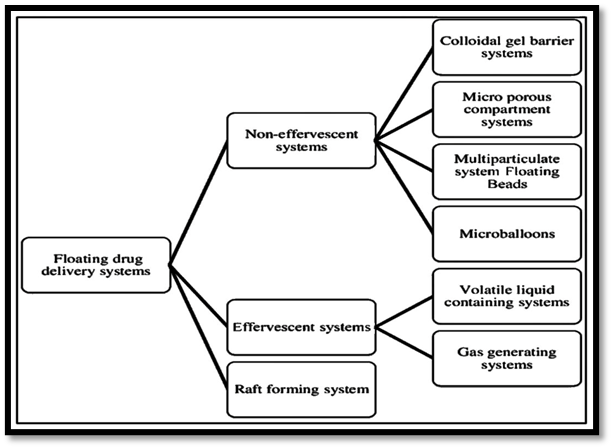
  1. Effervescent Systems 12-13

Effervescent systems utilize a combination of carbonates (e.g., sodium bicarbonate) and organic acids (e.g., citric acid, tartaric acid) to generate CO? gas, reducing the system’s density and enabling it to float on gastric fluid. This gas generation can be facilitated by incorporating a volatile liquid that evaporates at body temperature, further enhancing buoyancy. This approach allows for a sustained release of the drug in the stomach, improving its absorption and therapeutic efficacy.

  1. Gas Generating Systems

These systems involve incorporating CO2-generating agents into a matrix tablet, reducing its bulk density and allowing it to float on gastric fluids. This prolongs gastric residence time, slowing down gastric emptying and enabling sustained drug release.

  1. Volatile Liquid-Containing Systems

This system features a floatation chamber, either vacuum-sealed or filled with air or a harmless gas, which enables it to float in the stomach. The drug reservoir is encapsulated within a microporous compartment, allowing for controlled release as the volatile liquid evaporates or diffuses out, achieving sustained drug delivery.

  1. Non-Effervescent FDDS14-16

Non-effervescent FDDS involves swelling upon contact with gastric fluids, forming a gel-like barrier that prevents rapid exit from the stomach. These plug-type systems rely on swelling and bending to stay near the pyloric valve, releasing the drug slowly. Typically, the drug is mixed with a hydrophilic polymer that swells, trapping air and providing buoyancy. This approach is widely used due to its simplicity and effectiveness, with common excipients enabling sustained release and improved bioavailability.

  1. Colloidal Gel Barrier System

This system uses hydrocolloids like polyacrylate, polystyrene, or polycarbophil to form a gel barrier upon contact with gastric fluid. The gel floats on stomach contents, prolonging gastric retention and releasing the drug in solution form, enhancing absorption. Hydration of the hydrocolloid creates a colloid gel barrier, controlling drug release and improving bioavailability.

  1. Micro porous Compartment System

This system features a microporous compartment encapsulating a drug reservoir, with pores on the top and bottom walls. An air-filled flotation chamber enables the system to float on gastric contents, allowing controlled drug release through the pores, and enhancing gastric retention and bioavailability.

  1. Floating Microspheres/Micro balloons

Hollow microspheres, or micro balloons, are highly efficient buoyant materials with a central hollow core. Prepared using a solvent diffusion emulsion technique, they consist of a polymer shell loaded with the drug. This design enables them to float on gastric contents, releasing the drug slowly and improving bioavailability.

  1. Alginate Floating Beads

Calcium alginate beads, prepared by freeze-drying, form porous floating dosage forms that sustain buoyancy for over 12 hours. Created by injecting sodium alginate into calcium chloride solution, these beads have a diameter of ~2.5 mm and provide a gastric residence time of >5 hours, significantly longer than non-floating beads (1 hour). The porous structure enables prolonged drug release, making alginate beads a promising approach for gastroretentive delivery. Studies have shown improved bioavailability and therapeutic efficacy with these floating beads, highlighting their potential for various pharmaceutical applications.

  1. Raft-Forming Systems17-18

Raft-forming systems are gaining attention for delivering antacids and treating GI infections and disorders. Upon contact with gastric fluid, a gel-forming solution expands, creating a viscous raft that releases the drug slowly. This approach provides localized action, prolonged gastric retention, and improved bioavailability. Raft-forming systems often incorporate alginates, pectin, or other polymers, and can be formulated as liquids or tablets. They offer a promising approach for treating conditions like gastro-esophageal reflux disease (GERD) and Helicobacter pylori infections, with potential for tailored release profiles and enhanced therapeutic outcomes.

Evaluation of gastro-retentive dosage forms19-21

  • Weight Variation Test

Weigh 20 tablets individually and calculate the mean weight. Compare each tablet’s weight to the mean, checking if any deviate by more than twice the percentage limit (as per USP standards). The batch passes if no tablet exceeds this limit and no more than two tablets are outside the specified range. This test ensures dosage uniformity, typically applied to tablets with active ingredients ≥50mg. For low-dose tablets, content uniformity testing is often required additionally. USP and other pharmacopoeial standards provide specific limits for different tablet types and weights.

  • Hardness

Tablet hardness is assessed using testers like Monsanto, Strong-Cobb, Pfizer, Erweka, and Schleuniger to ensure they withstand manufacturing, packing, transportation, and patient handling stresses. The test measures the force required to break the tablet, typically expressed in kg/cm² or Newtons. Optimal hardness balances durability and disintegration; too hard may delay dissolution, while too soft may lead to breakage. Hardness ranges vary depending on tablet size, shape, and formulation, influencing patient compliance and therapeutic efficacy.

  • Thickness

Tablet thickness is determined using a vernier caliper, available with digital or manual readings, providing measurements in mm. This straightforward test ensures uniformity and compliance with specifications, influencing packaging, coating, and patient acceptability. Consistent thickness also indicates proper compression and formulation consistency.

  • Friability

Friability is evaluated using a Roche friabilator, rotating 20 tablets at 25 rpm for 100 revolutions. Tablets are weighed before and after, with acceptable weight loss typically ≤0.5-1.0%. This test ensures tablets can withstand handling and transportation stresses, maintaining integrity during use. High friability may indicate inadequate binding or compression, impacting patient safety and efficacy.

  • Floating systems
  • Buoyancy Lag Time

Buoyancy lag time measures the time taken by a dosage form to float on the dissolution medium’s surface. This parameter, often assessed during dissolution testing, indicates the formulation’s floating ability, influencing gastric retention and drug release. A shorter lag time typically enhances floating efficacy and therapeutic outcomes.

  • Floating Time

Floating time, a key parameter for gastroretentive formulations, is assessed in Simulated Gastric Fluid (SGF) at 37°C. It measures the duration a dosage form remains buoyant on the dissolution medium, influencing drug release and bioavailability. Longer floating times often enhance therapeutic efficacy by prolonging gastric retention.

  • Density Determination

Density is determined using the displacement method, with benzene as a displacement medium. This parameter is critical for floating dosage forms, as lower density (≤1 g/cm³) enables buoyancy in gastric fluid, influencing gastric retention and drug release profiles. Accurate density measurement ensures formulation efficacy.

  • Resultant Weight and Buoyancy

While bulk density and floating time describe buoyancy, resultant weight better represents a dosage form’s floating behaviour, as it accounts for changes over time. For example, gas generation and matrix erosion alter the weight, impacting buoyancy. Resultant weight integrates these dynamic changes, providing a more accurate measure of floating performance and gastric retention.

  • Swelling systems

Swelling Index and Water Uptake

Swelling index, an indicator of a matrix’s swelling capacity, is assessed by measuring dimensional changes (thickness/diameter) or weight gain over time in Simulated Gastric Fluid (SGF) at 37°C. This indirect measurement reflects the dosage form’s hydration and swelling behaviour, influencing drug release kinetics and gastric retention.

Swelling index= Wt -Wowo* 100

 

Where, Wt = weight of dosage form at time t.

Wo = initial weight of dosage form.

  • In-Vitro Dissolution Testing

In-vitro drug release was evaluated using a USP Type II (paddle) apparatus at 37°C ± 0.5°C, 50 rpm, in 900 mL 0.1N HCl. Samples were withdrawn at intervals over 6 hours, filtered (0.45 µm), and analysed using a Shimadzu UV-1800 spectrophotometer at the API’s λmax. Cumulative percentage release (CPR) was calculated using a calibration curve equation, providing insights into the formulation’s release kinetics.

  • FTIR Analysis

Fourier Transform Infrared (FTIR) spectroscopy evaluated physical and chemical interactions between the drug and excipients. Spectra of the pure drug and floating tablet were recorded using a Shimadzu FTIR-1700 analyser (KBr disc method), identifying potential drug-excipient compatibility and structural changes.

  • DSC Analysis

Differential Scanning Calorimetry (DSC) assessed drug-excipient interactions using a Shimadzu DSC-60 instrument. Thermograms of pure drug and drug composite mixtures were recorded, identifying potential incompatibilities or changes in thermal properties, ensuring formulation stability and compatibility.

  • Stability study

Stability testing, as per ICH Q1A (R2) guidelines, evaluated the impact of environmental factors (temperature, humidity, light) on the drug product’s quality. Short-term stability studies (40°C, 75% RH) assessed changes in the in vitro dissolution profile of the optimized batch over 1 month, ensuring the product’s shelf life and storage conditions.

Floating formulations for GRDDS Research done by some listed researchers in the last 5 years.

Drug name

Disease

Preparation methods

References

Lovastatin

Hypercholesterolemia

Floating Tablet

(Kumar V., et al, 2025)22

Curcumin

Peptic Ulcer

Floating Tablet

(Gupta C., et al, 2025)23

Atenolol

Hypertension

Floating Tablet

(Patel S et al., 2025)24

Capsaicin

Peptic ulcers

Nanofiber films

(Karavasili C., et al, 2024)25

Dihydromyricetin

Parasite infections, liver diseases, and hangovers

Compression coating technique,

(Hao liu., et al, 2023)26

Brivacetam

Epilepsy

Direct compression, Floating tab

(Jinsong Ding., et al, 2023)27

Propranolol Hydrochloride

Hypertension and cardiovascular disorders

3d-printed

(Mohammed AA.,et al, 2023)28

Ciprofloxacin Hydrochloride

Broad-spectrum fluoroquinolone antibiotics

Sfgrdds direct compression method

(Sheu M-T., et al, 2023)29

Niclosamide

Antiparasitic drug being repositioned for helicobacter pylori

3D Printed Nanocrystals by the Melting Solidification Printing Process.

(Real JP, Real DA., et al, 2023)30

Flavonolignan Silymarin

Treat acute and chronic hepatic diseases.

Direct compression, Floating tab

(Khan JA., et al, 2023)31

Metformin Hydrochloride

Diabetes type ii

Three-dimensional printing (3DP)

(Millán-Jiménez M., et al, 2023)32

Gabapentin

Treat overactive bladder

3d-printed

(Ghori MU., et al, 2023)33

Famotidine

Treat gastric and duodenal ulcers, zollinger-ellison syndrome, and reflux esophagitis

Semisolid extrusion 3d printing

(Kim DW., et al, 2023)34

Clarithromycin And Pantoprazole

Treating ulcers and lower and upper git bacterial infections.

Bilayer with direct compression

(Nawaz A., et al, 2023)35

Drotaverine hydrochloride

An antispasmodic drug used for smooth muscle spasms and pain associated with gastrointestinal colics, renal colics, biliary colics, irritable bowel syndrome, postsurgical spasm, and uterine neck. spasm

Direct compression, Floating mini-tablets

(Louis MM., et al, 2023)36

Domperidone

Used to stop feeling or being sick (nausea or vomiting)

3D-printed

(Patrojanasophon P., et al, 2023)37

Ofloxacin

Treat bacterial infections of the skin, lungs, prostate, or urinary tract

HBS floating capsules

(Nayak AK., et al, 2023)38

Esomeprazole And Clarithromycin

Management of gastroesophageal reflux disease (GERD), broad-spectrum antibiotic

Effervescent floating bilayer tablets direct compression.

(Muzammal M, Alamri AS., et al, 2022)39

Metronidazole

Abdominal discomfort, weight loss, diarrhea, constipation

Direct compression

(Elkomy MH., et al, 2022)40

Ciprofloxacin

Antiulcer therapeutic potential due to composed dietary fibers psyllium-moringa gum-alginate.

Beads using alginate-gelatin for cefadroxil drug encapsulation

(Singh B., et al, 2022)41

Sildenafil Citrate

Treatment of pah

Direct compression

(Diniz A., et al, 2022)42

Neratinib

Breast cancer treatment

Effervescent floating matrix NTB

(Alshahrani S., et al, 2021)43

Metformin HCl

Diabetes type ii

Direct compression floating tab

(Huh HW., et al, 2021)44

Dipyridamole

Widely used to prevent angina and inhibit thromboembolic complications

Acrylamide-based hydrogels are neutral hydrogels

(Salama AH., et al, 2021)45

Amoxicillin Trihydrate

Treatment of Helicobacter pylori

Floating-alginate based beads

(Raafat Al., et al, 2021)46

Losartan Potassium

Used to treat hypertension

Effervescent floating matrix tablets

(Rahamathuila M., et al, 2021)47

CONCLUSION

Floating drug delivery systems (FDDS) offer a promising approach to enhance bioavailability, sustain release, and minimize side effects. By prolonging gastric retention, FDDS improves absorption of drugs absorbed in the upper GI tract. Growing understanding of physiochemical and pharmacological aspects drives future advancements in FDDS design, making it a viable strategy for gastric retention and optimized drug delivery.

REFERENCES

  1. Thakur S, Ramya K, Shah DK, Raj K, Floating Drug Delivery System, Journal of Drug Delivery and Therapeutics. 2021; 11(3-S):125-130 DOI:                       http://dx.doi.org/10.22270/jddt.v11i3-S.4828.
  2. Mr. Shinde Jitendra V , Miss. Malshikare Swapnali S,  Dr. Chavanrajashree S “A Review on Floating Drug Delivery System” Published in International Journal of Trend in Scientific Research and Development (ijtsrd), ISSN: 2456-6470, Volume-4 | Issue-3, April 2020, pp.427-433, URL:                                                                                www.ijtsrd.com/papers/ijtsrd30478.pdf
  3. Swati Yadav, Bharat W Tekade, Nilesh Gorde, Vishal Bodke , Mohan Kales, “A Review on the Floating Drug Delivery System -Its Evaluations and Recent Works Done in 4-5 Years” Int. J. Pharm. Sci. Rev. Res., ISSN: 0976-044X, 84(5) May 2024; Article No. 02, Pages: 6-17.
  4. Agnihotri, S.A., Jawalkar, S.S., Aminabhavi, T.M. (2006). Controlled release of cephalexin through gellan gum beads: Effect of Formulation parameters on entrapment efficiency, size, and drug release, Eur. J. Pharm. Biopharm. 63:249-261. DOI PMid:16621483.
  5. Babu, V.B.M., Khar, R.K. (1990). In vitro and In vivo studies of sustained release floating dosage forms containing salbutamol sulphate. Pharmazie.; 45: 268-270. PMid:2381979.
  6. Desai, S., Bolton, S. (1993). A floating controlled release drug delivery system: in vitro- in vivo evaluation. Pharm Res; 10(9): 1321-1325. DOI PMid:8234170.
  7. Desai S. (1984) A Novel Floating Controlled Release Drug Delivery System Based on a Dried Gel Matrix Network [master’s the-sis]. [thesis]. Jamaica, NY: St John’s University.
  8. Chein YW. Novel Drug Delivery Systems. 2nd ed. New York: Marcel Dekker Inc.; 1992. P. 139-1.
  9. Tripathi J, Thapa P, Maharjan R, Jeong SH. Current State and Future Perspectives on Gastroretentive Drug Delivery Systems. Pharmaceutics.2019;11(4):193.    https://doi.org/10.3390/pharmaceutics11040193.
  10. Vrettos N-N, Roberts CJ, Zhu Z. Gastroretentive Technologies in Tandem with Controlled-Release Strategies: A Potent Answer to Oral Drug Bioavailability and Patient Compliance Implications. Pharmaceutics. 2021;13(10):1591.     https://doi.org/10.3390/pharmaceutics13101591.
  11. Grosso R, de-Paz M-V. Scope and Limitations of Current Antibiotic Therapies against Helicobacter pylori: Reviewing Amoxicillin Gastroretentive Formulations. Pharmaceutics. 2022; 14(7):1340.                                                               https://doi.org/10.3390/pharmaceutics14071340.
  12. Brahmankar DM, Jaiswal SB. Biopharmaceutics and Pharmacokinetics a treatise. Reprint of 1st ed. New Delhi: Vallabh Prakashan, Jain MK; 2003. P. 371-35.
  13. Mayavanshi AV, Gajjar SS. Floating drug delivery systems to increase gastric retention of drugs: A Review. Research Journal of Pharmacy and Technology. 1 (4); 2008: 345-347.
  14. Hirtz J. The git absorption of drugs in man: a review of current concepts and methods of investigation. Br J Clin Pharmacol. 1985; 19: 77-83.
  15. Arora, S., Ali, J., Ahuja, A., Khar, R.K., Baboota, S., Floating drug delivery systems: A Review, AAPS Pharmscitech, 2005, 372-390.
  16. Drishti Rani Ghosh, Rishikesh, Md. Anwarul Haque , MstRiktaBanu, Mohammad MahbuburRahman., Floating Drug Delivery System: A Review Journal of Drug Discovery and Therapeutics 1 (8) 2013, 52-59.
  17. Azhar Danish Khan and MeenakshiBajpal., Floating Drug Delivery System: An Overview. Int. J. Pharm Tech Res. 2: 2497-2503. 2010.
  18. Narang N: AN Updated Review On: Floating Drug Delivery System (FDDS). International Journal of Applied Pharmaceutics 2011; 3(1): 1-7.
  19. Chandiran S, Kumar BP and Narayan V: Formulation and in vitro evaluation of floating drug delivery system for salbutamol sulphate. International Journal of Pharma Biomed Sciences 2010; 1(1): 12-15.
  20. Jain A: New Concept: Floating Drug Delivery System. Indian Journal of Novel Drug Delivery 2011; 3(3): 163-69.
  21. Pooja Gupta, Gnanarajan, PreetiKothiyal, Floating Drug Delivery System: A Review, International Journal of Pharma Research & Review, August 2015; 4(8):37-44.
  22. Kumar V, Sodavat RK, Rathore GS, Formulation And Evaluation of Gastroretentive Floating Tablets of Lovastatin Using Natural Polymers, Journal of Drug Delivery and Therapeutics. 2025; 15(7):71-79 DOI:                                                         http://dx.doi.org/10.22270/jddt.v15i7.7280
  23. Gupta C, Sahu GK, Parashar AK, Singh K, Bukke SPN, Udom GJ. Novel Curcumin Floating Tablets for Spatial Delivery in Peptic Ulcer. Biomed Res Int. 2025 Jul 23;2025:6622146. Doi: 10.1155/bmri/6622146. PMID: 40741132; PMCID: PMC12310316.
  24. Patel S et al., Formulation and Evaluation of Gastroretentive Floating Tablets of Atenolol for Hypertension Management: A Pharmaceutical Development Study. Indian Journal of Health Care, Medical & Pharmacy Practice. 2025;6(2):9-17.
  25. Chachlioutaki K, Prazeres PHDM, Scalzo S, Bakirtzi P, Afewerki S, Guimarães PPG, Bouropoulos N, Fatouros DG, Karavasili C. In situ triggered, floating delivery systems of capsaicin for prolonged gastroprotection. European Journal of Pharmaceutics and Biopharmaceutics [Internet]. 2024 Feb 1;114212. Available from:          https://doi.org/10.1016/j.ejpb.2024.114212.
  26. Zhang R, Shi H, Li S, Zhang H, Zhang D, Wu A, Zhang C, Li C, Fu X, Chen S, Shi J, Tian Y, Wang S, Wang Y, Líu H. A double-layered gastric floating tablet for zero-order controlled release of dihydromyricetin: Design, development, and in vitro/in vivo evaluation. International Journal of Pharmaceutics [Internet]. 2023 May 1;638:122929. Available From:                                                   https://doi.org/10.1016/j.ijpharm.2023.122929.
  27. Hou Z, Cheng X, Zhao X, Lin J, Zhang H, Li Y, Ding J. Design and evaluation of gastro-swelling/gastro-floating sustained-release tablets of brivaracetam for epilepsy therapy. International Journal of Pharmaceutics [Internet]. 2023 Sep 1;644:123301. Available from:                                                            https://doi.org/10.1016/j.ijpharm.2023.123301.
  28. Alqahtani AA, Mohammed AA, Fatima F, Ahmed MM. Fused Deposition Modelling 3D-Printed Gastro-Retentive Floating Device for Propranolol HCl Tablets. Polymers. 2023; 15(17):3554.                                                                                  https://doi.org/10.3390/polym15173554.
  29. iang Y-K, Cheng W-T, Chen L-C, Sheu M-T, Lin H-L. Development of a Swellable and Floating Gastroretentive Drug Delivery System (Sfgrdds) of Ciprofloxacin Hydrochloride. Pharmaceutics. 2023; 15(5):1428.                 https://doi.org/10.3390/pharmaceutics15051428.
  30. Real JP, Real DA, Lopez-Vidal L, Barrientos BA, Bolaños K, Tinti MG, Litterio NJ, Kogan MJ, Palma SD. 3D-Printed Gastroretentive Tablets Loaded with Niclosamide Nanocrystals by the Melting Solidification Printing Process (MESO-PP). Pharmaceutics. 2023; 15(5):1387.                                              https://doi.org/10.3390/pharmaceutics15051387.
  31. Ahmad S, Khan JA, Kausar TN, Mahnashi MH, Alasiri A, Alqahtani AA, Alqahtani TS, Walbi IA, Alshehri OM, Elnoubi OA. Preparation, Characterization and Evaluation of Flavonolignan Silymarin Effervescent Floating Matrix Tablets for Enhanced Oral Bioavailability. Molecules. 2023; 28(6):2606.                                                              https://doi.org/10.3390/molecules28062606.
  32. Mora-Castaño G, Millán-Jiménez M, Caraballo I. Hydrophilic High Drug-Loaded 3D Printed Gastroretentive System with Robust Release Kinetics. Pharmaceutics. 2023; 15(3):842.                                                             https://doi.org/10.3390/pharmaceutics15030842.
  33. Khizer  Z, Akram MR, Tahir MA, Liu W, Lou S, Conway BR, Ghori MU. Personalised 3D-Printed Mucoadhesive Gastroretentive Hydrophilic Matrices for Managing Overactive Bladder (OAB). Pharmaceuticals. 2023; 16(3):372.                             https://doi.org/10.3390/ph16030372.
  34. Yang HS, Kim DW. Fabrication of Gastro-Floating Famotidine Tablets: Hydroxypropyl Methylcellulose-Based Semisolid Extrusion 2023; 15(2):316. 3D Printing. Pharmaceutics.                                                 https://doi.org/10.3390/pharmaceutics15020316.
  35. Ullah G, Nawaz A, Latif MS, Shah KU, Ahmad S, Javed F, Alfatama M, Abd Ghafar SA, Lim V. Clarithromycin and Pantoprazole Gastro-Retentive Floating Bilayer Tablet for the Treatment of Helicobacter Pylori: Formulation and Characterization. Gels. 2023; 9(1):43.                                                                                              https://doi.org/10.3390/gels9010043.
  36. Louis MM, Badawy AA, Nessem DI, El-Malak NSA. Drotaverine hydrochloride gastroretentive floating mini-tablets: Formulation, in-vitro and in-vivo evaluation. Journal of Drug Delivery Science and Technology [Internet]. 2020 Jun 1;57:101733. Available from:                                                                 https://doi.org/10.1016/j.jddst.2020.101733.
  37. Charoenying T, Opanasopit P, Ngawhirunpat T, Rojanarata T, Akkaramongkolporn P, Patrojanasophon P. Development of a novel tablet-shaped floating 3D-printed device with adjustable floating time as floating drug delivery systems provided zero-order release kinetics. Journal of Drug Delivery Science and Technology [Internet]. 2023 Jun 1;84:104506. Available                                                                                https://doi.org/10.1016/j.jddst.2023.104506.
  38. Samanta R, Nayak SK, Das BK, Nayak AK. Chitosan-carboxymethyl tamarind gum in situ polyelectrolyte complex-based floating capsules of ofloxacin: In vitro-in vivo studies. International Journal of Biological Macromolecules [Internet]. 2023 Dec 1;253:127507. Available from:                                                            https://doi.org/10.1016/j.ijbiomac.2023.127507.
  39. Israr M, Pugliese N, Farid A, Ghazanfar S, Di Cerbo A, Muzammal M, Alamri AS, Basheeruddin  Asdaq SM, Ahmad A, Khan KA. Preparation and Characterization of Controlled-Release Floating Bilayer Tablets of Esomeprazole and Clarithromycin. Molecules. 2022; 27(10):3242.                                 https://doi.org/10.3390/molecules27103242.
  40. Elkomy MH, Abou-Taleb HA, Eid HM, Yassin HA. Fabrication and In Vitro/In Vivo Appraisal of Metronidazole Intra-Gastric Buoyant Sustained-Release Tablets in Healthy Volunteers. Pharmaceutics. 2022; 14(4):863.                    https://doi.org/10.3390/pharmaceutics14040863.
  41. Singh B, Sharma V, Mohan M, Rohit, Sharma P, Ram K. Design of ciprofloxacin impregnated dietary fiber psyllium-moringa gum-alginate network hydrogels via green approach for use in gastro-retentive drug delivery system. Bioactive Carbohydrates and Dietary Fibre [Internet]. 2023 May 1;29:100345. Available from: https://doi.org/10.1016/j.bcdf.2022.100345.
  42. De Souza FP, Zimmermann E, Silva RTC, Borges LN, Nova MV, De Souza Lima MM, Diniz A. Model-Informed drug development of gastroretentive release systems for sildenafil citrate. European Journal of Pharmaceutics and Biopharmaceutics [Internet]. 2022 Jan 1;182:81-91.Available from:                                                                 https://doi.org/10.1016/j.ejpb.2022.12.001.
  43. Rahamathulla  M, Alshahrani S, Saqr AA, Alshetaili A, Shakeel F. Effervescent floating matrix tablets of a novel anti-cancer drug neratinib for breast cancer treatment. Journal of Drug Delivery Science and Technology [Internet]. 2021 Dec 1;66:102788.Available from:                                                                    https://doi.org/10.1016/j.jddst.2021.102788.
  44. Huh HW, Na YG, Kang H, Kim M, Han MG, Pham TMA, Lee H, Baek JS, Lee HK, Cho CW. Novel self-floating tablet for enhanced oral bioavailability of metformin based on cellulose. International Journal of Pharmaceutics [Internet]. 2021 Jan 1;592:120113. Available from:                                               https://doi.org/10.1016/j.ijpharm.2020.120113.
  45. Salama Abouelatta SM. Optimized copolymeric microstructured platforms for smart controlled delivery of an anticoagulant drug: Preparation, in vitro assessment and crossover study in healthy adult human volunteers. International Journal of Pharmaceutics [Internet]. 2021 Oct 1;608:121084. Available from: https://doi.org/10.1016/j.ijpharm.2021.121084.
  46. Raafat Al, Kamal H, Sharada HM, Elhalim S a. A, Mohamed RD. Radiation development of gastroretentive amoxicillin trihydrate floating-alginate based beads for the treatment of helicobacter pylori. Radiation Physics and Chemistry [Internet]. 2021 Feb 1;179:109268. Available from:                                                   https://doi.org/10.1016/j.radphyschem2020.109268.
  47. Rahamathulla M, Saisivam S, Alshetaili A, Hani U, Gangadharappa HV, Alshehri S, Ghoneim MM, Shakeel F. Design and Evaluation of Losartan Potassium Effervescent Floating Matrix Tablets: In Vivo X-ray Imaging and Pharmacokinetic Studies in Albino Rabbits. Polymers (Basel). 2021 Oct 10;13(20):3476. Doi: 10.3390/polym13203476. PMID: 34685235; PMCID: PMC8538939.

Reference

  1. Thakur S, Ramya K, Shah DK, Raj K, Floating Drug Delivery System, Journal of Drug Delivery and Therapeutics. 2021; 11(3-S):125-130 DOI:                       http://dx.doi.org/10.22270/jddt.v11i3-S.4828.
  2. Mr. Shinde Jitendra V , Miss. Malshikare Swapnali S,  Dr. Chavanrajashree S “A Review on Floating Drug Delivery System” Published in International Journal of Trend in Scientific Research and Development (ijtsrd), ISSN: 2456-6470, Volume-4 | Issue-3, April 2020, pp.427-433, URL:                                                                                www.ijtsrd.com/papers/ijtsrd30478.pdf
  3. Swati Yadav, Bharat W Tekade, Nilesh Gorde, Vishal Bodke , Mohan Kales, “A Review on the Floating Drug Delivery System -Its Evaluations and Recent Works Done in 4-5 Years” Int. J. Pharm. Sci. Rev. Res., ISSN: 0976-044X, 84(5) May 2024; Article No. 02, Pages: 6-17.
  4. Agnihotri, S.A., Jawalkar, S.S., Aminabhavi, T.M. (2006). Controlled release of cephalexin through gellan gum beads: Effect of Formulation parameters on entrapment efficiency, size, and drug release, Eur. J. Pharm. Biopharm. 63:249-261. DOI PMid:16621483.
  5. Babu, V.B.M., Khar, R.K. (1990). In vitro and In vivo studies of sustained release floating dosage forms containing salbutamol sulphate. Pharmazie.; 45: 268-270. PMid:2381979.
  6. Desai, S., Bolton, S. (1993). A floating controlled release drug delivery system: in vitro- in vivo evaluation. Pharm Res; 10(9): 1321-1325. DOI PMid:8234170.
  7. Desai S. (1984) A Novel Floating Controlled Release Drug Delivery System Based on a Dried Gel Matrix Network [master’s the-sis]. [thesis]. Jamaica, NY: St John’s University.
  8. Chein YW. Novel Drug Delivery Systems. 2nd ed. New York: Marcel Dekker Inc.; 1992. P. 139-1.
  9. Tripathi J, Thapa P, Maharjan R, Jeong SH. Current State and Future Perspectives on Gastroretentive Drug Delivery Systems. Pharmaceutics.2019;11(4):193.    https://doi.org/10.3390/pharmaceutics11040193.
  10. Vrettos N-N, Roberts CJ, Zhu Z. Gastroretentive Technologies in Tandem with Controlled-Release Strategies: A Potent Answer to Oral Drug Bioavailability and Patient Compliance Implications. Pharmaceutics. 2021;13(10):1591.     https://doi.org/10.3390/pharmaceutics13101591.
  11. Grosso R, de-Paz M-V. Scope and Limitations of Current Antibiotic Therapies against Helicobacter pylori: Reviewing Amoxicillin Gastroretentive Formulations. Pharmaceutics. 2022; 14(7):1340.                                                               https://doi.org/10.3390/pharmaceutics14071340.
  12. Brahmankar DM, Jaiswal SB. Biopharmaceutics and Pharmacokinetics a treatise. Reprint of 1st ed. New Delhi: Vallabh Prakashan, Jain MK; 2003. P. 371-35.
  13. Mayavanshi AV, Gajjar SS. Floating drug delivery systems to increase gastric retention of drugs: A Review. Research Journal of Pharmacy and Technology. 1 (4); 2008: 345-347.
  14. Hirtz J. The git absorption of drugs in man: a review of current concepts and methods of investigation. Br J Clin Pharmacol. 1985; 19: 77-83.
  15. Arora, S., Ali, J., Ahuja, A., Khar, R.K., Baboota, S., Floating drug delivery systems: A Review, AAPS Pharmscitech, 2005, 372-390.
  16. Drishti Rani Ghosh, Rishikesh, Md. Anwarul Haque , MstRiktaBanu, Mohammad MahbuburRahman., Floating Drug Delivery System: A Review Journal of Drug Discovery and Therapeutics 1 (8) 2013, 52-59.
  17. Azhar Danish Khan and MeenakshiBajpal., Floating Drug Delivery System: An Overview. Int. J. Pharm Tech Res. 2: 2497-2503. 2010.
  18. Narang N: AN Updated Review On: Floating Drug Delivery System (FDDS). International Journal of Applied Pharmaceutics 2011; 3(1): 1-7.
  19. Chandiran S, Kumar BP and Narayan V: Formulation and in vitro evaluation of floating drug delivery system for salbutamol sulphate. International Journal of Pharma Biomed Sciences 2010; 1(1): 12-15.
  20. Jain A: New Concept: Floating Drug Delivery System. Indian Journal of Novel Drug Delivery 2011; 3(3): 163-69.
  21. Pooja Gupta, Gnanarajan, PreetiKothiyal, Floating Drug Delivery System: A Review, International Journal of Pharma Research & Review, August 2015; 4(8):37-44.
  22. Kumar V, Sodavat RK, Rathore GS, Formulation And Evaluation of Gastroretentive Floating Tablets of Lovastatin Using Natural Polymers, Journal of Drug Delivery and Therapeutics. 2025; 15(7):71-79 DOI:                                                         http://dx.doi.org/10.22270/jddt.v15i7.7280
  23. Gupta C, Sahu GK, Parashar AK, Singh K, Bukke SPN, Udom GJ. Novel Curcumin Floating Tablets for Spatial Delivery in Peptic Ulcer. Biomed Res Int. 2025 Jul 23;2025:6622146. Doi: 10.1155/bmri/6622146. PMID: 40741132; PMCID: PMC12310316.
  24. Patel S et al., Formulation and Evaluation of Gastroretentive Floating Tablets of Atenolol for Hypertension Management: A Pharmaceutical Development Study. Indian Journal of Health Care, Medical & Pharmacy Practice. 2025;6(2):9-17.
  25. Chachlioutaki K, Prazeres PHDM, Scalzo S, Bakirtzi P, Afewerki S, Guimarães PPG, Bouropoulos N, Fatouros DG, Karavasili C. In situ triggered, floating delivery systems of capsaicin for prolonged gastroprotection. European Journal of Pharmaceutics and Biopharmaceutics [Internet]. 2024 Feb 1;114212. Available from:          https://doi.org/10.1016/j.ejpb.2024.114212.
  26. Zhang R, Shi H, Li S, Zhang H, Zhang D, Wu A, Zhang C, Li C, Fu X, Chen S, Shi J, Tian Y, Wang S, Wang Y, Líu H. A double-layered gastric floating tablet for zero-order controlled release of dihydromyricetin: Design, development, and in vitro/in vivo evaluation. International Journal of Pharmaceutics [Internet]. 2023 May 1;638:122929. Available From:                                                   https://doi.org/10.1016/j.ijpharm.2023.122929.
  27. Hou Z, Cheng X, Zhao X, Lin J, Zhang H, Li Y, Ding J. Design and evaluation of gastro-swelling/gastro-floating sustained-release tablets of brivaracetam for epilepsy therapy. International Journal of Pharmaceutics [Internet]. 2023 Sep 1;644:123301. Available from:                                                            https://doi.org/10.1016/j.ijpharm.2023.123301.
  28. Alqahtani AA, Mohammed AA, Fatima F, Ahmed MM. Fused Deposition Modelling 3D-Printed Gastro-Retentive Floating Device for Propranolol HCl Tablets. Polymers. 2023; 15(17):3554.                                                                                  https://doi.org/10.3390/polym15173554.
  29. iang Y-K, Cheng W-T, Chen L-C, Sheu M-T, Lin H-L. Development of a Swellable and Floating Gastroretentive Drug Delivery System (Sfgrdds) of Ciprofloxacin Hydrochloride. Pharmaceutics. 2023; 15(5):1428.                 https://doi.org/10.3390/pharmaceutics15051428.
  30. Real JP, Real DA, Lopez-Vidal L, Barrientos BA, Bolaños K, Tinti MG, Litterio NJ, Kogan MJ, Palma SD. 3D-Printed Gastroretentive Tablets Loaded with Niclosamide Nanocrystals by the Melting Solidification Printing Process (MESO-PP). Pharmaceutics. 2023; 15(5):1387.                                              https://doi.org/10.3390/pharmaceutics15051387.
  31. Ahmad S, Khan JA, Kausar TN, Mahnashi MH, Alasiri A, Alqahtani AA, Alqahtani TS, Walbi IA, Alshehri OM, Elnoubi OA. Preparation, Characterization and Evaluation of Flavonolignan Silymarin Effervescent Floating Matrix Tablets for Enhanced Oral Bioavailability. Molecules. 2023; 28(6):2606.                                                              https://doi.org/10.3390/molecules28062606.
  32. Mora-Castaño G, Millán-Jiménez M, Caraballo I. Hydrophilic High Drug-Loaded 3D Printed Gastroretentive System with Robust Release Kinetics. Pharmaceutics. 2023; 15(3):842.                                                             https://doi.org/10.3390/pharmaceutics15030842.
  33. Khizer  Z, Akram MR, Tahir MA, Liu W, Lou S, Conway BR, Ghori MU. Personalised 3D-Printed Mucoadhesive Gastroretentive Hydrophilic Matrices for Managing Overactive Bladder (OAB). Pharmaceuticals. 2023; 16(3):372.                             https://doi.org/10.3390/ph16030372.
  34. Yang HS, Kim DW. Fabrication of Gastro-Floating Famotidine Tablets: Hydroxypropyl Methylcellulose-Based Semisolid Extrusion 2023; 15(2):316. 3D Printing. Pharmaceutics.                                                 https://doi.org/10.3390/pharmaceutics15020316.
  35. Ullah G, Nawaz A, Latif MS, Shah KU, Ahmad S, Javed F, Alfatama M, Abd Ghafar SA, Lim V. Clarithromycin and Pantoprazole Gastro-Retentive Floating Bilayer Tablet for the Treatment of Helicobacter Pylori: Formulation and Characterization. Gels. 2023; 9(1):43.                                                                                              https://doi.org/10.3390/gels9010043.
  36. Louis MM, Badawy AA, Nessem DI, El-Malak NSA. Drotaverine hydrochloride gastroretentive floating mini-tablets: Formulation, in-vitro and in-vivo evaluation. Journal of Drug Delivery Science and Technology [Internet]. 2020 Jun 1;57:101733. Available from:                                                                 https://doi.org/10.1016/j.jddst.2020.101733.
  37. Charoenying T, Opanasopit P, Ngawhirunpat T, Rojanarata T, Akkaramongkolporn P, Patrojanasophon P. Development of a novel tablet-shaped floating 3D-printed device with adjustable floating time as floating drug delivery systems provided zero-order release kinetics. Journal of Drug Delivery Science and Technology [Internet]. 2023 Jun 1;84:104506. Available                                                                                https://doi.org/10.1016/j.jddst.2023.104506.
  38. Samanta R, Nayak SK, Das BK, Nayak AK. Chitosan-carboxymethyl tamarind gum in situ polyelectrolyte complex-based floating capsules of ofloxacin: In vitro-in vivo studies. International Journal of Biological Macromolecules [Internet]. 2023 Dec 1;253:127507. Available from:                                                            https://doi.org/10.1016/j.ijbiomac.2023.127507.
  39. Israr M, Pugliese N, Farid A, Ghazanfar S, Di Cerbo A, Muzammal M, Alamri AS, Basheeruddin  Asdaq SM, Ahmad A, Khan KA. Preparation and Characterization of Controlled-Release Floating Bilayer Tablets of Esomeprazole and Clarithromycin. Molecules. 2022; 27(10):3242.                                 https://doi.org/10.3390/molecules27103242.
  40. Elkomy MH, Abou-Taleb HA, Eid HM, Yassin HA. Fabrication and In Vitro/In Vivo Appraisal of Metronidazole Intra-Gastric Buoyant Sustained-Release Tablets in Healthy Volunteers. Pharmaceutics. 2022; 14(4):863.                    https://doi.org/10.3390/pharmaceutics14040863.
  41. Singh B, Sharma V, Mohan M, Rohit, Sharma P, Ram K. Design of ciprofloxacin impregnated dietary fiber psyllium-moringa gum-alginate network hydrogels via green approach for use in gastro-retentive drug delivery system. Bioactive Carbohydrates and Dietary Fibre [Internet]. 2023 May 1;29:100345. Available from: https://doi.org/10.1016/j.bcdf.2022.100345.
  42. De Souza FP, Zimmermann E, Silva RTC, Borges LN, Nova MV, De Souza Lima MM, Diniz A. Model-Informed drug development of gastroretentive release systems for sildenafil citrate. European Journal of Pharmaceutics and Biopharmaceutics [Internet]. 2022 Jan 1;182:81-91.Available from:                                                                 https://doi.org/10.1016/j.ejpb.2022.12.001.
  43. Rahamathulla  M, Alshahrani S, Saqr AA, Alshetaili A, Shakeel F. Effervescent floating matrix tablets of a novel anti-cancer drug neratinib for breast cancer treatment. Journal of Drug Delivery Science and Technology [Internet]. 2021 Dec 1;66:102788.Available from:                                                                    https://doi.org/10.1016/j.jddst.2021.102788.
  44. Huh HW, Na YG, Kang H, Kim M, Han MG, Pham TMA, Lee H, Baek JS, Lee HK, Cho CW. Novel self-floating tablet for enhanced oral bioavailability of metformin based on cellulose. International Journal of Pharmaceutics [Internet]. 2021 Jan 1;592:120113. Available from:                                               https://doi.org/10.1016/j.ijpharm.2020.120113.
  45. Salama Abouelatta SM. Optimized copolymeric microstructured platforms for smart controlled delivery of an anticoagulant drug: Preparation, in vitro assessment and crossover study in healthy adult human volunteers. International Journal of Pharmaceutics [Internet]. 2021 Oct 1;608:121084. Available from: https://doi.org/10.1016/j.ijpharm.2021.121084.
  46. Raafat Al, Kamal H, Sharada HM, Elhalim S a. A, Mohamed RD. Radiation development of gastroretentive amoxicillin trihydrate floating-alginate based beads for the treatment of helicobacter pylori. Radiation Physics and Chemistry [Internet]. 2021 Feb 1;179:109268. Available from:                                                   https://doi.org/10.1016/j.radphyschem2020.109268.
  47. Rahamathulla M, Saisivam S, Alshetaili A, Hani U, Gangadharappa HV, Alshehri S, Ghoneim MM, Shakeel F. Design and Evaluation of Losartan Potassium Effervescent Floating Matrix Tablets: In Vivo X-ray Imaging and Pharmacokinetic Studies in Albino Rabbits. Polymers (Basel). 2021 Oct 10;13(20):3476. Doi: 10.3390/polym13203476. PMID: 34685235; PMCID: PMC8538939.

Photo
Unnati Patel
Corresponding author

Shri Sarvajanik Pharmacy College, Near Arvind Baug, Mehsana-384001, Gujarat, India.

Photo
Dhanvi Patel
Co-author

Shri Sarvajanik Pharmacy College, Near Arvind Baug, Mehsana-384001, Gujarat, India.

Photo
Mona Gupta
Co-author

Shri Sarvajanik Pharmacy College, Near Arvind Baug, Mehsana-384001, Gujarat, India.

Photo
Nisha Patel
Co-author

Shri Sarvajanik Pharmacy College, Near Arvind Baug, Mehsana-384001, Gujarat, India.

Photo
Pankaj Prajapati
Co-author

Shri Sarvajanik Pharmacy College, Near Arvind Baug, Mehsana-384001, Gujarat, India.

Unnati Patel, Dhanvi Patel, Mona Gupta, Nisha Patel, Pankaj Prajapati, Floating Drug Delivery Systems: A Promising Approach to Enhance Bioavailability and Therapeutic Efficacy, Int. J. of Pharm. Sci., 2026, Vol 4, Issue 3, 1914-1927. https://doi.org/10.5281/zenodo.19073247

More related articles
The Future of Pharmacy: Leveraging Artificial Inte...
Jinal Patel, Krina Patel, Suraj Singh, Ria Patel, ...
A Systematic Review of a Documented Case Study Tha...
Pranay Uplenchwar, Vaidehi Gandhi, Vaishnavi Tambe, Dr. Ashish Ja...
Chemometrics in Spectroscopic Pharmaceutical Analy...
Puja Vyas, Katheriya Raj, Himanshu Kushwaha, Vishakha Parmar, ...
Quality Control And Quality Assurance In Pharmaceuticals...
Sayali Dilip Patil, Mayuri Kaduba Raut, Nikhil Prakash Rathod, ...
Design and Evaluation of Herbal Based Granular Nutraceuticals...
Vaishali Argade, Yogesh Thombare, Supriya Shinde, Nisha Mhaske, Dheeraj Chechare, ...
Characterization of Melittin from Honey Bee Venom using Analytical Methods...
Nandita Tangale, Dr. Preeti Sable, Dr. Shushama Vaishnav, Dr. Praveen Wakte, ...
Related Articles
Normal Death: A Comprehensive Multidisciplinary Review of the Physiological Mech...
Rohini Armo, Deeksha Singh, Shankar Gavaroji, Hariom Rajput, Ekta Pandey, Rajeev Kumar Singh, Pawan ...
More related articles
A Systematic Review of a Documented Case Study That Examined Advanced Approaches...
Pranay Uplenchwar, Vaidehi Gandhi, Vaishnavi Tambe, Dr. Ashish Jain, ...
Chemometrics in Spectroscopic Pharmaceutical Analysis: Underutilization, Standar...
Puja Vyas, Katheriya Raj, Himanshu Kushwaha, Vishakha Parmar, ...
A Systematic Review of a Documented Case Study That Examined Advanced Approaches...
Pranay Uplenchwar, Vaidehi Gandhi, Vaishnavi Tambe, Dr. Ashish Jain, ...
Chemometrics in Spectroscopic Pharmaceutical Analysis: Underutilization, Standar...
Puja Vyas, Katheriya Raj, Himanshu Kushwaha, Vishakha Parmar, ...