
Narasaraopet Institute of Pharmaceutical Sciences, Narasaraopet, Andhra Pradesh 522601
Cell lines are cultures of animal or human cell that can be propagated repeatedly and sometimes indefinitely. They arise from the normal tissues. The establishment of new cells is a very complex process that is still not well understood. The success rate for establishment is low and unpredictable for any specimen of origin. Stabilization of a cell line starts with a simple of tumors able to grow vigorously invivo escaping all cellular mechanisms that are involved in the control of cell cycle and cell death apoptosis. Cell line establishment involve the art and sciences of isolating and propagating cells in invitro. The cell lines have transcended their role as only mere laboratory tools; they have become gateways to profound in sights. They allow researchers to explore genetic and molecular intricacies parts, unravel disease mechanism and test potential treatments with remarkable depth and reproducibility. Today, cell line development continues to evolve, incorporating more sophisticated genetic engineering techniques to create cell line that are tailored for specific research needs, driving forward the boundaries of the sciences and medicine. The landscape of cell line technology is continuously evolving driven by break thoughts aimed to enhancing the precision, efficiency and applicability of vital research.
A cell line is a population of cells that originates from a single cell or group of cells and has been cultured under controlled laboratory conditions. These are capable of continues growth and division and are used extensively in biological and medical research. Once a primary culture is established from a tissue sample, cells that adapt to grow indefinitely invitro from what is called a continuous or immortalized cell lines. The concept of cell culture dates back to the early 20th century, but 1st widely used human cell lines was HeLa derived from cervical cancer. HeLa cells is an immortal cell line used in scientific research. It is the 1st and oldest human cell line and it is still the most widely used today. These cells were taken from a woman named Henrietta Lacks in 1951 at that time without her knowledge or permission by Dr. Gey. After her death the press revealed her name, and the cells became famous. When cells are 1st taken from tissue, they are primary culture. A cell line is formed when primary cells are transferred into a new culture vessel. In the case of adherent cultures, the cells are separated using chemicals such as trypsin or EDTA. This process is called passaging. For cells that grow in liquid suspension, the culture can be divided into new flasks to keep growing. With repeated passaging, the culture eventually becomes more uniform, with cells that continue dividing. This population represents the dividing cells from the original tissue. They keep growing until they reach their natural limit, after which they stop dividing (senescence). Proliferating cells usually lose their tissue specific functions. However, with the right signals, they can sometimes form functional tissue again. Culture that come from primary cells are called subcultures. If a culture comes from further division of cell lines, it is called a subclone.
CELL:
A cell is the smallest, most fundamental unit of life that performs all life processes. Frist observed by Robert Hooke in 1665, cells are building blocks of all living organisms, from bacteria to plants and animals.
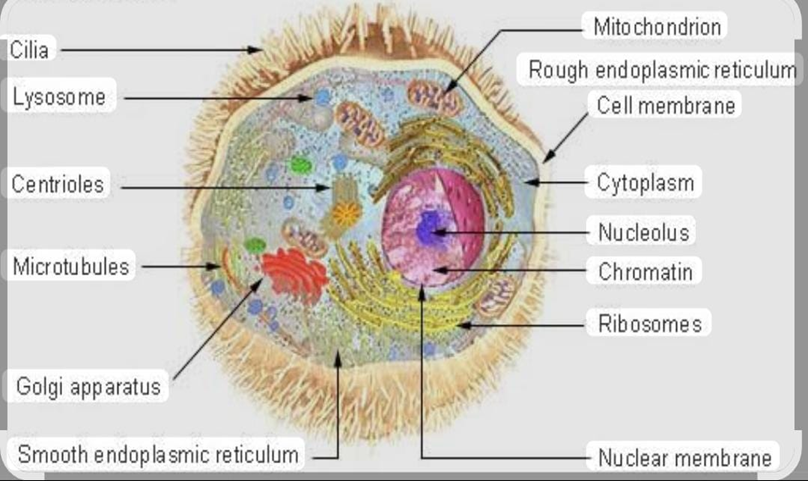
Fig1: STRUCTURE OF CELL
TYPES OF CELLS:
|
Feature |
Prokaryotic cells |
Eukaryotic cells |
|
Organisms |
Bacteria and archaea |
Animals, plants, fungi and protists. |
|
Size |
Typically, much smaller, 0.2-2.0 micrometers in diameter |
Generally larger, 10-100 micrometers in diameters |
|
Nucleus |
Lack a membrane bound nucleus. DNA is located in a region called the nucleoid |
Possess a true, membrane bound nucleus that houses that DNA. |
|
Organelles |
Lack membrane- bound organelles |
Contain numerous membrane-bound organelles. |
|
Ribosomes |
Smaller ribosomes(70s) found freely in the cytoplasm |
Larger ribosomes(80s) some free and some attached to the endoplasmic. |
|
DNA |
Usually a single, circular chromosome |
Multiple, linear chromosomes with histone proteins. |
|
Reproduction |
Asexual reproduction through binary fission |
Asexual reproduction(mitosis) and sexual reproduction(meiosis) |
LINES:
A line is a thin mark, streak, or ridge. It can also be an imaginary line connecting different points. In x- rays “lines” refers to changing a wide beam into a thin, focused beam. A cell line is a group of cells taken from an organism. Normally these cells stop dividing after some time. But in immortalized cell line, mutations let the cells keep divided forever. Such cells can grow in the lab for long periods. Immortality may occur naturally or be induced for experiments. They are widely used in research (biochemistry, cell biology and biotechnology).
Note: They are different from stem cells, which also divide indefinitely but are a natural part of development.
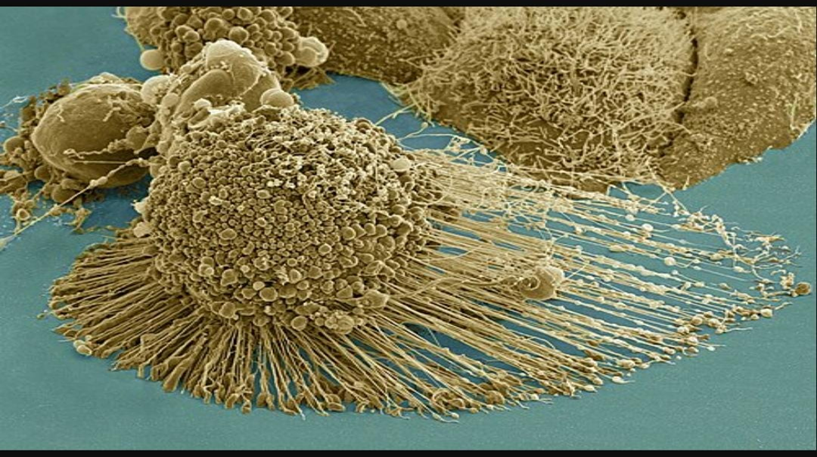
Fig2: HeLa CELL LINE
CELL LINES:
Cell line studies refer to scientific research and experiments carried out using cultured cell lines under controlled laboratory conditions. Instead of directly experimenting on humans or animals, scientists use cells that grow and divide continuously invitro. Cell lines studies are performed to understand biological process, drug effects disease mechanisms or product development. Take the right cell line (like cancer, kidney, liver cells) for study. Grow the cells in nutrient medium under sterile and controlled conditions. Treat the cells with test drug or chemical. Check the effects using tests like viability, protein, or gene studies. Collect results, analyze and store cells safely for future use. To study how diseases like cancer, diabetes or infections affect cells. To check wheather a substance is harmful to cells. Cell line studies are easier, cheaper and ethically better than testing directly in animals or humans. To see if a new drug is effective and safe.
ADVANTAGES OF CELL LINE STUDIES
DISADVANTAGES OF CELL LINE STUDIES:
1. Genetic drift – Cells can change over time, affecting experimental results.
2. Misidentification or contamination – Wrong or contaminated cell lines can give invalid data.
3. Lack of complexity – Cells in culture do not fully mimic the complexity of living tissues or organs.
4. Limited lifespan – Some primary cells cannot be cultured long-term.
5. Ethical concerns – Some cell lines (like HeLa) have controversial origins regarding consent.
6. Over-simplification – May not accurately predict responses in whole organisms
Ethical advantage – Reduces the need for animal or human subjects.
TYPES OF CELL LINES:
1. Finite cell line: Normal cell usually divides only a limited number of times before losing their ability to proliferate, which is genetically determined event known as senescence. These cell lines are known as finite. The cells normally divide 20-100 times before extinction. The actual number of doublings depends on the species, cell lineage differences, culture conditions etc. The human cells generally divide 50-100 times marine cells divide 30-50 time before dying. The finite cell line growth rate is slow comparison to continuous cell lines. The primary cells are many infinite cell lines are derived from primary cell cultures, which are cells directly isolated from living tissue.
2. Continuous cell lines: When a finite cell line undergoes transformation and acquires the ability to divide indefinitely, it becomes a continuous cell line. The continuous cell lines are transformed immortal and tumorigenic. The transformed cell for continuous cell lines may be obtained from normal primary cell cultures by treating them with chemical carcinogens or by infecting with oncogenic viruses.
ESTABLISHMENT OF CELL LINES:
A established cell line is a population of cells that has been sub-cultured(passaged) many times and has acquired the ability to grow indefinitely invitro (in laboratory conditions). These are different from primary cell cultures which have a limited like span.
HeLa cells: HeLa cells are the 1st immortal human cell line, derived in 1951 from the cervical cancer tumor of Henrietta Lacks, a patient at Johns Hopkins hospital in Baltimore, USA. These cells were taken without her consent, which later raised major ethical concerns in medical research. Polio vaccine development Johns Salk tested the 1st polio vaccine on HeLa cells. Cancer research- helped in understanding cancer cell behavior and growth. Virology used to study HIV, HPV and other viral infections.
HEK293: HEK293 cells are immortal human embryonic kidney cells, modified with a adenovirus DNA widely used in genetic engineering protein production and viral vector research. This HEK293 they are important in reliable and easy to grow. A standard work horse cell line in biotechnology. Crucial for advances in gene therapy vaccine development and molecular biology.
CHO cells: Chinese Hamster Ovary cells are an immortalized cell line derived from the ovary of the Chinese hamster in the 1950s. They are one of the most widely used mammalian cell lines in biotechnology and pharmaceuticals industries. Importance of this CHO cells are most FDA (food and drug administration) approved therapeutic proteins are made in CHO cells. They can provide human like proteins with correct folding and modifications. They are considered the gold standard for industrial scale biopharmaceutical manufacturing.
NIH/ 3T3 cells: NIH/3T3 cells are a mouse embryonic fibroblast cell line established in 1962 at the national institutes of health (NIH) USA by George Todaro and Howard Green. The name 3T3 comes from their culture method 3day transfer, Inoculated at 3 x 10⁵ cells. They are one of the most widely used continuous (immortalized) mouse cell lines in biomedical research.
Importance: Reliable, easy to grow cell line for basic research in cell biology, genetics and molecular signaling.
NOMENCLATURE OF CELL LINE STUDIES
The naming of cell lines is a global standard to give unique codes to cell lines for easy identification to ensure that each cell lines designation is unique. So that there were no confusion occurs when reports are given in literature. Further, at the time of publication, the cell line should be prefixed with a code that was designating the laboratory from which it was obtained for national cancer institute (NCI).
EX:
Hela cells (Henrietta lacks cervical cancer cells)
MCF-7 (Breast cancer cell)
CELL LINES
The naming of cell lines follows certain conventions to ensure clarity and identification in research
Nonhuman cell lines (like mouse or rat) are generally preferred because there have a low risk of biohazards.
EX: CHO Cells (derived from Chinese hamster ovary cells)
Human cell must be carefully translated or compared when trying to understand what happens in humans because they grow faster. Often cell lines are named as to reflect there origin of tissue or organ.
EX: MCF-7 (Breast cancer cell are origin from estrogen receptors positive (ER+))
Laboratories and institutions often create their own unique codes, which are there used in publications typically in materials and method section.
EX: MOG (Medical Oncology Glassgow), G123 (Glioma cell line)
FEATURES APPROPRIATE FOR GROWTH OF CELLS:
The following growth parameters need to be considered:
MAINTENANCE OF CELL CULTURES:
It involves monitoring, regular feeding and maintaining optimal incubation conditions (Temperature, pH) to ensure cell health growth and genetic stability. They kept at very low temperature (-1000c) in frozen state.
STORAGE OF CELLS:
Cells should be kept below -1300c as viability may be lost within a few months at -800c. Once at their final temperature, it is also detrimental to warm them to -800c even for short periods which suspends cellular metabolism and preserves them for extended periods.
APPLICATIONS OF CELL LINES:
1. Drug Discovery and Development
In drug discovery, scientists need to test new chemical entities for therapeutic activity. Cancer cell lines like HeLa cells are often used for testing anticancer drugs. They can grow continuously, so researchers always have enough cells to test. They are cheaper and faster than testing directly in animals or humans. Since HeLa cells come from humans, they give more reliable results about how human cancer cells may respond. Many drugs can be tested at the same time using these cells (high-throughput screening). They help to understand how a drug kills cancer cells or stops their growth. So, HeLa cells and other cancer cell lines are very important in the early stages of drug discovery to find out which new compounds might become effective anticancer medicines.
2. Toxicity Testing
Toxicity testing is very important to check the safety of chemicals, drugs, and cosmetics before they are used in humans. By evaluating cytotoxicity (cell damage) and genotoxicity (DNA damage) in cell cultures, researchers can quickly and reliably predict harmful effects. These tests reduce the need for animal experiments, which is an ethical advantage, as it minimizes animal suffering while still ensuring product safety. In addition, such in-vitro methods are cost-effective, faster, and often provide more human-relevant data.
3. Vaccine Production
Cell lines like Vero cells are widely used in vaccine manufacturing because they provide a safe, controlled, and renewable system for virus growth. Unlike primary animal tissues, which are limited, variable, and raise ethical concerns, Vero cells can be grown consistently in laboratories under standardized conditions. This ensures reliable production of vaccines for diseases such as polio, rabies, and COVID-19. Using cell lines also reduces the risk of contamination, allows large-scale production, and is ethically preferable since it avoids repeated use of animal tissues.
4. Monoclonal Antibody Production
Hybridoma cell lines are made by fusing B-lymphocytes (which make antibodies) with myeloma cells (which can grow forever). These hybrid cells live long and keep producing the same type of antibody again and again. Such monoclonal antibodies are very useful in diagnosing diseases, treating illnesses like cancer, and in research work. This method is important because it gives a steady and unlimited supply of specific antibodies.
5. Genetic Engineering and Biotechnology
Cell lines help in gene editing to understand how genes work. They can be used to make important proteins like insulin, growth hormone, and clotting factors. They are also useful in recombinant DNA technology to create new medicines and products. This makes them very important in research and biotechnology.
RECENT ADVANCES:
Recent years have witnessed transformative advances in cell line technology.
3D cultures and organoids: Copy real tissue structure, making experiments more realistic.
CRISPR-Cas9 editing: Let’s scientists edit genes to study diseases and test drugs.
Stem cell technologies: Stem cell technologies use special cells called iPSCs (induced pluripotent stem cells) and embryonic stem cells. These cells can turn into many types of other cells. Scientists can use them to create models of a patient’s disease in the lab, which helps study the disease and test treatments. They can also be used in regenerative medicine to repair or replace damaged tissues or organs.
Bioreactor systems: allow large scale production of therapeutic proteins and vaccines.
Microfluidics and Lab-on–a-Chip: Make experiments faster and closer to real body conditions.
FUTURE PERSPECTIVES:
The future of cell research focuses on reliability, ethics, and innovation. Cell lines should be checked carefully using Short Tandem Repeat (STR) profiling and genetic tests to avoid data misinterpretation. Ethical concerns are needed regarding consent, privacy, and fair use of cells, require clear policies and transparency. Innovation tools such as patient-specific iPSCs, AI drug testing, and 3D bioprinting will make research more precise. Sustainability of Producing medicines in large amounts and making them available to everyone are also important.
CONCLUSION
Cell lines have revolutionized biomedical research by providing reproducible, scalable, and versatile models that connect basic science with clinical applications. From the early HeLa cells to modern organoids, the development of cell line technology demonstrates both scientific creativity and ethical considerations. Challenges such as misidentification and genetic drift still exist, but improvements in cell authentication, gene editing, and 3D culture systems are increasing the reliability and usefulness of these models. With careful innovation and attention to ethics, cell line research will continue to drive advances in medicine, biotechnology, and global health.
REFERENCES

Ramya Teja Medarametla, Dr. J. N. Suresh Kumar, A. Lakshmi Prasanna, G. Naga Lakshmi, N. Ravi Teja, U. Srilekha, Y. Bhuvaneswari, Cell Line Studies, Int. J. of Pharm. Sci., 2026, Vol 4, Issue 2, 3610-3617. https://doi.org/10.5281/zenodo.18726558
 10.5281/zenodo.18726558
