
View Article

  • Advances in Musa Leaf Phyto-Nanotechnology: A Comprehensive Review of Antidiabetic Potential

  • St. John Institute of Pharmacy and Research, Palghar

Abstract

Diabetes mellitus, which is often considered a multifunctional metabolic disorder that is mainly characterised by chronic hyperglycaemia, has become one of the most common global health issues of the 21st century. Despite there is already the availability of synthetic hypoglycaemic agents and various insulin therapies, they have resulted in adverse effects, high cost and limited accessibility in the developing regions. This has led to an extensive use of plant-based therapy for the control of insulin levels. Among these various plants, the genus Musa or commonly referred to as the banana a plant that is extensively used for its medicinal values but also for its therapeutic versatility. Traditionally, various parts of the plant have been used for the treatment and management of the metabolic disorder commonly diabetes. This review mainly provides a comprehensive exploration of the banana leaf and its chemical components in the prevention and treatment of diabetes mellitus. Also, the mechanistic insights underlying the antidiabetic potential of banana, mainly the enhancement of insulin sensitivity, regulation of lipid metabolism, and modulation of glucose transport, have been reviewed. Furthermore, the role of antioxidants and polyphenols present in the banana leaf, which is a key component in restoring the pancreatic ?-cell integrity and maintaining glucose homeostasis. However, despite such promising data, human clinical trials and investigations remain sparse, and the optimisation, toxicity studies, and dosage potentials are still lacking. This review concludes by identifying the critical research gaps for future perspectives that mainly help bridge the gaps of traditional knowledge with pharmacology, urging the development of a banana leaf-derived nutraceutical and formulation as an affordable, eco-friendly and sustainable alternative for diabetic management.

Keywords

Nanoparticles, antioxidant, hypoglycaemia, Diabetes Mellitus

Introduction

Diabetes mellitus, also known as type 2 diabetes, is characterised by elevated blood glucose levels in the body. This is mainly caused by the defects in insulin secretion, insulin action or both. The conventional therapy that is used in the treatment of diabetes is limited and often expensive, and is associated with a number of side effects. Hence, there is a considerable interest in the herbal or plant-based extracts. The banana plant is widely cultivated across many regions, and it's not only cultivated for the fruit but for its other parts, which include the peel, leaf, flower and pseudo stem. Among these, the use of banana leaf is less studied in the antidiabetic context compared to the peel and the flower.

Species and the cultivation region-

The banana plant is rich in bioactive components across its different parts, including the peel, leaf, stem, flower, etc. The genus Musa comprises several species and hybrids, mainly it is categorised into two groups- Musa acuminate and Musa balbisiana.1 The Musa acuminate is the primary species for the sweet banana and has many hybrids also. It is mostly cultivated in Southeast Asia. This is the most cultivated species globally. The Musa Balbisiana mainly contributes to the starchy variety and is used in hybridisation to produce disease-resistant cultivations. The Musa ornate, which is mainly cultivated for its ornamental value and has attractive flowers. The Musa  Troglodytarum, commonly known as the fe’l banana, are mostly native to the Pacific islands and has mainly red to orange fruit and a high level of β-carotene content.2

Bananas are cultivated mainly in the tropical and subtropical regions. The leading producers of the plant are –

India- the largest producer with significant cultivation in the states like Kerala, Tamil Nadu and Maharashtra.

China- China is the major producer, mainly in the southern provinces.

Africa- Uganda, Tanzania and Ghana have substantial banana cultivation, often focusing on the cooking bananas.

Central America –  Costa Rica and Honduras are the significant exporters of various varieties of the plant banana.

Bananas thrive mainly in well-drained soils that have high organic matter content and a humid tropical climate. The temperature ranges from 26 to 30. They are mainly grown in altitudes below 1000 meters, as higher altitudes affect the fruit development, as they have cooler temperatures and reduced humidity.3

Phytochemistry

The genus Musa is rich in various bioactive components, which include mainly the peel, fruit, flower, leaf and the pseudo stem. The banana peel, leaves and other parts contain the flavonoids, alkaloids, tannins, sterols like the b- β-sitosterol, stigmasterol, fatty acids, etc. These compounds are known to exhibit their antioxidant property.4 The leaf and the peel were mainly found to contain phytol, octadecatrienoic acid, hexadecanoic acid and in the leaf extracts, vitamin E, octadecenamide. Dietary fibres, starch, and short-chain fatty acids are also key components. The key phytochemicals mainly consist of-

Alkaloids- these are present in the various parts and have their potential pharmacological activities, which include the antimicrobial and the antidiabetic effects.

Flavonoids- these compounds exhibit anti-inflammatory, antioxidant and anticancer properties. These are abundantly found in the peel and the pulp of the bananas.5

Phenolic compounds- mainly found in the peel and the pulp. Phenols mainly contribute to the antioxidant property and are linked with various health benefits.

Anthocyanins –  these are mainly responsible for the red and purple hue in some of the banana varieties. They have a high anti-inflammatory property.6

Carotenoids- mainly include the β-carotene, which are the precursors to vitamin A and are mostly found in higher concentrations in the fe’I banana variety.

Tannins –mostly present in the peel of the banana, they mainly possess antimicrobial properties.
Chemistry of diabetes-

Diabetes is mainly termed as a chronic metabolic disorder. There are mainly different categories of diabetes that affect the human population.

  1. Type-1 diabetes – this type causes the autoimmune destruction of the pancreatic β-cells. There is an absolute deficiency of insulin that leads to impaired glucose uptake by the muscle and mainly increases the hepatic gluconeogenesis and lipolysis. If not controlled may lead to an increase in the ketone body formation, resulting in ketoacidosis.
  2. Type-2 diabetes – in this type of diabetes, the body becomes insulin-resistant or doesn’t produce enough insulin, leading to high blood sugar. It mainly involves impaired glucose metabolism due to insulin resistance. The pancreas produces more insulin, leading to hyperglycaemia, but over time, the insulin production in the β-cells reduces, leading to insulin deficiency.
  3. Gestational diabetes- during pregnancy, hormones such as progesterone, lactogen and cortisol increase to support fetal growth. This leads to insulin resistance in the woman’s body, which reduces the ability of insulin to move glucose into the cells. And if there is a substantial spike in the insulin levels in the body.
  4. Secondary diabetes- secondary diabetes mainly occurs due to other conditions that cause an increase in the insulin level. Mainly, diseases like pancreatitis, crushing syndrome or prolonged usage of steroids can cause damage to the β-cells of the pancreas, leading to insulin resistance. This chemically leads to impaired glucose uptake, leading to an increase in the blood glucose and altering lipid metabolism.

Chemistry of the banana phytochemicals in diabetes

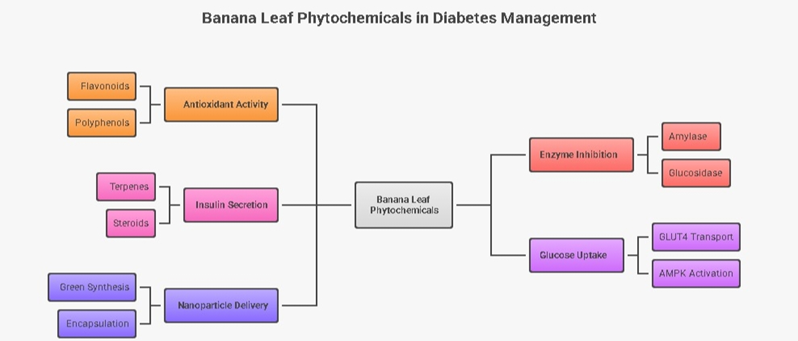
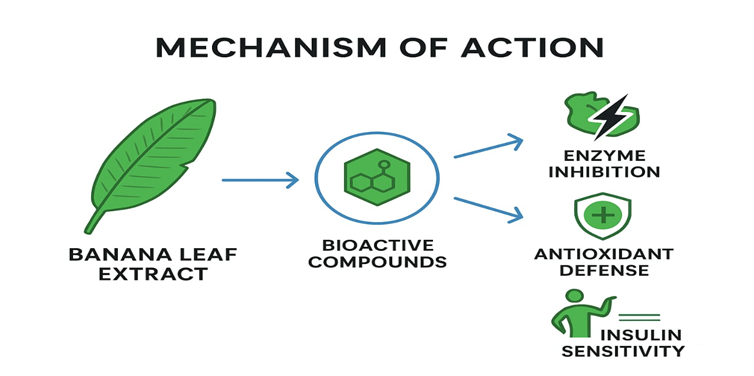
Banana leaves are rich in secondary metabolites that mainly exhibit antioxidants, anti-inflammatory and diabetic properties.

  1. Antioxidant and the free radical scavenging activity-

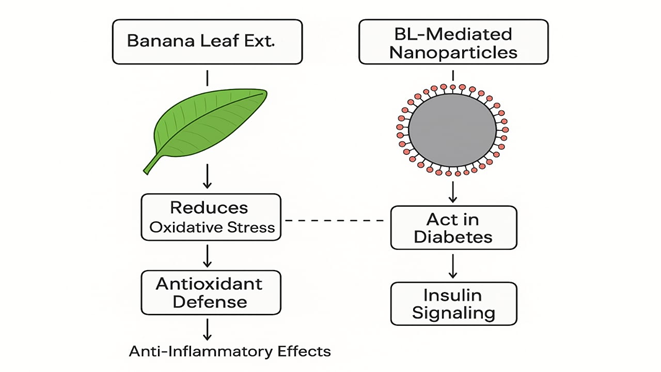
Diabetes mellitus is associated with high levels of oxidative stress. The flavonoids and the polyphenols, which are mainly present in the banana they mainly neutralise the reactive oxygen species, and they effectively help in the prevention of lipid peroxidation in pancreatic tissues.10 The quercetin and the catechin group directly donate the free hydrogen atoms to the free radicals. 7

  1. Amylase and the glucosidase inhibition-

These enzymes play a key role in carbohydrate digestion. Inhibiting them slows the glucose release into the bloodstream. Some flavonoids present in the banana leaf bind to the active sites of these enzymes and help to reduce the postprandial glucose spike.8

  1. Insulin secretion and β-cells protection-

Polyphenol compounds in the banana leaves are said to enhance the secretion of insulin, and they help in an effective way to preserve the pancreatic β-cells structure. The terpenes and the steroid group present in the banana help to activate the ATP-sensitive potassium channels, promoting the insulin release. Often the phenolic compounds are said to prevent the B-cells apoptosis by lowering the nitric acid and inflammatory cytokine production.9

  1. Modulation of glucose uptake and metabolism-

Banana leaf extracts have proven to improve glucose uptake in the peripheral tissues, especially in the liver and the muscles. They upregulate the GLUT4 transport in the cell membrane. Activation of the AMPK monophosphate-activated protein kinase, which is said to enhance the cellular glucose uptake.10
Nanoparticle-derived banana leaf in diabetes mellitus-

Nanoparticles are often used to improve the delivery and the efficacy of plant bio-activated by mainly-

  • Increasing the oral bioavailability.
  • Enhancing the controlled release.
  • Facilitating targeted delivery.

For plants such as banana, encapsulation in or use in green synthesis of nanoparticles can help in the targeted and the amplification of the antidiabetic activity.
Preparation of the banana-derived nanoparticles-

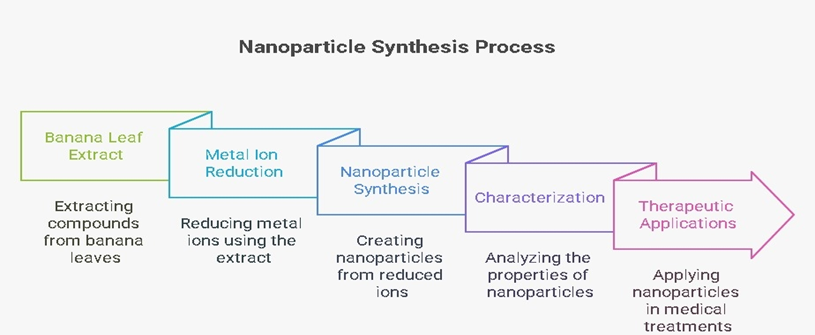
  1. Green synthesis of inorganic nanoparticles using banana plant extract –

Aqueous or hydrochloric extracts from the banana pulp contain polyphenols and the flavonoids that are said to reduce the metal ions.11 These polyphenols donate the electrons to metal ions, which causes nucleation and the growth of the metal nanoparticles. The phytochemical molecules they adsorbed on the surface of these nanoparticles. The reported nanoparticles made in this way include silver, iron oxides and composites.12

  1. Encapsulation of banana pulp bioactives into nano-carriers-

Polymeric nanoparticles, lipid nanoparticles and solid nanoparticles encapsulate isolated bioactives from banana pulp. These carriers protect the labile phytochemicals and improve the intestinal absorption, and also act as a functionalized targeting. While the nanoparticles based on the banana leaf are limited.13
 Types of nanoparticles –

  1. AgNPs -These are often called as silver nanoparticles. These are produced mainly using the banana stem, peel and pulp extracts. These have been reported to have shown antimicrobial and enzyme-inhibitory action. 14
  2. Iron oxide NPs-These are synthesised using the banana peel extract.15
  3. Physically produced nanoparticles of banana peel- the peel is mechanically ground to create nanoparticles. They are used to concentrate antioxidants and the bioactive content, improving functional food applications.16

Action of banana nanoparticles on the diabetic chemistry-

The nanoparticles, which are prepared from the banana phytochemicals, can influence the diabetic related chemistry at multiple levels-

  1. Reduce postprandial glucose absorption-

The nanoparticle formulations or the surface adsorbed flavonoids that are said to mainly inhibit the intestinal amylase and the β-glucosidase, mainly slow the carbohydrate digestion and thus effectively reduce the postprandial glycaemia. There are several nanoparticles that are synthesised by the banana pulp that have shown significant enzyme–inhibition activity. 17

  1. Improve insulin signalling and the glucose uptake-

The encapsulated sterols and the saponins can be delivered more effectively to the targeted tissues, which enhances the GLUT-4 translocation and the cellular glucose uptake. The Musa species has shown significant delivery in the required doses.18

  1. Scavenge ROS and reduce oxidative stress-

The phytochemical-capped nanoparticles frequently show a higher antioxidant capacity than the extract alone. Lower ROS limits the B-cell damage and which in turn prevents the oxidative pathways that lead to diabetic complications.19

  1. Antiglycation activity-

Some of the nanoparticles have proven to demonstrate antiglycation activity, which is that they reduce the formation of fructosamine intermediates. This indirectly led to the prevention of long-term protein crosslinking and damage to the cells.

  1. Modulate the gut microdata-

The nanoparticles from the banana peel powder have a higher surface area and fermentability. Early work suggests that the changed SCFA production and the microbiome composition can be effectively used to improve insulin sensitivity.20
Toxicity and challenges due to Nanoparticles-

  1. Metal nanoparticles safety- the AgNPs and the other metal nanoparticles have shown that they can accumulate and show a dose-dependent cytotoxicity. the capping by the plant phytochemicals can mitigate, but doesn’t fully eliminate the risk. The rigorous toxicological profiling is required before their clinical applications.21
  2. Standardisation- batch variability in the plant extracts. they have shown that plant variable nanoparticles' size, shape and the surface chemistry are inconsistent for biological activity.22 Standardisation, extract preparation, phytochemical fingerprinting and the nanoparticles characterisation are often essential.
  3. Translational map- most of the studies often end up only to the in vitro or the rodent models. The human pharmacokinetics, dosing, long-term safety and efficacy data are still lacking.23

The main chemical pathways in diabetes-

  1. Glycolysis- reduced glucose uptake causes lower pyruvate production in the tissue.24
  2. Gluconeogenesis- liver converts the non-carbohydrate precursors like the lactate, glycerol and amino acids to glucose, which leads to exacerbated hyperglycemia.25
  3. Glycogen metabolism- decrease glycogenesis in the liver and the muscle, which is mainly due to the lo insulin action.26

Effects of diabetes on the body chemistry-

Body system

Effect of diabetes

Blood

Chronic hyperglycaemia, increased HbA1c

Kidney

Hyperfiltration, glycation of nephron proteins

Eyes

Microvascular damage, retinopathy

Liver

Enhanced gluconeogenesis

Some of the key chemical reactions in diabetes are

  1. Non-enzymatic glycation:

In chronic hyperglycaemia, there is an excess of circulating glucose that reacts with the non-enzymatic free amino group of proteins, lipids or nucleic acids.

  1. Glucose + protein --Schiff base

This is a reversible reaction forming an unstable aldimine.

  1. Schiff base---Amadori product

The Schiff base undergoes the rearrangement into a more stable compound that is the Amadori product.27

  1. Amadori Product – Advanced Glycation End Product

Through oxidation, dehydration and cross-link formation, the AGEs are the products formed. These AGEs bind to the receptor on the endothelial, immune and nerve cells that cause inflammation, oxidative stress and vascular complications.28

  1. Ketogenesis in diabetes –

Especially in type-1 diabetes, there is an insulin deficiency and the increased lipolysis that eventually causes the excess free fatty acids to reach the liver.29 The free fatty acids undergo β-oxidation. When the oxaloacetate is diverted for gluconeogenesis, the TCA cycle shows the accumulation of Acetyl CoA. 30

  1. Sorbitol pathway-

Under the hyperglycaemic conditions, there is an excess of intracellular glucose that is converted through the polyol pathway, especially in the tissues that mainly do not require insulin for uptake.31 In this, the glucose is firstly converted to sorbitol with the help of the enzyme aldose reductase using NADPH. Then, further, the sorbitol gets converted to fructose by the enzyme sorbitol dehydrogenase. This causes the accumulation of sorbitol, which eventually causes osmotic stress and neuropathy.32

Preclinical evidence- in vitro and in vivo studies –

The growing literature demonstrates the antidiabetic effects of the plant-mediated nanoparticles through the direct study specifically using the banana leaf-derived nanoparticles for diabetes.

  1. In vivo animal studies-

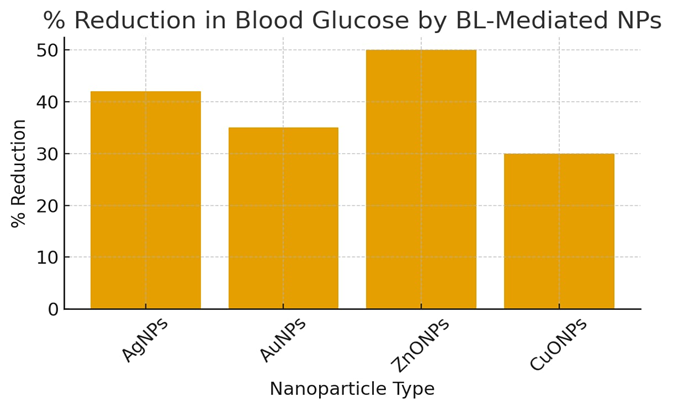
The animal models of diabetes have been used to test plant-mediated nanoparticles. The reports indicate that the biosynthesised AgNPs can lower the fasting blood glucose, improve the glucose tolerance and reduce the oxidative markers and also help in the improvement of the histopathology of the pancreas, liver and the kidney in the treatment of the animals. The dose, particle size and the treatment duration critically influence the outcomes and the safety profile of the formulation made in the effective treatment of diabetes mellitus.33

  1. In vitro studies-

The in vitro capacities mainly evaluate the antioxidant capacity of the enzyme inhibition, cytotoxicity in the mammalian cell lines and the glucose uptake assays in the adipocytes or the muscle cell lines. Banana extract nanoparticles have shown antioxidant and enzyme–inhibitory activity, supporting the potential antidiabetic activity.

  1. Comparative efficacy-

The comparison between the plant-mediated nanoparticles and the parent extracts or the conventional drugs suggests that the nanoparticles may produce amplified effects at lower doses, likely due to the improved stability, bioavailability and the targeted interactions. However, the comparison study is mostly limited.

Safety, Toxicity and The Biocompatibility Considerations-

Safety is considered a concern for translating nanoparticle therapies to the clinics. The toxicity depends upon the particle composition, size of the particles, their dose, administration, route and the surface chemistry. Some of the key issues that are mainly highlighted include-

  1. Acute and chronic toxicity- the main problem of the nanoparticles is that they can accumulate in the organs like the liver, spleen, and kidney, which adversely cause cytotoxicity. 34
  2. Oxidative stress – some of the nanoparticles exhibit the antioxidant effects via phytochemical coatings, certain metal nanoparticles can generate the ROS, and hence they produce toxicity if they are not properly formulated.35
  3. Immunogenicity- the surface properties influence the protein corona formation and the immune recognition.
  4. Regulatory gap- the standardisation of the plant-related nanoparticles is not fully established.36

Delivery routes and the pharmacokinetics-

The potential delivery route for the antidiabetic nanoparticle mainly includes the oral which is mainly to modulate the intestinal enzymes and for the systemic absorption. The parenteral, mainly the subcutaneous and the intravenous, for the targeted delivery and the topical or the transdermal for the localised effects.37 Mainly, the oral delivery faces many challenges, such as the stability in the gastric pH and the first pass metabolism strategies like the enteric coating, polymer encapsulation, and mucoadhesive formulation that can help to improve the intestinal stability and the absorption.38 The pharmacokinetic profiling of the plant-derived nanoparticle requires measurement of the distribution, metabolism, excretion and absorption and also the biotransformation of the serum proteins and the enzymes.39

Future directions and the research perspective

  1. Standardisation protocols- there must be proper and harmonised extract preparation, synthesis and characterisation for reproducibility. 40
  2. Toxicology- there must be rigorous toxicology performed, mainly by the chronic or the acute toxicity testing, also including the genotoxicity and the reproductivity assessment.41
  3. Formulation development- the oral and the parenteral formulation must be properly optimised, which is mainly done to protect the nanoparticles from degradation and to improve the bioavailability. 42
  4. Combinatorial studies- there must be proper comparative and combinatorial studies performed. The head-to-head comparison with the conventional drugs and the studies combining the nanoparticles with the standard therapies. 43
  5. Pilot plant evaluation- after the pre-clinical safety and efficacy have been established, the clinical studies must be performed with robust safety monitoring and the biomarker endpoint.44

Challenges and limitations-

Despite the promising pre-clinical evidence, the nanoparticles are said to face several challenges. The various challenges are divided into the scientific limitation, technical limitation and the regulatory limitation.

  1. Regulatory limitation-
            1. There is basically no evidence of the green synthesised nanoparticles, and also a lack of international standardisation.
            2. The toxicology data are limited and do not completely satisfy the regulatory submissions.
            3. There is a lot more uncertainty around the classification.45
  2. Technical limitations-
            1. There is a high probability of not maintaining the batch-to-batch uniformity.46
            2. Some of the metal nanoparticles are unstable in physiological conditions. 47
            3. There is a lot of unclear understanding of the nanoparticles.
  3. Scientific limitations-
            1. There is limited data on the long-term exposure and the metal accumulation in the body.48
            2. Often, the variability of the plant extract is due to the environmental factors.49

CONCLUSION

The banana leaf-mediated nanoparticles represent a rare intersection where traditional knowledge meets the edge-cutting nanotechnology, which is said to offer a sustainable and promising frontier in the management of diabetes. The phytochemical-rich coatings, versatile metal core and the eco-friendly synthesis of the nanoparticles enable the antioxidant, anti-inflammatory and the insulin-sensitising actions that mostly the conventional therapies fail to provide. However, this study from the laboratory to the clinics demands rigorous exploration, standardisation, manufacturing, safety studies, toxicology studies and the careful formulation approach. By involving strategic research, ethical oversight and innovation, the banana leaf nanoparticle has the potential to transform a common agricultural byproduct into an accessible antidiabetic therapy. This article has provided a thorough view of the effective use of the banana leaf nanoparticle in the anti-diabetic action. These mostly challenge the existing conventional therapies that are said to have more side effects. This traditional incorporated method can be used to give a futuristic direction to the herbal industry, which is mainly known for its lack of side effects and long-term therapy. This emerging field stands poised to reshape both nanomedicine and sustainable healthcare for the future.

REFERENCES

  1. Wang Z, Miao H, Liu J, et al. Musa balbisiana genome reveals subgenome evolution and functional divergence. Nat Plants. 2019;5(8):810-821. doi:10.1038/s41477-019-0452-6
  2. Li Z, Wang J, Fu Y, et al. The Musa troglodytarum L. genome provides insights into the mechanism of non-climacteric behaviour and enrichment of carotenoids. BMC Biol. 2022;20(1):186. doi:10.1186/s12915-022-01391-3
  3. Bebber DP. The long road to a sustainable banana trade. PLANTS, PEOPLE, PLANET. 2023;5(5):662-671. doi:10.1002/ppp3.10331
  4. Pereira A, Maraschin M. Banana (Musa spp) from peel to pulp: Ethnopharmacology, source of bioactive compounds and its relevance for human health. J Ethnopharmacol. 2015;160:149-163. doi:10.1016/j.jep.2014.11.008
  5. Widoyanti AAE, Chaikong K, Rangsinth P, Saengratwatchara P, Leung GPH, Prasansuklab A. Valorization of Nam Wah Banana (Musa paradisiaca L.) Byproducts as a Source of Bioactive Compounds with Antioxidant and Anti-inflammatory Properties: In Vitro and In Silico Studies. Foods. 2023;12(21):3955. doi:10.3390/foods12213955
  6. Buah S, Mlalazi B, Khanna H, Dale JL, Mortimer CL. The Quest for Golden Bananas: Investigating Carotenoid Regulation in a Fe’i Group Musa Cultivar. J Agric Food Chem. 2016;64(16):3176-3185. doi:10.1021/acs.jafc.5b05740
  7. Fu WJ, Stromberg AJ, Viele K, Carroll RJ, Wu G. Statistics and bioinformatics in nutritional sciences: analysis of complex data in the era of systems biology. J Nutr Biochem. 2010;21(7):561-572. doi:10.1016/j.jnutbio.2009.11.007
  8. Aiemcharoen P, Wichienchot S, Sermwittayawong D. Antioxidant and anti-diabetic activities of crude ethanolic extract from the banana inflorescence of musa (ABB group) namwa maliong. Functional Foods in Health and Disease. 2022;12(4):161. doi:10.31989/ffhd.v12i4.909
  9. Api AM, Belsito D, Botelho D, et al. RIFM fragrance ingredient safety assessment, 3-phenylpropionic acid, CAS Registry Number 501-52-0. Food and Chemical Toxicology. 2019;134:110601. doi:10.1016/j.fct.2019.110601
  10. Kwok JJN, Chen MK, Ong CW, Chen L. Antidiabetic Potential of Bananas (Musa spp.): A Systematic Review of Bioactive Compounds and Antihyperglycemic Activities. Curr Nutr Rep. 2025;14(1):38. doi:10.1007/s13668-025-00629-0
  11. Pranali Rajendra Gunjal, Shital Dnyaneshwar Gaikwad. Green synthesis and characterization of silver nanoparticles using banana peel extract and their biological activity against representative microorganism. World Journal of Biology Pharmacy and Health Sciences. 2023;13(1):425-239. doi:10.30574/wjbphs.2023.13.1.0048
  12. Ramesh P, et al. Biosynthesis and applications of silver and iron oxide nanoparticles using banana extracts: a review of reported metal nanoparticles from Musa spp. Journal of Nanobiotechnology / Composite Reports (2020).
  13. Zidan G, Greene CA, Etxabide A, Rupenthal ID, Seyfoddin A. Gelatine-based drug-eluting bandage contact lenses: Effect of PEGDA concentration and manufacturing technique. Int J Pharm. 2021;599:120452. doi:10.1016/j.ijpharm.2021.120452
  14. Rimstad E, Markussen T. Infectious salmon anaemia virus—molecular biology and pathogenesis of the infection. J Appl Microbiol. 2020;129(1):85-97. doi:10.1111/jam.14567
  15. Singh R, et al. Biosynthesis of iron-oxide nanoparticles using banana peel extract and their characterization. Mater Sci Semicond Process. Published online 2019.
  16. Nawrocka A, Rumi?ska W, Szyma?ska-Chargot M, Niewiadomski Z, Mi? A. Effect of fluorescence dyes on wet gluten structure studied with fluorescence and FT-Raman spectroscopies. Food Hydrocoll. 2022;131:107820. doi:10.1016/j.foodhyd.2022.107820
  17. Kaur H, et al. Enzyme-inhibitory activities (α-amylase, α-glucosidase) of banana-derived nanoparticles and capped flavonoids — in vitro evidence. J Enzyme Inhib Med Chem. Published online 2021.
  18. Saha S, et al. Delivery of plant sterols via nanoparticle carriers improves cellular uptake and GLUT4 translocation in muscle cells — evidence from animal/cell studies. Mol Nutr Food Res. Published online 2020.
  19. Chen M, Liu Y, Xiong S, et al. Dietary <scp>l</scp> -tryptophan alleviated LPS-induced intestinal barrier injury by regulating tight junctions in a Caco-2 cell monolayer model. Food Funct. 2019;10(5):2390-2398. doi:10.1039/C9FO00123A
  20. Huang Y, et al. Dietary fiber from banana peel and nanopowder fermentation: impacts on SCFA production and gut microbiota in rodents. Frontiers in Microbiology / Gut Microbiome Studies. Published online 2021.
  21. Ahamed M, et al. Toxicity of silver nanoparticles and mitigation by phytochemical capping: a review of in vitro and in vivo studies. Environ Toxicol Pharmacol. Published online 2019.
  22. Bansal M, Dravid A, Aqrawe Z, Montgomery J, Wu Z, Svirskis D. Conducting polymer hydrogels for electrically responsive drug delivery. Journal of Controlled Release. 2020;328:192-209. doi:10.1016/j.jconrel.2020.08.051
  23. Siracusa R, Schaufler A, Calabrese V, Fuller PM, Otterbein LE. Carbon Monoxide: from Poison to Clinical Trials. Trends Pharmacol Sci. 2021;42(5):329-339. doi:10.1016/j.tips.2021.02.003
  24. Berg JM, TJL, SL. lycolysis: regulatory biochemistry and effect of reduced glucose uptake on pyruvate — standard biochemistry text / review article. Biochemistry textbooks / Annual Review of Biochemistry.
  25. Newgard CB. Gluconeogenesis and hepatic contribution to hyperglycaemia: review of mechanisms. Published online 2019.
  26. Rubio-Patiño C, Bossowski JP, De Donatis GM, et al. Low-Protein Diet Induces IRE1α-Dependent Anticancer Immunosurveillance. Cell Metab. 2018;27(4):828-842.e7. doi:10.1016/j.cmet.2018.02.009
  27. Singh R, Barden A, Mori T, Beilin L. Advanced glycation end-products: a review. Diabetologia. 2001;44(2):129-146. doi:10.1007/s001250051591
  28. Brownlee M. Biochemistry and molecular cell biology of diabetic complications. Nature. 2001;414(6865):813-820. doi:10.1038/414813a
  29. HEGARDT FG. Mitochondrial 3-hydroxy-3-methylglutaryl-CoA synthase: a control enzyme in ketogenesis. Biochemical Journal. 1999;338(3):569-582. doi:10.1042/bj3380569
  30. Cahill GF. Fuel Metabolism in Starvation. Annu Rev Nutr. 2006;26(1):1-22. doi:10.1146/annurev.nutr.26.061505.111258
  31. Obrosova IG. Increased Sorbitol Pathway Activity Generates Oxidative Stress in Tissue Sites for Diabetic Complications. Antioxid Redox Signal. 2005;7(11-12):1543-1552. doi:10.1089/ars.2005.7.1543
  32. Brownlee M. The Pathobiology of Diabetic Complications. Diabetes. 2005;54(6):1615-1625. doi:10.2337/diabetes.54.6.1615
  33. Al-Khaial MQ, Chan SY, Abu-Zurayk RA, Alnairat N. Biosynthesis and Characterization of Zinc Oxide Nanoparticles (ZnO-NPs) Utilizing Banana Peel Extract. Inorganics (Basel). 2024;12(4):121. doi:10.3390/inorganics12040121
  34. Lankveld DPK, Oomen AG, Krystek P, et al. The kinetics of the tissue distribution of silver nanoparticles of different sizes. Biomaterials. 2010;31(32):8350-8361. doi:10.1016/j.biomaterials.2010.07.045
  35. Manke A, Wang L, Rojanasakul Y. Mechanisms of Nanoparticle-Induced Oxidative Stress and Toxicity. Biomed Res Int. 2013;2013:1-15. doi:10.1155/2013/942916
  36. Yang W, Wang L, Mettenbrink EM, DeAngelis PL, Wilhelm S. Nanoparticle Toxicology. Annu Rev Pharmacol Toxicol. 2021;61(1):269-289. doi:10.1146/annurev-pharmtox-032320-110338
  37. Brunello CA, Jokinen V, Sakha P, et al. Microtechnologies to fuel neurobiological research with nanometer precision. J Nanobiotechnology. 2013;11(1):11. doi:10.1186/1477-3155-11-11
  38. Norman J, Madurawe RD, Moore CMV, Khan MA, Khairuzzaman A. A new chapter in pharmaceutical manufacturing: 3D-printed drug products. Adv Drug Deliv Rev. 2017;108:39-50. doi:10.1016/j.addr.2016.03.001
  39. Haripriyaa M, Suthindhiran K. Pharmacokinetics of nanoparticles: current knowledge, future directions and its implications in drug delivery. Futur J Pharm Sci. 2023;9(1):113. doi:10.1186/s43094-023-00569-y
  40. Ibrahim HMM. Green synthesis and characterization of silver nanoparticles using banana peel extract and their antimicrobial activity against representative microorganisms. J Radiat Res Appl Sci. 2015;8(3):265-275. doi:10.1016/j.jrras.2015.01.007
  41. Paul S, Sarkar I, Sarkar N, et al. Silver nanoparticles in diabetes mellitus: therapeutic potential and mechanistic insights. Bull Natl Res Cent. 2024;48(1):33. doi:10.1186/s42269-024-01182-6
  42. Dhir R, Chauhan S, Subham P, et al. Plant-mediated synthesis of silver nanoparticles: unlocking their pharmacological potential–a comprehensive review. Front Bioeng Biotechnol. 2024;11. doi:10.3389/fbioe.2023.1324805
  43. Nagaraja S, Ahmed SS, D. R. B, et al. Green Synthesis and Characterization of Silver Nanoparticles of Psidium guajava Leaf Extract and Evaluation for Its Antidiabetic Activity. Molecules. 2022;27(14):4336. doi:10.3390/molecules27144336
  44. Paul S, Sarkar I, Sarkar N, et al. Silver nanoparticles in diabetes mellitus: therapeutic potential and mechanistic insights. Bull Natl Res Cent. 2024;48(1):33. doi:10.1186/s42269-024-01182-6
  45. Rodríguez-Gómez FD, Monferrer D, Penon O, Rivera-Gil P. Regulatory pathways and guidelines for nanotechnology-enabled health products: a comparative review of EU and US frameworks. Front Med (Lausanne). 2025;12. doi:10.3389/fmed.2025.1544393
  46. Docter D, Westmeier D, Markiewicz M, Stolte S, Knauer SK, Stauber RH. The nanoparticle biomolecule corona: lessons learned – challenge accepted? Chem Soc Rev. 2015;44(17):6094-6121. doi:10.1039/C5CS00217F
  47. Önal Acet B, Gül D, Stauber RH, Odaba?? M, Acet Ö. A Review for Uncovering the “Protein-Nanoparticle Alliance”: Implications of the Protein Corona for Biomedical Applications. Nanomaterials. 2024;14(10):823. doi:10.3390/nano14100823
  48. Khan M, et al. The potential exposure and hazards of metal-based nanoparticles. examples of accumulation and environmental/plant impacts. Published online 2021.
  49. Attarilar S, Yang J, Ebrahimi M, et al. The Toxicity Phenomenon and the Related Occurrence in Metal and Metal Oxide Nanoparticles: A Brief Review From the Biomedical Perspective. Front Bioeng Biotechnol. 2020;8. doi:10.3389/fbioe.2020.00822

Reference

  1. Wang Z, Miao H, Liu J, et al. Musa balbisiana genome reveals subgenome evolution and functional divergence. Nat Plants. 2019;5(8):810-821. doi:10.1038/s41477-019-0452-6
  2. Li Z, Wang J, Fu Y, et al. The Musa troglodytarum L. genome provides insights into the mechanism of non-climacteric behaviour and enrichment of carotenoids. BMC Biol. 2022;20(1):186. doi:10.1186/s12915-022-01391-3
  3. Bebber DP. The long road to a sustainable banana trade. PLANTS, PEOPLE, PLANET. 2023;5(5):662-671. doi:10.1002/ppp3.10331
  4. Pereira A, Maraschin M. Banana (Musa spp) from peel to pulp: Ethnopharmacology, source of bioactive compounds and its relevance for human health. J Ethnopharmacol. 2015;160:149-163. doi:10.1016/j.jep.2014.11.008
  5. Widoyanti AAE, Chaikong K, Rangsinth P, Saengratwatchara P, Leung GPH, Prasansuklab A. Valorization of Nam Wah Banana (Musa paradisiaca L.) Byproducts as a Source of Bioactive Compounds with Antioxidant and Anti-inflammatory Properties: In Vitro and In Silico Studies. Foods. 2023;12(21):3955. doi:10.3390/foods12213955
  6. Buah S, Mlalazi B, Khanna H, Dale JL, Mortimer CL. The Quest for Golden Bananas: Investigating Carotenoid Regulation in a Fe’i Group Musa Cultivar. J Agric Food Chem. 2016;64(16):3176-3185. doi:10.1021/acs.jafc.5b05740
  7. Fu WJ, Stromberg AJ, Viele K, Carroll RJ, Wu G. Statistics and bioinformatics in nutritional sciences: analysis of complex data in the era of systems biology. J Nutr Biochem. 2010;21(7):561-572. doi:10.1016/j.jnutbio.2009.11.007
  8. Aiemcharoen P, Wichienchot S, Sermwittayawong D. Antioxidant and anti-diabetic activities of crude ethanolic extract from the banana inflorescence of musa (ABB group) namwa maliong. Functional Foods in Health and Disease. 2022;12(4):161. doi:10.31989/ffhd.v12i4.909
  9. Api AM, Belsito D, Botelho D, et al. RIFM fragrance ingredient safety assessment, 3-phenylpropionic acid, CAS Registry Number 501-52-0. Food and Chemical Toxicology. 2019;134:110601. doi:10.1016/j.fct.2019.110601
  10. Kwok JJN, Chen MK, Ong CW, Chen L. Antidiabetic Potential of Bananas (Musa spp.): A Systematic Review of Bioactive Compounds and Antihyperglycemic Activities. Curr Nutr Rep. 2025;14(1):38. doi:10.1007/s13668-025-00629-0
  11. Pranali Rajendra Gunjal, Shital Dnyaneshwar Gaikwad. Green synthesis and characterization of silver nanoparticles using banana peel extract and their biological activity against representative microorganism. World Journal of Biology Pharmacy and Health Sciences. 2023;13(1):425-239. doi:10.30574/wjbphs.2023.13.1.0048
  12. Ramesh P, et al. Biosynthesis and applications of silver and iron oxide nanoparticles using banana extracts: a review of reported metal nanoparticles from Musa spp. Journal of Nanobiotechnology / Composite Reports (2020).
  13. Zidan G, Greene CA, Etxabide A, Rupenthal ID, Seyfoddin A. Gelatine-based drug-eluting bandage contact lenses: Effect of PEGDA concentration and manufacturing technique. Int J Pharm. 2021;599:120452. doi:10.1016/j.ijpharm.2021.120452
  14. Rimstad E, Markussen T. Infectious salmon anaemia virus—molecular biology and pathogenesis of the infection. J Appl Microbiol. 2020;129(1):85-97. doi:10.1111/jam.14567
  15. Singh R, et al. Biosynthesis of iron-oxide nanoparticles using banana peel extract and their characterization. Mater Sci Semicond Process. Published online 2019.
  16. Nawrocka A, Rumi?ska W, Szyma?ska-Chargot M, Niewiadomski Z, Mi? A. Effect of fluorescence dyes on wet gluten structure studied with fluorescence and FT-Raman spectroscopies. Food Hydrocoll. 2022;131:107820. doi:10.1016/j.foodhyd.2022.107820
  17. Kaur H, et al. Enzyme-inhibitory activities (α-amylase, α-glucosidase) of banana-derived nanoparticles and capped flavonoids — in vitro evidence. J Enzyme Inhib Med Chem. Published online 2021.
  18. Saha S, et al. Delivery of plant sterols via nanoparticle carriers improves cellular uptake and GLUT4 translocation in muscle cells — evidence from animal/cell studies. Mol Nutr Food Res. Published online 2020.
  19. Chen M, Liu Y, Xiong S, et al. Dietary <scp>l</scp> -tryptophan alleviated LPS-induced intestinal barrier injury by regulating tight junctions in a Caco-2 cell monolayer model. Food Funct. 2019;10(5):2390-2398. doi:10.1039/C9FO00123A
  20. Huang Y, et al. Dietary fiber from banana peel and nanopowder fermentation: impacts on SCFA production and gut microbiota in rodents. Frontiers in Microbiology / Gut Microbiome Studies. Published online 2021.
  21. Ahamed M, et al. Toxicity of silver nanoparticles and mitigation by phytochemical capping: a review of in vitro and in vivo studies. Environ Toxicol Pharmacol. Published online 2019.
  22. Bansal M, Dravid A, Aqrawe Z, Montgomery J, Wu Z, Svirskis D. Conducting polymer hydrogels for electrically responsive drug delivery. Journal of Controlled Release. 2020;328:192-209. doi:10.1016/j.jconrel.2020.08.051
  23. Siracusa R, Schaufler A, Calabrese V, Fuller PM, Otterbein LE. Carbon Monoxide: from Poison to Clinical Trials. Trends Pharmacol Sci. 2021;42(5):329-339. doi:10.1016/j.tips.2021.02.003
  24. Berg JM, TJL, SL. lycolysis: regulatory biochemistry and effect of reduced glucose uptake on pyruvate — standard biochemistry text / review article. Biochemistry textbooks / Annual Review of Biochemistry.
  25. Newgard CB. Gluconeogenesis and hepatic contribution to hyperglycaemia: review of mechanisms. Published online 2019.
  26. Rubio-Patiño C, Bossowski JP, De Donatis GM, et al. Low-Protein Diet Induces IRE1α-Dependent Anticancer Immunosurveillance. Cell Metab. 2018;27(4):828-842.e7. doi:10.1016/j.cmet.2018.02.009
  27. Singh R, Barden A, Mori T, Beilin L. Advanced glycation end-products: a review. Diabetologia. 2001;44(2):129-146. doi:10.1007/s001250051591
  28. Brownlee M. Biochemistry and molecular cell biology of diabetic complications. Nature. 2001;414(6865):813-820. doi:10.1038/414813a
  29. HEGARDT FG. Mitochondrial 3-hydroxy-3-methylglutaryl-CoA synthase: a control enzyme in ketogenesis. Biochemical Journal. 1999;338(3):569-582. doi:10.1042/bj3380569
  30. Cahill GF. Fuel Metabolism in Starvation. Annu Rev Nutr. 2006;26(1):1-22. doi:10.1146/annurev.nutr.26.061505.111258
  31. Obrosova IG. Increased Sorbitol Pathway Activity Generates Oxidative Stress in Tissue Sites for Diabetic Complications. Antioxid Redox Signal. 2005;7(11-12):1543-1552. doi:10.1089/ars.2005.7.1543
  32. Brownlee M. The Pathobiology of Diabetic Complications. Diabetes. 2005;54(6):1615-1625. doi:10.2337/diabetes.54.6.1615
  33. Al-Khaial MQ, Chan SY, Abu-Zurayk RA, Alnairat N. Biosynthesis and Characterization of Zinc Oxide Nanoparticles (ZnO-NPs) Utilizing Banana Peel Extract. Inorganics (Basel). 2024;12(4):121. doi:10.3390/inorganics12040121
  34. Lankveld DPK, Oomen AG, Krystek P, et al. The kinetics of the tissue distribution of silver nanoparticles of different sizes. Biomaterials. 2010;31(32):8350-8361. doi:10.1016/j.biomaterials.2010.07.045
  35. Manke A, Wang L, Rojanasakul Y. Mechanisms of Nanoparticle-Induced Oxidative Stress and Toxicity. Biomed Res Int. 2013;2013:1-15. doi:10.1155/2013/942916
  36. Yang W, Wang L, Mettenbrink EM, DeAngelis PL, Wilhelm S. Nanoparticle Toxicology. Annu Rev Pharmacol Toxicol. 2021;61(1):269-289. doi:10.1146/annurev-pharmtox-032320-110338
  37. Brunello CA, Jokinen V, Sakha P, et al. Microtechnologies to fuel neurobiological research with nanometer precision. J Nanobiotechnology. 2013;11(1):11. doi:10.1186/1477-3155-11-11
  38. Norman J, Madurawe RD, Moore CMV, Khan MA, Khairuzzaman A. A new chapter in pharmaceutical manufacturing: 3D-printed drug products. Adv Drug Deliv Rev. 2017;108:39-50. doi:10.1016/j.addr.2016.03.001
  39. Haripriyaa M, Suthindhiran K. Pharmacokinetics of nanoparticles: current knowledge, future directions and its implications in drug delivery. Futur J Pharm Sci. 2023;9(1):113. doi:10.1186/s43094-023-00569-y
  40. Ibrahim HMM. Green synthesis and characterization of silver nanoparticles using banana peel extract and their antimicrobial activity against representative microorganisms. J Radiat Res Appl Sci. 2015;8(3):265-275. doi:10.1016/j.jrras.2015.01.007
  41. Paul S, Sarkar I, Sarkar N, et al. Silver nanoparticles in diabetes mellitus: therapeutic potential and mechanistic insights. Bull Natl Res Cent. 2024;48(1):33. doi:10.1186/s42269-024-01182-6
  42. Dhir R, Chauhan S, Subham P, et al. Plant-mediated synthesis of silver nanoparticles: unlocking their pharmacological potential–a comprehensive review. Front Bioeng Biotechnol. 2024;11. doi:10.3389/fbioe.2023.1324805
  43. Nagaraja S, Ahmed SS, D. R. B, et al. Green Synthesis and Characterization of Silver Nanoparticles of Psidium guajava Leaf Extract and Evaluation for Its Antidiabetic Activity. Molecules. 2022;27(14):4336. doi:10.3390/molecules27144336
  44. Paul S, Sarkar I, Sarkar N, et al. Silver nanoparticles in diabetes mellitus: therapeutic potential and mechanistic insights. Bull Natl Res Cent. 2024;48(1):33. doi:10.1186/s42269-024-01182-6
  45. Rodríguez-Gómez FD, Monferrer D, Penon O, Rivera-Gil P. Regulatory pathways and guidelines for nanotechnology-enabled health products: a comparative review of EU and US frameworks. Front Med (Lausanne). 2025;12. doi:10.3389/fmed.2025.1544393
  46. Docter D, Westmeier D, Markiewicz M, Stolte S, Knauer SK, Stauber RH. The nanoparticle biomolecule corona: lessons learned – challenge accepted? Chem Soc Rev. 2015;44(17):6094-6121. doi:10.1039/C5CS00217F
  47. Önal Acet B, Gül D, Stauber RH, Odaba?? M, Acet Ö. A Review for Uncovering the “Protein-Nanoparticle Alliance”: Implications of the Protein Corona for Biomedical Applications. Nanomaterials. 2024;14(10):823. doi:10.3390/nano14100823
  48. Khan M, et al. The potential exposure and hazards of metal-based nanoparticles. examples of accumulation and environmental/plant impacts. Published online 2021.
  49. Attarilar S, Yang J, Ebrahimi M, et al. The Toxicity Phenomenon and the Related Occurrence in Metal and Metal Oxide Nanoparticles: A Brief Review From the Biomedical Perspective. Front Bioeng Biotechnol. 2020;8. doi:10.3389/fbioe.2020.00822

Photo
Aftab Khan
Corresponding author

St. John Institute of Pharmacy and Research, Mumbai University

Photo
Sejal Dsilva
Co-author

St. John Institute of Pharmacy and Research, Mumbai University

Aftab Khan, Sejal Dsilva, Advances in Musa Leaf Phyto-Nanotechnology: A Comprehensive Review of Antidiabetic Potential, Int. J. of Pharm. Sci., 2025, Vol 3, Issue 12, 4141-4153. https://doi.org/10.5281/zenodo.18097293

More related articles
Nanoemulgel As A Novel Carrier for Topical Drug De...
Manjunath T., Ganesh N. S., Adlin Jino Nesalin, Vineeth Chandy, ...
Analyzing Daridorexant Using RP-HPLC Method: Devel...
Sunil V Garad, Nanda B Bhalke, Gajanan Y Rapelliwar , S. S. Pati...
Taste Masking and Solubility Enhancement Strategie...
Amrapali Pachpute, Kiran Erande, Dr. Sunil Mahajan, Yogesh Ahirra...
Formulation Techniques and Biomedical Significance of Niosomal Carriers in Derma...
Riya Marium Philip, Dr Boby John G, Jayasankar K R , ...
Leveraging Artificial Intelligence for Enhanced Pharmacy Practice: A Comprehensi...
Abhijit S. Dongardive, Salman A. Khan, Sagar Sirsat, Trupti Kokane, Akshay Jagtap, ...
Related Articles
Ocusert – A Pioneering Ocular Drug Delivery System for Sustained Therapeutic A...
Tejaswini Pakade, Gayatri Gaykee, Chetana Chaudhari, Samruddhi Kajulkar, G. K. Brahma, ...
A Survey on Trends and Awareness of Over the Counter (OTC) Drugs ...
Vaishnavi Landkar, Harish Kumar Rathod, Dr. Swati Deshmukh, ...
A Review on Role of HSP70 in Treatment of Cancer...
M. Durga Bhavani, J. N. Suresh Kumar, B. Venkata Sainadh, S. Sanni, P. Vinod, T. Pallavi, E. Lakshmi...
Nanoemulgel As A Novel Carrier for Topical Drug Delivery System: A Brief Review...
Manjunath T., Ganesh N. S., Adlin Jino Nesalin, Vineeth Chandy, ...
More related articles
Nanoemulgel As A Novel Carrier for Topical Drug Delivery System: A Brief Review...
Manjunath T., Ganesh N. S., Adlin Jino Nesalin, Vineeth Chandy, ...
Analyzing Daridorexant Using RP-HPLC Method: Development And Validation...
Sunil V Garad, Nanda B Bhalke, Gajanan Y Rapelliwar , S. S. Patil, S P. Kumbhar , ...
Taste Masking and Solubility Enhancement Strategies for Mefenamic Acid and Parac...
Amrapali Pachpute, Kiran Erande, Dr. Sunil Mahajan, Yogesh Ahirrao, Dr. Manoj Magar, ...
Nanoemulgel As A Novel Carrier for Topical Drug Delivery System: A Brief Review...
Manjunath T., Ganesh N. S., Adlin Jino Nesalin, Vineeth Chandy, ...
Analyzing Daridorexant Using RP-HPLC Method: Development And Validation...
Sunil V Garad, Nanda B Bhalke, Gajanan Y Rapelliwar , S. S. Patil, S P. Kumbhar , ...
Taste Masking and Solubility Enhancement Strategies for Mefenamic Acid and Parac...
Amrapali Pachpute, Kiran Erande, Dr. Sunil Mahajan, Yogesh Ahirrao, Dr. Manoj Magar, ...