
Gokaraju Rangaraju College of Pharmacy, (Affiliated to Osmania University) Hyderabad, Telangana, India
Personalized/Precision medicine is a medical model that uses an individual’s unique genetics, medical history, lifestyle and environmental data to tailor healthcare decisions that includes diagnosis, prevention and treatment. The study looks at the progress in different areas like analysing genes, studying how genes affect drug reactions, researching proteins, examining microbes, and using artificial intelligence. A better understanding of how diseases develop because of genome sequencing helps in creating better care and customized treatments for patients. Conditions like HIV, cancer, depression, and heart disease are already using tests that look at how genes affect drug responses. Research on the body's environment shows how diet and the gut's microbes impact health and disease, leading to new ways of detecting and treating illnesses. Artificial intelligence is being used in medical imaging, finding new drugs, and helping doctors make decisions. It can predict future health issues and create treatment plans that fit each patient's needs. The study of proteins, starting from genes to how proteins fold and work, supports personalized care. Proteomics gives more knowledge in this area. Even though there are challenges with data, ethics, and costs, combining all these fields shows promise for better patient care and more efficient healthcare through precision medicine. This article highlights the major technological developments that support personalized and precision medicine. It also points out the challenges that still need to be overcome to provide truly personalized care for patients
Personalized or precision medicine is a way of treating people based on their unique genes, so that they get the best possible care with fewer side effects. Personalized treatment is a big goal in today’s medicine, but it’s tough to achieve because there’s still a lot we don’t understand about the biological factors that cause diseases. Advances in diagnosing, monitoring, and treating health conditions rely on discovering better biomarkers and understanding diseases more accurately. Also, treatments need to keep changing to match each person’s specific needs, like how much medicine they need and how their body reacts to it. [1]
Genome sequencing has a lot of potential to improve patient care by making diagnoses more accurate and treatments more targeted. To make the most of this, current genomic tools and sequencing methods need to be updated to fit clinical needs. New developments in genomics and next-generation sequencing have given us a better understanding of how genes, environment, and diet interact differently in each person. This includes improving alignment algorithms, raising quality standards, and handling complex sections of the genome. Sharing high-quality genetic and health data globally can help find the genes responsible for diseases more quickly. In the end, a better understanding of how diseases work will lead to treatments that are more focused and effective. [2]
Using integrative multi-omics like pharmacogenomics, proteomics, microbiomes, supported by modern bioinformatics like biomarkers and artificial intelligence, gives us a more complete picture of health and disease and provides a practical way to use a genomics-driven, multi-omics approach in healthcare and research. [3]
2. TECHNIQUES:
2.1.Pharmacogenomics:
It is a branch of medicine that explores how an individual's unique genes influence the body's response to specific drugs. It includes pharmacogenomic testing that assists clinicians or physicians in prescribing personalized or precision medication based on a person's genetic profile. [4] A pharmacogenomic assessment is a form of genetic evaluation that analyzes one or more genes to detect differences that affect how an individual processes drugs. For this examination, medical professionals typically gather a blood sample or a cheek (buccal) swab. The sample is subsequently examined in a lab, where specialists search for particular genetic alterations. The specific genes analyzed rely on the selected panel, the condition being assessed, and the treatments being evaluated. [4,5]
2.1.2.Clinical Applications:
Currently, pharmacogenomics has led to the development of medications for HIV, depression, cancer, and heart conditions.
HIV: In HIV therapy, a change in the HLA-B gene can cause a severe skin reaction when administering Abacavir (Ziagen®). A variation in the CYP2B6 gene may heighten the chances of experiencing side effects from Efavirenz (Sustiva®), such as neurological symptoms.
Depression: Variations in the CYP2D6 and CYP2C19 genes may affect the rate at which your body metabolizes specific antidepressant drugs. Several drugs affected are amitriptyline (a tricyclic antidepressant), citalopram, escitalopram, sertraline, paroxetine, and fluvoxamine(selective serotonin reuptake inhibitors) ,along with venlafaxine (serotonin-norepinephrine reuptake inhibitor).
Cancer:
Breast Carcinoma: These tumors possess genetic alterations that lead to an overproduction of the HER2 protein. Trastuzumab (Herceptin®) targets HER2 protein and acts as personalized medicine for patients with HER2-positive breast cancer.
Aguda Linfoblastica Leucemia (ALL):Individuals with low TPMT enzyme levels might suffer serious side effects when administered the typical dosage of mercaptopurine (Purinethol®). Decreased TPMT activity raises their susceptibility to toxicity and infections.
Colon Cancer: Patients with insufficient levels of the UGT1A1 enzyme and DPD enzyme may experience severe diarrhea and an increased complications when receiving irinotecan (Camptosar®) and fluorouracil (5-FU) (Adrucil®), respectively. This medication is commonly utilized to address cancers like colorectal, breast, stomach, and pancreatic types.
Elevated Cholestrol: Variations in the SLCO1B1 gene can increase the chances of experiencing muscle discomfort and weakness when using specific cholesterol-reducing drugs known as statins, which includes atorvastatin, fluvastatin, lovastatin, pitavastatin, pravastatin, rosuvastatin, and simvastatin.
Blood Clot Prevention: A modification in the CYP2C19 enzyme in the liver can reduce the effectiveness of clopidogrel (an antiplatelet drug).
Problems With The Immune System: Alterations in the TPMT or NUDT15 proteins can lead to decreased bone marrow activity when administering azathioprine, which is used for kidney transplants or specific immune disorders. Moreover, changes in the CYP3A5 enzyme may increase risk of organ rejection when tacrolimus is used following a transplant. [4,5,6,7]
2.1.3. Implementation Of Pharmacogenomics In Healthcare Institutions And Industry:
AIG Hospitals has partnered with GenePoweRx in a significant move to initiate pharmacogenomics (PGx) testing in India. Dr. Hima Challa, trained in genomics at Harvard, and Dr. Kalyan Uppaluri, an internist trained at Stanford, introduced sophisticated pharmacogenomic capabilities to India. AIG Hospitals conducted tests on over 1,500 patients—eventually raising the number to 2,000—who were on medications for diabetes, hypertension, and ulcers, discovering that nearly 30% were taking medications unsuitable for their genetic profiles. This realization prompted the hospital to launch India’s inaugural affordable pharmacogenomics test in collaboration with GenePoweRx. For ?5,000, people obtain a lifelong customized report that outlines which medications work for their bodies and which do not. [8,9]
2.2. Microbiomes: The term "microbiome" or "microbiota" refers to the trillions of different microorganisms (Bacteria, viruses, fungi, protozoa, archaea) that inhabit the human body.
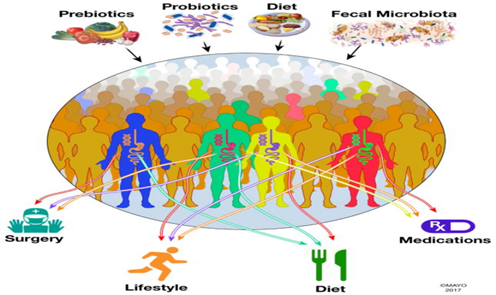
Figure 1. Gut microbiome as a determinant of human health and response to therapeutic intervention.
Human physical and mental health are impacted by the microbiome in a variety of ways. Evidence suggests that there is a complicated relationship between an individual's health and the makeup of the whole-body microbiome on epithelial surfaces like the skin, nasal and oral cavities, airways, gastrointestinal, and urogenital tracts. In the framework of predictive, preventive, and personalized medicine (PPPM/3 PM) the composition of microbiota and the capacity to alter it, collectively create an extremely attractive subject for translational biomedical research, combining multidisciplinary skills and healthcare-related outcomes. [10] Appropriate diagnostic and treatment approaches are pertinent in primary care (assessing health risks in people with suboptimal health conditions and preventing disease onset), secondary care (tailored treatment of clinically evident disorders to stop disease progression), and tertiary care (providing palliative care for optimal management of incurable diseases), according to the research findings gathered. The potential use of microbiome-related studies are highlighted in personalized treatment plans, and predictive diagnostics.
Bile Acid Metabolism And Cancer: It has been recognized that metabolites from the microbiome may contribute to the development of cancer. The food appears to be a major source of these metabolites; for example, the modern Western diet is high in fat and protein, which increases the chance of developing cancer. Bile acid (BA), on the other hand, functions as a signaling molecule associated with metabolic balance. BA is converted by some enzymes into SBA, which may be carcinogenic. According to in vitro studies, exposure to SBA compounds such as deoxycholic acid (DCA) and lithocholic acid (LCA) for one hour results in considerable DNA damage that is does-dependent. [11]
Population Differences In Colo-Rectal Cancer: Studies have shown that in colorectal cancer (CRC), the African-American community had a greater incidence and more deaths than the Native American group. Examining the microbiome mix of these two populations (Native American and African-American), it was found that the native American group had a high abundance of Prevotella species whereas the African-American group had a high abundance of bacteriodes species. Furthermore, whereas short-chain fatty acids were more common among Native American, the genes encoding for small bowel adenocarcinoma (SBA) and fecal SBA showed increased levels in the first group. As a result, research has shown that different diets and microbiota combinations can lead to phenotypic and developmental variants of a certain disease even though they have the same genetic ancestry. [11]
Diet And Microbiome Metabolites: Saccharolytic fermentation is triggered by eating foods high in fiber because gut microbial species produce short chain fatty acids, especially acteate, proprionate, and butyrate. For instance, Bacteroidetes possess elevated levels of acetate and propionate, whereas Firmicutes generate significant quantities of butyrate. Certain anti-cancer effects are linked to butyrate. Butyrate can trigger S-phase ablation in colorectal adenocarcinoma cells, leading to growth inhibition by promoting apoptosis and the expression of cell regulators like P21 and cyclin B1. Notably, the effects of butyrate vary depending on the cell type; in normal cells, butyrate promotes proliferation as an energy source, whereas in cell lines, it suppresses proliferation and initiates apoptosis. [11]
Microbiome And Disease Interaction: The gut microbiome is increasingly recognized as a biomarker for disease phenotype, prognosis, and treatment response, alongside the well-established links between changes in microbial community structure and various disease conditions. Inflammatory bowel disease is among the most researched conditions linked to dysbiosis, with the microbiome acting as a significant indicator of disease phenotype and treatment response. [12]
2.2.1. Clinical Applications:
Detection And Monitoring Of Inflammatory Bowel Disease: Embedded microorganisms can now be used to detect important signs of intestinal inflammation, making them an effective diagnostic tool for inflammatory conditions. Specialized strains of E. coli Nissle 1917 (EcN) bacteria have been developed by scientists to detect elevated levels of specific chemicals, such as calprotectin, nitrate, and tetrathionate, which are produced when there is active inflammation in the intestines among IBD patients. The exposure of modified bacteria to these chemicals results in illumination or brilliance, which facilitates the detection of inflammation without invasive testing. I-ROBOT is an advanced system that employs EcN to react with the thiosulfate. The system can detect IBD, monitor it gradually, and even reduce inflammation by releasing AvCystatin. IL-10 and il-12/23p40 are produced by this substance in the body to suppress inflammation. [13,14,15]
Probiotics: Probiotics are living microorganisms that can improve health when consumed in large quantities. A significant amount of research conducted on both humans and animals indicates that probiotics may have a positive impact on managing IBD. The probiotic EcN, which is commonly known as E. coli Nissle 1917, is frequently used to treat IBD. F. prausnitzius is an important probiotic in treating IBD. These types of bacteria exhibit anti-inflammatory characteristics.' In both living animals and laboratory tests, it can provide a defense against colitis. A study found that F. prausnitzii has anti-inflammatory properties that are comparable to those of a specific type of L. lactis that produces IL-10 and restores T cell levels to normal in both short-term and long-lasting models of colitis caused by chemicals. [13,16]
Therapies: The treatment options that utilize the gut microbiome are commonly classified as either additive or modulatory. The gut's microbiology is enhanced by the introduction of beneficial microbes, such as probiotics and fecal micronutrients through additive treatments. The process of using fecal microbiota transplantation (FMT) to put donor stool into the gut has been beneficial for conditions such as Clostridium difficile infection, hepatic encephalopathy, and antibiotic-resistant infections. The U.S. has recently approved live biotherapeutic products, and probiotics have been shown to help with obesity and cirrhosis as well. The FDA has authorized their use for the treatment of irritable bowel syndrome and recurring C. difficile infections. In contrast, modulatory treatments, such as diet and exercise, alter the gut microbiome by changing people's eating habits or lifestyle.. These methods have been shown to be beneficial for both nonalcoholic fatty liver disease and heart disease. [17]
2.2.2. Companies:
Enterobiotix: EnteroBiotix's main treatment, EBX-102-02, had positive results in a Phase IIa study for irritable bowel syndrome with constipation. The company is making oral capsules that contain good bacteria from healthy donars as a better option than traditional fecal transplants. [18]
Enterome: Enterome uses machine learning to analyze vast protein databases from the human gut microbiome to create its OncoMimicsTM immunotherapies. [18]
Kanvas Biosciences: Kanvas Biosciences was started by a group that includes an expert in microbial imaging and a specialist in infectious diseases. After choosing the most promising strains, the first treatment in Kanvas’ development process, called KAN-001, is being prepared for clinical trials. It targets a common problem with a type of cancer drugs known as checkpoint inhibitors. Kanvas is also working on another treatment, called KAN-004, which aims to help with colitis, a serious side effect of immune checkpoint inhibitors. [18]
Microbiotica: Their main drug, MB097, is an oral capsule with nine friendly gut bacteria. It's currently in a Phase Ib trial to see if it can help melanoma patients respond better to the checkpoint inhibitor Keytruda. Their second drug, MB310, is also in Phase Ib trials and is being tested as a standalone treatment for people with inflammatory bowel disease. [18]
Vedanta Biosciences: Their main treatment, VE303, includes strains of bacteria that help fight C. difficile by competing for food in the gut and making important substances that lower inflammation. Another treatment, VE202, is being developed to help people with inflammatory bowel disease. [18]
2.3. Artificial Intelligence:
The ability of technology systems to carry out activities that call for human intelligence is known as artificial intelligence (AI). AI has made tremendous strides in the medical field, using enormous volumes of data and processing power to support diagnosis, improve medical devices, and forecast patient outcomes. However, because of organizational, individual, and regulatory obstacles, the use of AI in healthcare has been very gradual. By streamlining procedures, enhancing patient care, and advancing research, digital technology integration in medicine seeks to advance personalized medicine. AI improves the operational workflow of healthcare facilities and makes clinical decision-making easier by evaluating vast amounts of data. AI is used in many medical domains, from image analysis and sophisticated data processing to automating paperwork and overseeing insurance procedures.
2.3.1. Clinical Applications:
ChatGPT: It is a specific illustration of how AI may be used in medicine. By evaluating patient data to deliver accurate information, ChatGPT can help medical professionals stay up to date on their knowledge, evaluate clinical competencies, and support the diagnostic process.
Large Language Models (LLMs): They are used in medical education, treatment planning, diagnosis, electronic health record (EHR) management, medical text analysis and production, and patient contacts. facilities and makes clinical decision-making easier by evaluating vast amounts of data.
Extensive Language Models: These are applied in areas like medical,training,formulating treatment approaches, ldentifyingdiseases,handling electronic medical records,examining and creating medical documents, and interacting with patients. [19]
2.3.2. Diagnosis:
Diagnostic Imaging: By incorporating advanced algorithms and machine learning, this technology signifies substantial progress in how we interpret and use medical images like MRIs, X-rays, and CT scans. The function of AI in diagnostic imaging goes beyond just process automation, as it fundamentally revolutionizes how illnesses are diagnosed, making it more accurate and effective. [20]
AI For Tailored Care: AI is making a big difference in how cancer is treated, especially in the field of oncology. In the past, cancer treatment followed a standard method, where patients received the same chemotherapy based on the type and stage of their cancer. Now, AI is changing this by introducing precision oncology. This involves using AI models to detect specific genetic changes in a patient's cancer cells and then pairing them with targeted therapies that are tailored to those genetic changes. This customized treatment not only improves the chances of a successful outcome but also helps reduce the side effects that often come with standard cancer treatments.
AI Driven Prognostication: AI-driven prognostication enables the prediction of the chances of developing chronic conditions such as diabetes or cardiovascular diseases by examining patterns in a patient’s medical history, laboratory results, and lifestyle habits. Identifying these risks early allows healthcare providers to implement timely interventions, make necessary lifestyle changes, and take preventive actions, which can greatly lower the occurrence and impact of these diseases. Although AI has the ability to process large volumes of data, including electronic health records, genetic data, and lifestyle factors, it can detect individuals who are at risk for certain conditions even before symptoms manifest. [21]
Robotics And AI In Surgery: In the years to come, the area of AI-powered robotics in surgery is expected to advance a lot. AI tools will assist during surgeries by guiding doctors in real time, analyzing body tissues, and performing tasks automatically. These improvements will help patients heal faster, lower the chances of surgery problems, and lead to better results for patients. These robotic systems powered by AI will cost less and be easier to get, making them used more in hospitals around the world. [22]
2.3.3. Companies:
A prime illustration is the deployment of machine learning techniques at Mount Sinai Hospital in the USA, facilitating the detection of heart and lung ailments in their initial phases. AI's capacity to scrutinize expansive collections of medical and visual data enables the identification of minor indicators potentially missed through conventional human assessment (Mount Sinai, 2021). This technological backing enhances physicians' ability to make well-informed choices, encouraging prompt detection and enhanced treatment strategies, which has notably decreased difficulties and financial burdens linked to advanced treatments. [19] Another case in point is the integration of AI driven solutions by the Mayo Clinic to refine cancer therapies to each patient's specific needs. Through employing state-of-the-art algorithms, medical experts possess the capability to assess the genetic configurations of individuals, thereby suggesting personalized treatment approaches for every unique presentation (Mayo Clinic, 2024). This methodology has greatly boosted predictions of outcomes in cancer, lessening instances of inefficient treatments, and cutting down harsh reactions. [19]
In the UK, the NHS collaborated with DeepMind to engineer a predictive system designed to foresee instances of acute kidney malfunction. Through the employment of neural networks, patient health information is dissected to allow the system to forewarn healthcare professionals up to two days prior to a health crisis becoming severe (DeepMind, 2019). This advancement leads to speedier, more effective action plans, cutting down on the necessity for ICU stays, and decreasing expenses tied to taking care of ailments at advanced phases. [19]
Medical Sieve represents IBM's newest software contribution. The project's main objective involves producing an innovative "cognitive assistant," packed with in-depth medical understanding and abilities to think critically and analyze comprehensively. Medical Sieve holds suitable qualifications to provide assistance in choices concerning cardiology and radiology. The ‘cognitive health assistant’ is adept at examining radiological images, speeding up and improving diagnostic precision. Radiologists will possibly only need to check the most challenging cases that require examination by a person. [19]
2.4. Proteomics:
Proteomics is the study of all the proteins made by a genome. It gives a changing picture of what's happening inside cells, which adds to the information from the genome, which stays the same. The proteome is all the proteins in a particular sample, like a piece of tissue or a cell, at a certain time. It can change depending on when the sample is taken and the conditions it's in. The term proteomics was first used in 1994 by Mark Williams, a philosophy student at Macquarie University in Sydney, Australia. Proteomics looks at the proteins in different tissues, cells, or organisms. Unlike the genome, which doesn't change, the proteome shows what proteins are being made, how they're changed, and how they interact with each other. This is often done using a technique called mass spectrometry. Proteomics helps find proteins that are linked to diseases, which can then be targets for drugs or antibodies. It also helps understand how drugs work by watching how proteins change after treatment and can spot reasons why some treatments don't work. Proteomics is used to discover biomarkers that help group patients and check how well a treatment is working, making the drug development process more efficient. [23]
Current Perspectives: As soon as the Human Genome Project was announced, people realized it was important to understand the human proteome in order to gain a full understanding of the biological processes that affect human health and illness. This knowledge could then be used to improve medical treatments. Cancer was seen as a key area to focus on. To achieve this, several projects were started, including the Human Protein Organization (HUPO), the National Cancer Institute’s Clinical Proteomic Tumor Analysis Consortium (CPTAC), the Early Detection Research Network (EDRN), the SEER cancer database, the Applied Proteogenomics Organizational Learning and Outcomes (APOLLO) network, and the International Cancer Proteogenome Consortium (ICPC: Cancer Moonshot). [24]
Clinical Proteomic Technology: Even though proteomics has a lot of potential in these areas, not many tests or useful markers have been used in actual clinical labs yet. The gap between basic research and clinical use is partly because the analysis is complicated and there are many different ways to do it. The new field called clinical mass spectrometry proteomics (cMSP) tries to bring together different basic science methods and check if they work well in clinical settings. Proteomic studies use a mix of steps like focusing on specific targets, turning molecules into ions, detecting them, and measuring their amounts Samples taken from tissue, blood, or urine are very complex, so they are often simplified or focused on a particular molecule before testing. To do this, scientists use methods like antibody-based purification or chromatography (like LC or UPLC) in normal or reverse phases. In a clinical lab, the choice of method depends on what the test is trying to find, and also on the cost and benefits of each method. As technology improves, these early steps might become unnecessary, making the whole process faster without losing accuracy or sensitivity.[25,26]
Proteomics In Diagnosis: Identifying an infectious disease quickly can be difficult and take a lot of time. It often involves doing several tests and waiting for days for cultures to grow. Creating databases that include the protein profiles of humans and the pathogens they can get infected with helps compare these profiles to samples taken from patients. This can lead to a fast diagnosis of an infection. Already, proteomic analysis can detect bacteria like E. coli, Salmonella, Campylobacter, Clostridium (including C. difficile), L. monocytogenes, Mycobacterium, Staphylococci, H. pylori, and enterobacteriaceae from biological samples. Many of these bacteria have different strains, each with its own set of toxins and harmful factors. Using proteomics to test isolates has been shown to be quicker and cheaper for several of these infections. Additionally, one test can identify not only the specific bacterial strain but also how it resists antibiotics, which depends on changes in protein activity. [27,28,29]. Testing a patient's sample using proteomics can show both special proteins made by the body and specific proteins from bacteria or viruses, which helps doctors make a more correct diagnosis and choose better treatment.[30]
2.4.1 Clinical Applications:
Cancer:
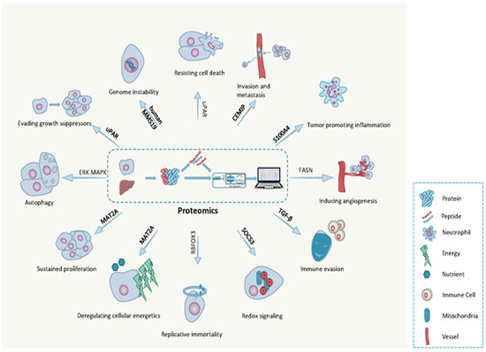
Figure 2. The Hallmarks of Cancer
Methionine adenosyltransferase 2a (MAT2A). cell migration-inducing and hyaluronan-binding protein (CEMIP). fatty acid synthase (FASN). urokinase plasminogen activator receptor(uPAR). Proteomics helps improve the understanding of the Hallmarks of Cancer and plays a major role in uncovering the processes that lead to cancer growth. Methionine adenosyltransferase 2a (MAT2A) is a crucial enzyme involved in metabolism, and when it is missing, it stops cancer cells from growing quickly. This has been shown by Agios Pharmaceuticals in the US through the use of proteomics.[31,32]
Cystic Fibrosis (CF): It is a genetic condition passed down from both parents. It happens when there is a change in a gene called cystic fibrosis transmembrane conductance regulator (CFTR). This gene helps make a protein that acts as a channel in the cell membranes of certain cells. Proteomics helps to detect proteins which are implicated in CFTR protein misfolding by scrutinizing the protein interactions and pathway affected by CFTR mutations. [33]
Chronic Obstructive Pulmonary Disease, Or COPD: COPD is a condition where the lungs slowly lose their ability to work properly, and the airways become more blocked. This often leads to a lung disease called emphysema. The most common cause of COPD is smoking, but other factors like infections and air pollution can make the disease worse. Scientists have found that certain proteins in the body, such as neutrophil defensins 1 and 2, S100A8, S100A9, TIMP1, CTSD, the Rho-GDP dissociation inhibitor protein, and IL-8, may be linked to COPD. [34]
Companies such as Grail, Freenome, SomaLogic, Olink, Thermo Fisher Scientific established in the year 2021 utilizes proteomics in various diagnostic parameters.
2.5. Biomarkers:
A biomarker is any measurable biological characteristic that indicates a normal biological process, a disease state, or a response to therapy. Biomarkers can be molecules DNA, RNA, proteins, cells, metabolites, or physiological measures such as blood pressure or body temperature. [35]
2.5.1. Types Of Biomarkers:
Susceptibility Or Risk: It refers to the possibility that an individual may develop a disease or medical condition that they currently do not have. For example, Factor V Leiden is used to identify people who are more likely to develop deep vein thrombosis. [36]
Diagnostic Testing: It is used to detect or confirm the presence of a disease or medical condition For instance, measuring blood sugar or hemoglobin A1c helps identify individuals with Type 2 diabetes. [36]
Monitoring: involves assessing the current status of a disease or medical condition.An example is measuring the hepatitis C virus ribonucleic acid (RNA) level to evaluate how well treatment is working in people with chronic hepatitis. Another example is using C-reactive protein levels to identify individuals who are more likely to experience recurrent coronary artery disease events.. [36]
Prognostic: Identifies the likelihood of a clinical event (a disease or medical condition) in individuals occurring, recurring (returning) or progressing (becoming more serious). Ex: Using C-reactive protein levels to identify individuals who are more likely to experience recurrent coronary artery disease events. [36]
Predictive: Identify individuals who are more likely to have a specific response, either positive or negative, to a medical product.For example, identifying mutations related to cystic fibrosis can help determine which individuals are more likely to benefit from a particular treatment. [36]
Pharmacodynamic Response: Indicates that a biological reaction has occurred in an individual who has been exposed to a medical product.For example, measuring blood pressure in people with hypertension helps assess how well they are responding to an antihypertensive medication or changes in sodium intake. [36]
Safety: It refers to the likelihood, presence, or severity of an adverse effect after an individual has been exposed to a medical product.For example, measuring serum creatinine levels in people taking medications that affect kidney function helps assess whether there is any damage to the kidneys. [36]
2.5.2. Clinical Applications:
Neuro-Degenerative Diseases:
Biomarkers of pathology, such as amyloid-β (Aβ) and tau, are primarily utilized in Alzheimer’s disease (AD) and the Frontotemporal lobar degeneration (FTLD) spectrum, assessed through cerebrospinal fluid (CSF), blood analysis, and positron emission tomography (PET) imaging. Beyond pathology-specific markers, general neurodegeneration markers like neurofilament light chain (NfL), a cytoplasmic protein abundant in large myelinated axons, serve as promising indicators of axonal degeneration measurable in both CSF and blood. Importantly, reduced baseline plasma Aβ42/Aβ40 levels predict longitudinal increases in cerebral amyloid load detected by amyloid-PET, while elevated plasma phosphorylated-tau217 levels predict tau accumulation, brain atrophy, and cognitive decline, with both plasma markers showing strong correlation to CSF biomarkers. [37,38]
Breast Cancer: Among the biomarkers that are crucial in breast cancer treatment, estrogen nd progesterone receptors play an important role in endocrine therapy, while other treatments target HER2 specifically. Despite its imperfections, Ki67 is widely used to forecast outcomes because it's easy on the wallet and readily available in clinical settings. [39]
2.5.3. Companies:
Pfizer functions as a global organization that also uses precision medicine approaches when discovering novel pharmaceuticals. This involves examining biomarkers and techniques for imaging. [40] AstraZeneca prioritizes the management of metabolic disorders and asthma through the application of precision medicine. It achieves this by pinpointing drug targets and biomarkers in addition to creating diagnostic assessments to support directing patients throughout the available treatment options. [40]
The biomarker market is significantly diversified, with the top five leading firms together owning just 8–10% of the overall market. F. Hoffmann-La Roche Ltd has broadened its biomarker offerings through the introduction of more than 20 diagnostic assessments from 2022 through 2025. Quiagen N. V. operates as a multinational company that incorporates biomarkers and is leading progress in personalized medicine preparation. [41]
CONCLUSION
New discoveries in genomics, pharmacogenomics and microbiology, as well as artificial intelligence have led to new developments in precision medicine. These technologies work to improve our understanding of diseases, enable more accurate diagnosis, provide targeted therapies and track patient outcomes. Pharmacogenomic tests are used to determine the most effective drugs for major health conditions. Diagnostics using the microbiome and specially formulated probiotics reveal how inflammation can be modulated by bacteria and its treatment effectiveness. The discovery of new protein networks linked to specific diseases continues through the use of proteomic tools, which can assist in identifying disease precursors and improving treatment efficacy. Medical images are made more accurate by AI, which also helps doctors make better decisions and predict the likelihood of disease.
The discovery of biomarkers is being expedited by these new tools, which are scientifically more accurate and are also facilitating the integration of molecular research into practical medical applications. Precision medicine reduces the number of failed treatments, lowers healthcare costs and foster growth in areas such as genomic testing, proteomic testing or microbiome-based treatments; especially from medical tools powered by artificial intelligence (AI), from an economic perspective.
ACKNOWLEDGMENT
The authors acknowledge management, Gokaraju Rangaraju College of Pharmacy and Dr. M. Ganga Raju, Principal, Gokaraju Rangaraju College of Pharmacy, Hyderabad for their support and encouragement
REFERENCES

Mamatha Kola, B. Naveena, V. Kavya, V. Kutchita Reddy, Chandan Reddy V., N. Sree Lakshmi, Advances In Personalized Medicine: Pharmacogenomics, Omics Technologies, And Biomarkers, Int. J. of Pharm. Sci., 2026, Vol 4, Issue 3, 3188-3202, https://doi.org/10.5281/zenodo.19228968
 10.5281/zenodo.19228968
