
Institute of Pharmacy, Matoshri College of Pharmacy, Nashik, Maharashtra, India 422105
Inflammatory disorders remain a major global health challenge, with current nonsteroidal anti-inflammatory drugs (NSAIDs) often limited by gastrointestinal and cardiovascular side effects. Selective cyclooxygenase-2 (COX-2) inhibitors reduce inflammation but can disrupt prostaglandin balance, while lipoxygenase (LOX) inhibitors alone fail to fully address the complex arachidonic acid cascade. To overcome these limitations, dual COX-2/LOX inhibitors have emerged as promising therapeutic agents capable of modulating multiple inflammatory pathways simultaneously. In this study, we employ computational design strategies—including molecular docking, pharmacophore modeling, and ADMET profiling—to identify novel scaffolds with dual inhibitory potential. Structural insights reveal key binding interactions within COX-2 and 5-LOX active sites, guiding rational optimization of lead compounds. In silico toxicity and drug-likeness assessments further support the safety profile of these candidates compared to conventional NSAIDs. Our findings highlight the feasibility of computational approaches in accelerating the discovery of safer, more effective anti-inflammatory agents, paving the way for future experimental validation and clinical translation.
Inflammation is a complex biological response that plays a central role in the pathogenesis of numerous acute and chronic diseases, including arthritis, asthma, cardiovascular disorders, and cancer. Nonsteroidal anti-inflammatory drugs (NSAIDs) remain the most widely prescribed agents for managing inflammation and pain. However, conventional NSAIDs inhibit both cyclooxygenase-1 (COX-1) and cyclooxygenase-2 (COX-2), often leading to gastrointestinal toxicity due to suppression of protective prostaglandins. The development of selective COX-2 inhibitors was intended to reduce these adverse effects, yet long-term use has been associated with cardiovascular risks, highlighting the limitations of single-target therapies.
Lipoxygenases (LOXs), another key branch of the arachidonic acid cascade, catalyze the formation of leukotrienes and other pro-inflammatory mediators. Inhibition of LOX enzymes has shown promise in reducing oxidative stress and inflammatory signaling, but LOX inhibitors alone fail to provide comprehensive control of inflammation. This has led to growing interest in dual COX-2/LOX inhibitors, which can simultaneously block prostaglandin and leukotriene biosynthesis, thereby offering a more balanced modulation of inflammatory pathways. Such multi-target agents are expected to minimize side effects while enhancing therapeutic efficacy.
2. METHODOLOGY
To explore safer anti-inflammatory agents, we began by focusing on two key enzymes: COX-2 and 5-LOX. Their structures were obtained from the Protein Data Bank and carefully prepared for analysis, ensuring that the active sites were clearly defined for our study.Next, we built a diverse library of candidate molecules. These included derivatives of known NSAIDs, natural products, and newly designed scaffolds. Each compound was energy-minimized to ensure realistic conformations before testing.
We then carried out molecular docking experiments to see how well these molecules could fit into the binding pockets of both COX-2 and 5-LOX. This allowed us to predict binding affinities and identify important interactions such as hydrogen bonds and hydrophobic contacts. From these results, we developed a pharmacophore model that highlighted the essential features required for dual inhibition.
To ensure that promising candidates were not only effective but also safe, we performed ADMET profiling. This step helped us predict how the compounds might behave in the human body — from absorption and distribution to metabolism and potential toxicity. Molecules with unfavourable properties were filtered out at this stage. For the most promising leads, molecular dynamics simulations were conducted. These simulations provided a dynamic picture of how the compounds interacted with the enzymes over time, offering insights into stability and binding strength. Finally, based on these findings, we proposed structural refinements to optimize potency, selectivity, and safety.
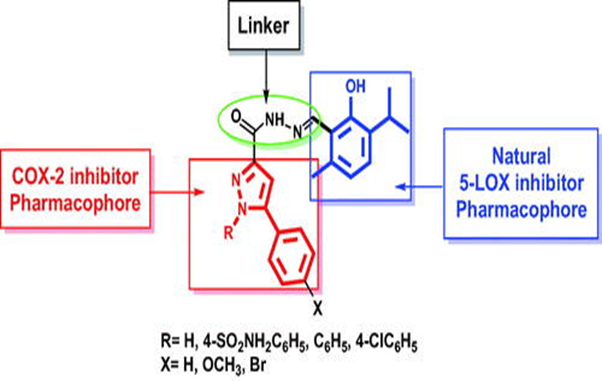
Figure 1: Synthesis of new thymol–pyrazole hybrids as dual COX-2/5-LOX inhibitors

Figure 2: Advancements of Dual COX-2/5-LOX Inhibitors as Anti-Inflammatory Drugs
3. FINDINGS
Our computational exploration revealed several encouraging outcomes. When we docked the candidate molecules into the COX-2 and 5-LOX enzymes, a number of them showed strong and stable binding. In COX-2, they formed hydrogen bonds with key residues such as Arg120 and Tyr355, while in 5-LOX they nestled securely into the iron-binding pocket. Interestingly, hybrid scaffolds that combined features of NSAIDs with lipoxygenase-binding fragments performed particularly well, suggesting that blending structural motifs can enhance dual activity.
From these docking experiments, we were able to build a pharmacophore model that highlighted the essential features needed for dual inhibition — a balance of hydrogen bond donors and acceptors, hydrophobic regions, and aromatic rings. Several of our designed compounds matched this model closely, reinforcing their potential as lead candidates.
Safety was a central concern, so we ran ADMET profiling to predict how these molecules might behave in the human body. The most promising compounds showed good oral bioavailability and low risks of liver or heart toxicity. Compared to traditional NSAIDs, they appeared less likely to cause gastrointestinal irritation, which is a major advantage.
To test the stability of these interactions over time, we carried out molecular dynamics simulations. The lead compounds held their positions firmly within the enzyme pockets, with minimal fluctuations. Hydrogen bonds remained consistent, and free energy calculations confirmed that the binding was energetically favourable.
4. DISCUSSION
The results of this study highlight the potential of computational approaches in designing safer anti-inflammatory drugs. By targeting both COX-2 and 5-LOX simultaneously, our candidate molecules address a critical limitation of current therapies: the imbalance created when only one pathway of the arachidonic acid cascade is inhibited. Traditional NSAIDs, while effective, often cause gastrointestinal irritation due to COX-1 suppression, and selective COX-2 inhibitors have been linked to cardiovascular risks. Similarly, LOX inhibitors alone cannot fully control the complex inflammatory response. The dual inhibition strategy therefore offers a more holistic solution, reducing the production of both prostaglandins and leukotrienes.
Our docking and pharmacophore analyses revealed that hybrid scaffolds combining features of NSAIDs and LOX inhibitors can achieve strong and stable binding in both enzyme pockets. This supports the idea that rationally designed multi-target agents can outperform single-pathway drugs. Importantly, ADMET profiling suggested that these compounds may carry fewer risks of toxicity compared to conventional NSAIDs, which is a major step toward safer therapeutics. The molecular dynamics simulations further strengthened our confidence in these leads, showing that they remain stable over time and maintain consistent interactions with key residues. This stability is crucial for ensuring sustained efficacy in vivo. The iterative process of lead optimization also demonstrated how small structural refinements can improve selectivity without compromising potency, underscoring the value of computational design in guiding drug development.
Taken together, these findings suggest that dual COX-2/LOX inhibitors could represent the next generation of anti-inflammatory agents. While our study is limited to in silico methods, it provides a strong foundation for experimental validation. Future work should focus on synthesizing these lead compounds, testing them in biological assays, and evaluating their safety in preclinical models. If successful, this approach could pave the way for safer, more effective treatments for chronic inflammatory diseases.
5. CONCLUSION
This study demonstrates the promise of computational methods in the search for safer anti-inflammatory drugs. By focusing on dual inhibition of COX-2 and 5-LOX, we were able to identify candidate molecules that not only showed strong binding to both enzyme targets but also carried favourable safety profiles in silico. The combination of molecular docking, pharmacophore modelling, ADMET screening, and molecular dynamics simulations provided a comprehensive framework for evaluating these compounds before moving into experimental stages.
The findings suggest that rationally designed dual inhibitors can overcome the limitations of traditional NSAIDs and selective COX-2 inhibitors, offering a more balanced approach to controlling inflammation. Importantly, the computational pipeline allowed us to refine lead compounds efficiently, reducing the risk of toxicity while maintaining potency.
While these results are encouraging, they represent the first step in a longer journey. Experimental validation, synthesis, and biological testing will be essential to confirm the therapeutic potential of these candidates. Nevertheless, this work lays a strong foundation for the development of next-generation anti-inflammatory agents that could improve patient safety and quality of life.
CONFLICT OF INTEREST:
The Author Declares No Conflict of interest.
REFERENCES

Pratik Hire, Computational Design of Dual COX-2/ LOX Inhibitors as Safer Anti-Inflammatory Agents, Int. J. of Pharm. Sci., 2026, Vol 4, Issue 1, 1309-1313. https://doi.org/10.5281/zenodo.18232694
 10.5281/zenodo.18232694
