
Raosaheb Patil Danve College of Pharmacy, Badnapur, Jalna
Nanomedicine and nano delivery systems are a relatively new but rapidly developing science where materials in the nanoscale range are employed to serve as means of diagnostic tools or to deliver therapeutic agents to specific targeted sites in a controlled manner. Nanotechnology offers multiple benefits in treating chronic human diseases by site-specific, and target-oriented delivery of precise medicines. Recently, there are a number of outstanding applications of the nanomedicine (chemotherapeutic agents, biological agents, immunotherapeutic agents etc.) in the treatment of various diseases. The current review, presents an updated summary of recent advances in the field of nanomedicines and nano based drug delivery systems through comprehensive scrutiny of the discovery and application of nanomaterials in improving both the efficacy of novel and old drugs (e.g., natural products) and selective diagnosis through disease marker molecules. The opportunities and challenges of nanomedicines in drug delivery from synthetic/natural sources to their clinical applications are also discussed. In addition, we have included information regarding the trends and perspectives in nanomedicine area. Nanoparticle-based drug delivery systems represent a significant innovation in contemporary medicine, providing enhanced precision in targeting diseased cells and reducing adverse side effects. Leveraging their unique size and surface characteristics, nanoparticles can be engineered to deliver therapeutic agents specifically to targeted cells or tissues, thus overcoming the limitations associated with conventional drug delivery approaches.
Nanoparticles used in drug delivery range from 10 to 1000 nm in size with at least one dimension being below 100 nm in size. The small sizes of nanoparticles as well as their surface chemistry are known to offer pharmaceutically beneficial attributes but may also contribute to their toxic effects as discussed earlier. Smaller nanoparticles enter cells more effectively when compared with larger molecules, but the administration of nanoparticles with a reduced clearance may result in some of the particles being retained within the body. In the case of a more active or cytotoxic nanoparticle being retained rather than a bulk of the drug being eliminated during the first pass effect, this may result in harmful effects on the targeted site due to unwanted retention.[1] Systemic administration of cytotoxic drugs may cause the drugs to exert their cytotoxicity on tissues during the first pass before they reach the intended tissues. Overall, 70% of globally synthesised drugs have poor aqueous solubility and hence poor pharmacokinetic properties in vivo. As a solution to this, nanoparticle drug delivery systems (DSSs) have been developed to achieve targeted and more efficient delivery of the therapeutic substance, which would prevent damage to surrounding organs from the effect of administered drugs that will otherwise arise if the drugs were in the free form. Over the past few decades, research efforts into DSSs have advanced significantly with various DSSs already being investigated and developed for the treatment of diseases, such as cancer and neurodegenerative diseases.[2]
Nanoparticles offer better advantages over other carrier systems. A major advantage of nanoparticles which makes them an efficient delivery system is their submicron size which makes extravasations possible and occlusion of terminal blood vessels. In addition, high density of therapeutic agent can often be encapsulated, dispersed or dissolved in these nanoparticles, which in turn depends on the preparation process to yield different properties and release characteristics of the entrapped agent.[3] Though liposomes have been used as potential carriers with properties including protecting drugs from degradation, targeting to site of action and reduction in toxicity or side effect. Despite of this versatility, some technical limitations including poor reproducibility and stability have been reported. Moreover drug delivery systems designed as liposomes cannot be used for controlled release of drug because of leakage of drug entrapped inside liposomes. On the other hand, polymeric nanoparticles offer some specific advantages of increasing the stability of drugs/proteins and possess useful controlled release properties16. Other features of nanoparticles include low number of excipients used in their formulations, simple procedure for preparation, high physical stability, and the possibility of sustained drug release that may be suitable in the treatment of chronic diseases.[4] By varying the polymer composition of the particle and morphology, one can effectively tune in a variety of controlled release characteristics , allowing moderate constant doses over prolonged periods of time. Liversidge and Cundy reported that availability of drug molecule entrapped in nanoparticle was 77% higher than a similar formulation consisting of microspheres17. Further, the nanoparticle system was used for various routes for administration including oral, nasal, parenteral, ophthalmic application18. Oral delivery of small drugs molecules can also be achieved which otherwise would not be available as injectable such as anticancer agents19. Also, the nanoparticles are good candidates to be shown as adjuvant for vaccines and advantageous features of nanoparticles include increased interaction of drug molecules with epithelial cells can be achieved leading to maximal absorption of the drug molecule.
Nanomedicine and nano delivery systems are a relatively new but rapidly developing science where materials in the nanoscale range are employed to serve as means of diagnostic tools or to deliver therapeutic agents to specific targeted sites in a controlled manner. Nanotechnology offers multiple benefits in treating chronic human diseases by site-specific, and target-oriented delivery of precise medicines. Recently, there are a number of outstanding applications of the nanomedicine (chemotherapeutic agents, biological agents, immunotherapeutic agents etc.) in the treatment of various diseases.[5] The current review, presents an updated summary of recent advances in the field of nanomedicines and nano based drug delivery systems through comprehensive scrutiny of the discovery and application of nanomaterials in improving both the efficacy of novel and old drugs (e.g., natural products) and selective diagnosis through disease marker molecules. The opportunities and challenges of nanomedicines in drug delivery from synthetic/natural sources to their clinical applications are also discussed. In addition, we have included information regarding the trends and perspectives in nanomedicine area. In the past few years, the successful development of nanotechnology, especially the emergence of new nanomaterials, has provided new ideas and potential methods for diagnosing and treating many major diseases.[6] Because of their unique physicochemical and biological properties, nanomaterials are widely used in drug delivery systems (DDS). Compared to conventional DDS, nano-DDS can effectively enhance the therapeutic efficacy by improving the pharmacokinetic and pharmacodynamic properties of encapsulated drugs, including drug stability, and achieving targeted drug delivery and controlled drug release due to their special characteristics of size, shape, and material .[7]
Nanoparticles are crucial in targeted drug delivery systems because they act as carriers to deliver drugs specifically to diseased cells, which increases efficacy and reduces side effects on healthy tissue. They can be engineered to overcome biological barriers like the blood-brain barrier, improve drug stability and solubility, and control drug release over time. This precision is achieved through passive mechanisms like the enhanced permeability and retention (EPR) effect, active targeting using surface ligands that bind to specific cells, and stimuli-responsive systems that release the drug in response to a trigger.[8]
a) Active Targeting: The nanoparticle carrier or therapeutic drug in active targeting attach and bind itself to the specific tissue or cell. In the active targeting, the targeted molecules bind their-self to the drug delivery system to be reached directly to targeted site i.e., tumor tissue, intracellular organ, cancer cell or specific molecule in it. The carrier drugs through this system attach to the surface of tissue specific antigen, carbohydrate and receptor to treat tumor.
b) Passive Targeting: Passive targeting, together with the drugs carriers inactively reach the specific target site. The mechanism in which the vessels leak the drug and gather in the cell by increasing the retention and permeability (Muhamad et al., 2018) when the tumor size increases up to 2mm3 the absorption ability of the cell becomes weakened and start angiogenesis to fight with the problem. Due to this,abnormalities in the basement membrane lead to leaking of vessels of the pore size 100 to1200nm.[9]
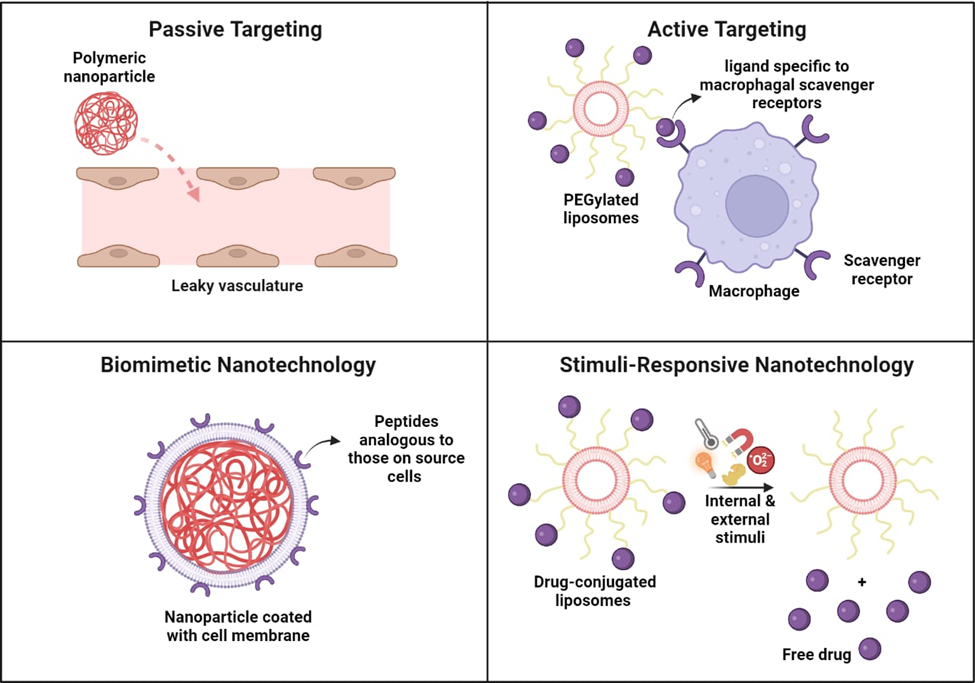
Figure no :1 Nanotechnology based targated drug delivery system
How nanoparticles enhance targeted drug delivery:
Targeting diseased cells: Nanoparticles can be designed to navigate the body and deliver drugs specifically to a target site, such as a tumor.
Overcoming biological barriers: Their small size allows them to cross difficult barriers like the blood-brain barrier (BBB) to treat conditions like brain tumors.
Improving drug properties: They can improve the solubility, stability, and bioavailability of a drug, ensuring it remains effective until it reaches its target.
Controlled drug release: Nanoparticles can be engineered to release their drug cargo in a controlled manner over an extended period, leading to sustained therapeutic effects.[10]
Minimizing side effects: By targeting the drug to the site of action, nanoparticles minimize exposure to healthy cells, which significantly reduces systemic toxicity and side effects.
Nanoparticles The nano-fluid was first discovered by Choi. These are manipulated colloids comprising the base fluid and nanoparticles. These may be organic fluid, oil and other lubricants, water etc. As the name indicates the nanoparticle are so small i.e., less than 100nm.[11] The main constituent of nanoparticles are oxides, metals and carbon nanotube .Nano particle-Based Targeted Drug Delivery The nanoparticle drug delivery system gained attention in multiple filed due to its characteristics. Its small size and ability to penetrate different barriers, elevate the limit of drug in target cells/tissues. They are designed as controlled drug release system i.e., they control the property of particles by lowering their side-effects and increasing their efficiency. The nanoparticle is synthesized from biodegradable materials which are safe for the body use. Coating of the drugs in nanoparticles carriers guard them from environmental damage i.e., pH, Temp etc. They are shaped to ignore the immune system clearance and increase the drugs circulation time. Targeted and controlled release of the nanoparticle lower the effect of drugs on non-targeted tissues.[12]
Nanotechnology and their use The technology or science permitting to regulate, study, manipulate and build the devices and structures of nanometer size. The Nanoparticle’s small size, customized coating, well developed solubility and many more functions assist them in creating innovative biomedical application. Through nanotechnology we can develop new tools that helps to diagnose, target and treat many notorious disease like neurodegenerative disease, cancer and tumor, develop single dose vaccine, and oral delivery of therapeutic protein .[13]
Physiochemical Properties of Nanoparticles in Medicine:
Nanoparticles have various properties that facilitate enhanced pharmacologic behaviour when compared with larger molecules. As such, significant efforts are being made in research modifying the nanoparticle size, shape, surface area, and surface chemistry to maximise their benefits for medical purposes.
Different nanoparticles such as gold nanos hells, liposomes, and micelles are synthesised in various ways, and the sizes and shapes of these nanoparticles can be controlled during the synthesis process based on the intended functionality. Nanoparticles can agglomerate into larger-sized particles during synthesis, which may enhance or indeed suppress the nanoparticle cytotoxicity depending on composition.
The surface chemistry of nanoparticles can be modified by adding reactive groups or molecules such as antibodies to surfaces in targeted drug delivery systems.[14]

(Figure no :2 Types of nanoparticals)
CLASSIFICATION:
NPs On the base of size, structure and chemical properties nanoparticles are divided into different categories which are as follow
Organic NPs The organic nanoparticle are alternative to metallic nanoparticle because of their biocompatible nature, they are use as imaging agent because of their ability to deliver drug to target site, e.g. in cancer cell they deliver drug to tumor cell and disease site Moreover, with the passage of time the use of organic nanoparticle in medical field increased worries about the potential accumulation inside the body. The accumulation leads to unintentional concern and adverse reactions
A] In-Organic nanoparticles: Inorganic nanoparticles coated with biological membranes are promising in personalized medicine, integrating synthetic and bionic nanocarriers for disease treatment. These nanoparticles have been widely used in tumor treatment, toxin removal, and antibacterial applications, achieving excellent results compared to traditional drugs.
B] Carbon-based nanoparticles: The two major groups, carbon nanotube and fullerenes represent carbon-base nanoparticles. Fullerenes are made up of allotropic carbon. Due to their properties like electrical conductivity, electron affinity, high strength, versatile nature and structure they gain commercial importance . Carbon nanotube have tubular elongated structure having diameter 1-2 nm . It resembles graphite structurally.
C] Metal nanoparticles: The metal nanoparticles are synthesized from the precursors of metals. The nanoparticles of noble and alkali metals such as copper, gold, silver, have a large band of absorption in the visible portion of electromagnetic solar spectrum . Gold nanoparticle is use in SEM i.e., to obtain high resolution image.
D] Ceramics nanoparticles: They are non-metallic inorganic solid form through heat and successive cooling. In atmosphere they can be present in different forms i.e., porous, dense and hollow form. Due to their application in various field of research they attract greater attention of researchers Semiconductor nanoparticles They have characteristics between nonmetal and metal and because of this they have great importance . Semiconductor have bad gap and band proper therefore they are rarely effective in water splitting application.[15]
E) Lipid nanoparticle: Nanoliposomes are lipid vesicles, spherical in shape, having a membrane bilayer that is made up of lipid molecules which are amphiphilic in nature. These nanoliposomes can be synthetic or natural. The most distinguishing feature of nanoliposomes is that it does not require any modification to carry either hydrophilic or hydrophobic drugs.
F) Polymeric nanoparticles: Polymeric nanoparticles are colloidal nanoparticles containing the therapeutic agent either encapsulated or adsorbed on the surface of the nanoparticle . These particles have the advantage of better circulation within the fine blood capillaries without getting agglomerated, thus, preventing blockage,
G) Gold nanoparticles: The application of gold nanoparticles in the medical field is not new but it is used for the treatment of diseases from centuries ago.
H) Dendrimer: Dendrimers are macromolecules having an ordered and highly branched structure having a core, branches coming out from core, and functional groups attached on it . The branched structure provides high ratio of surface area to size[16]
EVALUTION:
1) Particle size analysis: The particle sizes of the nanoparticles were evaluated by scanning electron microscope were ranging from 350 nm to 600 nm, particle size varies depending on the polymer load.
2) Scanning Electron Microscopy (SEM) studies: The particle shape and surface morphology of nanoparticles were examined by scanning electron microscopy. Lyophilised and completely moisture free samples were consigned on aluminium stubs using adhesive tapes and coated with gold using sputter coater and observed for morphology at an acceleration voltage of 20 kV.
3) Differential scanning Calorimetry (DSC) studies: The physical status of the native drug inside the nanoparticles was ascertained by the DSC analysis (DSC-60, Shimadzu, Japan). Approximately, weighed 2 mg of native drug, polymer and nanoparticles were placed separately into the different sealed standard aluminium pan and were scanned between 25°C and 300°C with heating rate of 10°C/min under nitrogen atmosphere. An empty aluminium pan served as reference.
4) Atomic Force Microscopy (AFM) studies: Atomic Force Microscopy (AFM) studies were carried out to characterize the surface morphology of prepared drug loaded nanoparticles. The nanoparticle suspension was prepared with milli-Q water and dried overnight in air on a clean glass surface and observation was performed with AFM (JPK Nano Wizard II, JPK instrument, Berlin, Germany) with silicon probes with pyramidal cantilever having force constant of 0.2 N/m.
5) To avoid damage of the sample surface, all measurements were conducted in intermittent contact mode and the tip to sample distance was kept constant using the amplitude feedback function in attractive forces regimen. The scan speed of 2 Hz and 312 kHz resonant frequency was used for displaying amplitude, signal of the cantilever in the trace direction and to obtained images .
6) Determination of percentage of drug entrapment efficiency: Prepared nanoparticle suspensions were centrifuged at 2000 rpm for 30 min. The supernatant was collected and the particles were washed with water and then subjected to another cycle of centrifugation.[17]
ROLE OF NANOPARTICALS
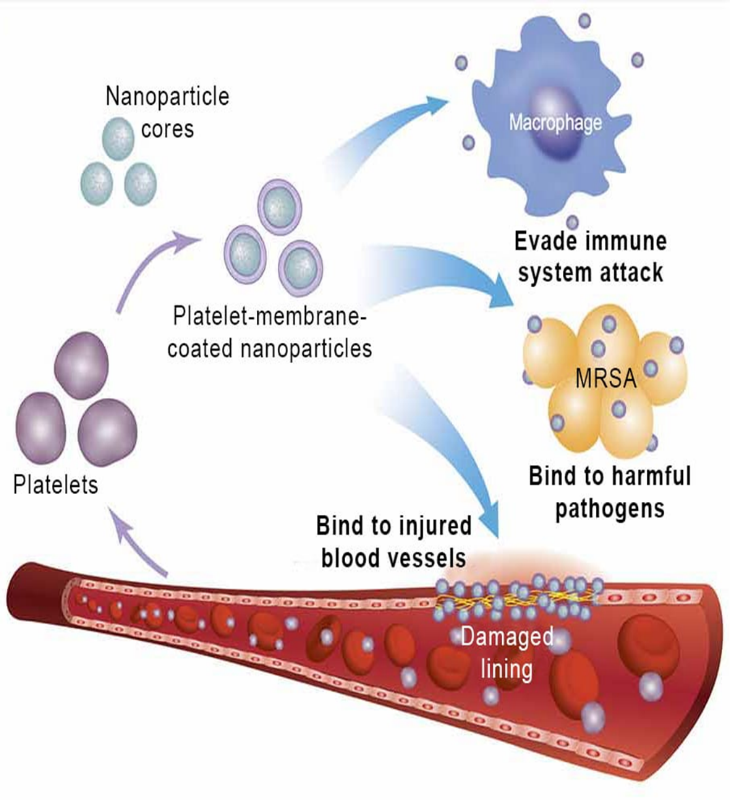
(Figure no :3 Nanoparticals in damaged lining)
APPLICATION:-
STRATERGIES FOR TARGATED DRUG DELIVERY USING NANOPARTICALS
a) Ligand-based Targeting : Numerous nanoparticle-based drug delivery and drug targeting systems have been developed or are currently under development. Their use aims to minimize drug degradation, prevent side effects, and increase drug bioavailability. These systems use ligands, which recognize and bind to target antigens by specific cells or tissue components. Ideal ligands for targeted delivery have high avidity, specificity, internalization of polymeric particles, compatibility with chemical modification, and sufficient quantity. Low ligand density is necessary for effective interaction with the receptor.
b) Antibody-based Targeting : Immunotherapy has been enhanced by the discovery of antibodies' structure and hybridoma technology, enabling targeting tumors both in vitro and in vivo. Modern antibody technology involves designing and preparing fragments against various tumor antigens. Cancer cells overexpress known protein biomarkers or tumor-associated antigens (TAA), and these TTA's provides insights for antibody-mediated targeting. Antibody-coupled nanocarriers are attractive drug targeting systems due to their specificity and stability.
c) Magnetic Targeting : Due to magnetic field and the moment of network units these nanoparticle are activated and when the magnetic field is absent they act as an inactive particles. The magnetism and nanotechnology combination seek attention for many years due to their wide use in different field i.e. catalysts, magnetic fluids, magnetic resonance, water treatment, biomedicine, magnetic resonance imaging, biotechnology .
d) pH-responsive Targeting : Due to the intracellular and extracellular stimuli of the pH responsive nanoparticles against tumor increase the glycolysis which in turn increases the production of lactic acid through which tumor gain energy . The external pH of tumor is between 6.5 to 7 which is slightly acidic while the internal pH is slightly higher than the other body fluids and tissues. Meanwhile some internal parts of the cells are more acidic such as lysosomes have pH 4.5 to 5 and endosomes have pH 5 to 6.5. [20]
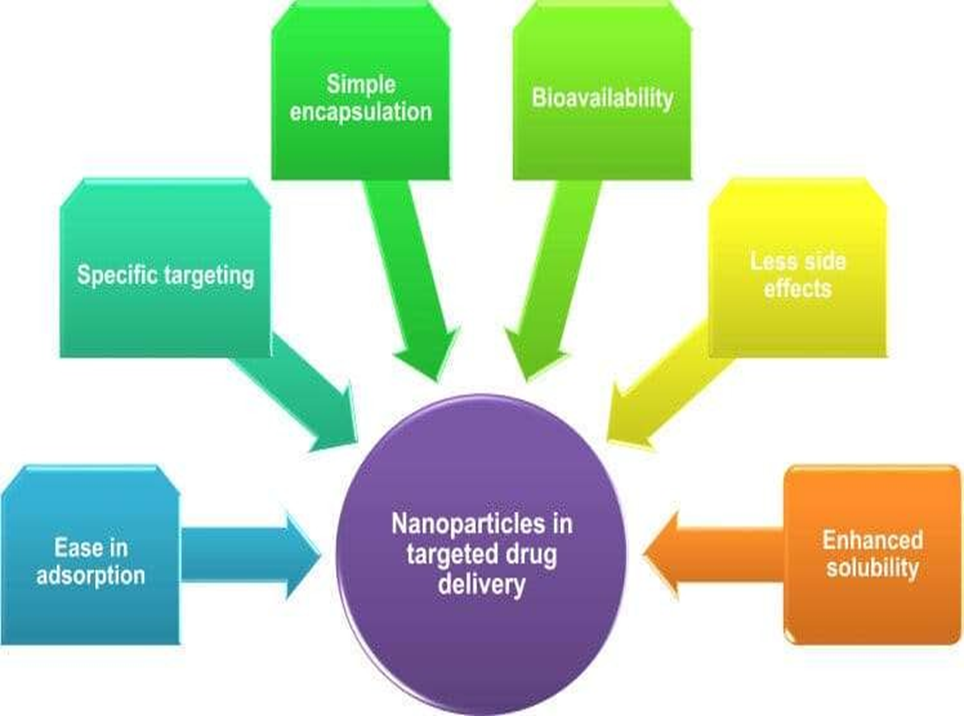
(Figure no:4 role of nanoparticals in targated system)
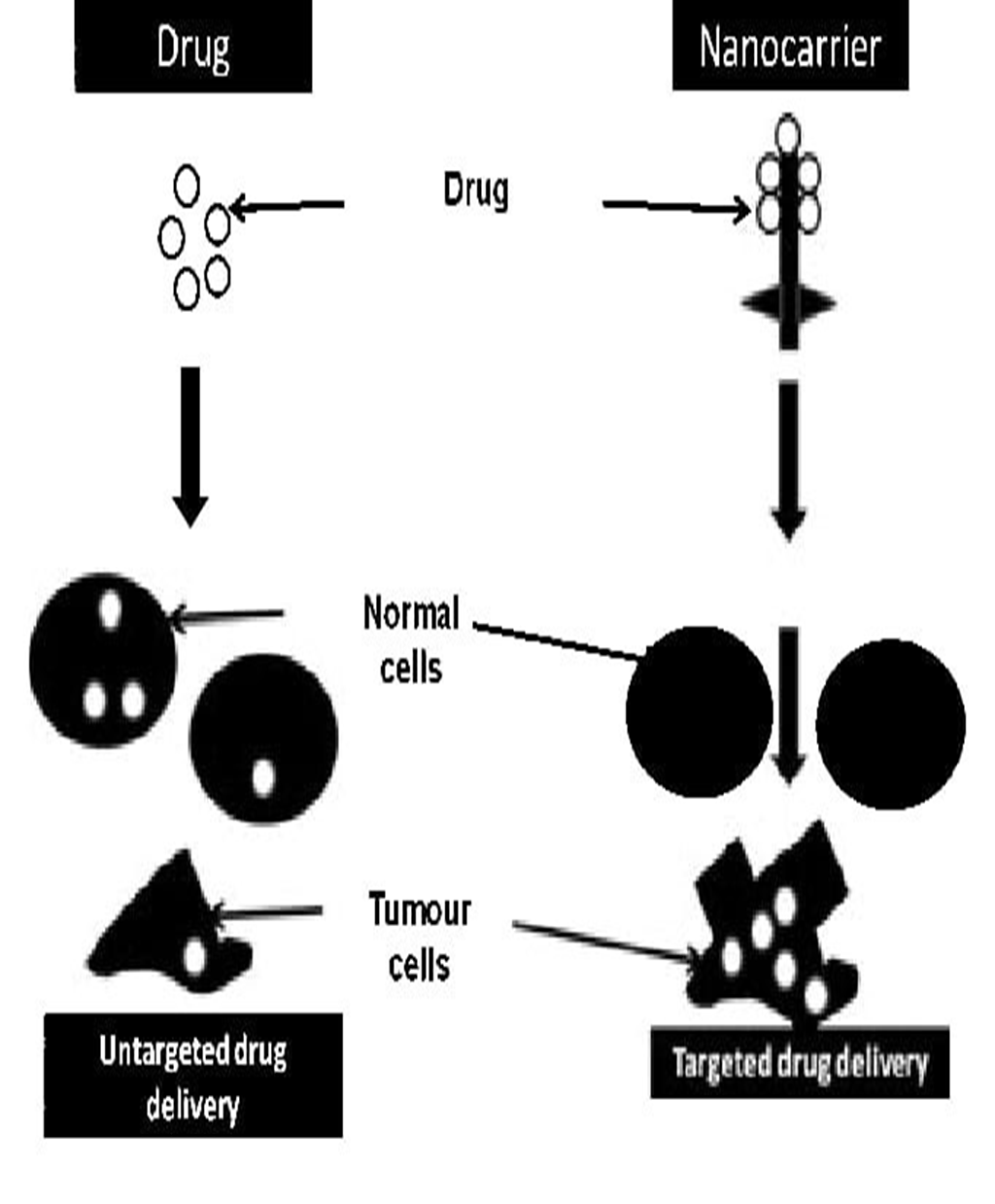
(Figure no :5 diffrence of untargeted and targated system)
NEED OF WORK:
AIM: To analysis role of nanoparticles in targeted drug delivery systems
OBJECTIVE:
CONCLUSION:-
Nanotechnology is truly a multidisciplinary science where chemists, physicist, biologists and pharmaceutical scientist all have played major roles to develop novel treatment and diagnosing modalities. It is evident through this review that application of nontechnology in drug delivery and medicine has paved new pathways and opened many doors for providing customizable and safer treatment option. The treatment of cancer and HIV/AIDS, non-invasive imaging as well as nutraceutical delivery have all progressed with the application of nanotechnology. Ultimately, through the manipulation of molecular size and surface properties, researchers are able to deliver drugs for longer period of time with less frequent dosing (sustained release) and with greater precision and penetration in difficult toaccess tissues.
SUMMRY:
Trapping nanoparticles has advanced significantly over the past decade. It has evolved from some initial scepticism into a well-established field. Optimisation of trapping geometries and parameters as well as better understanding of trapping processes between the Rayleigh and Mie regimes have helped to improve our understanding of optical forces at this size scale. There are multiple methods to model optical forces acting on nanoparticles. Within the Rayleigh approximation, the optical forces are decomposable into a gradient and a scattering force. As the size of the nanoparticle increases, this approach fails and one has to take higher order corrections into account. The Lorenz-Mie scattering theory and the T-matrix method deliver these necessary corrections. A direct numerical calculation of optical forces is also feasible by using, for example, finite elements methods and integrating either Maxwell’s stress tensor or its derivatives over the nanoparticle volume and surface. This large choice of methods presents the perfect ground to study the transition between atoms and much larger optical objects where geometrical optics is applicable.
FUTURE SCOPE:-
Developing drug delivery systems for future viruses: Developing drug delivery systems for future viruses using nano-based formulations involves creating adaptable and highly targeted therapies that can respond to emerging viral threats. These systems must be designed to rapidly deliver antiviral agents with precision, enhance immune responses, and navigate complex biological barriers.
Safety and efficacy of drug: Ensuring safety in nano-based formulations involve srigorous testing for toxicity, long-term effects, and potential interactions. Comprehensive risk assessments, standardized protocols, and stringent regulatory guidelines are essential to safeguard patient health and ensure that these advanced therapies are both effective and safe for clinical use.
Creating symbiotic drug delivery systems: Creating symbiotic drug delivery systems in nano-based formulations involves designing nanoparticles that work harmoniously with the body’s biological processes. These systems can enhance drug efficacy by mimicking natural cellular functions or interacting synergistically with physiological mechanisms.
Gender-sensitive drug delivery systems: Gender-sensitive drug delivery systems innano-based formulations aim to tailor treatments based on gender-specific physiological and hormonal differences. Future advancements could involve designing nanoparticles that adjust drug release and targeting strategies according to gender-related factors, enhancing efficacy and minimizing side effects.
Future Scope For future personalized medicine, nanoparticles will play a certain, from identification to monitoring.
Nanoparticles enhance biomarker sensitivity, aiding early disease identification and treatment. After diagnosing, nanoparticle effectively use in disease condition with decrease harms and side effects. Future challenges include drug loading and unloading, and advancements in diagnosing and treating nanoparticles. Nanomedicines have numerous uses and risks, with potential applications in medical expertise and probabilistic diagnostic algorithms.
For future personalized medicine, nanoparticles will play a certain, from identification to monitoring. Nanoparticles enhance biomarker sensitivity, aiding early disease identification and treatment. After diagnosing, nanoparticle effectively use in disease condition with decrease harms and side effects. Future challenges include drug loading and unloading, and advancements in diagnosing and treating nanoparticles. Nanomedicines have numerous uses and risks, with potential applications in medical expertise and probabilistic diagnostic algorithms.
REFERENCES


Suchita Lathi, Komal Pawar, Pallavi Shnide, Vaishnavi Shinde, A Review on Role of Nanoparticles in Targeted Drug Delivery Systems, Int. J. of Pharm. Sci., 2025, Vol 3, Issue 12, 2085-2097. https://doi.org/10.5281/zenodo.17909653
 10.5281/zenodo.17909653
