View Article

Abstract

In the present time Natural products are considered to be symbols of protection in comparison to the synthetic product that are regarded as unsafe to human life and environment. Although a large number of synthetic drugs are being added to the world of present pharmacopoeia, but still no system of medicine in the world has been able to solve all the health problems, which include diseases like Cancer. Plant-derived compounds have played an important role in the development of several clinically useful anti-cancer agents. These include vinblastine, vincristine, the camptothecin derivatives, topotecan and irinotecan, etoposide, derived from epipodophyllotoxin, and paclitaxel (taxol) “Anticancer Agents from Unique natural Products Sources. The goal of the project is to discover and develop novel anticancer agents from a variety of natural products sources. Development of tools to probe fungi for the production novel natural products by DNA-based probes. Discovery that the majority of these fungi can produce natural products via nonribosomal peptide synthesis.

Keywords

anticancer agent, Natural agents, marine micro-organism

Introduction

The development of cancer registries throughout the world has led to a search for novel drugs that are toxic to the cancer cells while having no harmful effect on normal cells. The anticancer drugs used previously exhibited relatively high toxicity not only to the tumour cells, but also to the normal cells of the body part in which the cancer had developed. Currently, the search for novel anticancer drugs is being conducted among terrestrial plants, as well as in marine environments [7]. Plants have been used for centuries to treat diseases. In various parts of the world, several plants are consumed for their health benefits as a part of traditional folk medicine. The increase in the incidence of various types of cancer creates a need for new anticancer drugs. For example, in 2017, 1,688,780 new cancer cases and 600,920 cancer deaths are projected to occur in the United States [8]. Numerous anticancer drugs isolated from plant materials are tested on cells (including various cancer cell lines) and experimental animals after purification and then sent to clinical trials. In recent years, there has been a dynamic increase in the number of newly discovered natural compounds. In 2006, about 50,000 such substances were known, whereas, in 2014, the number of the newly discovered molecules increased to approximately 326,000. Among these, there were approximately 170,000 compounds in the toxicity class. In addition, there are 195,000 pharmacologically active compounds for which the interactions are quantitatively known [9]. Plants that have been used in traditional medicine for centuries have found application as sources of materials that possess high biological activity [10] . In recent times,   One approach is to obtain these substances through extractions from the plant materials. Another approach is to use biotechnological tools to produce plant-derived anticancer compounds. The substances of natural origin (e.g., from plants and aquatic animals) that exhibit anti-tumour properties belong to various groups of compounds, such as alkaloids, diterpenes, diterpenoquinone, purine-based compounds, lactonic sesquiterpene, peptides,cyclic depsipeptide, proteins, macrocyclic polyethers, etc. Sometimes, the cost of extraction of these substances from natural materials is much lower than the cost of their chemical synthesis. 

CHEMICAL  MODIFICATION OF  NATURAL PRODUCTS

Alkaloids: Alkaloids are secondary metabolites that include nitrogen and are very common in nature all over the world. They have a variety of biological actions. The first alkaloid, morphine, was extracted from opium in 1805 and it is still a significant therapeutic compound [11]. There are currently more than 20000 alkaloids known, and many of these have been used in medicinal settings. At least 60 plant-derived alkaloids have currently received drug approval in a number of nations [12].

The few purine alkaloids that are regularly ingested are mostly found in tea, cocoa, and coffee. Most alkaloids are pharmacologically active or dangerous when taken in large quantities; they demonstrate a wide range of biological properties, including anticancer, antibacterial, anticholinergic, antihypertensive, antidepressant, anti-inflammatory, and antiulcer [13].

Table 1: Few Alkaloids used in Marketed Medicines

Alkaloid Name

Applications

Example Product

Ajmaline

Antiarrhythmic agent

AritminaTM, GilurytmalTM  RauwopurTM, RitmosTM

Caffeine

Neonatal apnea, atopic dermatitis

AgevisTM, AnlagenTM  ThomapyrineTM, Vomex

ATM Codeine (Methylmorphine)

Antitussive, analgesic

AntitussTM, CodicapsTM ,TussipaxTM

Lobeline


Anti-smoking, asthma, cough

CitotalTM, LobatoxTM, RefraneTM , StopsmokeTM

Morphine

Pain relief, diarrhea

DiastatTM, DuromorphTM , OramprphTM, SpasmofenTM

Quinine

myotonic disorders

AdaquinTM, BiquinateTM , QuinoctalTM, Zynedo-B TM

Natural products have several advantages in drug discovery, including structural diversity, potential for multi-target effects, and the presence of compounds that can overcome drug resistance. However, the challenges in sourcing and standardizing natural products, as well as issues related to patent protection, can complicate their development as anticancer drugs. [14]

Natural compounds from various sources exhibit anti-cancer activity.

  1. Vinblastine and Vincristine: these alkaloids are derived from the Madagascar periwinkle plant and are used in the treatment of leukemia and lymphoma [15].
  2. Paclitaxel: derived from the Pacific yew tree, and is used to treat various cancers, including breast, ovarian, and lung cancers [16].
  3. Etoposide: derived from the mayapple plant, etoposide is used to treat lung and testicular cancer [ 17].
  4. Camptothecin: originally isolated from the Chinese tree Camptotheca acuminata, derivatives of this compound, such as Topotecan and Irinotecan, are used in the treatment of ovarian and colorectal cancers [ 18,19].

Various natural compounds used as anti-cancer treatments in treating various cancers via different pathways.

Table 2 : natural compound & their source with mechanism of action

Natural                            compound

Source

Mechanism of Action

Cancer

Reference

Vincristine

Periwinkle plant (Catharanthus roseus)

Binds to tubulin, inhibits microtubule formation

Liver

15

Vinblastine

Periwinkle plant (Catharanthus roseus)

Inhibits microtubule assembly

Breast, colorectal, lung, ovarian, prostate.

20

Limonene

Citrus peels

Induces detoxification enzymes, anti-proliferative

These are not directly associated with causing specific cancers, but rather are involved in cellular pathways related to apoptosis (programmed cell death) and regulation of cell survival

22

Catechins

Tea, cocoa, fruits

Antioxidant, anti-inflammatory, anti-proliferative.

Colorectal, pancreatic, lung, breast.

21

Beta-carotene

Carrotssweet potatoesspinach

Antioxidant, modulates immune response

These genes are involved in various biological processes, including immune response and cell signalling. Their associations with specific cancers are not as prominent as some other genes, but they have been implicated in certain contexts.

23

Lycopene

Tomatoeswatermelon, pink grapefruit

Antioxidant, anti-proliferative

Breast, colorectal, lung, pancreatic, ovarian, cervical.

24

ANTICANCER  PLANT  DERIVED COMPOUNDS

  1. Vincristine

Vincristine is a vinca alkaloid that can be collected from Madagascar periwinkle Catharanthus roseus.[25] This is a chemotherapy medication that is applied for the treatment of types of cancer. This includes acute lymphocytic leukemia, myeloid leukemia, Hodgkins' disease, neuroblastoma, and lung cancer of small cells among others. It is delivered via intravenous infusion using different types of chemotherapy regimens.[26] Its main uses are in non-Hodgkins’s lymphoma as an element of chemotherapy regimen CHOP, Hodgkin's lymphoma as an element of MOPP, COPP, BEACOPP, or the less popular Stanford V chemotherapy regimen in acute lymphoblastoma leukemia and treatment for nephroblastoma.

ACTIVITY:

It is a chemotherapy medication applied for the treatment of acute    lymphocytic leukemia, myeloid leukemia, Hodgkins' disease, neuroblastoma, and lung cancer .[29]
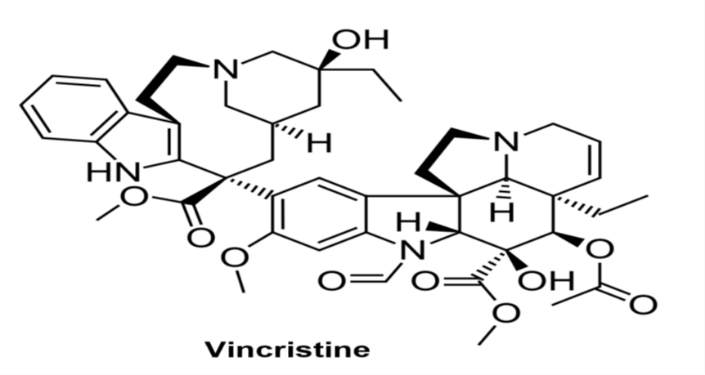
Figure.1

  1. Vinblastine

Vinblastine, a natural product was first extracted by chemist Robert Noble and Charles Thomas Beer from the Vinca rosea plant.[25] This is a chemotherapeutic drug, generally applied with other medicine for the treatment of different types of cancer. This includes Hodgkin's lymphoma, specific kinds of lung cancer, bladder cancer, brain cancer, testicular cancer and melanoma.[27] in blastine, nocodazole and colcemid are known as microtubule-disruptive drugs. The different studies showed that vinblastine, nocodazole and colcemid work with two distinct mechanisms. These drugs suppress microtubule dynamics at very low concentrations and reduce the mass of microtubule polymer at higher concentrations.[28]

ACTIVITY:

It is a chemotherapeutic drug, generally applied with other medicine for the treatment of Hodgkin's lymphoma, specific kinds of lung cancer, bladder cancer, brain cancer, testicular cancer and melanoma.
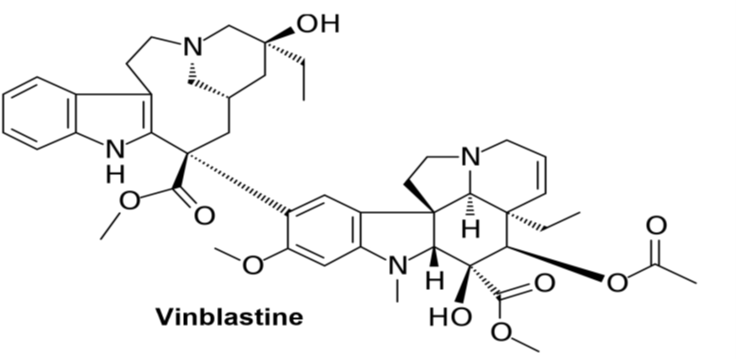
Figure.2

Present Status of Natural Compounds

Many natural compounds are under investigation in preclinical and clinical trials for their potential use in various medical applications, including cancer treatment, anti-inflammatory agents, and antioxidants[30] (Figure 1,2). These compounds are derived from plants, marine organisms, and other microorganisms. Some examples of natural compounds that have undergone, or are currently undergoing, pre-clinical and clinical trials are Curcumin, which was tested for anti-inflammatory, antioxidant, and potential anti-cancer properties31; Resveratrol, which has been tested in both preclinical and clinical trials for cardioprotective and anti-aging effects 32; Epigallocatechin Gallate (EGCG), which is being investigated for the treatment of various diseases, including cancer, neurodegenerative disorders, and metabolic syndrome 33; Paclitaxel, which is an established chemotherapy drug for various cancers, including breast, ovarian, and lung cancer 34; Quercetin, which has shown promising results in pre-clinical as well as clinical trials as an anti-inflammatory, antioxidant, and potential anti-cancer agent 35; and Camptothecin and its derivatives, such as Topotecan and Irinotecan, which are used in the treatment of ovarian and colorectal cancer 36. Clinical trials of Beta-carotene have explored its potential benefits, such as reducing the risk of certain cancers and eye conditions 37. Sulforaphane is under study in pre-clinical and clinical trials for its potential anti-cancer and antioxidant effects 38. Silibinin has shown potential in preclinical and early-stage clinical trials for various cancers and liver diseases, including hepatitis and cirrhosis [39]. These natural compounds are just a few examples of substances from nature that are being investigated in pre-clinical and clinical trials. The use of natural chemicals in conventional treatments represents a substantial advancement in modern health care. Several natural medicines previously confined to traditional applications are undergoing rigorous effectiveness testing for a variety of medical diseases, as research progresses. This demonstrates a trend toward more holistic and integrative therapeutic methods 40,41. A meticulous equilibrium between scientific validation and traditional knowledge is necessary for this shift. The clinical efficacy of natural chemicals, such as paclitaxel, highlights the capacity of these substances to supplement, or even improve, traditional medicinal interventions. Nevertheless, the inclusion of these substances in conventional treatment plans is contingent upon stringent clinical validation to ascertain their efficacy and safety when utilized in conjunction with, or in lieu of, synthetic medications. Although natural substances frequently possess low toxicity and tolerance, it is important to perform thorough scientific studies to ascertain their safety and effectiveness in treating a wide range of medical diseases. Clinical trials are vital for identifying the possible advantages and limitations of these natural substances as medical therapies. The continuous process of integrating and conducting comprehensive evaluations indicates an expanding acknowledgment and acceptance of the benefits offered by natural chemicals in contemporary medicine.42,43

The Importance and Potential of Natural Products in Drug Discovery

Promising and novel cancer therapies have been explored and studied in natural compounds and their structural analogs, and show exceptional variation in chemicals. In addition, the distinct molecular characteristics of natural products enable them to offer greater safety and effectiveness 44 Chemotherapy drugs like doxorubicin and cisplatin, as well as radiotherapy, are commonly employed in cancer treatment, but are associated with severe adverse reactions and toxic side effects. Radiotherapy, in particular, can lead to cognitive dysfunction and a decline in brain function 45Additionally, chemotherapy may result in secondary tumors and damage to normal tissues, presenting challenges for cancer survivors. Common issues during chemotherapy include bone marrow suppression, causing immunosuppression, and various toxicities such as liver, kidney, and heart toxicity 46. For instance, cisplatin can induce nausea, vomiting, acute kidney injury, neurotoxicity, and ototoxicity. Some chemotherapy drugs may not effectively target less-active cancer cells, influencing overall survival and prognosis, negatively 47.

In recent times, natural compounds have gained importance in cancer prevention and treatment. These compounds, including phenols (such as curcumin, quercetin, resveratrol, and capsaicin), flavonoids (quercetin, tanshensin IIa, and icariin), terpenoids (andrographolide, artesunate, and atractylodes), alkaloids (matrine, berberine, and piperine), and others, play a crucial role. They exhibit anti-inflammatory properties, promote cell apoptosis, inhibit invasion and metastasis, and enhance immune responses. These natural compounds have demonstrated efficacy against various cancers like lung cancer, breast cancer, and ovarian cancer 48

Compounds generated from bacteria, plants, and marine organisms are considered to be natural products. Throughout history, natural products have been crucial for the advancement in cancer treatments. Research on anti-cancer medication employs natural products because of their extensive chemical diversity, distinctive structural characteristics, and biological activity, which has less toxicity. As some of these substances have undergone evolutionary adaptations to protect species from illnesses, including cancer, they are promising candidates for anticancer drugs. Screening the anti-cancer activity of natural-product extracts is a customary initial step taken by researchers. Subsequently, promising extracts are isolated and purified to determine their precise active components. It is frequently possible to enhance the quality of natural products by chemical modification, as in the case of improving their bioavailability or targeting particular types of cancer cells. By synthesizing analogs or derivatives, medicinal chemists can augment the drug-like characteristics of substances. About fifty percent of drugs originated from natural substances. These could be compounds that are either semi-synthetic or obtained from flora 49.

Epidemiology of Cancer

The global cancer burden continues to rise due to an aging and growing population, along with the increasing prevalence of cancer-related risk factors such as smoking, consumption of processed foods, and sedentary lifestyles (Zhang et al., 2020). In developed countries, cancer ranks as the second leading cause of death. According to GLOBOCAN 2018 data, the number of cancer cases worldwide had reached 18.1 million, with 9.6 million cancer-related deaths. Developing countries accounted for 56% of all cases and 64% of cancer deaths (Ferlay et al., 2018).  Although cancer incidence in developed nations is half that of developing countries, overall cancer-related mortality remains nearly the same in both regions (Magalhaes et al., 2018). Despite the rising incidence and prevalence, cancer remains a low public health priority in Africa due to limited economic resources and the burden of other communicable and non-communicable diseases (Morales-Cruz et al., 2019). In Ethiopia, cancer accounts for approximately 6.2% of all deaths, with an estimated annual incidence of 68,960 new cases and over 54,000 deaths. The most common cancers among Ethiopian adults are breast cancer, cervical cancer, and colorectal cancer (Kumar et al., 2015)50

Pathophysiology of Cancer

The exact mechanism behind cancer development remains unclear and is not yet fully understood. It is believed that normal regulatory systems controlling cell growth and proliferation become disrupted (O’Higgins et al., 2018). Cancer develops in a stepwise process, beginning with initiation, where exposure to a carcinogenic substance causes genetic damage in normal cells, leading to mutations. In the promotion stage, carcinogens or mutated cells alter the cellular environment, disrupting normal cell growth (Klaunig et al., 2011). Next, transformation (or conversion) occurs when the mutated cell becomes malignant. The time between exposure to carcinogens and the clinical appearance of a tumor can take up to 20 years, depending on the type of cancer. Finally, in the progression stage, uncontrolled cell proliferation leads to tumor expansion and eventual spread to other parts of the body, a process known as metastasis (Zemene et al., 2021]51

PROCEDURES FOR THE TREATMENT OF CANCER

The types of treatment depend on the type of cancer and stages of cancer. In some cases, only one method is applied, while in most cases amalgamation of treatments, such as surgery with radiation therapy and or chemotherapy is used.
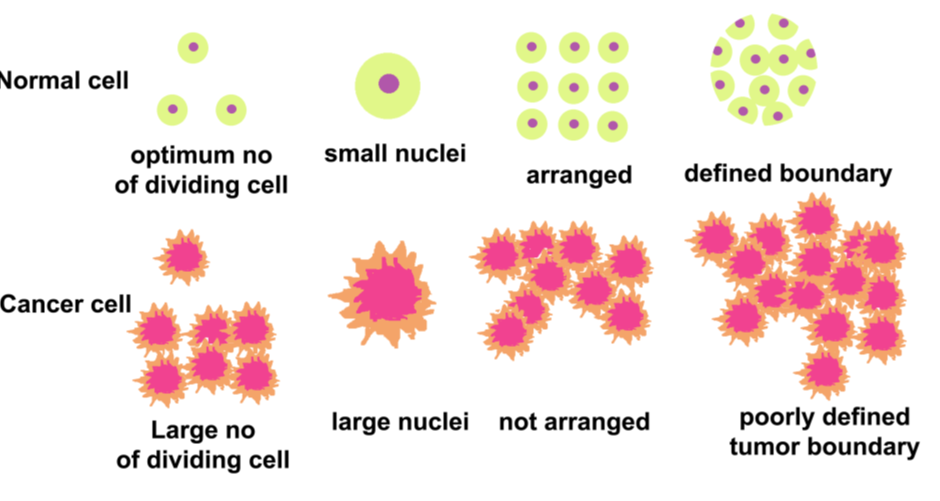
Figure.3

Surgery

The surgical method aims to remove cancer-affected tissues completely.53 However, if the vital organs such as the liver, lungs, brain are affected, complete removal may not be possible to prevent organ damage. For these cases, other procedures may be applied followed by surgery.

Radiation therapy

Radiation therapy works by damaging the DNA of cancer cells. DNA damage is caused by direct or indirect ionization. Linear accelerators, Cobalt-60 units, Caesium-137 therapy units, low to orthovoltage x-ray units, high dose and low dose rate brachytherapy units and conventional brachytherapy units are used for radiation therapy.54

Immunotherapy

Immunotherapy is a type of treatment that helps your immune system to fight against cancer. Immune Checkpoint Inhibitors, Adoptive Cell Therapies, Monoclonal Antibodies, Oncolytic Virus Therapy, Cancer Vaccines, Immune System Modulators are used for immunotherapy.55

Targeted therapy

There is another type of cancer treatment which is known as targeted therapy. Targeted therapy is a cancer treatment that uses drugs to target specific genes and proteins involved in the growth and survival of cancer cells. In Targeted therapy used drugs can either affect the environmental tissues that help cancer growth or it can target cells related to cancer growth.56

Hormone therapy

This treatment reduces or completely terminates the growth of prostate and breast cancer which apply hormones for growth. Aromatase inhibitors (AIs), such as anastrozole, exemestane, and letrozole and Selective estrogen receptor modulators (SERMs), such as tamoxifen and raloxifene and Estrogen receptor antagonists, such as fulvestrant and toremifene are used in hormone therapy.57

Transplant of stem cell

Stem cell therapy promotes the repair of diseased, dysfunctional or injured tissue using stem cells or their derivatives. Stem cells are used in cancer patients to treat certain cancer like leukemia. These are processes that restore blood-forming stems cells in patients for whom these are damaged by heavy doses of radiation or chemotherapy.58

Chemotherapy

Chemotherapy is a very effective cancer treatment that applies specific drugs to destroy cancer cells. In the current application, the word “chemotherapy” generally indicates cytotoxic drugs  that influence quickly dividing cells, in contrast to targeted therapy. Chemotherapy drugs prevent cell division in different possible mechanisms. In most cases of chemotherapy, not only cancer cells but also normal cells are affected. Often more than one drug is referred together because a few drugs' responses are better in combination. This type of chemotherapy is known as “combination chemotherapy”59

Novel Formulations of Natural Products for Chemotherapy

The major concern of  traditional therapies is their poor accessibility to the tumor site therefore, higher doses are required to achieve a desired pharmacological response,which causes adverse drug reactions.The advancement of innovative nanotechnologies in medicines can significantly improve the treatment at clinical settings by overcoming the existing limitations associated with the diagnosis and treatment of various fatal diseases.Despite a wide range of antitumor effects exhibited by natural compounds in vitro preclinical studies, various hurdles still exist in translating these promising results into in vivo or clinical trials, resulting in failure and expectations. Despite remarkable health benefits, natural products’ full clinical potential has not yet been unlocked due to low aqueous solubility, poor absorption, and lower bioavailability, and shorter retention time in the biological environment. After administration, natural agents need to interact with various physico?chemical barriers that can alter their structure and affect their antitumoral activity. Therefore, novel formulation strategies are adopted to prevent the degradation of the natural compound and their parent structure, which helps retain their chemopreventive and chemotherapeutic activity.[52]

CONCLUSION

This review aims to boost the use of natural product arising from their anticancer activities With growing trends of cancer different new types of treatments and procedures are developing Presently used procedures have several side effects and limitations. Natural products and their derivatives have been an important source of several clinically effective agents for treating multiple cancers. The exploration of natural products as potential anticancer drugs represents a significant milestone in medical research, blending modern scientific approaches with the time-tested principles of traditional medicine. Examining historical breakthroughs, like the development of groundbreaking medications such as Taxol, Vincristine, and Vinblastine, underscores the enduring efficacy of natural products.

REFERENCES

  1. Nirmala MJ, Samundeeswari A, Sankar PD, Natural plant resources in anti-cancer therapy-A review, Research in Plant Biology, 2011, 1(3), 23-31
  2. Sarangi MK, Padhi S, Plants with potential anticancer activities-a Review, International Journal of Phytomedicine, 2014, 6(1), 01.
  3. Dholwani KK, Saluja AK, Gupta AR, Shah DR, A review on plant-derived natural products and their analogs with anti-tumor activity, Indian journal of pharmacology, 2008, 40(2), 49.
  4. Altmann KH (2003): Epothilone B and its analogs – a new family of anticancer agents. Mini Rev Med Chem 3:149–158.
  5. Hamel E, Covell DG (2002): Antimitotic peptides and depsipeptides.Curr Med Chem Anti-Canc Agents 2: 19–53.
  6. Stehelin D; Varmus HE, Bishop JM, Vogt PK (1976):DNA related to the transforming gene of avian sarcoma virus is present in normal avian DNA. Nature 260:170–173.
  7. Greenwell, M.; Rahman, P.K. Medicinal Plants: Their Use in Anticancer Treatment. Int. J. Pharm. Sci. Res.2015, 6, 4103–4112. [CrossRef] [PubMed] 
  8. Siegel, R.L.; Miller, K.D.; Jemal, A. Cancer Statistics, 2017. CA Cancer J. Clin. 2017, 67, 7–30. [CrossRef] [PubMed]
  9. Banerjee, P.; Erehman, J.; Gohlke, B.O.;Wilhelm, T.; Preissner, R.; Dunkel, M. Super Natural II—A database of natural products. Nucleic Acids Res. 2015, 43, D935–D939. [CrossRef] [PubMed]Int. J. Mol. Sci. 2018, 19, 3533 29 of 38
  10. Fridlender, M.; Kapulnik, Y.; Koltai, H. Plant derived substances with anti-cancer activity: From folklore to practice. Front. Plant Sci. 2015, 6, 1–9. [CrossRef] [PubMed]
  11. Devereaux, A.L.; Mercer, S.L.; Cunningham, C.W. DARK classics in chemical neuroscience: Morphine. ACS Chem. Neurosci. 2018, 9, 2395–2407. [11]
  12. Cordell, G.A.; Quinn-Beattie, M.L.; Farnsworth, N.R. The potential of alkaloids in drug discovery. Phytother. Res. 2001, 15, 183–205. [12] Falcao de Sousa, J.A. Leite, J.M. Barbosa-Filho, P.F. de
  13. Athayde-Filho, M.C. de Oliveira Chaves, M.D. Moura, A. Luiz Ferreira, A.B. Albino de Almeida, A.R.M. Souza-Brito, M. de Fatima Formiga Melo Diniz, L.M. Batista, Molecules 13 (2008) 3198
  14. Shahar N., Larisch S. Inhibiting the Inhibitors: Targeting Anti-Apoptotic Proteins in Cancer and Therapy Resistance. Drug Resist. Updates. 2020;52:100712. doi: 10.1016/j.drup.2020.100712. [DOI] [PubMed] [Google Scholar]
  15. Paul A., Acharya K., Chakraborty N. Biosynthesis, Extraction, Detection and Pharmacological Attributes of Vinblastine and Vincristine, Two Important Chemotherapeutic Alkaloids of Catharanthus Roseus (L.) G. Don: A Review. S. Afr. J. Bot. 2023;161:365–376. doi: 10.1016/j.sajb.2023.08.034. [DOI] [Google Scholar]
  16. Zhu L., Chen L. Progress in Research on Paclitaxel and Tumor Immunotherapy. Cell. Mol. Biol. Lett. 2019;24:40. doi: 10.1186/s11658-019-0164-y. [DOI] [PMC free article] [PubMed] [Google Scholar]
  17. Wu C.-C., Li T.-K., Farh L., Lin L.-Y., Lin T.-S., Yu Y.-J., Yen T.-J., Chiang C.-W., Chan N.-L. Structural Basis of Type II Topoisomerase Inhibition by the Anticancer Drug Etoposide. Science. 2011;333:459–462. doi: 10.1126/science.1204117. [DOI] [PubMed] [Google Scholar]
  18. Avemann K., Knippers R., Koller T., Sogo J.M. Camptothecin, a Specific Inhibitor of Type I DNA Topoisomerase, Induces DNA Breakage at Replication Forks. Mol. Cell. Biol. 1988;8:3026–3034. doi: 10.1128/MCB.8.8.3026. [DOI] [PMC free article] [PubMed] [Google Scholar]
  19. Behera A., Padhi S. Passive and Active Targeting Strategies for the Delivery of the Camptothecin Anticancer Drug: A Review. Environ. Chem. Lett. 2020;18:1557–1567. doi: 10.1007/s10311-020-01022-9. [DOI] [Google Scholar]
  20. Moudi M., Go R., Yien C.Y.S., Nazre M. Vinca Alkaloids. Int. J. Prev. Med. 2013;4:1231–1235. [PMC free article] [PubMed] [Google Scholar]20.
  21. Zanwar A.A., Badole S.L., Shende P.S., Hegde M.V., Bodhankar S.L. Chapter 21—Antioxidant Role of Catechin in Health and Disease. In: Watson R.R., Preedy V.R., Zibadi S., editors. Polyphenols in Human Health and Disease. Academic Press; San Diego, CA, USA: 2014. pp. 267–271. [Google Scholar]
  22. ALaqeel N.K. Antioxidants from Different Citrus Peels Provide Protection against Cancer. Braz. J. Biol. 2023;84:e271619. doi: 10.1590/1519-6984.271619. [DOI] PubMedGoogle Scholar
  23. Toti E., Chen C.-Y.O., Palmery M., Villaño Valencia D., Peluso I. Non-Provitamin A and Provitamin A Carotenoids as Immunomodulators: Recommended Dietary Allowance, Therapeutic Index, or Personalized Nutrition? Oxid. Med. Cell Longev. 2018;2018:4637861. doi: 10.1155/2018/4637861. [DOI] [PMC free article] [PubMed] [Google Scholar]
  24. Kelkel M., Schumacher M., Dicato M., Diederich M. Antioxidant and Anti-Proliferative Properties of Lycopene. Free Radic Res. 2011;45:925–940. doi: 10.3109/10715762.2011.564168. [DOI] [PubMed] [Google Scholar]
  25. Ravina E. The evolution of drug discovery: from traditional medicines to modern drugs. John Wiley and Sons; 2011.
  26. Kuboyama T, Yokoshima S, Tokuyama H, Fukuyama T. Stereocontrolled total synthesis of (+)-vincristine. Proc Natl Acad Sci U S A. 2004; 101(33):11966-70. doi: 10.1073/pnas .0401323101, PMID 15141084.
  27. Dores GM, Metayer C, Curtis RE, Lynch CF, Clarke EA, Glimelius B, et al. Second malignant neoplasms among long-term survivors of Hodgkin’s disease: a population-based evaluation over 25 years. J Clin Oncol. 2002;20(16):3484-94. doi: 1 0.1200/JCO.2002.09.038, PMID 12177110.
  28. Jordan MA, Wilson L. Microtubules as a target for anticancer drugs. Nat Rev Cancer. 2004;4(4):253-65. doi: 10.1038/nrc1317, PMID 15057285.
  29. Iqbal J, Abbasi BA, Mahmood T, Kanwal S, Ali B, Shah SA, et al. Plant-derived anticancer  agents:A green anticancer approach. Asian Pac J Trop Biomed. 2017;7(12):1129-50. doi:     10.1016/j.apjtb.2017.10.016
  30. Steck W, Bailey BK, Shyluk JP, Gamborg OL. Coumarins and alkaloids from cell cultures of Ruta graveolens. Phytochemistry. 1971;10(1):191-4. doi: 10.1016/S0031-9422(00 )90269-
  31. Salehi B., Stojanovi?-Radi? Z., Mateji? J., Sharifi-Rad M., Anil Kumar N.V., Martins N., Sharifi-Rad J. The Therapeutic Potential of Curcumin: A Review of Clinical Trials. Eur. J. Med. Chem. 2019;163:527–545. doi: 10.1016/j.ejmech.2018.12.016. [DOI] [PubMed] [Google Scholar]
  32. Berman A.Y., Motechin R.A., Wiesenfeld M.Y., Holz M.K. The Therapeutic Potential of Resveratrol: A Review of Clinical Trials. NPJ Precis. Oncol. 2017;1:35. doi: 10.1038/s41698-017-0038-6. [DOI] [PMC free article] [PubMed] [Google Scholar]
  33. Aggarwal V., Tuli H.S., Tania M., Srivastava S., Ritzer E.E., Pandey A., Aggarwal D., Barwal T.S., Jain A., Kaur G., et al. Molecular Mechanisms of Action of Epigallocatechin Gallate in Cancer: Recent Trends and Advancement. Semin. Cancer Biol. 2022;80:256–275. doi: 10.1016/j.semcancer.2020.05.011. [DOI] [PubMed] [Google Scholar]
  34. Yang Y.-H., Mao J.-W., Tan X.-L. Research Progress on the Source, Production, and Anti-Cancer Mechanisms of Paclitaxel. Chin. J. Nat. Med. 2020;18:890–897. doi: 10.1016/S1875-5364(20)60032-2. [DOI] [PubMed] [Google Scholar]
  35. Tang S.-M., Deng X.-T., Zhou J., Li Q.-P., Ge X.-X., Miao L. Pharmacological Basis and New Insights of Quercetin Action in Respect to Its Anti-Cancer Effects. Biomed. Pharmacother. 2020;121:109604. doi: 10.1016/j.biopha.2019.109604. [DOI] [PubMed] [Google Scholar]
  36. Goto K., Ohe Y., Shibata T., Seto T., Takahashi T., Nakagawa K., Tanaka H., Takeda K., Nishio M., Mori K., et al. Combined Chemotherapy with Cisplatin, Etoposide, and Irinotecan versus Topotecan Alone as Second-Line Treatment for Patients with Sensitive Relapsed Small-Cell Lung Cancer (JCOG0605): A Multicentre, Open-Label, Randomised Phase 3 Trial. Lancet Oncol. 2016;17:1147–1157. doi: 10.1016/S1470-2045(16)30104-8. [DOI] [PubMed] [Google Scholar]
  37. Chen Q.-H., Wu B.-K., Pan D., Sang L.-X., Chang B. Beta-Carotene and Its Protective Effect on Gastric Cancer. World J. Clin. Cases. 2021;9:6591–6607. doi: 10.12998/wjcc.v9.i23.6591. [DOI] [PMC free article] [PubMed] [Google Scholar]
  38. Mangla B., Javed S., Sultan M.H., Kumar P., Kohli K., Najmi A., Alhazmi H.A., Al Bratty M., Ahsan W. Sulforaphane: A Review of Its Therapeutic Potentials, Advances in Its Nanodelivery, Recent Patents, and Clinical Trials. Phytother. Res. 2021;35:5440–5458. doi: 10.1002/ptr.7176. [DOI] [PubMed] [Google Scholar]
  39. Mashhadi Akbar Boojar M., Mashhadi Akbar Boojar M., Golmohammad S. Overview of Silibinin Anti-Tumor Effects. J. Herb. Med. 2020;23:100375. doi: 10.1016/j.hermed.2020.100375. [DOI] [Google Scholar]
  40. Thomford N., Senthebane D., Rowe A., Munro D., Seele P., Maroyi A., Dzobo K. Natural Products for Drug Discovery in the 21st Century: Innovations for Novel Drug Discovery. Int. J. Mol. Sci. 2018;19:1578. doi:10.3390/ijms19061578. [DOI] [PMC free article] [PubMed] [Google Scholar]
  41. Li G., Lou H.-X. Strategies to Diversify Natural Products for Drug Discovery. Med. Res. Rev. 2018;38:1255–1294. doi: 10.1002/med.21474. [DOI] [PubMed] [Google Scholar]
  42. Singh I.P., Ahmad F., Chatterjee D., Bajpai R., Sengar N. Natural Products: Drug Discovery and Development. In: Poduri R., editor. Drug Discovery and Development: From Targets and Molecules to Medicines. Springer; Singapore: 2021. pp. 11–65. [Google Scholar]
  43. Calixto J.B. The Role of Natural Products in Modern Drug Discovery. An. Acad. Bras. Ciências. 2019;91:1–7. doi: 10.1590/0001-3765201920190105. [DOI] [PubMed] [Google Scholar]
  44. Shaik B.B., Katari N.K., Jonnalagadda S.B. Role of Natural Products in Developing Novel Anticancer Agents: A Perspective. Chem. Biodivers. 2022;19:e202200535. doi: 10.1002/cbdv.202200535. [DOI] [PubMed] [Google Scholar]
  45. Ongnok B., Chattipakorn N., Chattipakorn S.C. Doxorubicin and Cisplatin Induced Cognitive Impairment: The Possible Mechanisms and Interventions. Exp. Neurol. 2020;324:113118. doi: 10.1016/j.expneurol.2019.113118. [DOI] [PubMed] [Google Scholar]
  46. Nan Y., Su H., Zhou B., Liu S. The Function of Natural Compounds in Important Anticancer Mechanisms. Front. Oncol. 2022;12:1049888. doi: 10.3389/fonc.2022.1049888. [DOI] [PMC free article] [PubMed] [Google Scholar]
  47. Desilets A., Adam J.-P., Soulières D. Management of Cisplatin-Associated Toxicities in Bladder Cancer Patients. Curr. Opin. Support. Palliat. Care. 2020;14:286–292. doi: 10.1097/SPC.0000000000000505. [DOI] [PubMed] [Google Scholar]
  48. Cao K., Tait S.W.G. Apoptosis and Cancer: Force Awakens, Phantom Menace, or Both? Int. Rev. Cell Mol. Biol. 2018;337:135–152. doi: 10.1016/bs.ircmb.2017.12.003. [DOI] [PubMed] [Google Scholar]
  49. Naeem A., Hu P., Yang M., Zhang J., Liu Y., Zhu W., Zheng Q. Natural Products as Anticancer Agents: Current Status and Future Perspectives. Molecules. 2022;27:8367. doi: 10.3390/molecules27238367. [DOI] [PMC free article] [PubMed] [Google Scholar]
  50. Baxi S.M., Beall R., Yang J., Mackey T.K., (2019).A Multidisciplinary Review of the Policy, Intellectual Property Rights, and International Trade Environment for Access and Affordability to Essential Cancer Medications. Glob. Health.15:57. doi: 10.1186/s12992-019-0497-3.
  51. Bertha N., Moiketsi, P. P., Makale, G. R., Teddie O. R.,and Abdullah M., (2023).Potential of Selected African Medicinal Plants as Alternative Therapeutics against Multi Drug-Resistant Bacteria.11(10): 2605.doi: 10.3390/biomedicines11102605
  52. Kashyap, D.; Tuli, H.S.; Yerer, M.B.; Sharma, A.; Sak, K.; Srivastava, S.; Pandey, A.; Garg, V.K.; Sethi, G.; Bishayee, A. NaturalProduct?Based Nanoformulations for Cancer Therapy: Opportunities and Challenges. In Seminars in Cancer Biology; Academic Press: Cambridge, MA, USA, 2019.
  53. Subotic S, Wyler S, Bachmann A. Surgical treatment of localised renal cancer. Eur Urol Suppl. 2012;11(3):60-5. doi: 10.1016/j.eursup.2012.04.002.
  54. Hill R, Healy B, Holloway L, Kuncic Z, Thwaites D, Baldock C. Advances in kilovoltage x-ray beam dosimetry. Phys Med Biol. 2014;59(6):R183-231. doi: 10.1088/0031-9155 /59/6/R183, PMID 24584183.
  55. Waldmann TA. Immunotherapy: past, present and future. Nat Med. 2003;9(3):269-77. doi: 10.1038/nm0303-269, PMID 12612576.
  56. Cordo’ V, van der Zwet JCG, Canté-Barrett K, Pieters R, Meijerink JPPT-cell Acute Lymphoblastic Leukemia: A Roadmap to Targeted Therapies. Blood Cancer Discov. 2021;2(1):19-31. doi: 10.1158/2643-3230.BCD-20-0093, PMID 34661151.
  57. Seifter EJ. Cancer: principles and practice of oncology De Vita VT, Jr Hellman S, Rosenberg SA, editors. Philadelphia: Lippincott-Raven Publishers, ISBN 0-397-51573-4;1997. 3125p.
  58. ParkB, YooKH, Kim C. Hematopoietic stem cell expansion and generation: The ways to make a breakthrough. Blood Res. 2015;50(4):194-203. doi: 10.5045/br.2015.50.4.1 94, PMID 26770947.
  59. Frei III E, EderJP. Combination chemotherapy. In: Cancer Medicine H-F, editor. 6th ed.B C Decker; 2003

Reference

  1. Nirmala MJ, Samundeeswari A, Sankar PD, Natural plant resources in anti-cancer therapy-A review, Research in Plant Biology, 2011, 1(3), 23-31
  2. Sarangi MK, Padhi S, Plants with potential anticancer activities-a Review, International Journal of Phytomedicine, 2014, 6(1), 01.
  3. Dholwani KK, Saluja AK, Gupta AR, Shah DR, A review on plant-derived natural products and their analogs with anti-tumor activity, Indian journal of pharmacology, 2008, 40(2), 49.
  4. Altmann KH (2003): Epothilone B and its analogs – a new family of anticancer agents. Mini Rev Med Chem 3:149–158.
  5. Hamel E, Covell DG (2002): Antimitotic peptides and depsipeptides.Curr Med Chem Anti-Canc Agents 2: 19–53.
  6. Stehelin D; Varmus HE, Bishop JM, Vogt PK (1976):DNA related to the transforming gene of avian sarcoma virus is present in normal avian DNA. Nature 260:170–173.
  7. Greenwell, M.; Rahman, P.K. Medicinal Plants: Their Use in Anticancer Treatment. Int. J. Pharm. Sci. Res.2015, 6, 4103–4112. [CrossRef] [PubMed] 
  8. Siegel, R.L.; Miller, K.D.; Jemal, A. Cancer Statistics, 2017. CA Cancer J. Clin. 2017, 67, 7–30. [CrossRef] [PubMed]
  9. Banerjee, P.; Erehman, J.; Gohlke, B.O.;Wilhelm, T.; Preissner, R.; Dunkel, M. Super Natural II—A database of natural products. Nucleic Acids Res. 2015, 43, D935–D939. [CrossRef] [PubMed]Int. J. Mol. Sci. 2018, 19, 3533 29 of 38
  10. Fridlender, M.; Kapulnik, Y.; Koltai, H. Plant derived substances with anti-cancer activity: From folklore to practice. Front. Plant Sci. 2015, 6, 1–9. [CrossRef] [PubMed]
  11. Devereaux, A.L.; Mercer, S.L.; Cunningham, C.W. DARK classics in chemical neuroscience: Morphine. ACS Chem. Neurosci. 2018, 9, 2395–2407. [11]
  12. Cordell, G.A.; Quinn-Beattie, M.L.; Farnsworth, N.R. The potential of alkaloids in drug discovery. Phytother. Res. 2001, 15, 183–205. [12] Falcao de Sousa, J.A. Leite, J.M. Barbosa-Filho, P.F. de
  13. Athayde-Filho, M.C. de Oliveira Chaves, M.D. Moura, A. Luiz Ferreira, A.B. Albino de Almeida, A.R.M. Souza-Brito, M. de Fatima Formiga Melo Diniz, L.M. Batista, Molecules 13 (2008) 3198
  14. Shahar N., Larisch S. Inhibiting the Inhibitors: Targeting Anti-Apoptotic Proteins in Cancer and Therapy Resistance. Drug Resist. Updates. 2020;52:100712. doi: 10.1016/j.drup.2020.100712. [DOI] [PubMed] [Google Scholar]
  15. Paul A., Acharya K., Chakraborty N. Biosynthesis, Extraction, Detection and Pharmacological Attributes of Vinblastine and Vincristine, Two Important Chemotherapeutic Alkaloids of Catharanthus Roseus (L.) G. Don: A Review. S. Afr. J. Bot. 2023;161:365–376. doi: 10.1016/j.sajb.2023.08.034. [DOI] [Google Scholar]
  16. Zhu L., Chen L. Progress in Research on Paclitaxel and Tumor Immunotherapy. Cell. Mol. Biol. Lett. 2019;24:40. doi: 10.1186/s11658-019-0164-y. [DOI] [PMC free article] [PubMed] [Google Scholar]
  17. Wu C.-C., Li T.-K., Farh L., Lin L.-Y., Lin T.-S., Yu Y.-J., Yen T.-J., Chiang C.-W., Chan N.-L. Structural Basis of Type II Topoisomerase Inhibition by the Anticancer Drug Etoposide. Science. 2011;333:459–462. doi: 10.1126/science.1204117. [DOI] [PubMed] [Google Scholar]
  18. Avemann K., Knippers R., Koller T., Sogo J.M. Camptothecin, a Specific Inhibitor of Type I DNA Topoisomerase, Induces DNA Breakage at Replication Forks. Mol. Cell. Biol. 1988;8:3026–3034. doi: 10.1128/MCB.8.8.3026. [DOI] [PMC free article] [PubMed] [Google Scholar]
  19. Behera A., Padhi S. Passive and Active Targeting Strategies for the Delivery of the Camptothecin Anticancer Drug: A Review. Environ. Chem. Lett. 2020;18:1557–1567. doi: 10.1007/s10311-020-01022-9. [DOI] [Google Scholar]
  20. Moudi M., Go R., Yien C.Y.S., Nazre M. Vinca Alkaloids. Int. J. Prev. Med. 2013;4:1231–1235. [PMC free article] [PubMed] [Google Scholar]20.
  21. Zanwar A.A., Badole S.L., Shende P.S., Hegde M.V., Bodhankar S.L. Chapter 21—Antioxidant Role of Catechin in Health and Disease. In: Watson R.R., Preedy V.R., Zibadi S., editors. Polyphenols in Human Health and Disease. Academic Press; San Diego, CA, USA: 2014. pp. 267–271. [Google Scholar]
  22. ALaqeel N.K. Antioxidants from Different Citrus Peels Provide Protection against Cancer. Braz. J. Biol. 2023;84:e271619. doi: 10.1590/1519-6984.271619. [DOI] PubMedGoogle Scholar
  23. Toti E., Chen C.-Y.O., Palmery M., Villaño Valencia D., Peluso I. Non-Provitamin A and Provitamin A Carotenoids as Immunomodulators: Recommended Dietary Allowance, Therapeutic Index, or Personalized Nutrition? Oxid. Med. Cell Longev. 2018;2018:4637861. doi: 10.1155/2018/4637861. [DOI] [PMC free article] [PubMed] [Google Scholar]
  24. Kelkel M., Schumacher M., Dicato M., Diederich M. Antioxidant and Anti-Proliferative Properties of Lycopene. Free Radic Res. 2011;45:925–940. doi: 10.3109/10715762.2011.564168. [DOI] [PubMed] [Google Scholar]
  25. Ravina E. The evolution of drug discovery: from traditional medicines to modern drugs. John Wiley and Sons; 2011.
  26. Kuboyama T, Yokoshima S, Tokuyama H, Fukuyama T. Stereocontrolled total synthesis of (+)-vincristine. Proc Natl Acad Sci U S A. 2004; 101(33):11966-70. doi: 10.1073/pnas .0401323101, PMID 15141084.
  27. Dores GM, Metayer C, Curtis RE, Lynch CF, Clarke EA, Glimelius B, et al. Second malignant neoplasms among long-term survivors of Hodgkin’s disease: a population-based evaluation over 25 years. J Clin Oncol. 2002;20(16):3484-94. doi: 1 0.1200/JCO.2002.09.038, PMID 12177110.
  28. Jordan MA, Wilson L. Microtubules as a target for anticancer drugs. Nat Rev Cancer. 2004;4(4):253-65. doi: 10.1038/nrc1317, PMID 15057285.
  29. Iqbal J, Abbasi BA, Mahmood T, Kanwal S, Ali B, Shah SA, et al. Plant-derived anticancer  agents:A green anticancer approach. Asian Pac J Trop Biomed. 2017;7(12):1129-50. doi:     10.1016/j.apjtb.2017.10.016
  30. Steck W, Bailey BK, Shyluk JP, Gamborg OL. Coumarins and alkaloids from cell cultures of Ruta graveolens. Phytochemistry. 1971;10(1):191-4. doi: 10.1016/S0031-9422(00 )90269-
  31. Salehi B., Stojanovi?-Radi? Z., Mateji? J., Sharifi-Rad M., Anil Kumar N.V., Martins N., Sharifi-Rad J. The Therapeutic Potential of Curcumin: A Review of Clinical Trials. Eur. J. Med. Chem. 2019;163:527–545. doi: 10.1016/j.ejmech.2018.12.016. [DOI] [PubMed] [Google Scholar]
  32. Berman A.Y., Motechin R.A., Wiesenfeld M.Y., Holz M.K. The Therapeutic Potential of Resveratrol: A Review of Clinical Trials. NPJ Precis. Oncol. 2017;1:35. doi: 10.1038/s41698-017-0038-6. [DOI] [PMC free article] [PubMed] [Google Scholar]
  33. Aggarwal V., Tuli H.S., Tania M., Srivastava S., Ritzer E.E., Pandey A., Aggarwal D., Barwal T.S., Jain A., Kaur G., et al. Molecular Mechanisms of Action of Epigallocatechin Gallate in Cancer: Recent Trends and Advancement. Semin. Cancer Biol. 2022;80:256–275. doi: 10.1016/j.semcancer.2020.05.011. [DOI] [PubMed] [Google Scholar]
  34. Yang Y.-H., Mao J.-W., Tan X.-L. Research Progress on the Source, Production, and Anti-Cancer Mechanisms of Paclitaxel. Chin. J. Nat. Med. 2020;18:890–897. doi: 10.1016/S1875-5364(20)60032-2. [DOI] [PubMed] [Google Scholar]
  35. Tang S.-M., Deng X.-T., Zhou J., Li Q.-P., Ge X.-X., Miao L. Pharmacological Basis and New Insights of Quercetin Action in Respect to Its Anti-Cancer Effects. Biomed. Pharmacother. 2020;121:109604. doi: 10.1016/j.biopha.2019.109604. [DOI] [PubMed] [Google Scholar]
  36. Goto K., Ohe Y., Shibata T., Seto T., Takahashi T., Nakagawa K., Tanaka H., Takeda K., Nishio M., Mori K., et al. Combined Chemotherapy with Cisplatin, Etoposide, and Irinotecan versus Topotecan Alone as Second-Line Treatment for Patients with Sensitive Relapsed Small-Cell Lung Cancer (JCOG0605): A Multicentre, Open-Label, Randomised Phase 3 Trial. Lancet Oncol. 2016;17:1147–1157. doi: 10.1016/S1470-2045(16)30104-8. [DOI] [PubMed] [Google Scholar]
  37. Chen Q.-H., Wu B.-K., Pan D., Sang L.-X., Chang B. Beta-Carotene and Its Protective Effect on Gastric Cancer. World J. Clin. Cases. 2021;9:6591–6607. doi: 10.12998/wjcc.v9.i23.6591. [DOI] [PMC free article] [PubMed] [Google Scholar]
  38. Mangla B., Javed S., Sultan M.H., Kumar P., Kohli K., Najmi A., Alhazmi H.A., Al Bratty M., Ahsan W. Sulforaphane: A Review of Its Therapeutic Potentials, Advances in Its Nanodelivery, Recent Patents, and Clinical Trials. Phytother. Res. 2021;35:5440–5458. doi: 10.1002/ptr.7176. [DOI] [PubMed] [Google Scholar]
  39. Mashhadi Akbar Boojar M., Mashhadi Akbar Boojar M., Golmohammad S. Overview of Silibinin Anti-Tumor Effects. J. Herb. Med. 2020;23:100375. doi: 10.1016/j.hermed.2020.100375. [DOI] [Google Scholar]
  40. Thomford N., Senthebane D., Rowe A., Munro D., Seele P., Maroyi A., Dzobo K. Natural Products for Drug Discovery in the 21st Century: Innovations for Novel Drug Discovery. Int. J. Mol. Sci. 2018;19:1578. doi:10.3390/ijms19061578. [DOI] [PMC free article] [PubMed] [Google Scholar]
  41. Li G., Lou H.-X. Strategies to Diversify Natural Products for Drug Discovery. Med. Res. Rev. 2018;38:1255–1294. doi: 10.1002/med.21474. [DOI] [PubMed] [Google Scholar]
  42. Singh I.P., Ahmad F., Chatterjee D., Bajpai R., Sengar N. Natural Products: Drug Discovery and Development. In: Poduri R., editor. Drug Discovery and Development: From Targets and Molecules to Medicines. Springer; Singapore: 2021. pp. 11–65. [Google Scholar]
  43. Calixto J.B. The Role of Natural Products in Modern Drug Discovery. An. Acad. Bras. Ciências. 2019;91:1–7. doi: 10.1590/0001-3765201920190105. [DOI] [PubMed] [Google Scholar]
  44. Shaik B.B., Katari N.K., Jonnalagadda S.B. Role of Natural Products in Developing Novel Anticancer Agents: A Perspective. Chem. Biodivers. 2022;19:e202200535. doi: 10.1002/cbdv.202200535. [DOI] [PubMed] [Google Scholar]
  45. Ongnok B., Chattipakorn N., Chattipakorn S.C. Doxorubicin and Cisplatin Induced Cognitive Impairment: The Possible Mechanisms and Interventions. Exp. Neurol. 2020;324:113118. doi: 10.1016/j.expneurol.2019.113118. [DOI] [PubMed] [Google Scholar]
  46. Nan Y., Su H., Zhou B., Liu S. The Function of Natural Compounds in Important Anticancer Mechanisms. Front. Oncol. 2022;12:1049888. doi: 10.3389/fonc.2022.1049888. [DOI] [PMC free article] [PubMed] [Google Scholar]
  47. Desilets A., Adam J.-P., Soulières D. Management of Cisplatin-Associated Toxicities in Bladder Cancer Patients. Curr. Opin. Support. Palliat. Care. 2020;14:286–292. doi: 10.1097/SPC.0000000000000505. [DOI] [PubMed] [Google Scholar]
  48. Cao K., Tait S.W.G. Apoptosis and Cancer: Force Awakens, Phantom Menace, or Both? Int. Rev. Cell Mol. Biol. 2018;337:135–152. doi: 10.1016/bs.ircmb.2017.12.003. [DOI] [PubMed] [Google Scholar]
  49. Naeem A., Hu P., Yang M., Zhang J., Liu Y., Zhu W., Zheng Q. Natural Products as Anticancer Agents: Current Status and Future Perspectives. Molecules. 2022;27:8367. doi: 10.3390/molecules27238367. [DOI] [PMC free article] [PubMed] [Google Scholar]
  50. Baxi S.M., Beall R., Yang J., Mackey T.K., (2019).A Multidisciplinary Review of the Policy, Intellectual Property Rights, and International Trade Environment for Access and Affordability to Essential Cancer Medications. Glob. Health.15:57. doi: 10.1186/s12992-019-0497-3.
  51. Bertha N., Moiketsi, P. P., Makale, G. R., Teddie O. R.,and Abdullah M., (2023).Potential of Selected African Medicinal Plants as Alternative Therapeutics against Multi Drug-Resistant Bacteria.11(10): 2605.doi: 10.3390/biomedicines11102605
  52. Kashyap, D.; Tuli, H.S.; Yerer, M.B.; Sharma, A.; Sak, K.; Srivastava, S.; Pandey, A.; Garg, V.K.; Sethi, G.; Bishayee, A. NaturalProduct?Based Nanoformulations for Cancer Therapy: Opportunities and Challenges. In Seminars in Cancer Biology; Academic Press: Cambridge, MA, USA, 2019.
  53. Subotic S, Wyler S, Bachmann A. Surgical treatment of localised renal cancer. Eur Urol Suppl. 2012;11(3):60-5. doi: 10.1016/j.eursup.2012.04.002.
  54. Hill R, Healy B, Holloway L, Kuncic Z, Thwaites D, Baldock C. Advances in kilovoltage x-ray beam dosimetry. Phys Med Biol. 2014;59(6):R183-231. doi: 10.1088/0031-9155 /59/6/R183, PMID 24584183.
  55. Waldmann TA. Immunotherapy: past, present and future. Nat Med. 2003;9(3):269-77. doi: 10.1038/nm0303-269, PMID 12612576.
  56. Cordo’ V, van der Zwet JCG, Canté-Barrett K, Pieters R, Meijerink JPPT-cell Acute Lymphoblastic Leukemia: A Roadmap to Targeted Therapies. Blood Cancer Discov. 2021;2(1):19-31. doi: 10.1158/2643-3230.BCD-20-0093, PMID 34661151.
  57. Seifter EJ. Cancer: principles and practice of oncology De Vita VT, Jr Hellman S, Rosenberg SA, editors. Philadelphia: Lippincott-Raven Publishers, ISBN 0-397-51573-4;1997. 3125p.
  58. ParkB, YooKH, Kim C. Hematopoietic stem cell expansion and generation: The ways to make a breakthrough. Blood Res. 2015;50(4):194-203. doi: 10.5045/br.2015.50.4.1 94, PMID 26770947.
  59. Frei III E, EderJP. Combination chemotherapy. In: Cancer Medicine H-F, editor. 6th ed.B C Decker; 2003

Photo
Supriya Bidrale
Corresponding author

Balwantrao Chavan College of Pharmacy, Naigaon

Photo
Dr. Vishal Kshirsagar
Co-author

Principal, Balwantrao Chavan College of Pharmacy, Naigaon

Photo
Prashant Sawale
Co-author

Associate Professor, Balwantrao Chavan College of Pharmacy, Naigaon

Photo
Dr. Kshitija Deshmukh
Co-author

Associate Professor, Balwantrao Chavan College of Pharmacy, Naigaon

Supriya Bidrale, Dr. Vishal Kshirsagar, Prashant Sawale, Dr. Kshitija Deshmukh, A Review on Anticancer Agent from Natural Product, Int. J. of Pharm. Sci., 2026, Vol 4, Issue 3, 1703-1715. https://doi.org/10.5281/zenodo.19058832

More related articles
Preclinical Study On Protective Effects Of Maqui B...
Pavan khonde, Swati Jadhav, Aman Upaganlawar, Chandrashekhar Upas...
Development And Validation of RP- HPTLC Method For...
Dr. Pralhad Rege, Dr. Niraj Bahuguni, Avinash Jagdale, ...
A Comprehensive View Of Kaffir Lime (Citrus Hystrix)...
K.MOUNIKA, K.B ILANGO, M.J DHARANI PRABHA, S.EDVIN SHERIN, K.P PRAVEEN, T.TAMILARASI, ...
Formulation And Evaluation of Lip Tint Using Herbal Extracts...
Kumodini Bansod, Pooja Ghutke, Saima Sayyad, Souarab Naitam, ...
Formulation and Evaluation of Herbal Hand Wash Containing Methanolic Leaf Extrac...
Rohit P. Patil, Rohit S. Patil, Askshata Pawar, Shridhar Adagane, Rohan Bindage, ...
Related Articles
Advances in Nanotechnology Based Delivery of Resveratrol: Challenges, Opportunit...
Dharani priya B., Kavya M., Athulya P. K., Kiruthika V., ...
Standardization and Pharmacological Insights of Pathyakshadhatryadi Kashaya: An ...
Anu Joy, Devisree C., Smitha Francis, Greeshma K. M., D. Ramanathan, ...
Formulation and Evaluation of Flaxseed Hair Gel...
HEMAPRIYA. M, KODHAI. V, PAVITHRA. N, MOUNIKA. R, PERARASU. P, Senthilraja M., ...
Medical Device: Supporting Hand In The Analytical Pharmacy...
Pavan B. Batav, Sakshi P. Sadavrte, Diksha S. Borse, Jagruti V. Pardhe , Ankita S. Musale , ...