
Sun College of Pharmacy and Research Centre, Tamil Nadu, India
Nano sponges are nanosized drug carriers with a three-dimensional structure created by cross linkage polymers. They have the advantage of being able to hold a wide range of range of drugs of various sizes. Nano sponges come in variety of shapes and sizes. They are distinguished by the research method used, the type of polymer used, and the type of drug they may contain. Nano sponges are superior to order delivery system because they can provide a controlled drug release pattern with targeted drug delivery. These features have extended their applications across diverse fields including oncology, antimicrobial therapy, cardiovascular treatment, dermatology, and diagnostic imaging. The period of action, as well as the drug’s residence time, may be regulated. Since it made of biodegradable materials, is has a low toxicity and is safe to use. The efficiency of drug encapsulation is determined by the sizes of the drug molecule and the amount of void space available. Cancer, enzyme and biocatalyst carrier, oxygen delivery, solubility enhancement, enzyme immobilization and poison absorbent are some the application for nano sponges. Their sponge-like porous structure enables the entrapment of drugs within cavities, leading to improved solubility and stability of active molecules. Their controlled release, biocompatibility, and ability to target specific sites make them a promising platform for advanced pharmaceutical and biomedical applications. The method of preparation, characterization, factor affecting nano sponge development, drug loading and release mechanism, recent development in this area, and patient field in the area of nano sponge are all highlighted in this study.
Nano sponges are nanoscale, porous, mesh-like structures capable of encapsulating a wide range of therapeutic agents, including both hydrophilic and lipophilic drug molecules.1 Their unique architecture enhances drug solubility, stability, and bioavailability, making them highly effective carriers for controlled and sustained drug delivery.2 Structurally, Nano sponges pose a spherical colloidal shape with an internal network composed of long- chain polyester crosslinked to form 3D framework.3
Nano sponges can be adapted for various routes of drug delivery:
MERITS OF NANOSPONGES
DEMERITS OF NANOSPONGES
METHOD OF NANOSPONGES
Several methods employed in the preparation of nano sponges are described below.
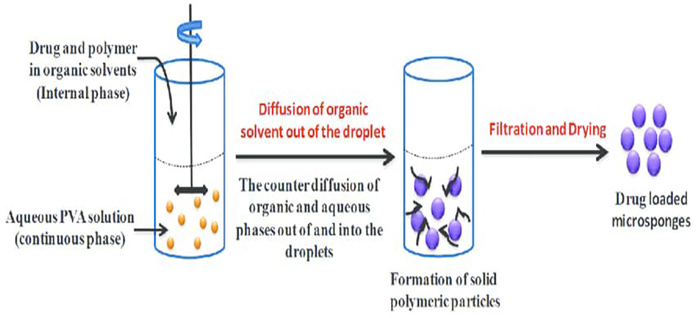
QUASI-EMULSION SOLVENT DIFFUSION METHOD
In this technique, nano sponges are prepared using two phases are aqueous and organic combined in specific ratios. The aqueous phase is composed of polyvinyl alcohol, while the organic phase contains the polymer and drug dissolved in an appropriate solvent. The organic mixture is slowly introduced into the aqueous phase under continuous stirring at 1000 rpm for over 2 hours. Finally, the obtained nano sponges are collected by filtration, followed by washing and drying.8-9
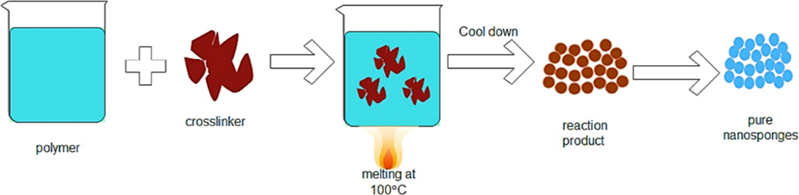
MELT METHOD
During the melting process, the polymer and crosslinker are melted and uniformly homogenized. The obtained material is then subjected to repeated washing with an appropriate solvent, which eliminates unreacted reagents and excess polymer, ultimately producing Nano sponge.10
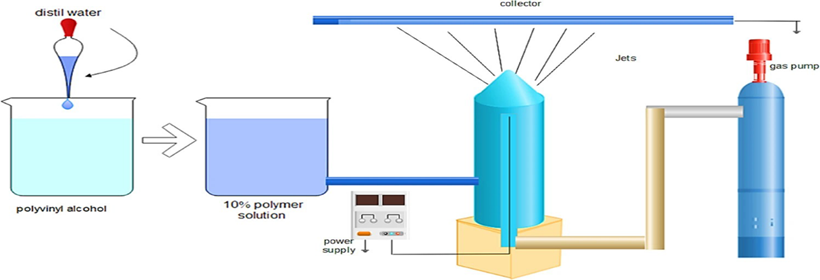
BUBBLE ELECTROSPINNING
Polyvinyl alcohol can serve as the polymer in bubble electrospinning. To prepare the polymer solution, 10% polyvinyl alcohol was dissolved in distilled water and maintained at 80–90 °C for 2 hours until a homogeneous one-phase mixture was achieved. The solution was then cooled to room temperature and subsequently utilized for the fabrication of nanoporous fibres.11
MATERIALS USED IN NANOSPONGE PREPARATION
POLYMERS AND COPOLYMERS
In drug- polymer complexation, the nano sponge’s cavity must be compatible with the molecular dimensions of the drug to ensure efficient encapsulation. Thus, polymer selection is determined by both the drug’s physicochemical characteristics and the intended release profile.12 Commonly used polymers include cyclodextrins and their derivatives, hyper crosslinked polystyrenes, Eudragit RS100, and various acrylic polymers.13 Cyclodextrins, owing to their hydrophobic internal cavity and hydrophilic outer surface, can encapsulate both hydrophilic and hydrophobic drugs. In this case, the porous structure of cyclodextrin nano sponges significantly enhanced the solubility of ferulic acid.14
CROSSLINKING AGENT
The selection of crosslinker in nano sponge formulation is largely determined by the structural of the polymer and the physicochemical properties of the drug to be encapsulated.15A variety of crosslinking agents have been reported in the literature, including carboxylic acid dianhydrides, carbonyl diimidazoles, diphenyl carbonate, glutaraldehyde, and dichloromethane.16By modifying crosslinker concentration, it is possible to design nano sponges with either hydrophilic or hydrophobic properties, thereby tailoring them for the delivery of diverse therapeutic agents. Furthermore, the type of crosslinker used can yield water-soluble nano sponge network and significantly such as polymer swelling behavior and hydrophilicity/hydrophobicity balance.11
DRUG SUBSTANCE
The drug substance is the core material used in the preparation of nano sponges, and its selection plays a vital role in determining the efficiency and application of the final formulation. Nano sponges are versatile carriers that can encapsulate both hydrophilic and lipophilic drugs, but poor aqueous solubility and low bioavailability Drugs such as anticancer agents, antibiotics, antifungals, anti-inflammatory drugs, and cardiovascular agents have been successfully incorporated into nano sponge formulations. , the choice of drug substance is crucial, as it directly influences the loading capacity, entrapment efficiency, and therapeutic performance of the nanosponges.17
FACTORS AFFECTING PREPRATION OF NANOSPONGE
The formulation of nano sponges by various methods is affected by different parameters discussed below
TYPES OF DRUGS AND MEDIUM USED FOR INTERACTION
The drug molecules must possess certain physicochemical characteristics to be effectively encapsulated within the nano sponge’s nanocavities.18
Effective entrapment typically requires drug molecules with the following properties.
TEMPERATURE
The complexation efficiency of nano sponges is influenced by temperature variations .As the temperature increases, the stability constant of the drug nano sponges complex generally decrease, likely due to weakened intermolecular interactions such as hydrophobic forces and van der Waals forces.20
On the other hand, very high temperatures can degrade both the polymer and drug substance, resulting in instability and loss of therapeutic activity. An optimum temperature range is therefore required to ensure proper cross linking, uniform pore formation, and stable nano sponge structure. Moreover, temperature also affects the solubility of the drug in the chosen solvent system, which in turn influences the loading capacity.
EVALUATION OF NANOSPONGE
Nano sponges are evaluated through a series of analytical techniques designed to assess their mechanical strength, crosslinking efficiency, drug loading and release performance. These tests are essential in determining whether the developed formulation meets the desired functional and structural criteria.21
MICROSCOPIC STUDY
The structural features of nano sponges and their drug complex can be investigated using high-resolution electron microscopy techniques such as Scanning Electron Microscopy (SEM) and Transmission Electron Microscopy (TEM).22 These tools provide detailed images of the nano sponge morphology and surface texture.23
SOLUBILITY STUDY
Inclusion complexation is commonly evaluated using the phase solubility technique. This method involves adding a fixed amount of drug to aqueous solutions containing increasing concentrations of nano sponges. . The drug concentration in the filtrate is then quantified via High-Performance Liquid Chromatography (HPLC). 24
THIN LAYER CHROMATOGRAPHY (TLC)
Thin layer chromatography aids in the identification of inclusion complexes by analyzing the retention factor (RF) values of drug molecules. Changes in these values drug molecules. Changes in these values indicate interaction between the drug and nano sponges, suggesting complex formation.25-26
DRUG LOADING EFFICIENCY
The efficiency with which Nano sponges encapsulate drug can be quantitatively assessed drug UV-visible spectrophotometry. The following equation is typically applied to calculate the percentage of drug loading 25
% Drug loading = (Amount of drug loaded in Nano sponges /Total amount of drug and polymer used)
SWELLING INDEX
The swelling index of nano sponges was evaluated using the Bernauer-Emmett-Teller (BET) method, conducted with a micromeritics ASAP analysis. Prior to testing, the samples were subjected to a pre-treatment process by heating at 120°C for 2 hours to ensure complete dehydration.27After the system thermal equilibrium at the optimal temperature, a known quantity of the dehydrated nano sponges’ sample (Wd) was introduced into the analysis bath. The swollen sample’s surface was gently blotted using filter paper to remove excess surface moisture, and the hydrated weight (Wh) was recorded.
This process was repeated three times, and the average Wh values was calculated to ensure accuracy.28
Swelling ratio= Wh/Wd
ENTRAPMENT EFFICIENCY
Weigh accurate quantity of nano sponge + Suitable solvent in a volumetric flask + Flask was shaken for 1 minute (vortex Mixer) + Volume made up to 10 ml with solvent + Solution was filtered and diluted with the concentration of Drug (UV Spectrometer) + Yield of nano particles determined by initial weight of nanoporosponge.29
POROSITY
To determine the extent of produced nanochannels and nanocavities, a porosity analysis is Conducted. A helium pycnometer is used to measure the Porosity of Nano sponges because helium gas may pass Through both inter and intra specific channels in materials. The helium displacement method is used to calculate the Material’s actual volume. Equation provides the percent.30
% Porosity = Bulk volume – True volume/Bulk volume × 100
WATER INDEX
Water uptake studies evaluate how much water the nano sponges can retain within their porous structure. It is generally expressed as a percentage increase in weight after hydration compared to the dry weight. A higher water index suggests improved porosity and better suitability for hydrophilic drug delivery systems.31
Percentage of Water Uptake =
Mass of the hydrogel after 72 hrs x 100
Initial marking before soaking
APPLICATIONS
|
DRUG |
NANO SPONGE VEHICLE |
INDICATION |
|
Antisense oligonucleotides |
Sodium alginate Poly L-lysine |
Cancer therapy, Viral infection, Pathological disorders. |
|
Bovine serum albumin |
Cyclodextrin based Poly (amidoamine) Protein supplement |
Drug release study |
|
Camptothecin |
β-cyclodextrin |
Cancer |
|
Dexamethasone |
β-cyclodextrin |
Brain tumours |
|
Econazole nitrate |
Ethyl cellulose Polyvinyl alcohol |
Antifungal |
|
Itraconazole |
β-cyclodextrin and copolyvidonum |
Antifungal |
|
Paclitaxel |
β-cyclodextrin |
Cancer |
|
Resveratrol |
β-cyclodextrin |
Inflammation, Cardiovascular disease, Dermatitis, Gonorrhoea, fever, hyperlipidaemia, Cytotoxicity. |
|
Tamoxifen |
β-cyclodextrin |
Breast cancer
|
|
Temozolomides |
Poly (Valero lactone allyl Valero lactone) and poly (Valero lactone allyl Valerolactoe-Oxepanedione) |
Brain tumours. |
|
Voriconazole |
Ethyle cellulose (EC), Polymethyl methacrylate (PMMA), PVA |
Antifungal |
CONCLUSION
The Nano sponges have been recognized as drug delivery system. The accumulation for both hydrophilic and lipophilic drug by forming a complex. If deliver the drug in a controlled manner. The advantage of this technology offers targeting the drug to specific site reduces side effects. The human health is already improved owing to recent approvals of drug delivery system. The safety and effectiveness of such medication’s delivery through nano sponges.
The functionality of nano sponges for emerging applications, including gene delivery, personalized medicine, and sustainable environmental technologies.
FUTURE PROSPECTS
Nano sponges have been found as the prominent drug delivery system in the field of pharmaceutics. The functionalization of Nano sponges to reduce toxicity, increase their specificity, and biosafety betterment. The various characteristics and multifunctionality can be produced.33The use of 3D printing techniques can help in the easy faster production of Nano sponges.13
The application of Nano sponges in the oral delivery of protein and peptides still needs to be investigated. The nano sponges were developed using β-cyclodextrin and crosslinking in with pyromellitic dianhydride. The Nano sponges were investigated for in vivo, in vitro, and other Physicochemical properties. On treatment, the in vivo study showed the presence of insulin in the plasma of rats with a hypoglycaemic effect. In upcoming years, Nano sponges, being an effective and reliable drug delivery system, can be an innovative nanotechnological method for oral delivery of protein.34
Continued research and development efforts are crucial to fully unlock the potential of nano sponges and translate them into practical applications in the future.
REFERENCES

Dr. J. Jaslin Edward, T. Jaghatha, P. Sreeja, Arshith H. M., Felin Varsha V. J., Keerthika A., Nawaz Khan M., Siva Gayathri S. R., A Comprehensive Review on Nanosponge: A Novel Class of Versatile Drug Delivery System, Int. J. of Pharm. Sci., 2026, Vol 4, Issue 1, 3604-3611. https://doi.org/10.5281/zenodo.18442090
 10.5281/zenodo.18442090
