
Highlights of Current Issue 2026 | Vol 04 | Issue 04
Tuberculosis (TB), caused by Mycobacterium tuberculosis, remains one of the world’s most serious public health challenges and is the leading cause of death among people...
 10.5281/zenodo.19629189
Hyperuricemia, caused by elevated xanthine oxidase (XO) activity, which generates reactive oxygen species and catalyzes the final steps of purine breakdown to uric acid, ...
10.5281/zenodo.19629094 
Liver diseases represent a major global health challenge, with increasing incidence of drug-induced hepatotoxicity, non-alcoholic fatty liver disease, and viral hepatitis...
10.5281/zenodo.19628859 
Blood grouping is a vital process in transfusion medicine. Usually, blood grouping is performed using serological techniques based on antigen–antibody interactions such...
10.5281/zenodo.19628695 
This study will focus on the formulation and application of herbal antioxid face serum using Cinnamon Barkextract, Aloevera geland honey as the primary natural ingredien...
10.5281/zenodo.19628471 
Nanoscale materials are used in nanomedicine to diagnose, treat and deliver medications for cancer, neurological diseases, and heart disease. Using artificial intelligenc...
10.5281/zenodo.19628192 
The immunomodulatory properties of polysaccharides produced from ?ve important Indian mushrooms—Volvariella volvacea, Pleurotus sajor-caju, Ganoderma lucidum (sometimes...
10.5281/zenodo.19627851 
The drug discovery process is notoriously time-consuming, costly, and failure-prone. In recent years, artificial intelligence (AI) techniques—including machine learning...
10.5281/zenodo.19627749 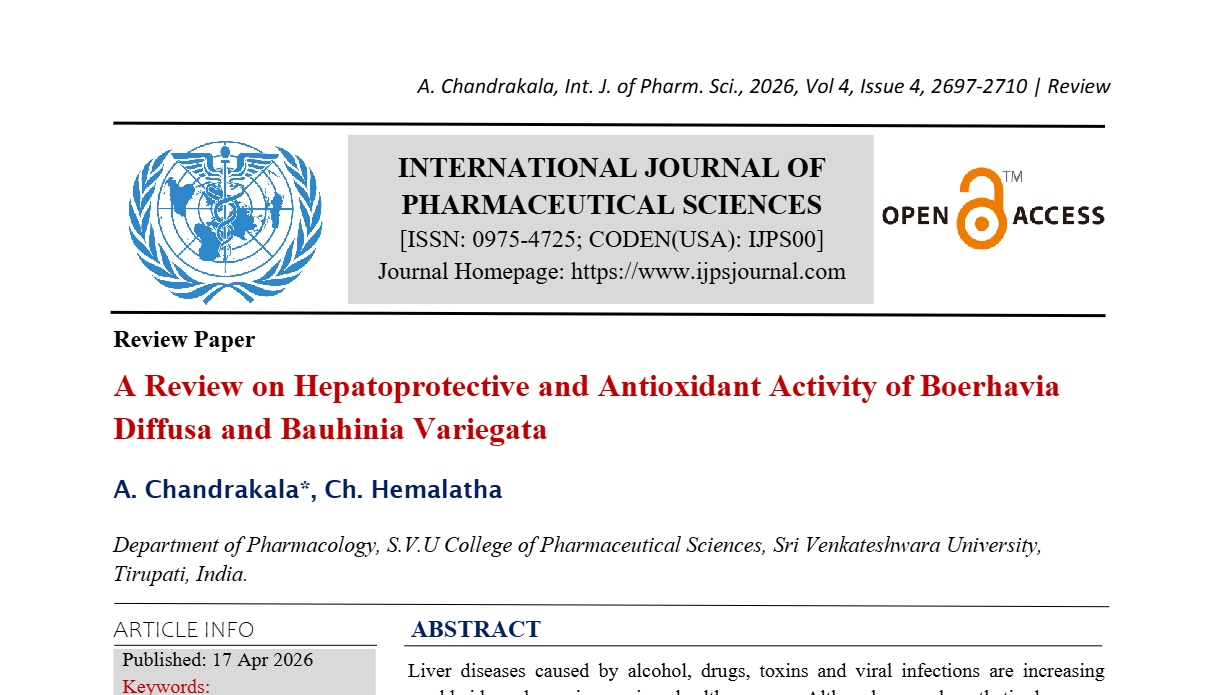
Liver diseases caused by alcohol, drugs, toxins and viral infections are increasing worldwide and remain a serious health concern. Although several synthetic drugs are av...
10.5281/zenodo.19627601 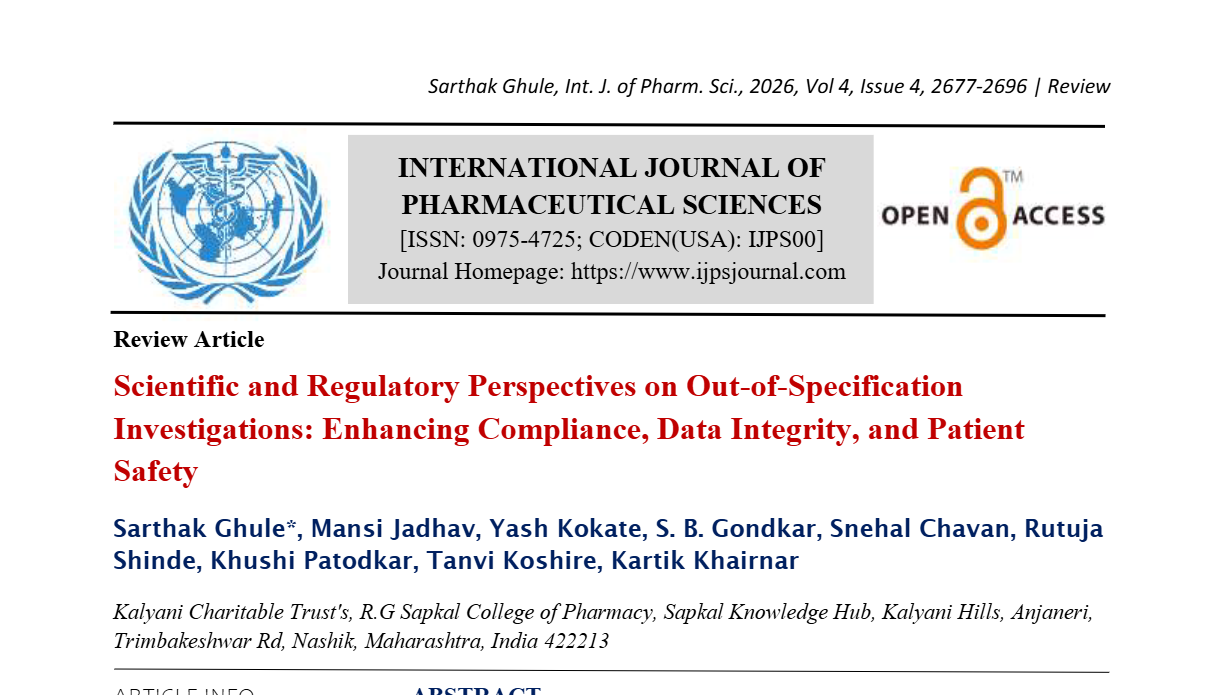
Out-of-Specification (OOS) results represent critical quality deviations in pharmaceutical manufacturing demanding rigorous investigation to protect patient safety and pr...
10.5281/zenodo.19614436 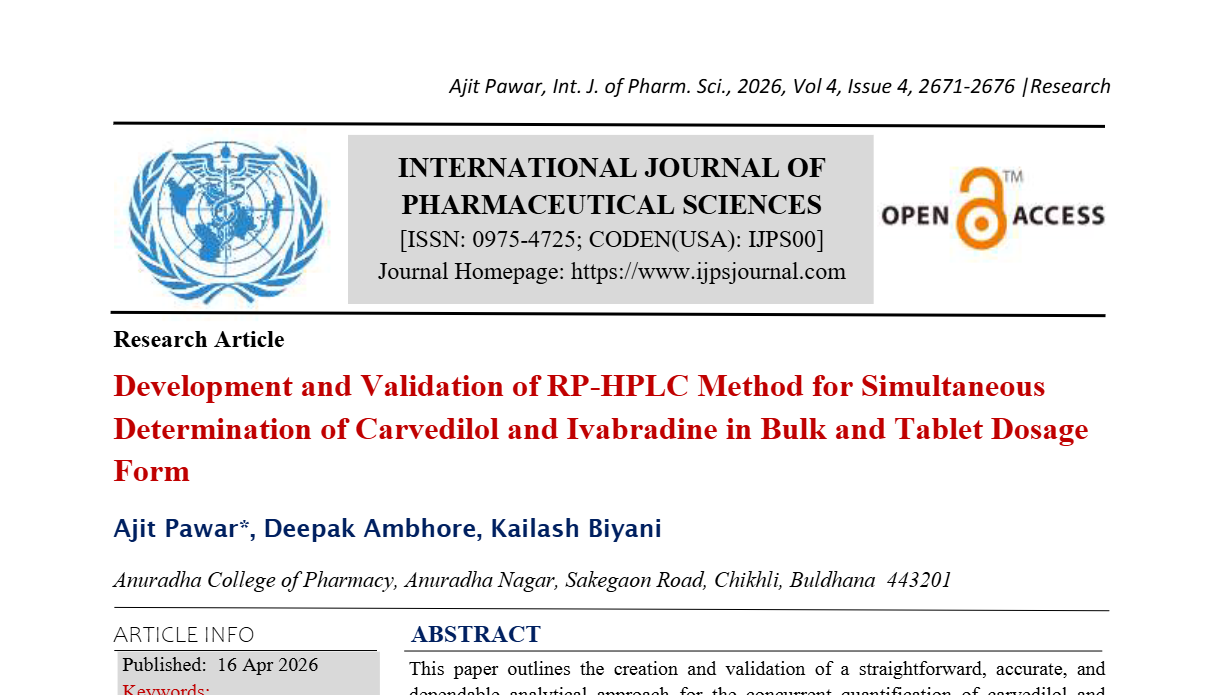
This paper outlines the creation and validation of a straightforward, accurate, and dependable analytical approach for the concurrent quantification of carvedilol and iva...
10.5281/zenodo.19614403 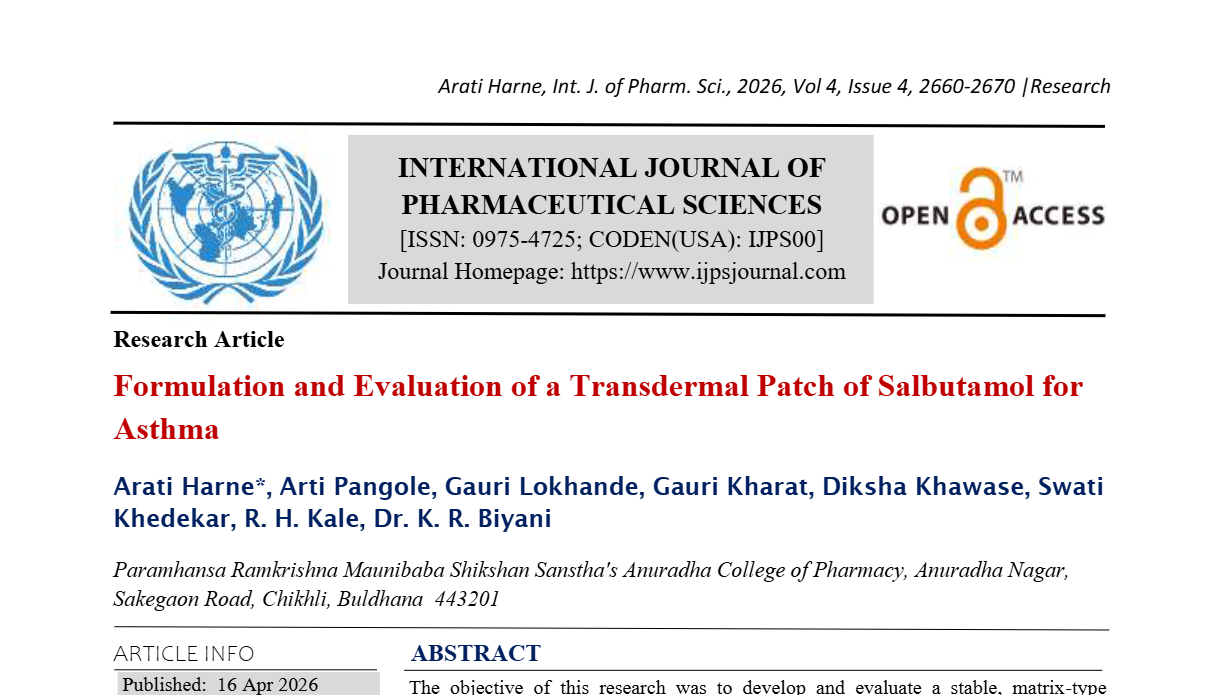
The objective of this research was to develop and evaluate a stable, matrix-type transdermal drug delivery system for Salbutamol Sulfate to provide controlled systemic re...
10.5281/zenodo.19610584 
