
Dattakala College of Pharmacy, Swami Chincholi, Bhigwan, Daund, Pune, Maharashtra, 413130
Medicinal plants have been an integral part of traditional healthcare systems for centuries and continue to play a significant role in modern drug discovery. Their bioactive phytochemicals, including alkaloids, flavonoids, terpenoids, and phenolic compounds, exhibit a wide spectrum of pharmacological activities such as anti-inflammatory, antioxidant, antimicrobial, and anticancer effects. Terminalia chebula Retz., commonly known as “Haritaki,” is a well-documented medicinal plant widely used in Ayurveda, Unani, Siddha, and other traditional systems of medicine. It has been attributed with diverse pharmacological activities, including antioxidant, antimicrobial, anti-inflammatory, hepatoprotective, antidiabetic, cardioprotective, and anticancer properties. The therapeutic efficacy of T. chebula is primarily linked to its rich phytochemical profile, comprising tannins, flavonoids, phenolic acids, and glycosides, particularly chebulagic acid, chebulinic acid, and gallic acid. Recent pharmacological and clinical studies have validated many of its traditional uses, indicating its potential as a source for novel drug development. However, limitations such as lack of large-scale clinical trials, challenges in standardization, and sustainable harvesting remain significant hurdles. This review aims to consolidate current knowledge on the phytochemistry, pharmacological activities, and therapeutic potential of Terminalia chebula Retz., while highlighting future research directions for its effective integration into modern medicine.
Medicinal plants represent an invaluable resource for traditional and modern healthcare systems, offering bioactive compounds with diverse therapeutic potential. Terminalia chebula Retz. (family: Combretaceae), commonly known as Haritaki, is one such plant extensively used in Ayurveda, Unani, Siddha, and Tibetan medicine. Native to South and Southeast Asia, it is distributed across India, Nepal, China, and Sri Lanka, where it is revered as the “King of Medicines” due to its broad spectrum of health benefits. The term Haritaki originates from Sanskrit, where it is derived from “Hari” (a synonym for Lord Shiva/Vishnu) and “Tak” (meaning that which removes or eliminates). Thus, Haritaki is interpreted as “the remover of diseases and sins” or “that which imparts health and longevity” . In Ayurveda, Haritaki is also called Abhaya (“fearless”), symbolizing protection against disease and premature death. The dried fruit of T. chebula is the primary medicinal part, used alone or in polyherbal formulations such as Triphala and Rasayana preparations. Ethnomedicinally, it has been employed for the treatment of digestive disorders, respiratory ailments, cardiovascular diseases, wound healing, and as a general health tonic. Phytochemical studies have identified tannins, flavonoids, phenolic acids, and glycosides—particularly chebulagic acid, chebulinic acid, gallic acid, and ellagic acid—as its major bioactive constituents.
Botanical Description:-
Habit and Habitat :-
Haritaki is a large, perennial, deciduous tree belonging to the family Combretaceae. It is valued both medicinally and ecologically, often cultivated in home gardens, forests, and agroforestry systems. The tree is hardy, drought-resistant, and capable of thriving in poor soils, which explains its wide adaptability. Haritaki (Terminalia chebula Retz.) is a large, perennial, deciduous tree belonging to the family Combretaceae. It usually grows 20–30 meters tall with a trunk diameter of up to 1 meter. The tree has a rounded crown and spreading branches. Its leaves are simple, ovate, and opposite, while flowers are small, dull white to yellowish, and borne in spikes. The fruits are oblong to ovoid drupes with five distinct longitudinal ridges, green when unripe and turning yellow to brown as they mature. T. chebula is native in Asia, it can also be found in Pakistan, Yunnan, Tibet, the Guangdong, and Guangxi regions of China, Myanmar and in Nepal, Sri Lanka, Myanmar, Bangladesh, Egypt, Iran, and Turkey.
In India, it grows in deciduous forests of Himachal Pradesh, Tamil Nadu, Kerala, Karnataka, Uttar Pradesh, Andhra Pradesh and West Bengal. Haritaki thrives naturally in tropical and subtropical zones, especially in dry and moist deciduous forests, and up to elevations of 1500 meters in the sub-Himalayan region. It prefers warm temperatures, with ambient ranges from 36 °C to 45 °C, and annual rainfall in the region tends to range between 1200–3000 mm.
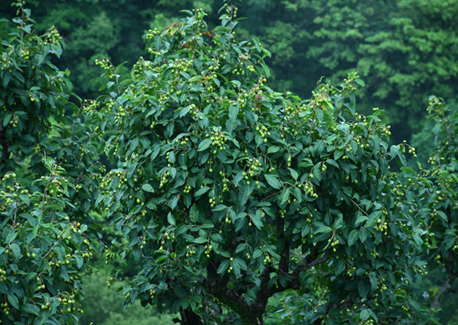
Fig.1: Terminalia chebula Retz. Tree
Morphology of the Fruit:-
Fruit is yellow, elliptical with five longitudinal ridges, and about 2-4 cm long and 1 2.5cm wide. Very large fruit is valuable. Mature fruit is of an ovoid form, from 25 to 38mm long. The unripe fruits are shriveled, black, ovoid, brittle bodies. The fruit is a drupe, ovoid to ellipsoidal, usually five-ridged, sometimes three or seven ridged.It measures about 2–5 cm in length and 1.2–2.5 cm in width.The surface is wrinkled with longitudinal ridges; the pericarp is fleshy and fibrous. Color changes from green when unripe to yellowish-brown or dark brown when mature. Each fruit contains a single hard seed enclosed in a tough endocar. The fruit is rich in tannins (20–40%) including chebulinic acid, chebulagic acid, and gallic acid, which are responsible for its astringent taste and medicinal value.
Features of Fruit:-
Table 1 - Morphology of the Fruit
|
Feature |
Feature |
|
Type |
Drupe (fleshy fruit with hard seed inside |
|
Shape |
Ovoid, oblong, or ellipsoidal; usually 5-ridged (sometimes 3 or 7 ridges) |
|
Size |
2–5 cm long, 1.2–2.5 cm wide |
|
Surface |
Wrinkled or rough with longitudinal ridges |
|
Color |
Green when unripe; yellowish-brown to dark brown/black when mature |
|
Pericarp |
Fleshy, fibrous, thick; constitutes the medicinal portion |
|
Seed |
Single, hard, enclosed in a woody endocarp; non-edible |
|
Fruit Maturation |
Winter to early spring (January–April) |
Properties of Haritaki Fruit (Ayurvedic Perspective):-
Table 2 - Properties of Haritaki Fruit (Ayurvedic Perspective)
|
Feature |
Feature |
|
Rasa (Taste) |
Predominantly Kashaya (astringent); contains all tastes except Lavana (salty) |
|
Guna (Qualities) |
Laghu (light), Ruksha (dry) |
|
Virya (Potency) |
Ushna (hot) |
|
Vipaka (Post-digestive effect) |
Madhura (sweet) |
|
Prabhava (Special effect) |
Rasayana (rejuvenative), Tridoshahara |
|
Dosha Action |
Balances all three doshas: Vata, Pitta, Kapha |
|
Phytochemical Constituents |
Tannins (chebulinic acid, chebulagic acid, gallic acid), phenolic compounds, quercetin, ethyl gallate, terchebin |
Varieties of Fruits (Classical Ayurveda):-
Ayurvedic texts classify seven types of Haritaki fruits based on morphology and therapeutic effects:
Fig.2: Terminalia chebula Retz. Unripe Fruit
Fig.3: Terminalia chebula Retz. Ripened Fruit
Flower:-
Flowers are somewhat yellowish white and fragrant, borne in large in compound inflorescence. They appear in little panicles or as spikes that emerge from the higher axils.
Seed-
Seed is globose and 2-6 cm long, sometimes tapering towards the lower extremity, obscurely 5 or 6 sided, more or less furrowed longitudinally, covered with a smooth yellowish-brown epidermis, within which is an astringent pulp, enclosing a large rough bony one celled endocarp.
Phytochemical properties:-
Among its many phytoconstituents, chebula contains a comparatively high quantity of tannins (around 32%) along with flavonoids, sterols, amino acids, fructose, resin, and fixed oils. Further, tannin content of T. chebula largely depends on its geographic location. The chief components of tannin are chebulic acid, chebulinic acid, chebulagic acid, gallic acid, corilagin and ellagic acid. Tannins of T. chebula are of pyrogallol (hydrolysable) type. There are about 14 hydrolysable tannins (gallic acid, chebulic acid, punicalagin, chebulanin, corilagin, neochebulinic acid, ellagic acid, chebulegic acid, chebulinic acid, 1,2,3,4,6-penta-O-galloyl-b-D glucose, casuarinin, 3,4,6-tri-O-galloyl-D-glucose and terchebulin) which have isolated from fruits of T. chebula 10. There have also been reports of the presence of phytochemicals such as terpinenes, terpinenols, ethaedioic acid, sennoside, 4,2,4 chebulyl-d glucopyranose, and anthraquinones. Triterpenoids and their glycosides have been isolated from stem bark of T. chebula []. Recent studies show that T. chebula contains more phenolics than any other plant. Terminalia chebula is notably rich in diverse hydrolyzable tannins, including gallic acid, chebulic acid, chebulinic acid, chebulagic acid, punicalagin, corilagin, ellagic acid, terchebulin, terflavin A, and galloyl-glucose derivatives, which form a significant portion of its phytochemical makeup. Additionally, its fruit contains an array of phenolic acids such as gallic, ellagic, caffeic, ferulic, and protocatechuic acids, together with lignans like terminaliate A and lithospermate B, and triterpenoids including maslinic acid, arjunolic acid, and chebupentol. Flavonoids such as luteolin, quercetin, rutin, and isoquercetin have also been identified. The plant further includes volatile compounds (e.g., furfural, benzaldehyde, methyl salicylate), sterols like β-sitosterol and daucosterol, and a range of fatty acids including palmitic and oleic acids. Leaves and other parts are similarly phytochemically endowed, with leaves containing polyphenols like punicalin, punicalagin, and terflavins B–D. This complex phytochemical profile underpins Haritaki’s potent antioxidant, anti-inflammatory, antidiabetic, hepatoprotective, cardioprotective, and other pharmacological activities.
Fig: Structure of some major phytochemicals in T. chebula
Traditional values of Haritaki:-
Classical Ayurvedic texts such as the Charaka Samhita and Sushruta Samhita describe numerous medicinal plants, with Terminalia chebula (Haritaki) holding a particularly important role in India as well as other parts of Asia and Africa. It is utilized across Ayurveda, Siddha, Unani, and even homeopathic medicine. In Ayurvedic Materia Medica, Haritaki is recommended for the treatment of asthma, bleeding piles, sore throat, vomiting, and gout. In Thai traditional medicine, it is employed as a carminative, astringent, and expectorant (Reddy et al., 2012). Vagbhata further emphasized its role as a primary remedy in diseases involving vata and kapha doshas. One of the most renowned formulations containing Haritaki is Triphala, which combines T. chebula, T. bellerica, and Emblica officinalis. Triphala is used as a laxative for chronic constipation, a detoxifier of the colon, a digestive aid, and a rejuvenator. Research suggests Triphala enhances appetite, provides detoxification, supports cancer management, and functions as a cardiotonic and antifungal agent. Topically, it is applied for eye conditions such as conjunctivitis, as a gargle in stomatitis and throat problems, and as a hair and tooth cleanser. Its decoction is beneficial for chronic wounds, while Haritaki extract demonstrates anticaries activity when used as a mouth rinse. Internally, Haritaki has versatile applications. Classical references suggest its administration with rock salt for kapha disorders, sugar for pitta disorders, and ghee for vata disorders, with different anupana (vehicles) advised in accordance with the seasons. For instance, it is taken with rock salt during the monsoon, sugar in autumn, ginger in winter, long pepper in late winter, honey in spring, and jaggery in summer. Vagbhata also mentioned that frying Haritaki in ghee and consuming it regularly promotes vitality and longevity. Various preparations of Haritaki are used in gastrointestinal ailments, tumours, ascites, liver and spleen disorders, piles, worms, and colitis. Its bark enhances digestion, while Bala Haritaki is noted for haemorrhoid relief. Mixtures with Triphala and turmeric aid diabetes care, and combinations with ginger, long pepper, or jaggery help with bronchospasms, flatulence, diarrhoea, and dysentery. Other preparations, such as Haritaki Siddha Ghrita, are prescribed in chronic fever, while decoctions are recommended for hepatitis, anaemia, and obesity. Haritaki is also believed to improve memory, support urinary health, and reduce kidney stones due to its nervine and diuretic effects. Internally, hartaki is used to cure a vast variety of diseases. Haritaki is recommended with rock salt in ‘kapha’ diseases, with sugar in ‘pitta’ diseases and with the ghee in ‘vata’ diseases. When eaten with different supportive dravyas in different seasons, Haritaki has a rejuvenating effect. There is a specific reference of the ‘anupana’ (a substance that serves as a medium for the herbs to be taken with) with which haritaki should be combined, with reference to the season. It should be consumed with rock salt during varsa ritu (July–August), sugar during sarad ritu (September–October), sunthi during hemanta ritu (November–December), pippali during sisira ritu (January–February), honey during vasanta ritu (March–April), and jaggery during grisma ritu (May–June).
Vagbhata claims that consuming haritaki powder fried in ghee on a regular basis together with enough ghee in diet increases energy and longevity. Haritaki is an effective treatment for common gastrointestinal disorders, tumors, ascites, piles, spleen and liver enlargement, worms, and colitis. When haritaki bark is consumed after chewing, it facilitates better digestion. "Bala haritaki" helps with bowel clearance and hemorrhoids. A well-known diabetes adjunct is a blend of haridra and triphala powder. Honey combined with haritaki and bibhitaka powders successfully reduces bronchospasm. It is administered with ghee and jiggery for flatulence-related stomach pain. A common remedy for diarrhea, dysentery, flatulence, and other ailments is haritaki, musta, sunthi, and jaggery. In cases of hepatitis, haritaki or triphala decoction is administered with honey. An further useful treatment for anemia is haritaki powder combined with honey and ghee. Its decoction with honey lowers excess body fat in obese people.
Precaution:-
Haritaki (Terminalia chebula) should be used with caution or avoided altogether under certain conditions. It is contraindicated during pregnancy and lactation, as its laxative and drying effects may adversely affect uterine health and milk production. People with gastrointestinal disorders such as ulcers, Crohn’s disease, or severe acidity should also refrain from using Haritaki, given its potential to worsen digestive symptoms Furthermore, excessive use may result in loose stools, abdominal cramps, dehydration, and fatigue.Blood sugar–lowering properties of Haritaki require caution in individuals taking anti-glycemic medications or who have recently donated blood. Moreover, due to possible anticoagulant effects, Haritaki should be discontinued at least two weeks before surgery, and used cautiously in those with bleeding risks or on anticoagulant therapy. Individuals suffering from fatigue, low immunity, dehydration, or conditions of dryness (e.g., dry mouth, emaciation) are also advised to avoid Haritaki, as its astringent and warming nature may exacerbate these states.
Pharmacological Properties:-
Antibacterial Activity:-
Terminalia chebula Retz. exhibits strong antibacterial activity, attributed mainly to tannins, phenolic compounds, chebulagic acid, and gallic acid. Both aqueous and alcoholic extracts of Haritaki have shown broad-spectrum action against Gram-positive and Gram-negative bacteria. Extracts are effective against pathogenic bacteria such as Staphylococcus aureus, Escherichia coli, Salmonella typhi, Pseudomonas aeruginosa, and Klebsiella pneumoniae. The methanolic extract of T. chebula demonstrated significant zone of inhibition against multidrug-resistant E. coli and S. aureus strains. The antibacterial action is thought to occur through disruption of bacterial cell walls, inhibition of nucleic acid synthesis, and interference with bacterial quorum sensing.
Fig.5: Antibacterial Activity of Terminalia chebula Retz.
Fig.6: Flow Chart: Antibacterial Activity of Haritaki
Antiviral Activity:-
Terminalia chebula Retz. demonstrates promising antiviral activity, largely attributed to hydrolyzable tannins, gallic acid, ellagic acid, and chebulagic acid. Anti-HIV activity: Chebulagic acid and chebulinic acid isolated from T. chebula inhibit HIV-1 integrase and protease enzymes, interfering with viral replication. Anti-Herpes Simplex Virus (HSV): Methanolic fruit extracts significantly inhibited HSV-1 and HSV-2 replication in vitro. Anti-Hepatitis C Virus (HCV): Polyphenolic compounds from T. chebula suppressed HCV entry and replication by blocking viral attachment. Anti-Influenza activity: Aqueous and ethanolic extracts reduced influenza A virus replication and protected host cells by modulating viral RNA polymerase activity. Broad-spectrum potential: Reports also suggest activity against coxsackievirus and adenovirus through immune modulation and direct viral inhibition.
Fig.7: Antiviral Activity of Haritaki (Terminalia chebula Retz.)
Anticarcinogenic Activity:-
Anticarcinogenic Activity of Haritaki (Terminalia chebula Retz.) Terminalia chebula Retz. exhibits significant anticarcinogenic activity due to its bioactive compounds such as chebulagic acid, gallic acid, ellagic acid, chebulinic acid, and flavonoids. Chebulagic acid suppresses proliferation of Y79 retinoblastoma cells by inducing G1 arrest, stabilizing IκBα to inhibit NF-κB, and activating apoptosis through caspase-3 and BAX/Bcl-2 modulation. Methanolic fruit extracts show cytotoxic effects on A549 (lung) and MCF-7 (breast) cancer cells by increasing apoptotic sub-G1 population, DNA fragmentation, and regulating iNOS, COX-2, TNF-α, and NF-κB pathways. Crude methanol extracts and isolated phenolics (ellagic acid, chebulinic acid) decreased viability of multiple cancer cell lines (MCF-7, S115, HOS-1, PC-3), inducing apoptosis at lower concentrations and necrosis at higher doses . Methanol extracts demonstrated broad anticancer activity against eight human cancer cell lines including breast, colon, lung, melanoma, ovary, and prostate cancers, confirming wide-spectrum cytotoxicity (Arora et al., 2010). Hydro-alcoholic extracts induced apoptosis in U87 glioblastoma cells via ROS production and caspase activation.
Antioxidant Activity:-
Terminalia chebula Retz. (Haritaki) is well known for its strong antioxidant properties. Its phytochemicals, mainly tannins (chebulagic acid, chebulinic acid, gallic acid, ellagic acid), flavonoids, and phenolic compounds, contribute to scavenging free radicals, inhibiting lipid peroxidation, and enhancing endogenous antioxidant enzymes.
Antidiabetic and Hypoglycemic Activity:-
Terminalia chebula Retz. (Haritaki), a well-known medicinal plant in Ayurveda, has been extensively studied for its role in managing diabetes and regulating blood glucose levels.
Mechanisms of Action-
Enhancement of Insulin Secretion – Bioactive compounds such as chebulagic acid and gallic acid stimulate insulin secretion from pancreatic β-cells.
Inhibition of α-Glucosidase and α-Amylase – Prevents postprandial hyperglycemia by reducing carbohydrate breakdown and glucose absorption
Improvement in Glucose Utilization – Increases peripheral glucose uptake in muscle and adipose tissues.
Reduction of Oxidative Stress – Acts as an antioxidant, preventing pancreatic β-cell damage caused by reactive oxygen species (ROS).
Lipid Regulation – Reduces hyperlipidemia associated with diabetes, improving insulin sensitivity.
Antifungal Activity:-
Terminalia chebula Retz. (Haritaki) exhibits significant antifungal properties, mainly attributed to its high content of tannins, flavonoids, and phenolic compounds. The antifungal activity has been demonstrated against a variety of fungal pathogens, including Candida albicans, Aspergillus niger, and Fusarium species.
Hepatoprotective Activity:-
Terminalia chebula Retz. (Haritaki) has been extensively studied for its hepatoprotective (liver-protecting) effects. The activity is mainly attributed to its high content of polyphenols, tannins, chebulagic acid, and gallic acid, which possess antioxidant and anti-inflammatory properties.
Mechanism of Action-
Antioxidant Effect – Neutralizes reactive oxygen species (ROS) in hepatocytes, preventing oxidative stress-induced liver damage.
Stabilization of Cell Membranes – Protects hepatocyte membranes from chemical-induced injury (e.g., CCl?, paracetamol).
Inhibition of Lipid Peroxidation – Reduces lipid peroxidation in liver cells, preserving cellular integrity.
Regulation of Liver Enzymes – Normalizes serum levels of liver marker enzymes (ALT, AST, ALP) and bilirubin.
Anti-inflammatory Activity:-
Terminalia chebula Retz. (Haritaki) has been traditionally used to manage inflammation-related disorders. Its anti-inflammatory properties are mainly attributed to chebulagic acid, chebulinic acid, gallic acid, and other polyphenolic compounds that modulate inflammatory pathways.
Mechanism of Action-
Inhibition of Pro-inflammatory Enzymes – Suppresses cyclooxygenase (COX-1 and COX-2) and lipoxygenase (LOX), reducing prostaglandin and leukotriene synthesis.
Reduction of Inflammatory Mediators – Downregulates TNF-α, IL-1β, and IL-6 in inflammatory sites.
Antioxidant Activity – Neutralizes reactive oxygen species (ROS), preventing oxidative stress–induced inflammation.
Modulation of NF-κB Pathway – Inhibits nuclear factor kappa B (NF-κB), a key transcription factor in inflammatory responses.
CONCLUSION:-
Terminalia chebula is an important medicinal plant widely used in traditional systems for many health problems. It contains useful natural compounds that show antioxidant, antimicrobial, anti-inflammatory, and antiviral effects. Modern research supports many of its traditional uses and shows its potential in protecting the liver, heart, and brain.
Although it is generally safe, more detailed studies on dosage and long-term use are still needed. Standardization of extracts is important because its chemical content can vary with growing and processing conditions.More clinical research is required to confirm its benefits in humans. Overall, T. chebula is a promising herbal resource with great potential for future therapeutic use.
REFERENCES

Harshad Lakade, Srushti Kunjir, Onkar Nagawade, Rajpurva Nimbalkar, Vidya Lonkar, Terminalia chebula Retz's : Pharmacological and Physiological features, Int. J. of Pharm. Sci., 2025, Vol 3, Issue 12, 2702-2712. https://doi.org/10.5281/zenodo.17959943
 10.5281/zenodo.17959943
