
IVM’ Krishnarao Bhegade Institute of Pharmaceutical Education and Research, Talegaon Dabhade, Pune.
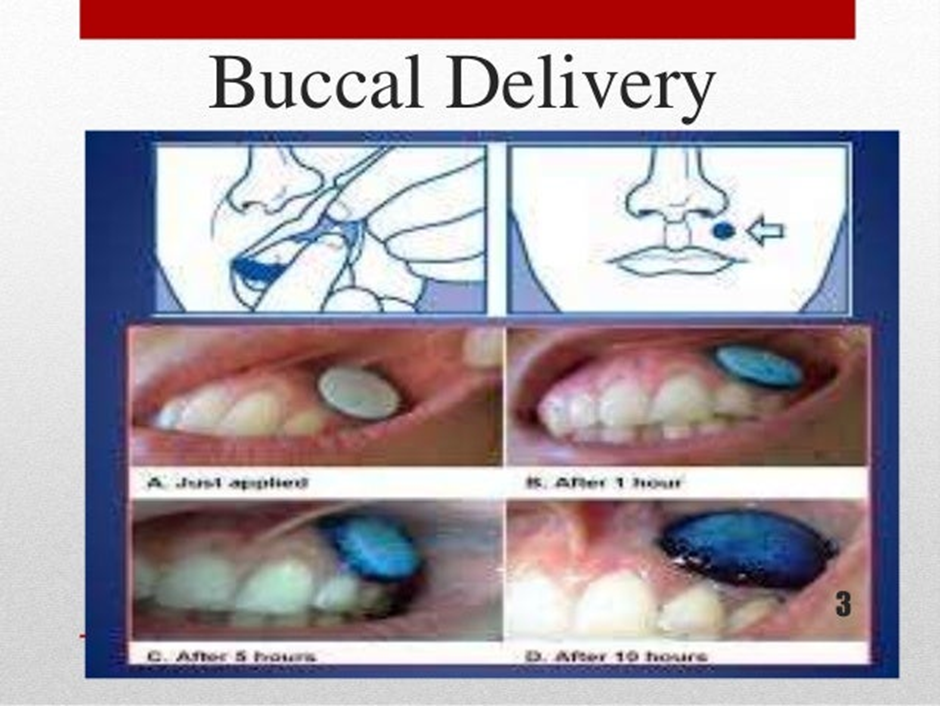
Owing to the ease of the administration, the oral cavity is an attractive site for the delivery of drugs. Through this route it is possible to realize mucosal (local effect) and transmucosal (systemic effect) drug administration. Among the various routes of drug delivery, the oral route is perhaps the one mostly preferred by patients and clinicians. Based on our current understandings of biochemical and physiological aspects of absorption and metabolism, many drugs, cannot be delivered effectively through the conventional oral route, because after administration are subjected to pre-systemic clearance extensively in liver, which often leads to a lack of significant correlation between membrane permeability, absorption, and bioavailability (1) Buccal drug absorption and delivery systems. Oral mucosal membranes act as a permeable barrier system to microorganisms and pathogens. However, it allows the diffusion of water, nutrients, gases and small molecules. In drug absorption process, drugs have to be diffused through different layers in oral mucosa such as hydrophilic mucus, keratinized layers if applicable, densely packed epithelial cell layers, basement membrane and hydrophilic connective tissue. Any of these layers may hinder the drug absorption. The two main routes of drug(4)
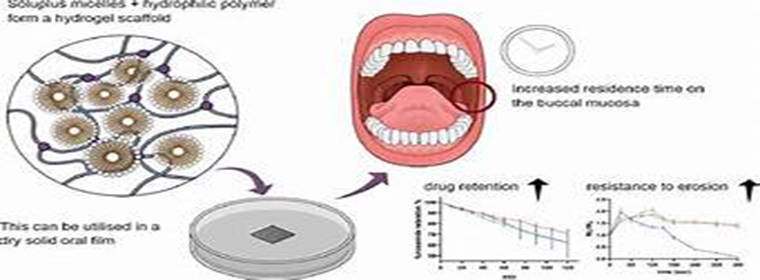
Among the various routes of drug delivery, the oral route is perhaps the one mostly preferred by patients and clinicians. Based on our current understandings of biochemical and physiological aspects of absorption and metabolism, many drugs, cannot be delivered effectively through the conventional oral route, because after administration are subjected to pre-systemic clearance extensively in liver, which often leads to a lack of significant correlation between membrane permeability, absorption, and bioavailability .From the wide range of polymer solutions, chitosan represents the greatest binding, followed by methylcellulose, gelatin, carbopol and polycarbophil. Buccal adhesive drug delivery devices are subjected to the routine evaluation tests such as weight variation, thickness variation, friability, hardness, content uniformity, in vitro dissolution for tablets; tensile strength, film endurance, hygroscopicity etc. for films and patches; viscosity, effect of aging etc. for gels and ointments. (1) buccal mucoadhesive system for drug delivery such as tablets, disks, wafers, buccal patches, semi-solid and liquid forms. Nevertheless, using mucoadhesive films or patches is currently more prevalent for the treatment due to the more flexibility, less thickness and high absorption because of its large surface area and longer residence times..(4)
Advantages and Disadvantages of Buccal Drug Delivery System
Advantages
Disadvantage
Saliva is continuously secreted into the oral cavity diluting drugs at the site of absorption resulting in low drug concentrations at the surface of the absorbing membrane.
Instinctively swallowing of saliva results in a maximum part of dissolved or suspended released drug being removed from the site of absorption(3)Drugs with ample dose are often difficult to be administered. Possibility of the patient to swallow the tablet being forgotten. Eating and drinking may be restricted till the end of drug release. iv. This route is unacceptable for those drugs, which are unstable at pH of buccal environment. This route cannot administer drugs, which irritate the mucosa or have a bitter or unpleasant taste or an obnoxious odour. vi. Limited surface area is available for (5)]
Methods To Increase Drug Delievery Via Buccal Route
Absorption enhancers : Absorption enhancers have demonstrated their effectiveness in delivering high molecular weight compounds, such as peptides, that generally exhibit low buccal absorption rates. These may act by a number of mechanisms, such as increasing the fluidity of the cell membrane, extracting inters/intracellular lipids, altering cellular proteins or altering surface mucine. The most common absorption enhancers are azone, fatty acids, bile salts and surfactants such as sodium dodecyl sulfate. Solutions/gels of chitosan were also found to promote the transport of mannitol and fluorescent-labelled dextrans across a tissue culture model of the buccal epithelium while Glyceryl mono oleates were reported to enhance peptide absorption by a co-transport mechanism.
Prodrugs: Hussain et al delivered opioid agonists and antagonists in bitterless prodrug forms and found that the drug exhibited low bioavailability as prodrug.
Nalbuphine and naloxone bitter drugs when administered to dogs via the buccal mucosa, the caused excess salivation and swallowing. As a result, the drug exhibited low bioavailability. Administration of nalbuphine and naloxone in prodrug form caused no adverse effects, with bioavailability ranging from 35 to 50% showing marked improvement over the oral bioavailability of these compounds, which is generally 5% or less.
pH : Shojaei et al evaluated permeability of acyclovir at pH ranges of 3.3 to 8.8, and in the presence of the absorption enhancer, sodium glycocholate. The in vitro permeability of acyclovir was found to be pH dependent with an increase in flux and permeability coefficient at both pH extremes, as compared to the midrange values (pH 4.1, 5.8, and 7.0).
Patch design: Several in vitro studies have been conducted regarding on the type and amount of backing materials and the drug release profile and it showed that both are interrelated. Also, the drug release pattern was different between single-layered and multi-layered patches.(6)
CONCLUSION
Buccal adhesive systems offer innumerable advantages in terms of accessibility, administration and withdrawal, retentivity, low enzymatic activity(e.g., mouth ulcers), to reduce the overall required dosage and minimize side effects that may be caused by systemic administration of drugs. The future direction of buccal adhesive drug delivery lies in vaccine formulations and delivery of small proteins/ peptides.(1) Due to the ease of application and avoidance of the hepatic metabolism, oral transmucosal (buccal, sublingual) drug delivery offers a promising alternative to overcome the limitations of conventional oral drug delivery and parental administration. The buccal routes, in particular, presents ample opportunities and many formulation approaches have been explored, although the current commercially available formulations are mostly limited to tablets (5)
REFERENCE

Nandini Gire, G. K Bramha, Review on Buccal Drug Delivery System, Int. J. of Pharm. Sci., 2025, Vol 3, Issue 11, 2901-2905. https://doi.org/10.5281/zenodo.17649608
 10.5281/zenodo.17649608
