
Shivlingeshwar College of Pharmacy, Almala
Polymers have become vital tools in managing diabetic complications, especially diabetic wounds, by providing advanced biomaterials that enhance healing and drug delivery. Natural polymers like chitosan, alginate, and hyaluronic acid, and synthetic polymers such as PLGA, PEG, and PVA, are engineered into hydrogels, nanoparticles, and scaffolds to improve antimicrobial activity, reduce inflammation, combat oxidative stress, and promote tissue regeneration. These polymeric systems enable controlled and sustained release of therapeutic agents, targeted delivery to affected tissues, and protection of transplanted cells for insulin regulation. Despite their potential, challenges remain in biocompatibility, immune responses, and scalability. The future focus lies in developing smart, multifunctional, and personalized polymer platforms integrated with bioactive molecules to revolutionize diabetic care and improve patient outcomes.
Overview
The management of diabetes mellitus and its associated complications has witnessed significant advancement through polymer-based therapeutic interventions between 2022 and 2025. Polymeric systems have emerged as versatile platforms for drug delivery, wound healing, insulin administration, and tissue engineering applications in diabetic complications. This review systematically examines recent developments in both natural and synthetic polymers designed to address various diabetic complications including diabetic wounds, nephropathy, retinopathy, neuropathy, and cardiovascular complications.
Natural Polymers in Diabetic Complications
Chitosan
Chitosan, a natural polysaccharide derived from chitin, has gained prominence as a primary material for diabetic wound healing applications. Its excellent antibacterial properties, independent degradability, and biocompatibility make it particularly suitable for treating chronic diabetic wounds. Recent studies have demonstrated that chitosan-based hydrogels, when combined with calcium alginate nanoparticles and silver nanoparticles, exhibit broad-spectrum antibacterial properties against both gram-negative bacteria (Escherichia coli, Pseudomonas aeruginosa) and gram-positive bacteria (Bacillus subtilis, Staphylococcus aureus). Chitosan-coated PLGA nanoparticles have shown enhanced adhesion ability and controlled drug delivery, improving bioavailability in diabetic retinopathy treatment. Carboxymethyl chitosan (CMCS), a water-soluble derivative, has demonstrated sustained drug release via quasi-Fickian diffusion and the ability to regenerate pancreatic islets in diabetic rats. The combination of carboxymethyl chitosan with sodium alginate forms hydrogels with excellent stability, biocompatibility, and rapid drug release capabilities, accelerating full-thickness wound healing in diabetic models. Recent systematic reviews of peptide nanoparticles incorporating chitosan have shown improved glucose control, insulin delivery, and overall patient outcomes in diabetes management.15. Carboxymethyl chitosan (CMCS) is widely used in managing diabetic complications due to its enhanced water solubility, biocompatibility, and bioactivity compared to chitosan itself.
Main Biomedical Uses of Carboxymethyl Chitosan
Diabetic Wound Healing:
CMCS-based hydrogels combined with sodium alginate or other polymers have been shown to accelerate healing of diabetic wounds by promoting rapid cell proliferation, supporting angiogenesis, and providing sustained drug release. These hydrogels demonstrate excellent stability, biocompatibility, and a rapid healing effect for full-thickness diabetic wounds in animal models.
Regeneration of Pancreatic Islets:
CMCS hydrogels facilitate the regeneration of pancreatic islets in diabetic rats, contributing to improved glucose regulation and potential restoration of endogenous insulin production.
Drug Delivery and Release:
CMCS allows quasi-Fickian sustained drug release and healing efficacy for diabetic ulcers. Incorporation of CMCS into wound dressings or injectable hydrogels confers bacteriostatic and hemostatic properties, along with support for tissue repair.
Combination with Other Polymers:
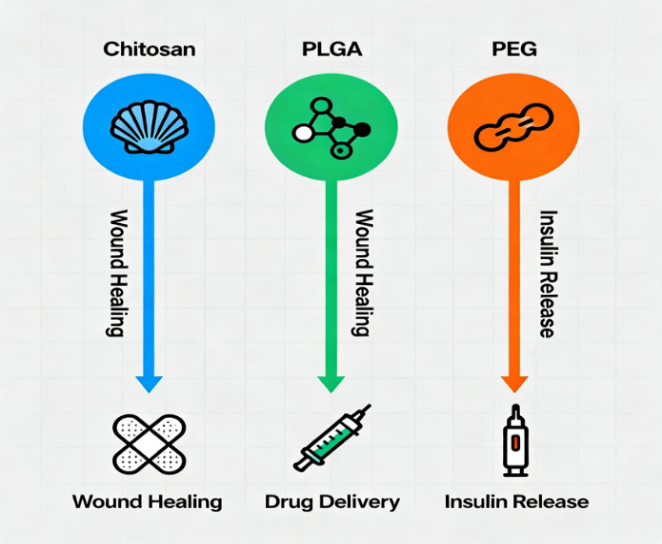
Blending CMCS with sodium alginate or other natural polymers yields hydrogels that exhibit superior mechanical and bioactive features, further enhancing wound healing and reducing oxidative stress in diabetic complication.12.
Alginate
Alginate, extracted from brown seaweed, remains a cornerstone polymer for diabetic applications due to its biocompatibility, biodegradability, and gel-forming properties. Sodium alginate-based hydrogels have been extensively used for pancreatic islet encapsulation, providing immunoprotection while maintaining glucose-responsive insulin secretion. The polymer’s ability to form gels in situ prolongs drug retention on wound surfaces, making it particularly effective for diabetic foot ulcer management. Oxidized sodium alginate combined with carboxymethyl chitosan creates pH-responsive hydrogels that show promise for diabetic wound applications. Alginate-chitosan polyelectrolyte complexes have been developed for oral insulin delivery, demonstrating stability at acidic stomach pH and sustained release in intestinal conditions
Biomedical Uses of Alginate in Diabetes
Wound Healing (Diabetic Ulcers):
Alginate-based hydrogels and dressings are frequently used for diabetic wound care. They maintain a moist environment, absorb exudate, and promote re-epithelialization, leading to faster healing of chronic diabetic ulcers. Alginate dressings are also often combined with other actives (growth factors, antimicrobial agents, or chitosan) to further boost healing and fight infection.
Encapsulation for Cell Therapy:
Alginate is widely used to encapsulate pancreatic islet cells for transplantation, a technique intended to restore insulin secretion in diabetes without provoking immune rejection. Alginate’s gel barrier shields the cells while allowing key nutrients and insulin to diffuse through.
Main Applications of Encapsulation in Diabetes
Pancreatic Islet Cell Encapsulation
The most common encapsulation materials are alginate and modified hydrogels (e.g., alginate-PEG blends), which form microcapsules or macrocapsules to enclose islet cells. This allows transplanted islet cells to secrete insulin in response to glucose while remaining protected from the host’s immune system—critical for treating type 1 diabetes.
Immune Protection and Functional Durability
Alginate-based encapsulation demonstrates immunoprotection and extends islet cell function in vivo, with clinical studies showing normoglycemia sustained up to 90 days. Polymerized laminin-modified microcapsules further enhance resistance to inflammatory cytokines and improve survival of transplanted cells in diabetic environments.
Advanced Biomaterial Innovations
Recent advances involve hybrid and multilayered polymeric capsules using PEG, polyether sulfone, and other smart polymers to fine-tune permeability and reduce foreign body reactions. These approaches optimize mechanical stability, oxygen and nutrient exchange, and long-term graft survival.
Controlled Drug Delivery:
Sodium alginate is utilized for oral and injectable drug delivery systems (including insulin). It forms gels in response to physiological stimuli, enabling sustained, targeted release of drugs in the gastrointestinal tract or wound site.
pH-Responsive Hydrogels:
Alginate’s ability to form pH-responsive hydrogels (especially when oxidized or blended with chitosan/CMCS) is exploited for smart drug delivery and wound dressings that respond to the high pH and oxidative status of diabetic wounds.
Hyaluronic Acid
Hyaluronic acid (HA), a glycosaminoglycan polymer naturally present in the extracellular matrix, has demonstrated significant therapeutic potential for diabetic foot ulcers. Meta-analyses conducted through 2024 revealed that HA and its derivatives significantly improve complete ulcer healing rates (OR 3.92, 95% CI 1.74 to 8.81) and shorten healing time (SMD = -0.83, 95% CI -1.13 to -0.53) without increasing adverse events. HA’s inherent biocompatibility, viscoelastic properties, biodegradability, and non-immunogenicity make it an excellent candidate for diabetic wound dressing components.23,25. Dynamic hyaluronic acid hydrogels exhibiting glucose, ROS, and acidic pH responsiveness have been developed for comprehensive diabetic wound management. Sulfated hyaluronic acid/collagen-based biomimetic hybrid scaffolds have shown accelerated diabetic wound healing through enhanced angiogenesis and collagen deposition.26,27
Gelatin and Collagen
Gelatin, obtained from partial collagen hydrolysis, has emerged as a key natural polymer for tissue engineering in diabetic wounds. Collagen-based scaffolds remain the gold standard for diabetic wound dressings, with Apligraf® representing the first FDA-approved tissue-engineered collagen hydrogel loaded with human keratinocytes and fibroblasts for treating diabetic ulcers. Recent developments include gelatin-based electrospun mats loaded with berberine showing antibacterial behavior against common wound pathogens with low hemolytic activity. Hybrid gelatin-ascorbyl phosphate scaffolds have demonstrated effectiveness in reducing oxidative stress damage while enhancing angiogenesis and collagen remodeling for diabetic wound healing. Gelatin methacryloyl (GelMA) combined with polymeric gallic acid creates temperature-responsive hydrogel patches exhibiting temperature-triggered adhesion properties ideal for diabetic wound treatment.
Silk Fibroin and Cellulose
Silk fibroin has gained attention for sustained insulin release applications, providing month-long insulin delivery without altering molecular conformation or native bioactivity. Growth hormone-loaded 3D printed silk fibroin-cellulose composite wound dressings have shown accelerated healing in diabetic ulcers. Nanocellulose combined with silk fibroin-loaded cerium oxide nanoparticles forms smart scaffolds demonstrating excellent antimicrobial, anti-inflammatory, and antioxidant properties for diabetic wound treatment
Silk Fibroin in Diabetic Complications
Wound Dressings and Tissue Engineering
Silk fibroin is the protein component of silk and is valued for its superior mechanical properties, biodegradability, and low immunogenicity. Growth hormone-loaded 3D printed silk fibroin-cellulose composite wound dressings have been reported to accelerate the healing process in diabetic ulcers. Silk fibroin hydrogels are documented to provide sustained insulin release for wound care, maintaining the bioactivity of insulin for up to a month.
Bioactivity and Wound Healing
Silk fibroin also supports angiogenesis and tissue regeneration, which are essential for healing chronic diabetic wounds where blood flow and cell turnover are often compromised.
Cellulose in Diabetic Complications
Advanced Wound Healing
Cellulose, often in the form of nanocellulose, is used in smart scaffolds for diabetic wound healing. Composites that integrate cellulose, silk fibroin, and cerium oxide nanoparticles have demonstrated enhanced antimicrobial, anti-inflammatory, and antioxidant effects, thus promoting faster closure and tissue repair in diabetic wounds.
Antimicrobial and Structural Characteristics
Nanocellulose-based biomaterials prevent infection and provide excellent scaffolding properties for cells, encouraging cell adhesion and proliferation required in wound repair and tissue engineering for diabetes patients.
Synthetic Polymers in Diabetic Complications
Poly (lactic-co-glycolic acid) (PLGA)
PLGA stands as one of the most extensively utilized synthetic biodegradable copolymers for controlled drug delivery in diabetes management. FDA-approved for human use, PLGA’s versatility stems from its tunable degradation rates, controlled release properties, and excellent biocompatibility. Recent applications include PLGA nanoparticles encapsulating pigment epithelium-derived factor (PEDF) for diabetic retinopathy, maintaining therapeutic efficacy in the vitreous for at least 4 weeks. PLGA-based systems have been developed for dual delivery of GLP-1 and DPP-4 inhibitors, achieving 44% blood glucose reduction at 4 hours post-administration in diabetic rats. Crocetin-loaded PLGA nanoparticles demonstrated superior anti-inflammatory and antifibrotic effects for diabetic nephropathy management. PSS-loaded PLGA nanoparticles have shown improvement in ventricular wall motion and cardiac systolic/diastolic functions in diabetic cardiomyopathy models. Surface-engineered PLGA nanoparticles incorporating amino-phenylboronic acid groups enable threshold-sensitive glucose sensing and on-demand insulin delivery through an “On-Off” mechanism, maintaining glucose-responsive function for 72 hours over 8-10 cycles.10.
Polyethylene Glycol (PEG)
PEG remains the FDA-approved polymer most extensively utilized for polymeric coating of nanomedicines. PEG-based nanoparticles loaded with apatinib have demonstrated effectiveness in preventing VEGF-induced retinal vascular leakage in diabetic retinopathy. The polymer’s ability to prolong circulation time while reducing recognition by the reticuloendothelial system makes it particularly valuable for diabetes applications. Glucose-responsive polymersomes based on PEG-poly (silicone ketal) have shown selective transformation from hydrophobic to hydrophilic states through gluconic acid-triggered hydrolysis, maintaining normoglycemic levels for up to 5 days following subcutaneous injection. PEG-based microparticles incorporated into insulin formulations enable insulin release for 12 hours in vitro and blood glucose control for approximately 10 days in vivo.
Detailed Characteristics of PEG in Diabetic Applications
Physicochemical Properties:
PEG is a hydrophilic, non-toxic, and FDA-approved polymer with variable molecular weights that can be tailored for specific clinical needs. Its high solubility in water and organic solvents allows easy incorporation into diverse drug delivery platforms including nanoparticles, micelles, hydrogels, and conjugates.
Enhanced Circulation and Reduced Immunogenicity:
PEGylation—the process of covalently attaching PEG chains to therapeutic molecules or nanoparticles—creates a hydration shell around the drug carrier. This “stealth” layer prevents opsonization and recognition by immune cells, thereby extending systemic circulation times and enhancing drug bioavailability in vivo. In diabetic retinopathy and nephropathy, PEGylated nanoparticles effectively localize to target tissues minimizing off-target effects.
Drug Delivery Systems:
Nanoparticles and Micelles:
PEG-based amphiphilic block copolymers self-assemble into micelles capable of encapsulating hydrophobic drugs. These polymeric micelles protect the drug from degradation and enhance targeted delivery. For example, micellar systems have been engineered for sustained delivery of anti-angiogenic agents to diabetic retina, helping to control pathological neovascularization.
Hydrogels and Microparticles:
PEG hydrogels act as injectable depots for sustained insulin release, providing glucose-responsive control of blood sugar levels. These hydrogels can be engineered to degrade or swell in response to changes in glucose or pH levels, releasing insulin in a controlled manner. Double-coated microparticles with PEG-based outer layers improve oral bioavailability of insulin and reduce enzymatic degradation in the gastrointestinal tract.7,8
Stimuli-Responsive Systems:
Incorporating PEG into glucose- or ROS-sensitive polymer matrices yields advanced “smart” delivery systems that release therapeutics in response to diabetic microenvironment cues. PEG’s hydrophilicity and flexibility facilitate molecular rearrangements necessary for responsiveness, enabling on-demand insulin or drug release, reducing hypoglycemia risk, and improving patient compliance.
Clinical and Regulatory Status:
Due to its well-documented safety profile, PEG is featured in several FDA-approved formulations and devices used in diabetes care. PEG-modified drugs and nanoparticles form a critical technology scaffold for novel combination products undergoing clinical trials, poised for regulatory approval and commercialization soon.
Integration with Other Polymers and Bioactives
PEG is frequently combined with natural polymers (alginate, chitosan, hyaluronic acid) to create hybrid hydrogels and nanoparticles that merge biodegradability and bioactivity with PEG’s pharmacokinetic advantages. PEG serves as a versatile design element to modulate mechanical properties, drug release kinetics, and immune compatibility.
Polyvinyl Alcohol (PVA)
PVA, characterized by excellent flexibility, high transparency, hydrophilicity, and chemical stability, has demonstrated significant promise for diabetic wound healing. Electrospun PVA-citric acid dressings have shown 95.9% wound recovery after 14 days in acute wound models, promoting faster reduction in wound size compared to untreated controls. The high-water absorption capacity facilitates exudate removal and reduces bacterial proliferation. PVA-borate hydrogels incorporating insulin-loaded PLGA carriers function as structured vehicles for controlled insulin delivery. Composite materials combining PVA with chitosan, starch, or other natural polymers have demonstrated enhanced biocompatibility (72-98% cell viability) and antimicrobial efficacy against wound-associated pathogens.
Stimuli-Responsive Polymers
Glucose-Responsive Systems
Glucose-responsive polymers represent a paradigm shift in diabetes management, enabling closed-loop insulin delivery systems that mimic pancreatic β-cell function. Phenylboronic acid (PBA)-based polymers form reversible esters with cis-diol molecules, allowing glucose-triggered insulin release through competitive binding mechanisms. pH-sensitive polymers including polyacrylic acid and polymethacrylic acid enable glucose-triggered structural changes leading to controlled drug release. Recent developments include PBA-modified porous PLGA microparticles achieving fast glucose-responsive insulin release with glycemic control exceeding 2 weeks in vivo. Dual-responsive polymeric micelles based on PEG-block-poly (amino phenylboronic ester) respond to both glucose and hydrogen peroxide, demonstrating excellent responsiveness over 30-hour controlled release periods.30.
ROS-Responsive and pH-Sensitive Systems
The hyperglycemic environment in diabetic wounds generates excessive reactive oxygen species, prompting development of ROS-responsive polymers. Supramolecular hydrogel systems containing methionine residues exhibit both ROS-scavenging capacity and ROS-responsive degradation, triggering controlled drug release while actively reducing oxidative stress. pH-responsive hydrogels exploit varying pH levels throughout the gastrointestinal tract for targeted drug delivery, particularly beneficial for oral insulin administration Temperature-responsive hydrogels utilizing poly(N-isopropylacrylamide) and derivatives demonstrate sol-gel transitions at physiological temperatures, enabling injectable formulations that gel at body temperature for sustained drug release.
Polymeric Nanomedicines
Polymeric Nanoparticles
Polymeric nanoparticles (PNPs) have emerged as highly promising carriers for oral insulin delivery, addressing the challenge of extremely low oral bioavailability (≤2%). Chitosan-coated nanoparticles increase bioavailability comparable to subcutaneous administration, with 2-hour post-treatment distribution showing 50%, 20%, and 10% in liver, small intestine, and kidneys respectively. Recent systematic reviews and meta-analyses demonstrate that 30 IU of encapsulated porcine insulin produces optimal hypoglycemic effects, with parameters including high encapsulation efficiency (~90%), particle size (200-400 nm), and low polydispersity index (0.086-0.3) correlating with lower blood glucose levels.1
Applications
Oral Insulin Delivery:
Oral delivery of insulin is challenging due to enzymatic degradation and poor absorption. Polymeric nanoparticles protect insulin from gastric degradation and enhance absorption in the intestine. Chitosan-coated PNPs show bioavailability comparable to subcutaneous administration with targeted distribution in liver and small intestine.
Targeted Therapy for Diabetic Retinopathy and Nephropathy:
PNPs encapsulating anti-VEGF agents or anti-inflammatory drugs allow targeted delivery to affected retinal or renal tissues, reducing systemic side effects and improving local efficacy. PEGylated nanoparticles improve residence time and penetrate blood-retinal barrier.36.
Anti-inflammatory and Antioxidant Delivery:
Encapsulation of antioxidants or anti-inflammatory compounds in PNPs supports management of chronic inflammation and oxidative stress in diabetic wounds and cardiomyopathy
Sustained and Controlled Release:
PNPs provide a mechanism for sustained, controlled release of drugs, reducing dosing frequency and improving patient compliance. Insulin-loaded polymeric nanoparticles maintain long-term glycemic control in animal models.
Polymeric Micelles
Polymeric micelles formed from amphiphilic block copolymers offer advantages including biodegradability, biocompatibility, sustained drug release, and improved patient adherence. Temperature-sensitive polymer micelles have emerged as promising approaches for controlled drug delivery, particularly in managing diabetic retinopathy through targeted VEGF inhibition. The enhanced permeability and retention (EPR) effect enables passive targeting, while active targeting through ligands like folic acid and antibodies increases therapeutic specificity. Polymeric nanoparticles represent a practical and effective approach for multiple diabetic complications, with continuing research focused on optimization, safety, and clinical translation to improve diabetic patient outcomes globally.
Dendrimers
Dendrimers, branched polymeric structures with precisely controlled architecture, have shown potential for diabetes management. Polyamidoamine (PAMAM) dendrimers demonstrate substantial improvement in pulmonary uptake of insulin and calcitonin in rats, with enhancement effects following the order: G3 > G2 > G1 > G0. Subcutaneous administration of PAMAM G4 dendrimers (0.5 μmol/kg body weight) for 60 days effectively reduced long-term hyperglycemia markers with moderate toxicity profiles.
Electrospun Nanofibers
Electrospinning technology has revolutionized diabetic wound dressing development, producing nanofibers with excellent extracellular matrix-mimicking morphology and biological functions. These nanofibrous dressings promote fibroblast adhesion, migration, and proliferation while providing microbial barrier performance through small pore sizes and high porosity. Natural polymer-based electrospun nanofibers incorporating chitosan, gelatin, collagen, and silk fibroin have demonstrated superior wound healing outcomes compared to traditional cotton gauze. Polysaccharide-mediated electrospun nanofibers address the moderate effectiveness of current diabetic wound care strategies, with Zeus Bioweb™ representing a commercially available PTFE-based electrospun nanofiber product.49.
Pancreatic Islet Encapsulation
Hydrogel-encapsulated pancreatic islet transplantation represents a transformative approach for diabetes cell therapy, potentially restoring endogenous insulin secretion without frequent injections. Macro-, micro-, and nanoencapsulation strategies utilizing alginate, PEG, and polyether sulfone polymers provide immunoprotection while maintaining glucose-responsive insulin secretion. Recent clinical trials have achieved promising results, with alginate-based encapsulation devices maintaining normoglycemia for up to 90 days in diabetic models. Polymerized laminin-modified microcapsules improve pancreatic islet resilience toward cytokine-induced inflammatory stress while reducing chemoattractant cytokine secretion. FDA approval of Lantidra in June 2023 marked the first approval of allogeneic pancreatic islet cellular therapy for type 1 diabetes treatment.28.
Clinical Applications and FDA-Approved Devices
The translation of polymer-based diabetes therapies into clinical practice has accelerated considerably since 2022. The Freestyle® Libre 2, approved by the FDA in June 2020, represents the longest-lasting non-adjunctive integrated continuous glucose monitoring system, incorporating advanced polymer materials for sensor stability. Smart insulin patches utilizing hypoxia-sensitive hyaluronic acid conjugated with 2-nitroimidazole have demonstrated effective blood glucose regulation in type 1 diabetes mouse models, representing the first synthetic glucose-responsive device using a hypoxia trigger. Hydrogel dressings for diabetic foot ulcers have shown significant clinical efficacy, with meta-analyses demonstrating improved healing rates (OR 4.09, 95% CI 2.83 to 5.91), shortened healing time (MD -11.38, 95% CI -13.11 to -9.66), and reduced bacterial infection incidence (OR 0.10, 95% CI 0.05 to 0. 18) compared to conventional dressingl.39.
Challenges and Future Perspectives
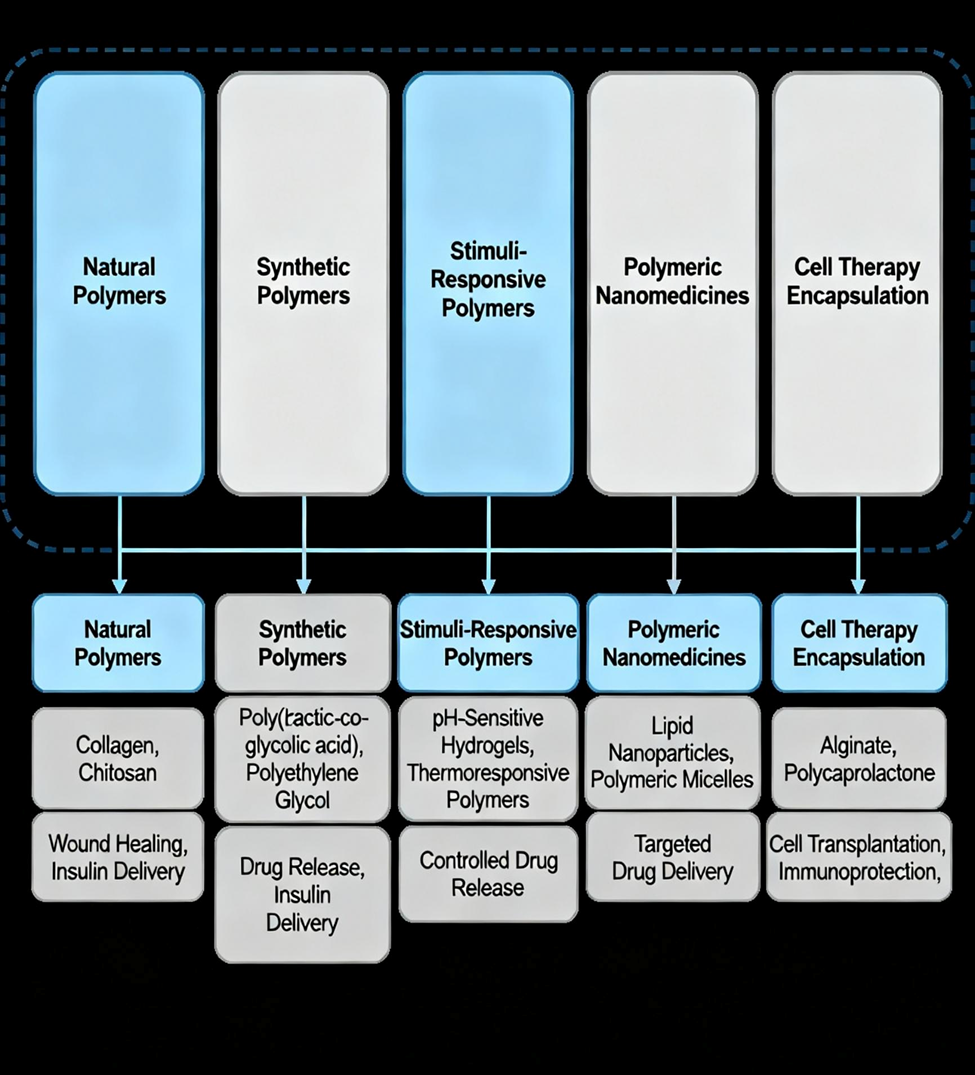
Despite remarkable progress, several challenges remain in translating polymer-based diabetic therapies to widespread clinical use. Long-term biocompatibility and safety data are essential, particularly for implantable devices and systemically administered nanoparticles. Scalability and cost-effectiveness of advanced electrospinning and microencapsulation techniques require optimization for large-scale manufacturing. Future research directions include personalized medicine approaches tailoring drug delivery systems to individual patient needs, integration of biosensors and artificial intelligence for real-time monitoring and adaptive treatment regimens, and development of multifunctional platforms combining diagnostic and therapeutic capabilities. The incorporation of multiple glucose-sensing mechanisms (GOx and PBA) in polymer matrices, variations in particle size and permeability, and use of multilayered polymer matrices represent promising strategies for optimizing glucose-responsive insulin delivery.
CONCLUSION
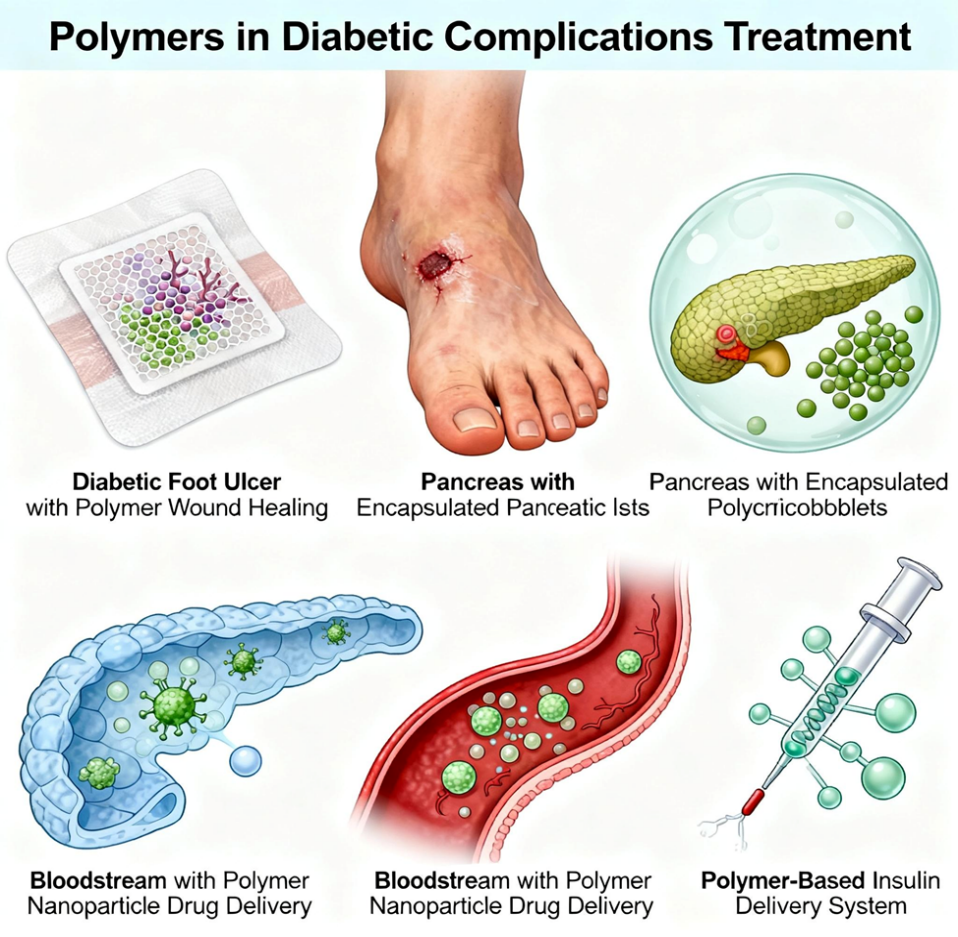
The period from 2022 to 2025 has witnessed unprecedented advancement in polymer-based interventions for diabetic complications. Both natural polymers (chitosan, alginate, hyaluronic acid, gelatin, collagen, silk fibroin, cellulose) and synthetic polymers (PLGA, PEG, PVA) have demonstrated remarkable versatility in addressing diverse aspects of diabetes management. Stimuli-responsive polymers, particularly glucose-responsive systems, represent a transformative approach enabling closed-loop insulin delivery. Polymeric nanomedicines including nanoparticles, micelles, and dendrimers have enhanced drug bioavailability and therapeutic efficacy. Electrospun nanofibers and hydrogel-based wound dressings have significantly improved diabetic wound healing outcomes. The clinical translation of these technologies, exemplified by FDA approvals and successful clinical trials, underscores the immense potential of polymer-based therapeutics in revolutionizing diabetes care and improving patient quality of life. Continued interdisciplinary collaboration between polymer scientists, biomedical engineers, and clinicians will be essential for realizing the full potential of these advanced materials in diabetes management.
REFERENCES

Shaikh Ramiz Rafik*, Belure M. S., Polymers Used in Diabetic Complications: A Review, Int. J. of Pharm. Sci., 2025, Vol 3, Issue 12, 3290-3302. https://doi.org/10.5281/zenodo.18014433
 10.5281/zenodo.18014433
