
Department of Pharmacognosy, Centre for Pharmaceutical Sciences, University College of Engineering, Science and Technology, Jawaharlal Nehru Technological University Kukatpally, Hyderabad– 500085, Telangana state, India.
Ocimum tenuiflorum L. c ommonly known as Tulsi or Holy Basil is a sacred and medicinally important herb of the family Lamiaceae, widely used in traditional systems of medicine across Asia. Its remarkable phytochemical repertoire includes essential oils rich in eugenol and linalool, phenolic acids such as rosmarinic and caffeic acid, flavonoids, and triterpenoids including ursolic and oleanolic acid. These bioactive constituents underpin a wide range of pharmacological properties, including antimicrobial, anti-inflammatory, antioxidant, anticancer, antidiabetic, and neuroprotective effects. Advances in analytical chemistry, metabolomics, and pharmacological assays have provided new insights into the molecular targets and mechanisms of action of Tulsi-derived compounds, highlighting their potential as leads for modern drug discovery. However, variability in chemotypes, limited pharmacokinetic and toxicological data, and insufficient clinical validation remain key challenges. This article consolidates current knowledge on the phytochemical diversity and therapeutic potential of O. tenuiflorum, critically evaluates existing evidence, and outlines future directions for its development as a source of novel bioactive molecules in drug discovery and development.
Tulsi or Holy Basil is a perennial aromatic herb of the family Lamiaceae, revered for centuries in traditional medicine systems such as Ayurveda, Siddha, and Unani, and celebrated culturally as the “Queen of Herbs” for its spiritual and therapeutic significance. Traditionally used to treat respiratory ailments, fever, infections, stress, inflammation, and metabolic disorders, Tulsi has gained modern scientific attention due to its diverse phytochemical profile comprising essential oils (eugenol, linalool, methyl eugenol), phenolic acids (rosmarinic, caffeic, chlorogenic), flavonoids (apigenin, luteolin derivatives), triterpenoids (ursolic and oleanolic acids), sterols, and polysaccharides. These metabolites are associated with a broad range of pharmacological activities, including antimicrobial, antioxidant, anti-inflammatory, anticancer, antidiabetic, neuroprotective, and cardioprotective effects, making Tulsi a promising source of lead compounds for drug discovery. Advances in analytical chemistry and metabolomics have provided deeper insights into its chemotype variations and molecular mechanisms, yet challenges such as variability in phytochemical composition, limited pharmacokinetic and toxicological data, and a paucity of well-controlled clinical trials hinder its full translational potential. This review consolidates the current state of knowledge on the phytochemical diversity and therapeutic applications of O. tenuiflorum, while also highlighting future directions for its integration into modern drug discovery and development.
Importance In Herbal Medicine
As a "Rasayana" plant, Tulsi is prized for its restorative, adaptogenic, and illness-preventive qualities. Tulsi is used as a general health-promoting tonic and in traditional systems like Ayurveda, Siddha, Unani, and diverse folk practices to treat respiratory conditions, fever, cough, asthma, gastrointestinal issues, inflammation, and skin illnesses(1). It is known as the "Queen of Herbs" due to its extensive use as decoctions, herbal teas, tinctures, powders, and poultices, which demonstrate its adaptability in both medicinal and preventive applications. Over the past century, phytochemical studies have uncovered a varied chemical profile that supports and broadens its conventional applications. Tulsi is a rich source of phenolic acids (rosmarinic, caffeic, and chlorogenic), flavonoids (apigenin, luteolin, orientin, and vicenin), triterpenoids (ursolic and oleanolic acids), sterols, immunomodulatory polysaccharides, and essential oils (eugenol, linalool, methyl eugenol, and β-caryophyllene). Tulsi is a good option for evidence-based herbal treatments because of the diverse range of pharmacological benefits that these ingredients provide, including antibacterial, antioxidant, anti-inflammatory, anticancer, antidiabetic, cardioprotective, neuroprotective, and adaptogenic action(2).Globally, Tulsi is gaining recognition as an ingredient in herbal teas, nutraceuticals, functional foods, cosmeceuticals, and standardized phytopharmaceutical formulations, reflecting its transition from traditional medicine into mainstream health applications.
Description
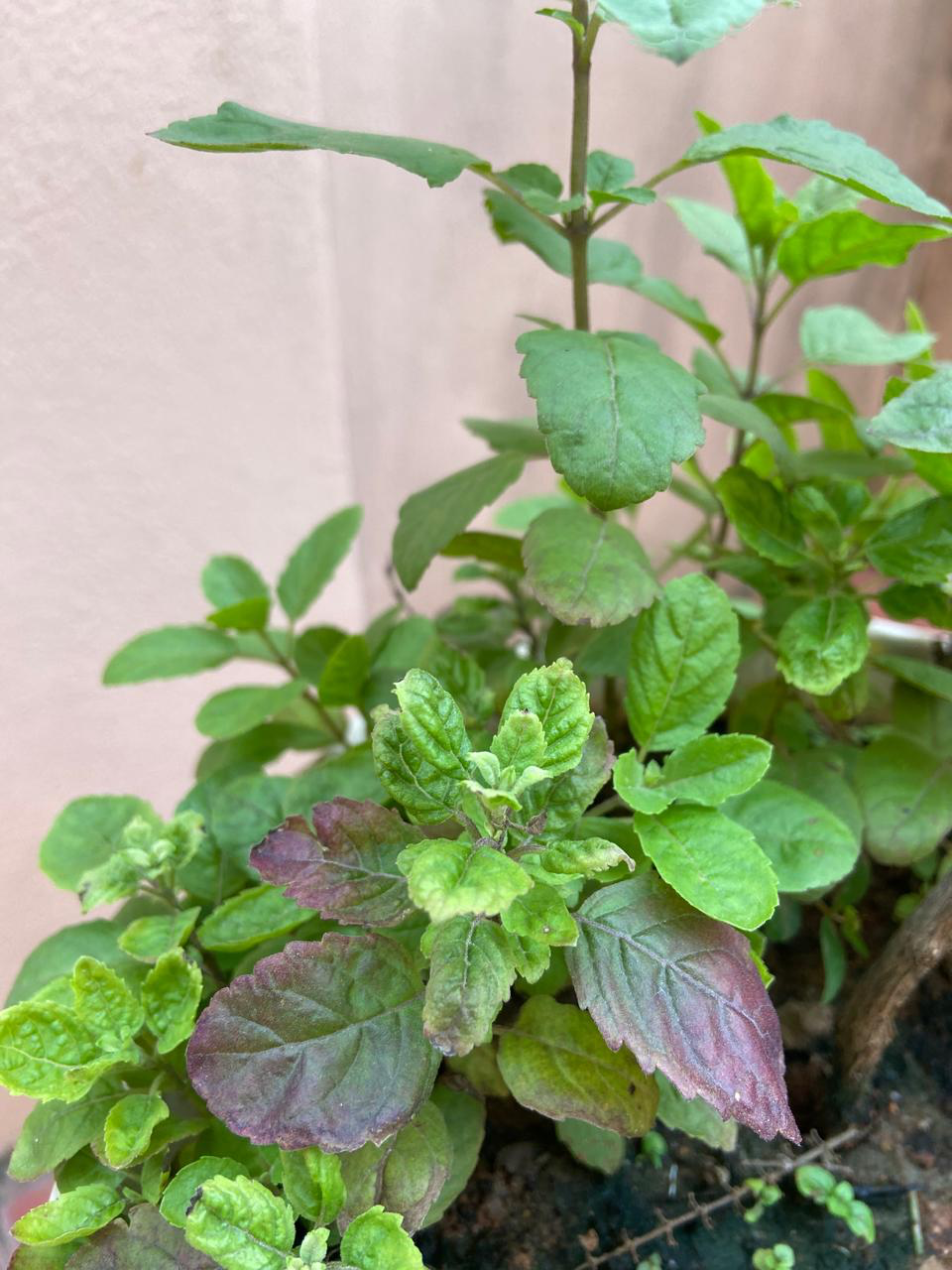
Growing between 30 and 90 cm in height, Tulsi is a perennial aromatic shrub belonging to the Lamiaceae family. It has highly branching morphology and hairy, quadrangular stems. The plant's distinctive scent comes from the abundance of glandular trichomes on its opposing, elliptical, serrated leaves which is usually 2–5 cm long, which release essential oils. There are two primary types that are known to exist which are purple-leaved (Krishna Tulsi) and green-leaved (Sri Tulsi). The plant produces racemes of tiny, purple to reddish flowers with four Lamiaceae-typical stamens and a bilabiate corolla. Fruits are little brown nutlets with a prolonged calyx around them. Tulsi is widely grown for its culinary, medicinal, and religious uses in India and Southeast Asia. It requires well-drained soils and grows well in tropical and subtropical climes(3).
Phytochemical Diversity
The secondary metabolite profile of the chemically abundant medicinal plant Ocimum tenuiflorum (Tulsi) includes phenolic acids, flavonoids, triterpenoids, sterols, polysaccharides, volatile essential oils, and a number of other minor compounds. This chemo diversity is influenced by genetics (chemotypes), environment (soil, season, climate), plant component, and extraction/analysis techniques. It manifests itself in both qualitative composition (which classes of compounds are present) and quantitative variability (relative amounts of certain compounds). Tulsi's reputation as a versatile phytochemical reservoir is confirmed by recent thorough studies and metabolomic surveys, which makes it appealing for both conventional applications and current drug-discovery initiatives(4,5).
Major Phytochemicals
|
Compound |
Class |
Plant Part |
Concentration |
Bioactivities |
|
Eugenol |
Phenylpropanoid (volatile oil) |
Leaves, flowers |
20–70% of essential oil (chemotype-dependent) |
Antimicrobial, analgesic, anti-inflammatory |
|
Linalool |
Monoterpene alcohol |
Leaves |
up to 30% of essential oil |
Sedative, antimicrobial |
|
Methyl eugenol |
Phenylpropanoid |
Leaves |
variable, chemotype-dependent |
Insect repellent, antimicrobial |
|
β-Caryophyllene |
Sesquiterpene |
Leaves |
5–10% of essential oil |
Anti-inflammatory, analgesic |
|
Rosmarinic acid |
Phenolic acid |
Leaves |
0.5–2% dry weight |
Antioxidant, anti-inflammatory |
|
Apigenin |
Flavonoid |
Leaves |
trace–0.1% |
Anticancer, antioxidant |
|
Ursolic acid |
Triterpenoid |
Leaves |
0.2–0.6% dry weight |
Anticancer, hepatoprotective, anti-inflammatory |
|
Oleanolic acid |
Triterpenoid |
Leaves |
~0.1–0.3% |
Antioxidant, hepatoprotective |
|
β-Sitosterol |
Sterol |
Leaves |
Variable |
Anti-hyperlipidemic, anti-inflammatory |
Antimicrobial activity
Broad-spectrum antibacterial qualities against viruses, fungi, and bacteria are demonstrated by tulsi. Essential oil compounds including β-caryophyllene, linalool, and eugenol break down microbial membranes and allow cell contents to seep out(15). Staphylococcus aureus, Escherichia coli, Klebsiella pneumoniae, and Candida albicans have all been demonstrated to be inhibited by extracts. Preliminary research has also shown antiviral activity against SARS-CoV-2, herpes simplex, and influenza. Combination studies indicate that Tulsi may lessen germ resistance and increase the effectiveness of antibiotics(16).
Anti-inflammatory and Immunomodulary Effects
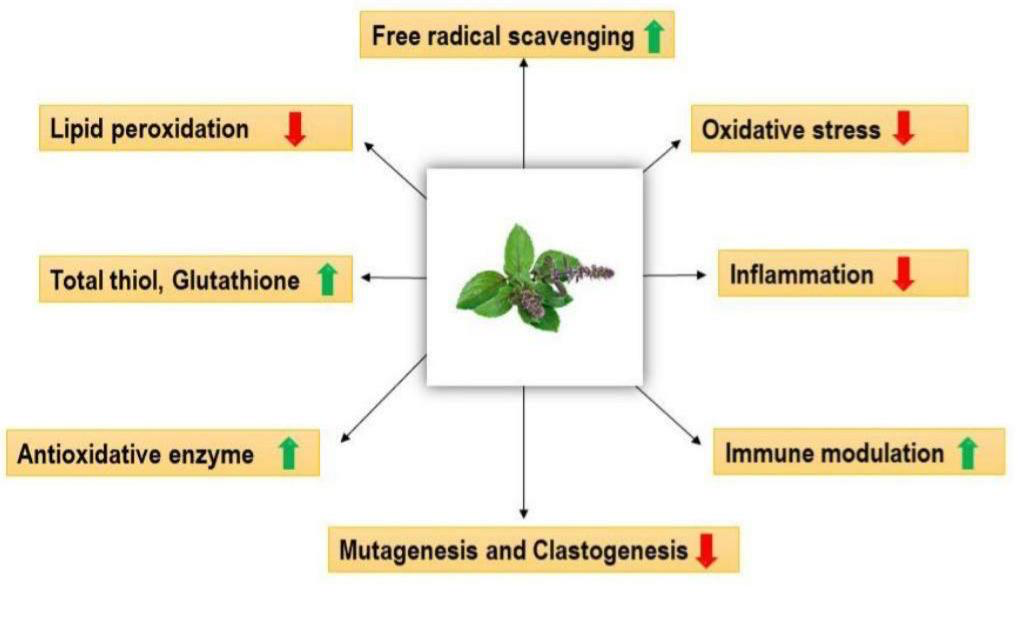
Both volatile and non-volatile components of Tulsi exhibit potent anti-inflammatory properties(17). By inhibiting pro-inflammatory enzymes including cyclooxygenase (COX) and lipoxygenase (LOX), ursolic acid and eugenol lower the production of prostaglandins and leukotrienes. Rosmarinic acid reduces pro-inflammatory cytokines such IL-1β, TNF-α, and IL-6 by modulating the NF-κB and MAPK signalling pathways (18,19).Tulsi extracts considerably lessen formalin-induced arthritis and carrageenan-induced paw oedema in rats when administered in vivo. Phagocytic activity is increased by polysaccharide fractions, confirming its historical function as an immunomodulator and adaptogen.
Antioxidant activity
Strong radical-scavenging capabilities are provided by polyphenols such apigenin, caffeic acid, and rosmarinic acid. Tulsi extracts, both aqueous and ethanolic, show strong activity in the DPPH, ABTS, and FRAP tests(20). Additionally, these chemicals defend against damage caused by oxidative stress by upregulating endogenous antioxidant defences such as glutathione, catalase, and superoxide dismutase. Numerous therapeutic properties of Tulsi, such as neuroprotection, hepatoprotection, and anticancer activity, are supported by antioxidant processes(21).
Anticancer potential
Tulsi's main anticancer components are the triterpenoids ursolic acid and oleanolic acid. By suppressing VEGF, they prevent angiogenesis, alter PI3K/Akt and MAPK signalling, and trigger apoptosis through mitochondrial pathways (upregulation of Bax, caspase activation)(22).
Additional cytotoxic and chemo preventive actions are provided by flavonoids including orientin and apigenin . In animal models of skin and lung carcinogenesis, Tulsi extracts decrease tumor incidence and suppress the growth of breast, colon, and pancreatic cancer cell lines. Despite the strength of preclinical evidence, there is still a lack of clinical validation(23).
Antidiabetic and metabolic effects
Tulsi extracts increase insulin secretion, block α-glucosidase and α-amylase, and encourage peripheral glucose absorption. Studies on animals show better lipid profiles and decreased fasting blood glucose. HbA1c, postprandial, and fasting glucose levels are shown to decrease in type 2 diabetic patients in small-scale clinical trials. Flavonoid glycosides, rosmarinic acid, and ursolic acid are primarily responsible for these actions(24,25).
Neuroprotective and stress modulating effects
Tulsi, which is traditionally considered a Rasayana, has neuroprotective and adaptogenic properties. Eugenol has anxiolytic and antidepressant-like effects, whereas the flavonoids orientin and vicenin shield neurons from oxidative stress and excitotoxicity . Tulsi has been shown in animal models to enhance memory retention, prevent neurodegenerative alterations, and lower stress-induced cortisol rise. These results provide credence to its long-standing applications in stress reduction and cognitive improvement(26).
Cardioprotective and hepatoprotective effects
Triterpenoids and sterols (β-sitosterol) found in Tulsi have hepatoprotective, antihypertensive, and lipid-lowering properties. Extracts raise HDL cholesterol, lower triglycerides and blood cholesterol, and stop the development of atherosclerotic plaque(27). Tulsi extracts, mostly through antioxidant and anti-inflammatory mechanisms, reduce transaminase levels and arrest histological alterations brought on by CCl? and paracetamol in hepatotoxicity models(28).
Wound healing and Dermatological applications
In animal studies, topical Tulsi administration speeds up collagen synthesis, wound contraction, and epithelialization . Its antibacterial and anti-inflammatory qualities aid in the healing process even more. Formulations containing essential oils are used to treat inflammatory skin disorders, acne, and cutaneous fungal infections(29).
Uses Of Tulsi Plant
Tulsi, or Ocimum tenuiflorum, is a Rasayana herb that is valued for fostering longevity, fortitude, and general health in Ayurvedic, Siddha, and Unani medicine. Tulsi has long been used to treat a variety of illnesses, including worm infestations, diarrhoea, and indigestion; feverish conditions like dengue and malaria; and respiratory disorders including cough, cold, bronchitis, and asthma. While leaf pastes and oils are frequently used to treat wounds, skin diseases, and insect bites, decoctions, leaf juices, and herbal teas (kadha) made with Tulsi are used as home remedies. Chewing leaves is advised for stress reduction and dental hygiene, and seeds are utilized as a cooling agent in urinary diseases. In ritual and cultural contexts, Tulsi is considered a sacred plant believed to purify the environment and protect against illness(30,31). Since Tulsi's essential oils (eugenol, linalool), phenolics (rosmarinic acid, caffeic acid), flavonoids (orientin, vicenin), and triterpenoids (ursolic, oleanolic acids) have shown antimicrobial, anti-inflammatory, antioxidant, adaptogenic, and wound-healing qualities, these traditional uses closely align with pharmacological findings. Tulsi's function as a "bridge plant" connecting traditional methods to scientifically supported treatments is highlighted by the intersection between ethnomedicine and contemporary pharmacology.
Applications Of Tulsi
The food and nutraceutical industries are using tulsi more and more because of its potent scent, bioactive ingredients, and health-promoting qualities. Because of its antibacterial, adaptogenic, and antioxidant properties, Tulsi leaves are used in herbal teas, functional drinks, and flavoured water. As natural flavorings and preservatives, leaf extracts are added to dairy products, confections, and baked goods to prolong their shelf life by preventing microbiological growth. Because of its antibacterial properties, tulsi essential oil, which is high in eugenol and linalool, is used in food packing and preservation. Tulsi extracts and powders are sold as dietary supplements for improving immunity, reducing stress, and maintaining metabolic health in functional meals. It is also useful for lowering lipid oxidation in processed foods due to its natural antioxidant properties, which enhances both quality and safety(32).
Therapeutic Applications
Antimicrobial, anti-inflammatory, antioxidant, antidiabetic, anticancer, cardioprotective, hepatoprotective, neuroprotective, and wound-healing properties are just a few of the many therapeutic benefits that make tulsi (Ocimum tenuiflorum) valuable. Together, its phenolics (rosmarinic acid), flavonoids (orientin, vicenin), essential oils (eugenol, linalool), and triterpenoids (ursolic and oleanolic acids) combat infections, control oxidative stress, boost immunity, safeguard key organs, and promote metabolic health(33). Tulsi is one of the most significant medicinal plants that connects traditional medicine with contemporary therapeutic uses since it is also regarded as an adaptogen, which lowers stress and increases general resilience.
Future Perspectives in Drug Discovery
CONCLUSION
One of the most significant medicinal plants is Tulsi, which connects traditional wisdom with contemporary scientific verification. Numerous therapeutic uses, including antimicrobial, anti-inflammatory, antioxidant, anticancer, antidiabetic, cardioprotective, neuroprotective, and wound-healing properties, are supported by its diverse phytochemical profile, which includes essential oils, phenolic acids, flavonoids, triterpenoids, and sterols. Emerging pharmacological research supports the traditional use of Tulsi in Ayurveda and other medical systems, emphasizing its value as a preventative and curative agent. There are still issues with standardization, chemotype variability, and the absence of extensive human trials, despite encouraging preclinical and limited clinical results. To transform Tulsi from a culturally valued herb into evidence-based phytopharmaceuticals, future studies concentrating on bioactive lead optimization, formulations based on nanotechnology, pharmacokinetics, and thorough clinical validation will be essential. With its unique combination of cultural significance and scientific potential, Tulsi represents not only a cornerstone of herbal medicine but also a valuable reservoir for next-generation drug discovery.
REFERENCES


Sai Priya Sagar*, Dr. G. Krishnamohan, Ocimum Tenuiflorum (Tulsi): Phytochemical Diversity, Therapeutic Applications, And Future Perspectives in Drug Discovery, Int. J. of Pharm. Sci., 2025, Vol 3, Issue 9, 2478-2487 https://doi.org/10.5281/zenodo.17176597
 10.5281/zenodo.17176597
