
B. R. Harne College of Pharmacy, Karav, Vangani, Thane.
The present study focused on formulating sustained-release tablets of the highly water-soluble drug Tramadol HCl. Various grades of HPMC polymers (K100M, K15M, and K4M) were employed as economical, non-toxic, readily accessible, and effective hydrophilic matrix-forming agents. Tablets containing 50 mg of Tramadol HCl were prepared using the wet-granulation technique and evaluated for their physical properties. Dissolution studies were carried out in 0.1 N HCl for the first 2 hours followed by phosphate buffer (pH 6.8) for 10 hours. The drug release profile showed no significant variation after three months of storage. Kinetic analysis indicated that the release pattern predominantly followed zero-order kinetics, with further correlation to Higuchi and Korsmeyer-Peppas models. The results confirm that the developed formulations successfully sustained the release of Tramadol HCl, achieving nearly complete drug release within 12 hours.
A drug delivery system (DDS) refers to a specialized formulation or device designed to deliver therapeutic agents into the body while optimizing their safety and effectiveness. It achieves this by regulating the rate, timing, and location of drug release. This system encompasses the administration of the medication, controlled liberation of the active substance, and its movement across biological membranes to reach the intended site of action.[1] A sustained-release dosage form refers to a pharmaceutical system designed to extend the drugs therapeutic action by controlling its release over time. The fundamental goals of such systems are to enhance drug safety, improve therapeutic efficacy, and promote better patient adherence. Sustained-release formulations are widely utilized in managing both acute and chronic conditions, as they help maintain plasma drug concentrations within the therapeutic window above the minimum effective level and below the toxic threshold for prolonged durations. By delivering the drug in a controlled manner, these systems enable optimized therapy, minimizing dosing frequency and associated adverse effects.[2] Tramadol is an analgesic agent commonly prescribed for the management of osteoarthritis pain, particularly in cases where conventional non-steroidal anti-inflammatory drugs (NSAIDs) such as acetaminophen or COX-2 inhibitors fail to provide adequate symptomatic relief. [3] Hydrophilic matrix tablets, often termed hydrogel matrices or swellable sustained-release systems, are formulated using polymers capable of absorbing water and expanding. These swellable polymeric structures regulate the drug-release profile by forming a gel barrier that controls diffusion and erosion, enabling prolonged and controlled delivery of the active ingredient. Following oral administration, tramadol exhibits rapid and near-complete absorption from the gastrointestinal tract. [4]
Tramadol is a centrally acting synthetic analgesic with the chemical designation (±) cis-2-[(dimethylamino)methyl]-1-(3-methoxyphenyl)cyclohexanol. It is commercially available as a racemic mixture, wherein each enantiomer contributes differently to its pharmacological profile. At the receptor level, tramadol exhibits a relatively weak affinity forμ-opioid receptors- approximately one-sixth that of morphine. The (+)-enantiomer demonstrates about fourfold greater potency than the (–)-enantiomer in terms of μ-opioid receptor binding and serotonin (5-HT) reuptake inhibition, while the (–)-enantiomer primarily mediates inhibition of noradrenaline reuptake. These complementary mechanisms result in a synergistic enhancement of analgesic efficacy, with the (+)-enantiomer showing roughly ten times higher analgesic potency compared to the (–)-form.[5] Hydroxypropyl methylcellulose (HPMC) along with natural polymers such as Karaya gum (KG) and Carrageenan (CG) were utilized in this study. Different drug-to-polymer ratios, specifically 1:1 and 1:2, were selected to investigate their effect on drug release. After optimizing the ratio to achieve the desired release profile, the drug release rate was further modified using binary and ternary combinations of the rate-controlling polymers. The matrix tablets were formulated and assessed for various physicochemical properties, including appearance, weight variation, thickness, hardness, friability, drug content, and in vitro drug release behavior. The marketed formulation containing 100 mg of tramadol hydrochloride was also subjected to similar evaluation parameters, and the in vitro release profile of the developed formulation was compared with that of the marketed product.[3]
Rationale for sustain release dosage forms
Certain drugs possess inherently prolonged durations of action, allowing them to maintain effective plasma concentrations and therapeutic activity with a single daily oral dose. Such agents are generally formulated as conventional immediate-release dosage forms. In contrast, many other drugs exhibit shorter half-lives and therefore require multiple administrations throughout the day to sustain the desired pharmacological response. Frequent dosing regimens, however, are often inconvenient for patients and may lead to missed or irregular doses, ultimately resulting in poor adherence to therapy. When conventional immediate-release formulations are administered repeatedly at prescribed intervals, they typically produce fluctuating plasma concentration profiles characterized by alternating peaks and troughs following each dose. Extended-release formulations are designed to overcome these limitations by maintaining steady plasma drug levels for prolonged periods, thereby minimizing dosing frequency and often eliminating the need for nighttime administration—an advantage for both patients and caregivers.[6]

Hypothetical plasma concentration- Time profile from conventional multiple dosing and single doses of sustained delivery formulations
ADVANTAGES OF SUSTAINED RELEASE DOSAGE FORMS
Patient compliance and convenience in drug administration can be significantly improved through sustained or modified release formulations. These systems help minimize fluctuations in plasma drug concentrations that are typically observed with multiple dosing of conventional dosage forms, thereby ensuring more consistent therapeutic effects. Enhanced control over drug absorption also reduces the occurrence of high plasma peaks associated with drugs of high bioavailability. Consequently, the total amount of drug required for therapy can be lowered, which not only maximizes drug availability with minimal dosing but also minimizes or eliminates local and systemic side effects, as well as drug accumulation during chronic therapy.[6]
Moreover, the safety margins of potent drugs are increased, reducing the risk of adverse reactions in sensitive patients. Such delivery systems also enhance therapeutic efficiency by enabling faster control or cure of medical conditions, improving bioavailability of certain drugs, and utilizing specific pharmacokinetic advantages—for example, sustained-release aspirin formulations that provide early morning relief from arthritic pain when administered at bedtime.[6]
DISADVANTAGES OF SUSTAIN RELEASE DOSAGE FORMS
Modified-release formulations may present certain limitations, including the potential risk of dose dumping and restricted flexibility for dose adjustment. Additionally, the manufacturing cost of such single-unit systems is generally higher compared to conventional dosage forms. These formulations may also enhance the likelihood of first-pass metabolism and often necessitate additional patient counseling to ensure correct administration. Furthermore, they can exhibit reduced systemic bioavailability relative to immediate-release forms and may demonstrate poor correlation between in vitro and in vivo performance.[6]
MATERIAL AND METHOD
Material
Tramadol Hydrochloride, Hydroxypropyl Methylcellulose (HPMC) grades K100M, K15M, and K4M, along with Lactose, Microcrystalline Cellulose (Avicel PH 101), Polyvinylpyrrolidone (PVP K30), Magnesium Stearate, and Talc were procured as laboratory-grade samples from Merck Chemicals Pvt. Ltd.[4]
Formulation of SR Tramadol hydrochloride matrix tablet
The accurately weighed quantities of drug, HPMC K100M, HPMC K15M, HPMC K4M, lactose, and microcrystalline cellulose were passed through a #40 mesh sieve and blended uniformly for 3–5 minutes in a stainless-steel container. A binder solution was prepared by dissolving PVP K30 in isopropyl alcohol. The granulation of the blended mixture was carried out using the prepared binder solution, followed by kneading until a uniform dough mass was achieved. The resultant wet mass was passed through a #12 mesh sieve and dried in a tray dryer to achieve a loss on drying (LOD) of 2–3%. The dried granules were then sieved through a #20 mesh to obtain granules of uniform size. Lubrication was performed by blending the granules with magnesium stearate and talc, both pre-sieved through a #60 mesh, for 3–4 minutes in a stainless-steel container, followed by mixing in a polybag. The lubricated granules were compressed into tablets using a 16-station single rotary CADMACH compression machine equipped with 6.3 mm standard concave circular punches.[4]
Drug Excipient Compatibility
FTIR Spectroscopy
Fourier Transform Infrared (FTIR) Spectroscopy plays a crucial role in evaluating drug–excipient interactions, which are essential for the successful development of stable and effective pharmaceutical formulations. This analytical technique is employed to determine the physicochemical compatibility between the active pharmaceutical ingredient and excipients, thereby predicting any possible interactions that may affect the formulation’s performance. In the present study, physical mixtures of the drug and excipients were prepared in a 1:1 ratio to assess compatibility. The FTIR spectra were recorded using a Bruker ATR-FTIR instrument, utilizing the direct sample analysis method.[4]
EVALUATION PARAMETERS
Evaluation of Granules
Determination of bulk density and tap density
An accurately weighed amount of the powder sample (W) was transferred into a graduated cylinder, and its initial volume (Vo) was recorded. The cylinder was then securely closed with a lid and placed in a tapped density apparatus, which was operated for 500 taps. The resulting volume (Vf) was noted, and the process was repeated until two successive readings were consistent. The bulk and tapped densities were determined using the following relationship:[4]
Bulk density (g/mL) = W / Vo
Tapped density (g/mL) = W / Vf
where Vo represents the initial volume and Vf denotes the final volume after tapping.
Compressibility Index
The Compressibility Index and Hausner Ratio serve as indicators of a powder’s tendency to undergo compression, thereby reflecting the extent of interparticulate interactions within the material. In powders exhibiting good flow properties, these interactions are minimal, resulting in bulk and tapped densities that are relatively similar. Conversely, materials with poor flow characteristics demonstrate stronger interparticle attractions, leading to a more pronounced difference between bulk and tapped densities. These variations are quantitatively expressed through the Compressibility Index and Hausner Ratio, which are derived from the measured bulk density (ρ_bulk) and tapped density (ρ_tapped) using the following formulas:
Compressibility Index (%) = [(ρ_tapped – ρ_bulk) / ρ_tapped] × 100
Hausner Ratio = ρ_tapped / ρ_bulk
Loss on drying
The drying time during the granulation process was optimized based on the loss on drying (LOD) values. The LOD of each batch was determined at 105°C for 2.5 minutes using a “Sartorius” electronic LOD apparatus to ensure consistent moisture content and process uniformity.
Angel of repose
The flow behavior of a powder is commonly evaluated using the angle of repose, which reflects the extent of interparticle frictional forces influencing flowability. These frictional forces hinder the smooth movement of particles and are quantitatively expressed through the angle of repose. It is defined as the maximum angle formed between the surface of a powder heap and the horizontal plane. The angle can be determined using the relation:
tan q =h/r
q =tan -1 h/r
where h represents the height of the powder pile, r denotes the radius of its base, and θ corresponds to the angle of repose.
Evaluation of tablets
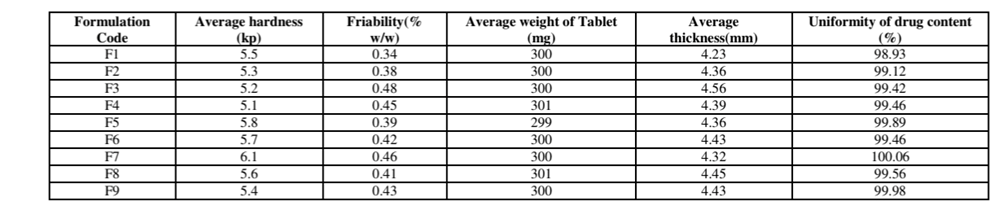
The prepared tablets were subjected to evaluation for various physicochemical parameters, including weight variation, hardness, thickness, friability, drug content, and stability. Tablet hardness was assessed using a Pfizer hardness tester. For weight variation analysis, twenty tablets were randomly selected, and their individual weights were compared against the calculated average weight. Hardness testing involved placing each tablet between the plungers of the tester, and the applied force required to cause fracture was recorded. For each formulation, the hardness of six tablets was measured. The crown-to-crown thickness of ten tablets from each batch was determined using a vernier caliper. Friability testing was performed using a Roche friabilator (Electrolab, Mumbai), which exposed the tablets to abrasion and shock by rotating them at 25 rpm and dropping them from a height of 6 inches during each revolution.[3]
The prepared preweight tablet samples were evaluated for friability by placing them in a friabilator and subjecting them to 100 revolutions. After completion, the tablets were dedusted gently with a muslin cloth and reweighed. Friability (F) was determined using the following equation:
F = (1 − W? / W) × 100
where W? represents the initial tablet weight and W denotes the final weight after testing.
For drug content estimation, three tablets from each batch were accurately weighed, finely powdered, and dissolved in phosphate buffer (pH 6.8) to a final volume of 250 mL. The resulting solution was filtered, appropriately diluted, and analyzed spectrophotometrically at 271 nm.[3]
In vitro drug release from the matrix tablets was assessed over 12 hours using an eight-station USP dissolution apparatus (TDT-08L, Electrolab, Mumbai) operated at 100 rpm and maintained at 37 ± 0.5°C. The study was carried out in two media: 0.1 N HCl (pH 1.2) for the first 2 hours, followed by phosphate buffer (pH 6.8) for the remaining 10 hours. At predetermined intervals, 5 mL samples were withdrawn and replaced with an equal volume of fresh medium to maintain a constant volume. The collected samples were filtered, suitably diluted, and analyzed at 271 nm using a UV–Visible spectrophotometer to determine the concentration of tramadol hydrochloride released at each time point.[3]
Stability study
The stability studies of tablet formulations F7 (H8K2), F16 (H2C8), and F17 (K8C2) were conducted in compliance with ICH guidelines by storing the samples at 40 ± 2°C and 75 ± 5% RH for a period of three months using a stability chamber (Lab-care, Mumbai).[3]
FTIR Analysis:
Fourier Transform Infrared (FTIR) spectroscopy was performed to assess possible interactions between the drug and excipients. The spectra of pure tramadol hydrochloride and formulation F16 (H2C8) were obtained using an FTIR spectrophotometer (Model 1615, Perkin Elmer, USA) with the KBr pellet method.
Differential Scanning Calorimetry (DSC):
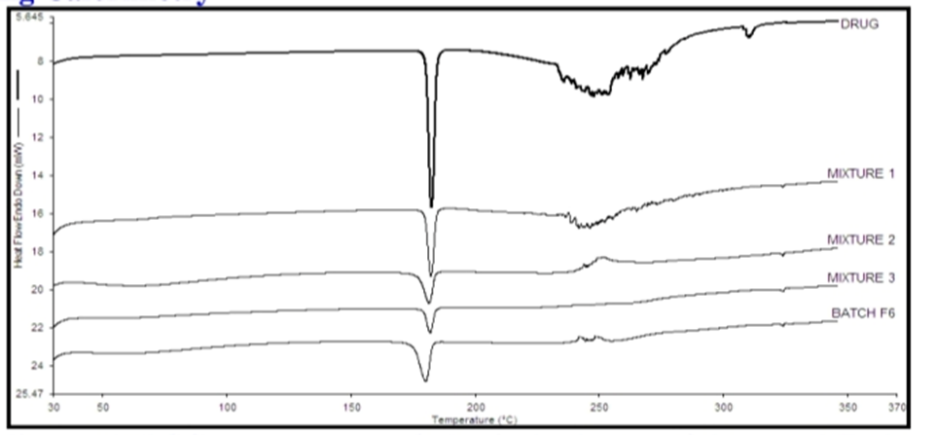
Thermal analysis was carried out using a Differential Scanning Calorimeter (DSC-60, Shimadzu, Japan). Approximately 5 mg of accurately weighed pure tramadol hydrochloride and a tablet formulation containing an equivalent amount of the drug were analyzed. The samples were sealed in perforated aluminum pans, with an empty sealed pan serving as the reference. Temperature calibration was performed using indium as a standard. The samples were scanned at a heating rate of 10°C/min over a temperature range of 50–300°C.[3]
RESULT AND DISCUSSION
The present study was aimed at developing sustained-release solid dispersion tablets of Tramadol Hydrochloride utilizing different polymers. The prepared formulations were subjected to evaluation for their physicochemical characteristics as well as in vitro drug release performance.
Analytical Method:
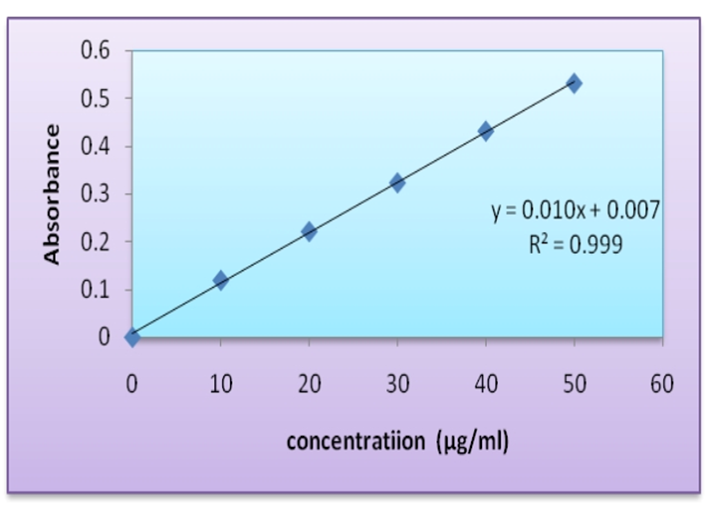
A calibration curve for Tramadol Hydrochloride was constructed in 0.1 N HCl. The UV spectrum of a 10 µg/ml Tramadol Hydrochloride solution scanned between 200–400 nm exhibited a maximum absorbance (λmax) at 271 nm. Standard solutions in the concentration range of 10–50 µg/ml demonstrated excellent linearity with a correlation coefficient (R²) of 0.999, confirming adherence to Beer–Lambert’s law.
Standard curve of Tramadol hydrochloride in 0.1N HCL
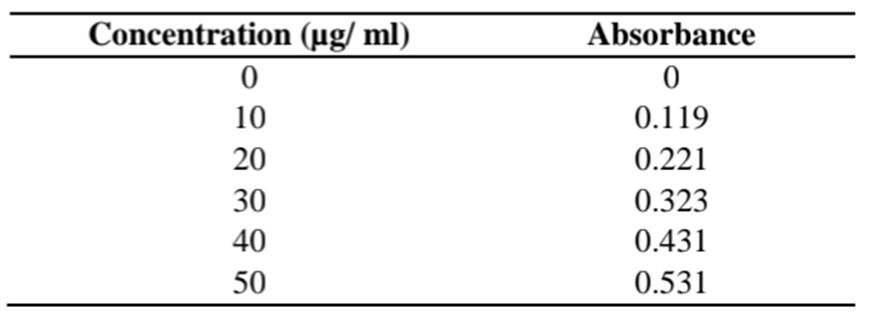
Calibration curve of Tramadol hydrochloride in the 0.1N HCL at 271 nm
Standard curve of Tramadol hydrochloride in Phosphate buffer Ph 6.5
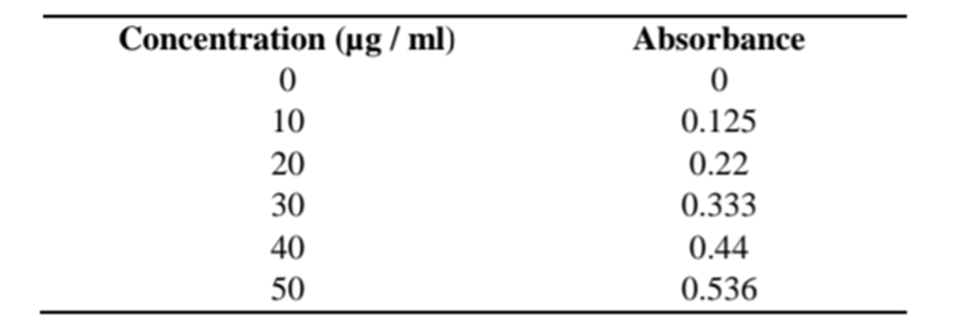
Calibration curve of Tramadol hydrochloride in Phosphate buffer Ph 6.5
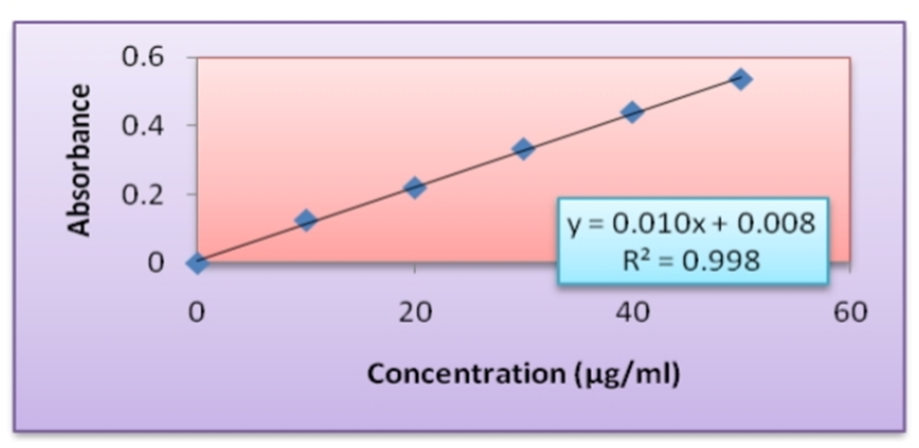
THE STANDARD CURVE OF TRAMADOL HYDROCHLORIDE HCL PH 6.5
The standard calibration curve of Tramadol Hydrochloride was developed in phosphate buffer of pH 6.8. A 10 µg/ml solution was scanned in the ultraviolet range of 200–400 nm against the same buffer as a blank, revealing a maximum absorbance at 271 nm (λmax). A series of standard solutions ranging from 10 to 50 µg/ml exhibited excellent linearity with a correlation coefficient (R²) of 0.999, confirming adherence to Beer–Lambert’s law.[6]
Drug and Excipient Compatibility study
FTIR spectrum of Tramadol hydrochloride
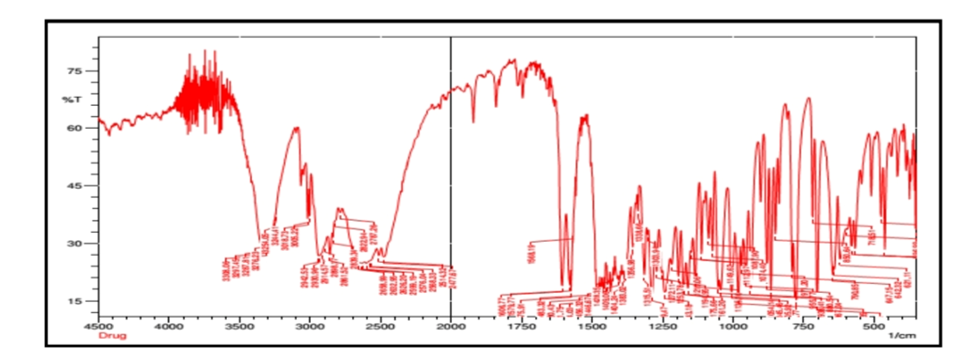

FTIR SPECTRUM OF OPTIMIZED FORMULATION
Differential Scanning Calorimetry (DSC):
Evaluation of sustain release tablet for Tramadol hydrochloride
Pre compression parameters of formulations

Post compression parameters of formulations
zero order release profile for formulation
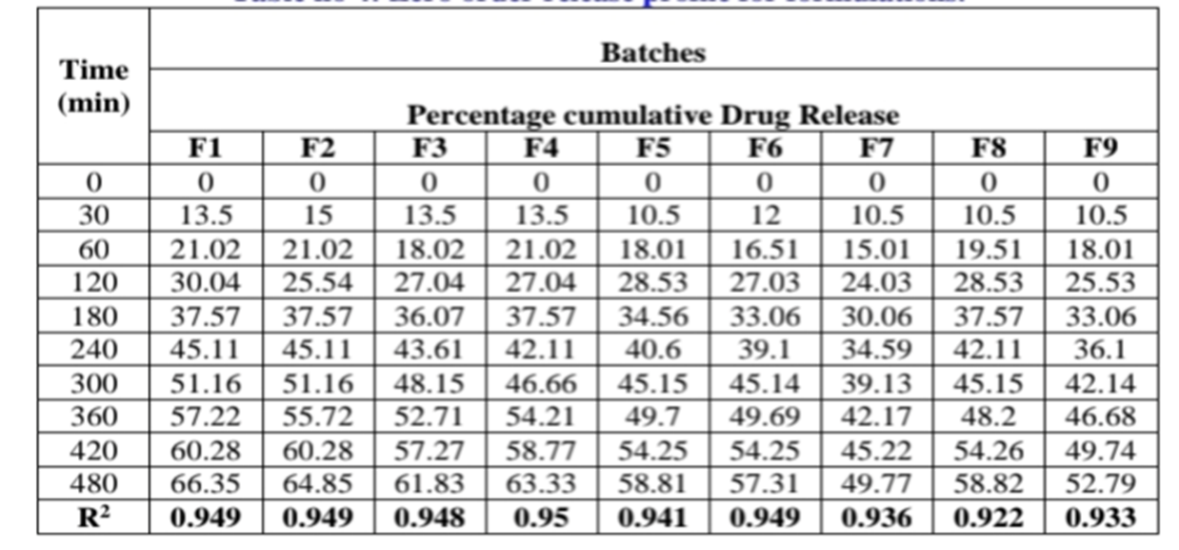
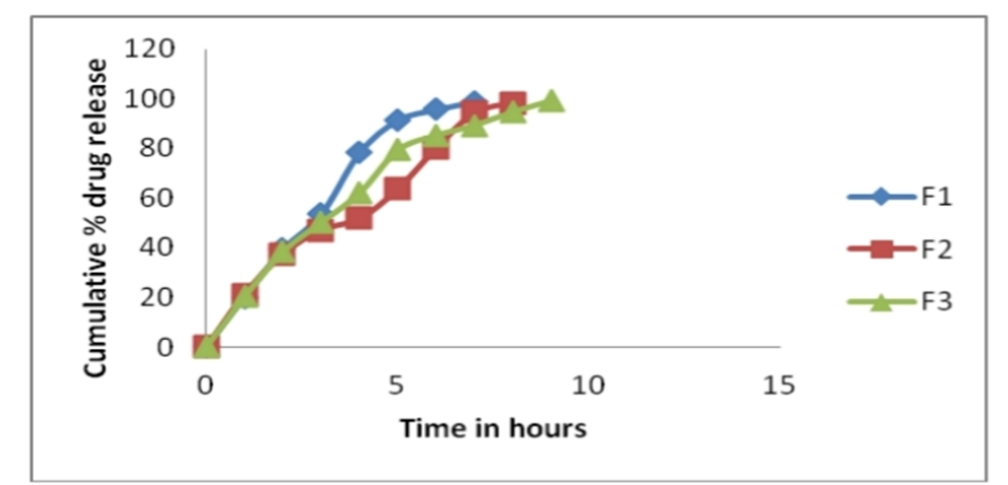
DRUG RELEASE PROFILE FOR FORMULATION F1 TO F3
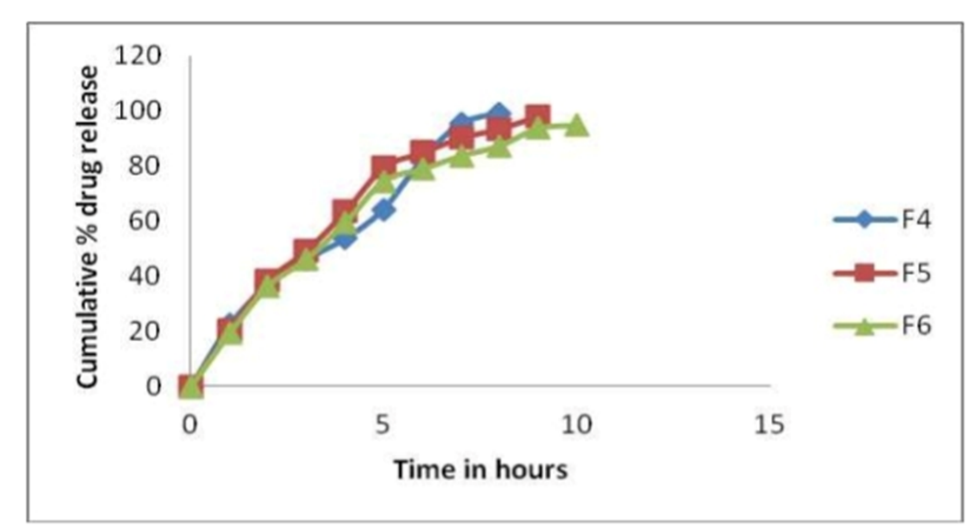
DRUG RELEASE PROFILE FOR FORMULATION F4 to F6
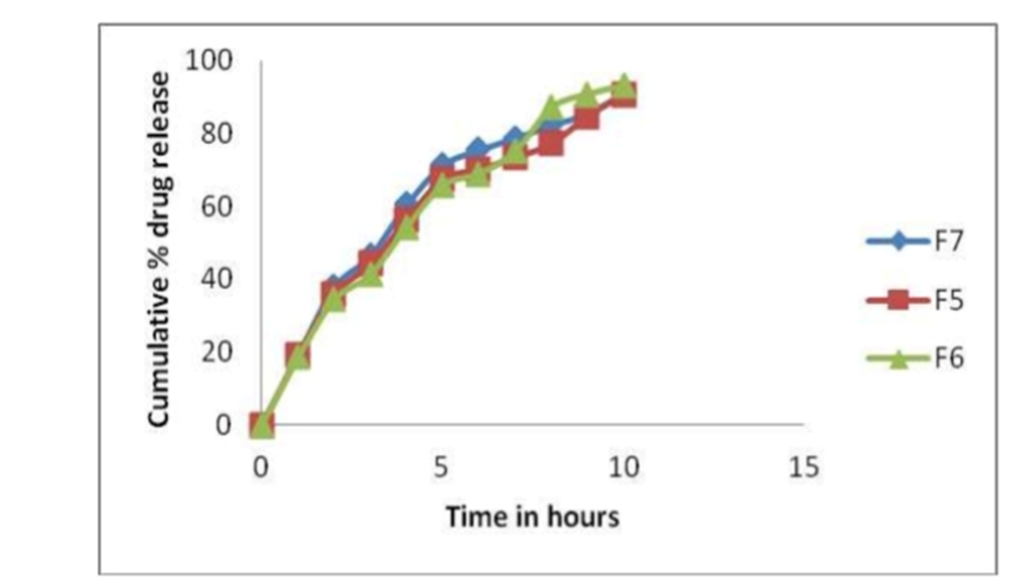
DRUG RELEASE PROFILE FOR FORMULATION F7 F5 F6
CONCLUSION
The present investigation focused on the development of sustained-release tablet formulations of the highly water-soluble drug Tramadol Hydrochloride using HPMC K100M and Ethyl Cellulose as release-retarding polymers. Among the various formulations, batch F7 containing 33% HPMC K100M exhibited the most desirable sustained-release profile. Lower concentrations of HPMC K100M and Ethyl Cellulose were found to be inadequate in controlling the drug release, whereas higher concentrations of Ethyl Cellulose alone were ineffective in achieving the desired retardation. Comparatively, HPMC K100M demonstrated superior release-controlling efficiency over Ethyl Cellulose. Thus, HPMC K100M can be effectively employed for the formulation of sustained-release tablets of Tramadol Hydrochloride.[6]
REFERENCES


Shreya Raut, Priyanka Hajare, Formulation and Evaluation of Sustain Release Matrix Tablet of Tramadol Hydrochloride, Int. J. of Pharm. Sci., 2025, Vol 3, Issue 12, 3897-3907. https://doi.org/10.5281/zenodo.18086381
 10.5281/zenodo.18086381
