
Navmaharashtra Shikshan Mandal Abasaheb Kakade College of B.Pharmacy, Bodhegaon, Ahilyanagar
The emergence of antibiotic-resistant bacteria has raised the demand for safe, economical, and effective herbal alternatives. This study aims to develop and evaluate a polyherbal emulgel using extracts of jackfruit seed (Artocarpus heterophyllus), neem (Azadirachta indica), and turmeric (Curcuma longa) for antibacterial activity. Each extract has potent antibacterial phytoconstituents: jackfruit seed is rich in phenolics and flavonoids, neem contains azadirachtin, nimbin, and quercetin, and turmeric contains curcuminoids with broad-spectrum antimicrobial and anti-inflammatory qualities. The synergistic combination of these herbal extracts is expected to decrease potential side effects while increasing stability and efficacy. Emulgel was chosen as a transdermal delivery system due to the combined advantages of emulsion and gel systems, which include improved drug penetration, spreadability, patient compliance, and controlled release of active chemicals. By bypassing first-pass metabolism, delivering medication locally at the site of infection, and maintaining sustained therapeutic levels, the transdermal approach increases bioavailability and decreases systemic toxicity. Evaluations were conducted on the produced polyherbal emulgel's physicochemical properties, such as pH, viscosity, spreadability, and stability. Using broth microdilution (MIC, MBC) and agar well diffusion procedures, antimicrobial activity against Escherichia coli, and was assessed in accordance with CLSI guidelines. The results demonstrated low MIC values and significant zones of inhibition, confirming the formulation's broad-spectrum antibacterial efficacy. The study found that the created polyherbal emulgel has better transdermal penetration and therapeutic potential, making it a viable natural topical antibacterial agent. It could serve as a beneficial alternative to synthetic antibiotics for the treatment of skin infections.
As antimicrobial resistance and adverse effects associated with synthetic antibiotics increase, interest in herbal-based formulations for topical antibacterial therapy is growing again. Herbal medicines are biocompatible with human skin, have multiple modes of action, and are composed of bioactive chemicals derived from plants. They also have fewer side effects. The advantages of gels and emulsions—better skin penetration, controlled release, and enhanced solubility of herbal actives—have been combined in emulgels, which has generated a lot of interest among topical administration systems. This study aims to develop and assess a transdermal application of a polyherbal emulgel with antibacterial activity that comprises extracts from the seeds of Curcuma longa (turmeric), Azadirachta indica (neem), and Artocarpus heterophyllus (jackfruit).
The Scientific Background and Justification
The seeds of the jackfruit, Artocarpus heterophyllus, are an underutilized agricultural by- product that are rich in phenolics, flavonoids, and lectins that have strong antibacterial, antioxidant, and anti-inflammatory properties. It has been demonstrated that ethanolic and methanolic seed extracts inhibit Pseudomonas aeruginosa, Escherichia coli, and Staphylococcus aureus. Neem, or Azadirachta indica, is one of the most studied medicinal plants because of its potent antibacterial, antifungal, and wound-healing qualities. Neem contains compounds including quercetin, nimbin, and azadirachtin that prevent infection and promote skin regeneration by preventing the formation of biofilms and microbial cell walls.
Another extensively studied plant is turmeric, or Curcuma longa; its primary curcuminoid ingredients control oxidative stress and cytokine production to provide broad-spectrum antibacterial and anti-inflammatory effects. When these three extracts are combined in a single formulation, a synergistic polyherbal effect can be created that boosts antibacterial activity through multiple biochemical routes. Turmeric encourages anti-inflammatory and wound- healing properties, neem has direct bactericidal activity, and jackfruit seeds enhance antioxidant stability and phenolic content. Better patient compliance, localized activity at the infection site, and avoidance of first-pass metabolism are some of the extra advantages of transdermal delivery over oral treatment.
The Rationale Behind Creating Emulsion
Scientific and Biological Activity
Topical effectiveness is limited by the low skin permeability and poor water solubility of herbal extracts having therapeutic potential, such as curcumin and neem oil. To address these issues, a novel hybrid system called Emulgels was created, which blends oil-in-water (O/W) emulsions with gelling polymers such as Carbopol. Enhancing the solubilization of lipophilic herbal actives within the oil droplets, the emulgel process maintains the optimum viscosity, spreadability, and non-greasy texture of a gel.
Physicochemical and Biological Advantages
Polyherbal emulgels combine the physicochemical stability of emulsions with the simplicity of use of gels. Within the gel matrix, the homogenous distribution and small droplet size provide a high surface area for drug release, which enhances diffusion into the epidermal layers. To guarantee full effectiveness, the formulation allows for the simultaneous addition of lipophilic (neem and turmeric extracts) and hydrophilic (jackfruit seed extract) ingredients.
From a biological perspective, the antibacterial activity of these extracts prevents infection, while their anti-inflammatory and antioxidant properties support tissue regeneration and wound healing. Biodegradable polymers and natural excipients, which reduce toxicity and irritation, further strengthen the formulation’s safety profile for long-term cutaneous usage.
Innovation and Methods of Science
The distinctive feature of this formulation is the integration of three distinct herbal extracts into an emulgel technology designed for synergistic antibacterial activity. There aren’t many studies that report using neem, turmeric, and Artocarpus heterophyllus seed extract in a single transdermal formulation. By employing green extraction techniques such ethanol–water maceration and ultrasound-assisted extraction, bioactive yield is raised while environmental sustainability is preserved. Curcumin, quercetin, and total phenolic content are examples of chromatographic markers that will be used to standardize the formulation and ensure batch-to- batch repeatability.
Furthermore, using factorial trial design and Quality by Design (QbD) principles to optimize formulation parameters (oil phase, surfactant ratio, and viscosity) represents a modern, scientific approach to the production of herbal products. As a result, efficacy and compliance with current pharmaceutical and regulatory standards are guaranteed.
Present Difficulties and Prospects
There are several barriers to the development and modernization of herbal mixtures, despite their potential. These include the potential for microbial contamination during manufacturing, the instability of phytochemicals such as curcuminoids, the absence of standardization, and batch variability caused by differences in plant origin and extraction methods. Furthermore, the widespread popularity of herbal treatments is limited by inadequate clinical validation and unequal quality control. To overcome these challenges, modernization strategies such as validated HPLC fingerprinting, GMP-compliant manufacturing, and nanotechnology-based delivery modalities are essential. Green chemistry and solvent-free extraction methods can further enhance sustainability and safety. Future studies should focus on elucidating molecular processes, conducting comparative analyses, and investigating
The current work integrates state-of-the-art pharmaceutical technologies with traditional herbal knowledge to develop a stable, standardized, and powerful polyherbal emulgel for transdermal antibacterial applications. The formula aims to promote the development and global recognition of herbal treatments by providing synergistic, broad-spectrum antibacterial activity with improved skin penetration and patient acceptability.
LITRATURE SURVEY
1. Fuloria S. et al. 2022: Turmeric, or Curcuma longa Linn. (C. longa), is a member of the Zingiberaceae family and has long been used for its ability to treat a wide range of illnesses. C. longa has been treated externally to treat ulcers and inflammation and utilized in Unani and Ayurvedic medicine to treat liver blockage and jaundice. As an antiseptic, it is also used to treat a number of other conditions, including cough, cold, dental problems, dyspepsia, skin infections, blood purification, asthma, piles, bronchitis, tumors, wounds, and hepatic disorders. One of C. longa's main components, curcumin, is well known for its medicinal potential in a variety of illnesses. In contrast to curcumin, there is a dearth of research on C. longa's potential for therapeutic use.
2. Merrell DS et.al May 30, 2022: For thousands of years, the neem tree, Azadirachta indica (A. Juss), has been utilized as a traditional treatment for a wide range of human illnesses. Nowadays, studies in the domains of dentistry, food safety, bacteriology, mycology, virology, more research is obviously required to ascertain the precise mechanisms of action, clinical efficacy, and in vivo safety of neem as a treatment for human infections of interest, despite the increasing amount of compelling evidence supporting the use of A. indica as an antibiotic. Furthermore, the numerous ongoing studies
3. Pawar SR et.al October 27, 2021: Emulgel has a pattern of prolonged release and dual control. Enhancing bioavailability, Emulgel in addition to patient adherence. The generated formulation's stability study, skin irritation test, medication content, viscosity, pH, particle size, zeta potential, and other characteristics are assessed.
4. Giri S et. al September 2022: Recent advances in topical delivery systems have been made possible by the combination of phytochemistry and nanoemulgel. In order to combat microbial infections, the current study sought to create a topical drug delivery system using nanoemulgel based on neem (Azadirachta indica) and turmeric (Curcuma longa). To create the nano emulsion, Tween 80 (surfactant), PEG600 (co-surfactant), and olive oil (oil phase) were utilized.
5. Manianga A. et.al April 12, 2024: Worldwide, jackfruit seeds are frequently disregarded and thrown away, which results in the underutilization of this priceless resource. By examining the availability of jackfruit, household-level seed usage and underuse, and the kinds of subsistence activities in the community, this study investigated the possibilities of using underutilized jackfruit seeds as an alternative source of human subsistence.
HISTORICAL DEVELOPMENT

Fig no 1.1 JACKFRUIT
Jackfruit is believed to have originated in the rain forests of the Western Ghats in southwest India, while other researchers question whether Malaysia could be the actual origin. It can be found in Africa, Asia, and South America. Jack tree growth is best suited to warm, humid regions. The tropical climacteric fruit Artocarpus heterophyllus Lam., popularly referred to as jackfruit, belongs to the Moraceae family. Native to India's Western Ghats, it is distributed throughout Asia, Africa, and some regions of South America. Jackfruit, the world's largest edible fruit, is nutrient-dense and contains proteins, carbs, vitamins, minerals, and phytochemicals. The fully ripe meat can be eaten fresh, but the seeds and flesh are eaten in a variety of ways, such as boiling dishes and curries. Many nations have used pureed jackfruit to make a variety of food products, including ice creams, jams, jellies, and marmalades. Different jackfruit tree parts— Because of their anti-inflammatory, anti-fungal, anti-carcinogenic, anti- microbial, wound-healing, and blood-sugar-lowering qualities, fruits, leaves, and bark have long been utilized in medicine.
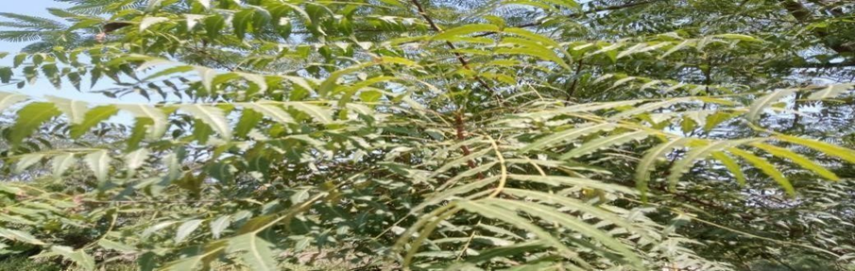
Fig no 2.2 (Neem)
Tropical and semitropical regions like Bangladesh, India, Pakistan, and Nepal are home to a large number of neem trees. The Meliaceae family includes them. This tree grows quickly, reaching a height of 20–23 meters and having a straight trunk that is roughly 4-5 feet in diameter. The imparipinnate, complex leaves have five to fifteen leaflets each. Its drupes turn from green to golden yellow between June and August. As a member of the Meliaceae family of mahogany trees, the quickly growing neem (Azadirachta indica) tree is valued for its health benefits, lumber, and organic pesticides. The dry regions of South Asia and the Indian subcontinent are likely where neem originated. It has traveled to several South African nations, the Caribbean, and other Central and South American nations. The plant has long been used in organic farming, cosmetics, and traditional and Ayurvedic medicine.
The description of Neem
|
Order |
Rutales |
|
Suborder |
Suborder |
|
Family |
Meliaceae |
|
Subfamily |
Melioideae |
|
Tribe |
Melieae |
|
Genus |
Azadiracta |
|
Species |
Indica |
Neem trees are characterized by their lovely, rounded crowns and thick, furrowed bark. 15 to 30 meters (49 to 98 feet) is the maximum height they can reach. Even though the intricate leaves typically have serrated leaflets and are evergreen, they do vanish during periods of excessive dryness. Staminate (male) or bisexual, the little, fragrant white blossoms are borne in bunches in the leaf axils. The fruit is a yellow-green drupe that is silky and has a tasty content.
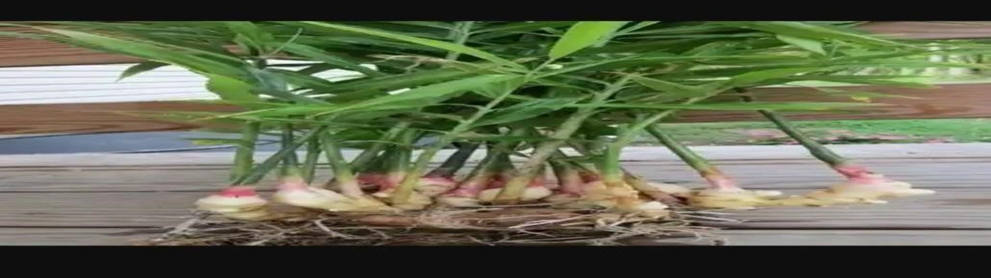
Fig no 3.1(TURMERIC)
India is home to the most diversified number of Curcuma species, with between 40 and 45 species. Turmeric has been used for centuries throughout Asia and is a key component of Ayurveda, Siddha, traditional Chinese medicine, Unani, and the animistic rituals of Austronesian peoples. Originally used as a dye, it was later used for its alleged therapeutic properties in traditional medicine. It spread with Buddhism and Hinduism in India because yellow dye is used to color the clothing of monks and priests. Austronesian peoples of Island Southeast Asia have long used turmeric, according to linguistic and circumstantial evidence, soon after their Ayurveda, Siddha, traditional Chinese medicine, Unani, and the animistic rites of Austronesian peoples all include turmeric, which has been used for ages throughout Asia. It was first employed as a dye before being used in traditional medicine for its purported therapeutic benefits. Because monks and priests' garments are colored with yellow dye, it spread throughout India along with Buddhism and Hinduism.
ORIGIN
In recent decades, a lot of research has been conducted on their biological activities. The comprehensive examination of curcumin's applications with an emphasis on its antioxidant, anti-inflammatory, neuroprotective, anticancer, hepatoprotective, and cardioprotective qualities. Bioavailability, bioefficacy and safety characteristics, side effects, and quality aspects of curcumin are also examined, followed by its many uses, food appeal optimization, agro- industrial processes to counterbalance its instability and low bioavailability, health issues, and future plans for clinical applications.
Description of the body
Turmeric plants reach a height of around 1 meter (3.3 feet) and have long, simple leaves with long petioles (leaf stalks). The leaves are produced by branching rhizomes that are situated at the soil's surface. Older rhizomes are brown and somewhat scaly, whereas younger rhizomes are pale yellow to brown, orange. The tiny yellow-orange blooms are carried in the axils of waxy bracts, which are usually pale green or somewhat purple.
TAXONOMICAL CLASSIFICATION
|
Kingdom |
Plantae |
|
Subkingdom |
Vascular plants |
|
Superdivision |
Tracheobionta. |
|
Division |
Spermatophyta |
|
Order |
Zingiberales |
|
Family |
Zingiberaceae |
|
Subclass |
Zingiberidae |
MATERIALS AND METHOD
Materials:
Neem leaves, Jackfruit seeds, Turmeric rhizomes, methanol, & Soxhlet assembly.
Method:
Soxhlet Extraction:
Soxhlet extraction, which is mainly recommended for the abstraction of lipids, was first promoted by the German chemist Franz Ritter Von Soxhlet (Sasidharan et al., 2011). These days, this technique is used to extract bioactive (solid liquid) compounds from a range of plant sources. A simple method that is effective for highly repeated data is Soxhlet extraction.
set of abstractions with a new solvent. It is continued until all of the source material has been removed from the solution (Azmir et al., 2013). The first stage of the Soxhlet extraction procedure is distillation. In this case, heating the solution to its boiling point causes the liquid to condense. It is put back in its original flask once more. A thimble is usually filled with a very small quantity of raw material. A distillation flask with a particular solvent is placed inside the thimble. when the submersion level has been reached. The siphon transfers the solvent to the same distillation flask from the thimble holder. This flask contains the extracted solutes. Until the extraction process is finished.
This process is ongoing (Grigonisa et al., 2005). Rotavapor is a device used to separate the extract and solvent. This device creates a vacuum evaporation using a check valve and vacuum pump. The ball is rotated and submerged in a heated fluid bath during the evaporation process. A condensate collection flask is fitted to the apparatus. The rebellion of the balloon expands the exchange surface to accomplish and execute quick evaporation (Marie et al., 2017).
The Soxhlet extractor's constituent parts:
There are numerous vital components that make up the Soxhlet extractor:
Soxhlet extraction apparatus: The sample is retained, and continuous extraction is made possible by the extractor apparatus, which is available in various sizes and materials.
Siphon mechanism: The siphon, a crucial part of the extraction procedure, keeps the solvents flowing continually.
Sample holder: a cellulose thimble is typically used to hold the solid sample in place during extraction. In some cases, a reusable sample holder made of clear glass is used.
Condenser: Using a cold-water recirculation system, the Alihn condenser condenses the solvent and returns it to the sample.
Heating mantle: this component heats the ethanol in the round-bottom flask. The Alihn condenser is supplied with the resulting vapor of ethanol.
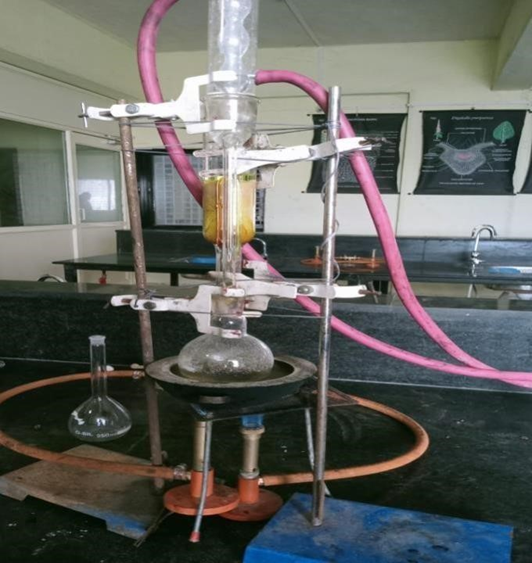
Fig no 4.1 (Soxhlet apparatus)
The Soxhlet extraction method is built up in a number of steps:
Setting up the sample and solvent: A known-quality solvent (such ethanol) is created together with the solid sample. The sample is put into the sample holder.
Assembly: The Soxhlet apparatus is assembled on top of a round-bottom flask after the condenser is linked to it. One essential need is that the sample holder extends over the solvent exit tube.
Heating and Cooling: A chilled water recirculation system keeps the condenser cool while the solvent is heated to its boiling point.
TECHNIQUES FOR SOXHLET EXTRACTION
The Soxhlet extraction procedure includes the following steps:
The heating mantle raises the solvent (such ethanol) in the round-bottom flask to its boiling point, a process known as solvent vaporization.
By vapor condensation, ethanol vapor rises above the sample holder and the Soxhlet well. Then, as the target compound condenses inside the Alihn condenser and drips over the sample, it starts to disintegrate.
The target component-containing solvent then passes through the sample holder's glass frit filter, creating a continuous circulation. The Soxhlet well gradually fills as more solvent condensate enters, and a siphon mechanism is triggered to discharge the solvent and the dissolved material back into the round-bottom flask. Repeated Cycles: Because this technique repeats in cycles, it enables efficient extraction without constant monitoring. Evaporation and finishing.
1. JACKFRUIT
1.1. Raw Materials and Substances
Jackfruits were collected from Seri Kembangan in Selangor, Malaysia. After separating the jackfruit seeds from the meat, the seed jackets were removed. To reduce the moisture content to less than 10%, the seeds were then thoroughly cleaned with water and dried for eight hours at 80 °C in an oven [30]. The dried jackfruit seeds were ground in a blender and then sieved through a 250 μm mesh sieve. To be further studied, the powdered jackfruit seeds were placed in a desiccator and kept in a glass bottle sealed with aluminum foil.
1.2. The Method of Soxhlet
The extraction was carried out using Soxhlet equipment, which included a 250 mL round- bottom flask containing 153 mL of the extraction solvent (pure methanol). After being wrapped in filter paper, a 27 g sample was added to the flask. The temperature was kept at the solvent boiling point (about 65 °C for methanol) during the one to four-hour extractions. After centrifuging the extracts for 10 minutes at 4000 rpm (KUBOTA Corporation, Osaka, Japan), the filtrate was separated from the solid residue using a nylon syringe filter (0.22 mm).
The filtrates' phenolic acid analysis, antioxidant activity, and total phenolic compounds were subsequently investigated. The solid was kept in a freezer. solid waste, and the temperature for the surface morphology examination was roughly -25°C.
1.3. Subcritical Extraction
Subcritical water extractions were performed using a batch fluid extraction device with a salt bath. A 1:1 ratio of potassium nitrate to sodium nitrite was used to create the salt bath, which acted as the heating medium for the subcritical water extraction. The temperature was preheated until it reached the appropriate setting range of 180 to 240 °C, and the operation took 10 to 30 minutes. The pressure range was 1.00 MPa to 3.35 MPa for each temperature range.
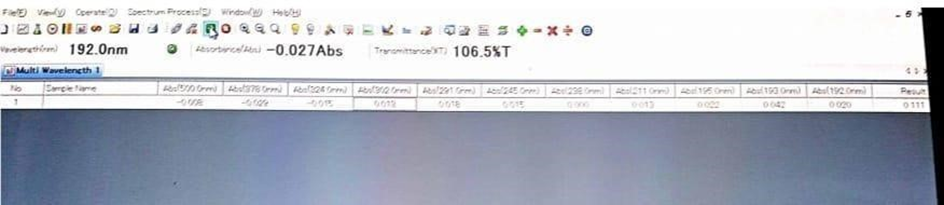
Fig no 4.3 (UV result)
2. NEEM
2.1 SUPPLIES
The neem leaves utilized in the study was supplied by local area in Bodhegaon. A dry oven was used to dry the neem leaves. Neem powder that had been weighed was put on an analytical balance. A sieve was used to separate the fine particles from the neem powder. Filter paper was used in the filtration process. A heating mantle was used to heat the solution during the Soxhlet extraction time. A Soxhlet chamber was used for the extraction process. Conical flasks and 100 mL volumetric flasks were used for measurement and solution preparation. A pipette, burette, and beakers were used for the entire titration process.
2.2. Sieve analysis and reduction of neem leaves size A 2 mm sieve was used to crush neem leaves in mill. The material was sieved using a set of sieve sizes, which were arranged in descending order: 1 mm, 710 μm, and 355 μm, using a vibrating shaker. This is to investigate the effects of particle size on oil production and quantity. As a result, using a 355μm sieve is more efficient and produces more oil than the other method.
2.3. Making neem leaves powder the neem leaves utilized in the study. Before being used, the neem leaves were cleansed multiple times to remove dirt and other impurities. After that, they dried in a 50°C oven until their moisture content didn't change. To prepare them for extraction, neem leaves were then pulverized into particles that were 355 μm in size (Maria et al. 2008).
2.4. Method for extracting neem oil The Soxhlet chamber was filled with the thimble that held 100 g of neem powder. After 500 ml of selected solvents were placed in a round-bottom flask and prepared for a Soxhlet extractor, the distillation process began. After the extraction process was complete, the solvent and extractor were placed on a water bath to evaporate the solvent.
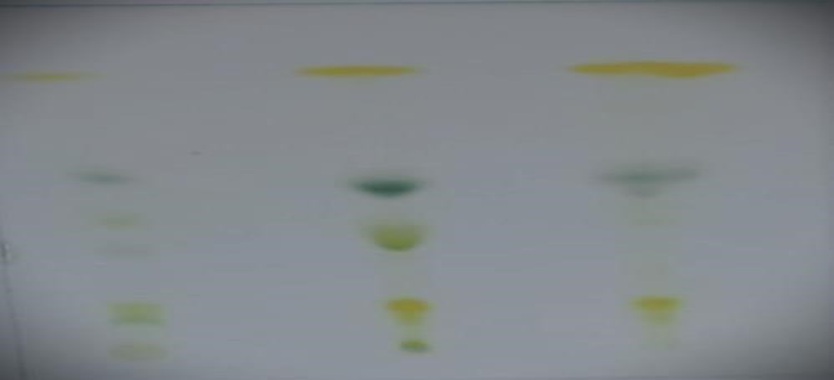
Fig no 4.4 (TLC Of Neem)
3. TURMERIC
3.1 The process of choosing turmeric for extraction:
The Salem, china, Krishna, these variety of turmeric was selected from the region of Nanded. Fresh rhizomes of turmeric are separated. Rinse the rhizomes and cut them into little pieces. Store this small piece of turmeric in the refrigerator or in the oven at 105°C for three hours to dry. Pulverize the turmeric to a fine powder for extraction.
3.2 Selecting the Proper Extraction Solvent
Use organic solvents for extraction since they are volatile and readily evaporate. In organic solvents, curcumin dissolves easily. Avoid using water since curcumin is very poorly soluble in water. 100 g of curcumin requires 1500 ml of organic solvent to extract.
3. Extraction method:
Make use of the meaty rhizomes of turmeric. The turmeric rhizomes were dried in an oven at 105 °C for three hours. A uniform powder was made from the dried rhizome. The turmeric powder was stored in a refrigerator to prevent moisture absorption. After weighing and putting 10 grams of powdered turmeric in a thimble, the Soxhlet apparatus was gradually filled over the course of eight hours at 60 degrees Celsius. After extraction, a rotary evaporator running at 35°C under vacuum was utilized to extract the extract from the acetone. The residue was weighed once it had dried. To determine whether curcumin was present, TLC was utilized.
Utilizing thin-layer chromatography for curcumin detection
Using TLC, three curcumoids were found in the acetone extract. The TLC-pre-coated silica gel (0.25 mm thick) plate was made using a spreader. In a glass tank that had been pre-saturated with the mobile phase for an hour, each plate was grown to a height of around 10 cm. The composition of the mobile phase was optimized in an 8:2:2 ratio. Stains were observed after the development plates were removed and allowed to dry.
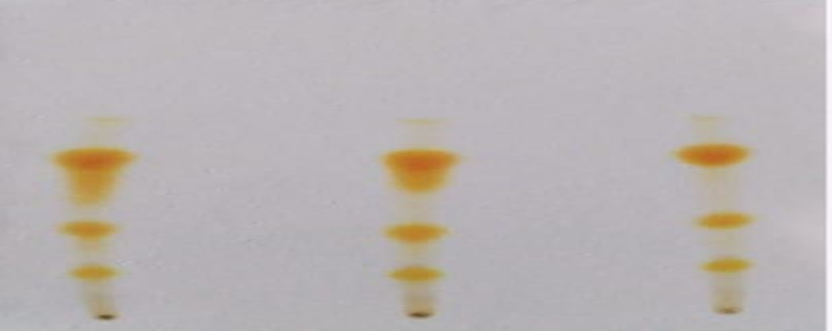
Fig no 4.5 (TLC of Turmeric)
FORMULATION
1. Producing polyherbal Emulgel: As shown in Table (), ethanolic extracts of Azadirecta indica, Curcuma longa, and Artocarpus hetrophyllus were used to create formulations A, B, and C at concentrations of 0.1%, 0.2%, and 0.5%, respectively. To produce 100g of gel, you'll need the following ingredients: carbapol-940, propylene glycol, ethanol, honey, methyl paraben, propylene glycol, triethanolamine, Tween80, Span20, aloe vera gel, coconut oil, orange oil, and enough distilled water.
A. PREPARED FOR THE OIL PHASE
Put orange and coconut oils in a span-20-sanitized beaker.
Stir in the lipophilic extract and gradually raise the temperature to 60 to 70ºc.
In a separate beaker, dissolve Tween 80 in distilled water.
Heat the preservatives, propylene glycol, and hydrophilic extract. Add preservatives to the same temperature as the oil phase, between 60 and 70ºc.
To guarantee homogeneity, add the phase progressively to the oil phase while swirling continuously.
Disperse carbapol in distilled water
Add aloe vera gel and stir to form a uniform gel.
Use triethanolamine to adjust the PH (6-6.5).
With the propeller running at 500 rpm for an hour, slowly pour the prepared emulsion into the prepared gel foundation while stirring continuously to produce a homogenous emulgel free of trapped air bubbles.
FORMULATION TABLE:
Table no- 5.1 (Formulation table)
|
Ingredients |
QTY. Taken In % for gel base |
QTY. Taken In % for formulation A |
QTY. Taken In % for formulation B |
QTY. Taken In % for formulation C |
Role |
|
Carbapol90 |
1.0 |
- |
- |
- |
Gelling agent |
|
Extract of each drug |
- |
0.1 |
0.2 |
0.5 |
Antibacterial activity |
|
Propylene glycol |
- |
5 |
5 |
5 |
Cosolvent |
|
Oil |
- |
10 |
10 |
10 |
Oil phase |
|
Tween80 |
- |
1.5 |
1.5 |
1.5 |
Emulsifier (hydrophilic) |
|
Span20 |
- |
1.0 |
1.0 |
1.0 |
Emulsifier (lipophilic) |
|
Methyl paraben |
- |
0.2 |
0.2 |
0.2 |
Preservative |
|
Propylene paraben |
- |
0.2 |
0.2 |
0.2 |
preservative |
|
Aloe vera |
3.0 |
- |
- |
- |
Gelling agent |
|
Honey |
1.0 |
- |
- |
- |
Humectant |
|
Triethanolamine |
- |
0.01 |
0.01 |
0.01 |
PH adjuster |
|
Distilled water |
Q. S |
Q. S |
Q. S |
Q. S |
Aqueous phase, solvent |
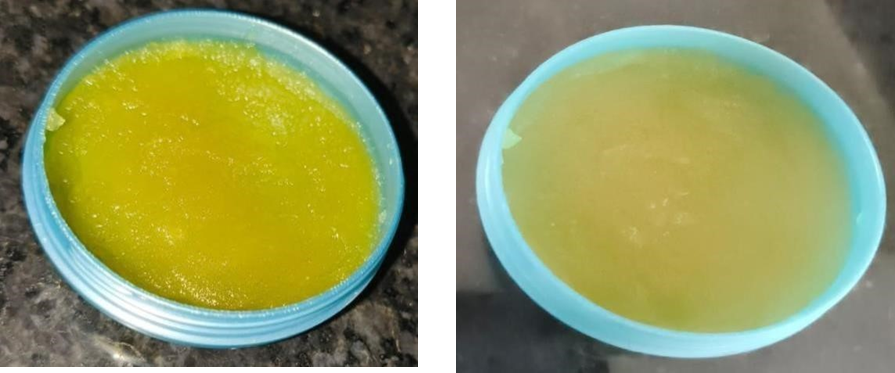
Fig no 5.1(Batch A emulgel) Fig no 5.2 (Batch B emulgel)
EVALUTION PARAMETER
The prepared formulations were observed to range from creamy yellow to dark yellow in color. Over the course of the 45-day observation period, no alterations in color or appearance were observed with regard to the base of formulations A, B, and C. Visual observation was utilized to assess the physical appearance and homogeneity of the prepared emulgel and the control (base).
The PH of the produced formulations and the control (base) were ascertained using a digital PH meter. Before the PH was measured independently, three grams of gel were precisely weighed, dissolved in thirty milliliters of pure water, and left for two hours. Each formulation's PH was measured three times, and the average results are shown in the table.
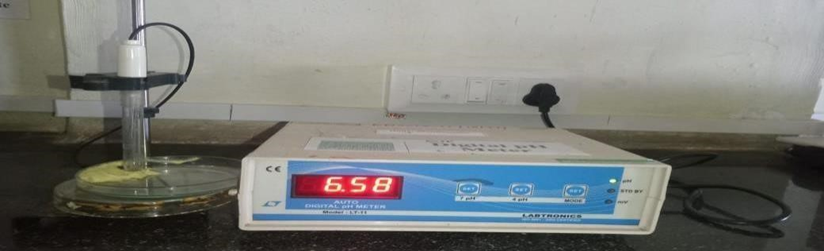
Fig no 5.3 (PH meter)
The rheological properties of the formulation and control (base) at 25 °C were ascertained using a Brookfield viscometer equipment. The entire speed range—from 10 rpm to 100 rpm—was measured, with a 30-second lag between two succeeding speeds before the speeds were arranged in descending order.
In accordance with Mutimer et al. (1956), a specialized apparatus was assigned to ascertain the created emulgel compositions' spredability. To compress the extra emulgel sample to a consistent thickness, it was sandwiched between two glass slides and subjected to a 1000 mg weight for five minutes. The pan was then filled with a 50g weight. One key indicator of spredability was the amount of time it took for the two slides to separate. The better the spredability, the shorter the separation time. The formula S=M was used to determine spredability (s). L/t where L is the length in centimeters that the glass slide moves, M is the weight in grams that is attached to the upper glass slide, and t is the amount of time in seconds that the slides take to separate.
After the formulations were applied to the skin, the degree and ease of water washing were assessed by hand.
The growing resistance of pathogenic microorganisms to conventional antibiotics has raised interest in herbal alternatives with broad-spectrum antibacterial properties. Polyherbal treatments mix several plant extracts to boost effectiveness through synergistic effects and decrease microbial resistance. This study evaluated the antibacterial activity of a polyherbal emulgel including extracts from jackfruit seeds (Artocarpus heterophyllus), neem (Azadirachta indica), and turmeric (Curcuma longa) against certain bacterial strains.
Jackfruit Seed Extract (Artocarpus heterophyllus)
Jackfruit seeds are rich in phenolic compounds, flavonoids, saponins, and lectins, all of which have strong antibacterial properties. Studies have demonstrated that both Gram-positive (Staphylococcus aureus) and Gram-negative (Escherichia coli, Pseudomonas aeruginosa) bacteria are inhibited by the disruption of their cell walls and disruption of their enzymes.
Neem extract (Azadirachta indica)
Neem's antibacterial, antifungal, and anti-inflammatory qualities have been demonstrated. Its bioactive ingredients, quercetin, nimbin, and azadirachtin, are known to alter bacterial cell permeability and inhibit nucleic acid synthesis. Because neem extracts have shown significant bactericidal action against S. aureus, E. coli, and Bacillus subtilis, they are a promising natural antibacterial agent that can be employed in topical formulations.
Turmeric extract (Curcuma longa)
Turmeric contains curcuminoids, particularly curcumin, which have antimicrobial and broad- spectrum antioxidant qualities. Curcumin damages bacterial membranes, disrupts quorum sensing, and stops the polymerization of the FtsZ protein, which is essential for bacterial cell division. Previous studies have demonstrated that curcumin-based gels significantly suppress the growth of S. aureus and P. aeruginosa, highlighting the potential of this compound in topical antimicrobial formulations.
Rationale for the Evaluation
These three plant extracts are expected to work in concert to provide antibacterial properties in a single polyherbal emulgel, increasing its potency and spectrum while ensuring topical safety. The emulgel base facilitates direct action against dangerous germs by enhancing the release and penetration of active phytoconstituents into the skin. The antimicrobial evaluation is performed using agar well diffusion and broth microdilution techniques against Gram-negative bacterial strains in accordance with CLSI standards.
TABLE (Evaluation parameter):
Table no 5.2 (Evaluation parameter)
|
Parameter |
8º |
35º |
8º |
35º |
8º |
35º |
|
Appearance of Formulation |
A Semisolid B Semisolid |
A Semisolid B Semisolid |
A Semisolid B Semisolid |
A Semisolid B Semisolid |
A Semisolid B Semisolid |
A Semisolid B Semisolid |
|
Colour |
A Pale Yellow B Yellow |
A Pale Yellow B Yellow |
A Pale Yellow B Yellow |
A Pale Yellow B Yellow |
A Pale Yellow B Yellow |
A Pale Yellow B Yellow |
|
odour |
A Pleasant B Pleasant |
A Pleasant B Pleasant |
A Pleasant B Pleasant |
A Pleasant B Pleasant |
A Pleasant B Pleasant |
A Pleasant B Pleasant |
|
PH |
A)6.8±0.1 B)6.8±0.1 |
A) 6.7±0.1 B) 6.7±0.1 |
A) 6.5±0.2 B) 6.8±0.16 |
A) 6.6±0.1 B) 6.7±0.16 |
A) 6.5±0.2 B) 6.8±0.16 |
A) 6.6±0.1 B) 6.7±0.16 |
|
Viscosity |
A) 8500 cp B) 8300 cp |
A) 8500 cp B) 8300 cp |
A) 8500 cp B) 8300 cp |
A) 8500 cp B) 8300 cp |
A) 8500 cp B) 8300 cp |
A) 8500cp B)8300cp |
|
Spreadability |
A) 8.4 B) 9.8 |
A) 8.5 B) 9.9 |
A) 8.4 B) 9.8 |
A) 8.5 B) 9.9 |
A) 8.4 B) 9.8 |
A) 8.5 B) 9.9 |
STABILITY STUDY:
OBSERVATION TABLE
Table no 5.3 (stability study)
|
Days |
Temperature |
color |
Phase separation |
PH |
Consistency |
|
0 |
Room temperature |
yellow |
No |
6.5 |
smooth |
|
15 |
8ºc |
Slightly thick |
No |
6.5 |
Good |
|
15 |
25ºc |
Normal |
No |
6.3 |
Good |
|
15 |
40ºc |
Slightly thin |
No |
6.4 |
Good |
|
45 |
25ºc |
No change |
No |
6.4 |
Stable |
RESULT AND DISCUSSION ANTIMICROBIAL EVALUTION
Using the agar well diffusion method on nutrient agar medium, the antibacterial effectiveness of the prepared polyherbal emulgel against specific bacterial strains was assessed. The chosen microorganisms were the the gram-negative Escherichia coli, which are the frequently found to cause skin infections. Standardized bacterial solutions were used to inoculate nutrient agar plates. The polyherbal emulgel, separate herbal extract gels (turmeric, neem, and jackfruit), and a commercial antibiotic gel (gentamicin) were all placed into wells. Zones of inhibition were measured in millimeters to assess antibacterial potency following a 24-hour incubation period at 37ºC.
Observed outcomes
Significant zones of inhibition against E-coli strains were demonstrated by the polyherbal emulgel, demonstrating its broad-spectrum antibacterial effectiveness.
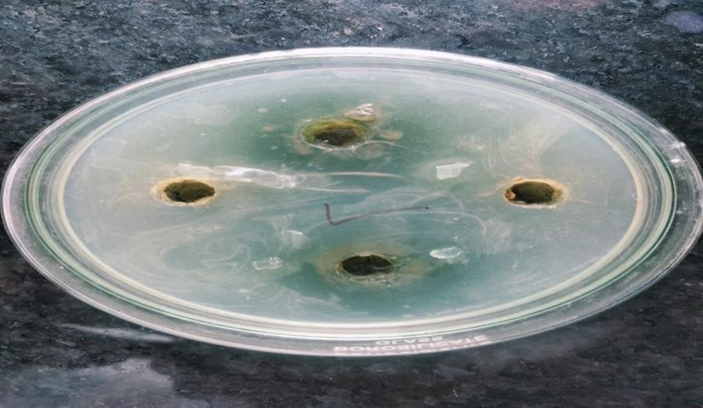
Fig no 6.1 (Zone of inhibition for formulation A&B Against E. coli)
The improvement confirms synergistic action among the three herbal extracts. The polyherbal emulgel showed enhanced antibacterial activity compared to individual extract formulations, approaching the performance of the standard antibiotic gel. Turmeric curcuminoids minimize inflammation and inhibit nucleic acid synthesis, while jackfruit seed phenolics and flavonoids increase oxidative damage to bacterial membranes, supporting the antibacterial effect.
Observation Table
Fig no 6.1(zone of inhibition)
|
Sample |
Zone of inhibition |
|
Polyherbal emulgel |
18-22 mm |
|
Standard Gentamicin |
25-28 mm |
|
Control (Base) |
0 mm |
Culture Visual observations and media performance
The diffusion of active phytochemicals through the agar medium was demonstrated by the distinct zones of inhibition that formed around wells containing the polyherbal emulgel during incubation. The absence of inhibition in the material surrounding control wells demonstrated that the herbal components were the exclusive cause of the action. The nutrient agar medium allowed for clear distinction of active zones and excellent development for organisms, confirming the validity of the experiment. The results demonstrate appropriate release and the formulation's antibacterial efficacy by confirming that bioactive components from the emulgel base successfully diffused into the growth medium.
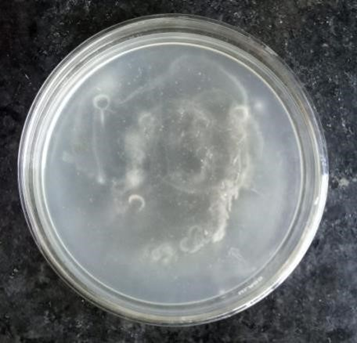
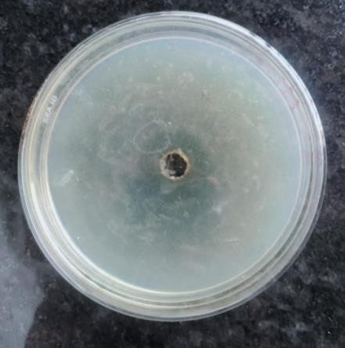
Fig 6.2(BEFORE) Fig 6.3(AFTER)
Graphical presentation of ZOI
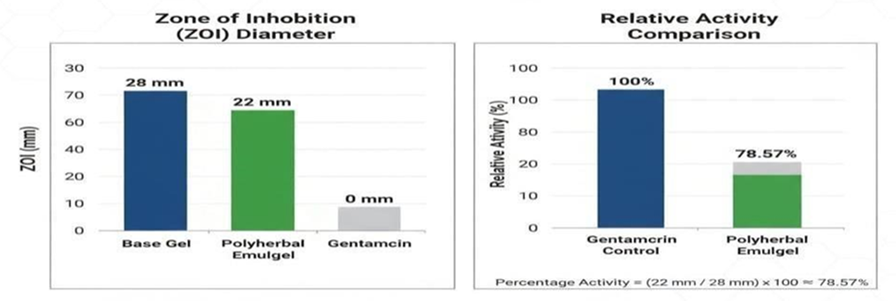
Fig no 6.4 ( graphical presentation of ZOI )
DISCUSSION:
The results give substantial evidence in Favor of the theory that a single emulgel base including extracts from jackfruit seed, neem, and turmeric has powerful antibacterial activity. Neem’s suppression of microbial cell wall formulation, curcumin’s disruption of bacterial quorum sensing, and the antioxidant in jackfruit seed that increase membrane permeability are some of the possible mechanisms. Both hydrophilic and lipophilic phytoconstituent were release more easily by the oil- in- water emulgel basis is, guaranteeing a longer-lasting antibacterial activity and better diffusion through the culture medium.
The activity of polyherbal emulgel was higher than that of individual extracts, perhaps as a result of phytochemical interactions expanding the range of activity. In multicomponent herbal systems, where mixed extracts offer potentiating or additive effects, this synerge emulgels viscosity (~8500cP) and PH (6.5) were within the skin compatibility range, guaranteeing sufficient active release. The resilience of the formulation was confirmed by a stability analysis conducted over four weeks at room temperature, which revealed no appreciable changes in PH, antibacterial activity, or physical appearance.
These finding support the effective fusion of convential herbal medicine with contemporary pharmaceutical technologies. Compared to straightforward gels or ointments, the emulgel delivery technique improved the extracts’ release and stability while preserving their biological activity. Further ex-vivo and in-vivo wound healing research as well as possible clinical evaluation of the formulation as a safe, natural substitute for synthetic antibiotics are strongly justified by the positive results of the culture medium assay.
CONCLUSION
In nutrient agar culture media, the polyherbal emulgel including extracts from jackfruit seed, neem, and turmeric showed potent and synergistic antibacterial activity against gram- negative bacteria. The findings support the emulgel base’s potential as a novel transdermal antibacterial formulation by showing that it successfully releases and diffuse active phytochemicals. The composition combines traditional botanical efficacy with cutting- edge pharmaceutical design to provide a modern, environmentally friendly solution for treating skin problems.
The transdermal route was chosen because it enables direct application to the affected area and ensure a longer local concentration of the herbal actives precisely where the illness occurs, the transdermal(topical) approach was selected. Additionally, it avoids first-pass metabolism, lowers systemic exposure, avoids gastrointestinal adverse effects, and greatly increases the bioavailability of substances like curcumin, which often have limited oral absorption. Emulgels are perfect for dermatological use since they offer a non- greasy texture, quicker absorption, and greater patient comfort than conventional ointments.
Overall, this polyherbal emulgel’s successful development demonstrates that it is an antimicrobial formulation with significant therapeutic promise for transdermal applications that is safe, efficacious, stable, and supported by science. With benefits in terms of safety, efficacy, and patient compliance, it is a promising herbal substitute for synthetic antibacterial medic
REFERENCES


Joshi Raghavi, Jogdand Vishakha, Supekar Amol, Gangurde Hemant, Formulation and Development of Polyherbal Emulgel for Antimicrobial Activity, Int. J. of Pharm. Sci., 2026, Vol 4, Issue 4, 123-140. https://doi.org/10.5281/zenodo.19381335
 10.5281/zenodo.19381335
