
Rungta Institute of Pharmaceutical Sciences and Research (RIPSR), Kohka, Kurud, Bhilai
Synthetic dyes used in the textile industry cause serious environmental pollution and health problems. Due to these issues, there is growing usage natural dyes as eco-friendly alternatives. Agricultural waste such as fruit and vegetable peels is produced in large amounts and is usually thrown away. This study explores the extraction of natural dyes from agricultural waste and their use in textile applications. Common waste materials like onion peels, avocado peels, cabbage leaves, and custard apple peels were selected because they contain natural pigments and are easily available. The dyes were extracted using simple methods such as green extraction method and boiling the plant waste in water which makes the process safe, low-cost and environmentally friendly. The extracted dyes were then applied to cotton fabric using basic dyeing techniques. Mordants were used to improve dye absorption and help the colour bind better to the fabric. The dyed fabrics were examined for colour appearance, shade variation, and overall quality. The results showed that agricultural waste can produce a variety of natural colours ranging from yellow and brown to green and pink shades. The colours obtained were visually appealing and showed acceptable durability for textile use. Using agricultural waste as a dye source helps reduce waste, lowers environmental pollution, and decreases dependence on harmful synthetic dyes. This study concludes that natural dyes extracted from agricultural waste have good potential for sustainable textile applications. The process supports eco-friendly practices and promotes the reuse of waste materials. Such natural dyeing methods can contribute to greener textile production and encourage the development of sustainable and environmentally responsible industries .
The textile industry is one of the largest consumers of synthetic dyes worldwide, contributing significantly to environmental pollution through the discharge of toxic and non-biodegradable effluents. Synthetic colorants, although widely used due to their stability, color variety, and cost-effectiveness, often contain hazardous aromatic compounds and heavy metals that pose ecological and health risks [20]. Increasing awareness of environmental sustainability and green chemistry principles has driven renewed scientific interest in natural dyes derived from plant-based sources [21].
Natural dyes are biodegradable, renewable, and generally non-toxic, making them environmentally compatible alternatives to synthetic colorants. Historically, plant-derived dyes were extensively used for textile coloration before the widespread adoption of synthetic dyes in the nineteenth century [22]. Modern research is revisiting these traditional resources with scientific approaches to improve extraction efficiency, color fastness, and industrial applicability [23]. Among various plant sources, agricultural waste materials such as fruit peels have emerged as promising dye resources due to their abundance, low cost, and high content of bioactive compounds [24].
Fruit processing generates substantial quantities of peel waste that are often discarded without utilization, contributing to environmental burden. these peels contain significant concentrations of natural pigments including tannins, flavonoids, anthocyanins, and polyphenols. These compounds possess chromophoric properties and the ability to bind with textile fibers through hydrogen bonding and metal coordination in the presence of mordants [25]. the valorization of fruit peel waste into natural dyes represents a sustainable approach that integrates waste management with eco-friendly textile production [26].
Avocado peels are rich in phenolic compounds, catechins, and tannins that produce brown to reddish coloration upon oxidation and interaction with textile fibers. These compounds exhibit strong metal-chelating ability, enhancing dye fixation and improving color durability [27].
Custard apple peels contain flavonoids, oxidizable polyphenols, and natural pigments capable of producing yellowish to brown shades. The presence of natural tannins in both peel types supports their function as dye sources and natural mordanting agents, contributing to improved dye-fiber affinity [28].
Cotton fabric, a cellulose-based natural fiber, is particularly suitable for natural dyeing due to its hydrophilic nature and ability to form stable interactions with plant-derived pigments. natural dyeing efficiency depends on several critical factors including extraction conditions, dye concentration, mordant type, temperature, pH, and duration of dyeing [29]. Optimization of these parameters is essential to achieve reproducible color shades and acceptable fastness properties.
The present study focuses on the extraction of natural dyes from avocado and custard apple peel waste, their application on cotton fabric, and evaluation of dye performance through standard textile testing methods. The research aims to develop a sustainable dyeing system that utilizes biodegradable resources, reduces environmental impact, and promotes circular utilization of agricultural waste.
MATERIALS AND METHODS
Raw Materials
Fresh avocado (Persea americana) and custard apple (Annona squamosa) fruits were obtained from local markets, and the peels were manually separated immediately after fruit processing to minimize enzymatic degradation of pigment compounds. The collected peels were washed thoroughly with running tap water followed by rinsing with distilled water to remove adhering dust, sugars, and microbial contaminants. The cleaned peels were shade-dried at ambient temperature (25–30°C) for several days to preserve thermolabile phenolic pigments, as direct heating may degrade bioactive compounds such as flavonoids and tannins.
After complete drying, the material was ground into coarse powder using a mechanical grinder and sieved to obtain uniform particle size. The powdered samples were stored in airtight containers under moisture-free conditions until further use. Plain woven cotton fabric composed of 100% cellulose fiber was selected as the textile substrate because of its hydrophilic nature, high absorbency, and availability of hydroxyl functional groups that facilitate interaction with natural dye molecules [30].
Chemicals and Reagents
All reagents used during the experimental procedure were of analytical grade to ensure reproducibility and reliability of results. Potassium aluminum sulfate (alum) and ferrous sulfate were used as mordants to improve dye fixation and modify shade intensity. Acetic acid was used to regulate pH conditions of the dye bath, while sodium carbonate was used for scouring of cotton fabric to remove natural impurities. Distilled water served as the extraction medium and dye bath solvent. Metallic mordants such as alum and ferrous sulfate are commonly employed in natural dyeing because they form coordination complexes between dye molecules and fiber structures, thereby enhancing color strength and durability [31].
Extraction Procedure
Natural dyes were extracted using an aqueous heat-assisted extraction method. Dried peel powder was mixed with distilled water in a fixed material-to-solvent ratio and allowed to soak for a short period to facilitate solvent penetration into the plant matrix. The mixture was subsequently heated in a thermostatically controlled water bath at elevated temperature for a specified duration with continuous stirring. Heat treatment promotes rupture of plant cell walls and enhances diffusion of polyphenolic pigments, tannins, and flavonoids into the aqueous medium, thereby improving extraction efficiency [32].
Table:01. Extraction details for Avocado.
|
PARAMETER |
DESCRIPTION |
|
Dye source |
Avocado peels (agriculture waste) |
|
Major colouring compounds |
Persin and catechins |
|
Extraction method |
Green extraction method (boiling in water or sodium hydroxide soloution) |
|
Extraction temperature |
50-75 |
|
Extraction time |
30-40 minutes |
|
Filtration method |
Cloth or filter paper |
|
Dye soloution colour |
Pink to brownish red (varies with ph and moderent) |
After extraction, the mixture was cooled to room temperature and filtered first through muslin cloth to remove coarse plant residues and then through filter paper to obtain a clear dye solution. The filtrate was concentrated by controlled evaporation to increase dye strength and stored in amber-colored containers at low temperature to prevent oxidation and microbial degradation prior to dyeing application.
Dye Characterization
Preliminary characterization of the dye extracts was performed to evaluate physicochemical properties relevant to textile application. The pH of the extracts was measured using a calibrated digital pH meter, and visual assessment of color intensity and hue was carried out under standardized lighting conditions. The stability of the extract during storage was monitored by observing changes in color and precipitation behavior. Solubility in aqueous medium was also evaluated to ensure uniform dye bath preparation.
Natural dye performance is strongly influenced by environmental conditions such as pH, temperature, and oxidation state of phenolic compounds, which determine chromophoric behavior and fiber interaction potential [33].
Fabric Preparation
Prior to dyeing, cotton fabric was subjected to a scouring treatment to remove natural waxes, oils, pectins, and other impurities that hinder dye absorption. The fabric samples were treated in an alkaline solution containing sodium carbonate and a small amount of non-ionic detergent at elevated temperature for a fixed duration. After treatment, the fabric was thoroughly rinsed with distilled water and air-dried at room temperature. Scouring enhances fiber wettability, increases surface accessibility of cellulose hydroxyl groups, and improves uniformity of dye uptake during subsequent dyeing operations [34].
Table:02.
|
Fabric Type |
Fiber Nature |
Suitability With Avacado Peel Dye |
Reason For Selection |
Expecteded Shade Result |
Fastness Performance |
|
COTTON |
Natural (cellulosic) |
Very suitable |
Good absorption with moderent treatment |
Light pink to brown shades |
Moderete to good |
|
SILK |
Natural (protein) |
Highly suitable |
Excellent dye uptake due to protein fibres |
Bright pink to reddish-brown |
Good |
|
WOOL |
Natural (protein) |
Highly suitable |
Strong affinity to natural dyes |
Deep brown and reddish tones |
Good to very good |
|
LINEN |
Natural (cellulosic) |
Suitable |
Absorbs dye similar to cotton |
Light brown to pink |
Moderete |
Mordanting Process
A pre-mordanting technique was employed to improve dye-fiber interaction and fastness properties. Cotton fabric samples were immersed in aqueous mordant solutions of defined concentration and treated at elevated temperature under continuous agitation to ensure uniform penetration of mordant ions into the fiber structure. Alum and ferrous sulfate were selected as mordants because of their ability to form coordination complexes with both cellulose fibers and polyphenolic dye molecules. After mordanting, the fabrics were rinsed to remove excess mordant and dried under shade conditions. Mordanting enhances dye fixation by creating bridging interactions between dye molecules and fiber functional groups, thereby improving color strength and resistance to washing and light exposure [35].
Dyeing Process
Dyeing was carried out using an exhaust dyeing technique in which mordanted cotton samples were immersed in the prepared dye extract under controlled conditions. The dyeing bath was maintained at elevated temperature for a specified period with periodic stirring to ensure uniform distribution of dye molecules. Increased temperature enhances dye diffusion into the fiber structure and promotes interaction between dye molecules and cellulose hydroxyl groups through adsorption and fixation mechanisms [36]. Upon completion of dyeing, the fabrics were rinsed thoroughly with distilled water to remove unfixed dye and air-dried in shade to prevent photodegradation of natural pigments.

Fig:01. Extraction of natural
Fastness Testing
The dyed fabrics were evaluated for color fastness properties to determine durability of coloration under various environmental conditions. Washing fastness was assessed to evaluate resistance to color loss during laundering, while light fastness was evaluated to determine resistance to photodegradation upon exposure to light. Rubbing fastness testing measured resistance to color transfer under mechanical friction, and perspiration fastness assessed stability of dyed fabrics in acidic and alkaline conditions. Fastness properties provide essential information regarding the strength of dye-fiber interaction and the practical applicability of natural dyes in textile processing [37]
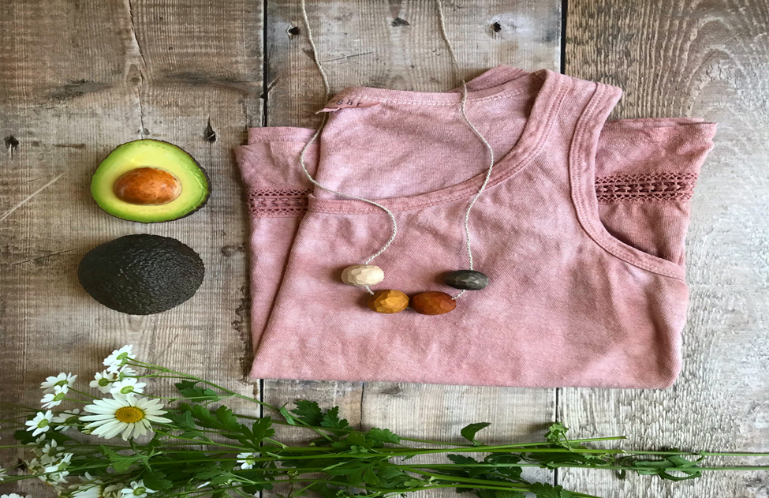
Fig:02. Naturally dyed clothing.
5. Development and Optimization of Dyes (Avocado, Custard Apple)
Avocado Peel Dye Development and Optimization
The development of natural dye from avocado peel was performed through systematic optimization of extraction and dyeing variables to maximize pigment yield, color strength, and dye fixation on cotton fabric. Avocado peel is rich in phenolic compounds, catechins, and condensed tannins that function as natural chromophores and exhibit strong affinity toward cellulose fibers. These compounds undergo oxidation and structural transformation during thermal extraction, resulting in formation of stable brown to reddish pigment complexes suitable for textile coloration [38].
Optimization of dye extraction and application parameters is essential because natural dyes are sensitive to environmental conditions such as temperature, pH, and oxidation state, all of which influence chromophoric behavior and dye-fiber interactions [39].
Extraction temperature was found to be a major determinant of pigment release from avocado peel. Controlled heating facilitates disruption of plant cell walls and enhances diffusion of polyphenolic compounds into the aqueous medium. Elevated temperature increases solubility and mobility of pigment molecules, thereby improving extraction efficiency. excessively high temperature or prolonged heating may lead to degradation of thermolabile phenolic structures and reduction in color intensity. optimization requires maintaining a balance between effective pigment release and preservation of chromophoric integrity [40].
The concentration of peel material in the extraction medium also played a crucial role in determining dye strength. Increased solid-to-liquid ratio provided higher availability of coloring constituents, producing deeper and more intense shades. very high concentrations resulted in increased viscosity of dye solution, which hindered uniform penetration of dye molecules into the fiber matrix. optimization of material concentration ensured adequate dye strength without compromising uniformity of coloration.
The pH of the dye bath strongly influenced the coloration behavior of avocado peel extract. Polyphenolic compounds exhibit pH-dependent structural transformations that affect their light absorption properties and binding affinity toward textile fibers. Under mildly alkaline conditions, enhanced oxidation of phenolic groups led to formation of darker and more stable pigment complexes. In contrast, acidic conditions produced lighter shades due to limited oxidation and reduced metal-complex formation. Control of pH is therefore critical for achieving reproducible color outcomes in natural dyeing systems [41].
Mordanting was a key factor in optimization of avocado peel dye. Metallic mordants such as ferrous sulfate and alum interact with phenolic hydroxyl groups of dye molecules and hydroxyl groups of cellulose fibers to form coordination complexes that stabilize dye-fiber binding. Ferrous ions tend to produce deeper and duller shades due to formation of strong metal-dye complexes, whereas alum produces brighter shades by forming relatively lighter coordination structures.
The presence of natural tannins in avocado peel further enhances mordant effectiveness by providing multiple binding sites for metal ions, thereby improving dye fixation and fastness properties [42]. Dyeing temperature and duration also influenced dye uptake, as elevated temperature promotes fiber swelling and enhances diffusion of dye molecules into the amorphous regions of cellulose structure. Increased dyeing time allowed equilibrium adsorption of pigment molecules onto fiber surface until saturation was achieved [43].
The optimized dyeing conditions demonstrated that avocado peel extract is an effective natural dye capable of producing stable coloration on cotton fabric. The high polyphenolic content of avocado peel contributes to strong dye-fiber interaction, improved color depth, and satisfactory resistance to washing and light exposure, supporting its potential application in sustainable textile processing [44]
Custard Apple Peel Dye Development and Optimization
The development of dye from custard apple peel was conducted through optimization of extraction efficiency, pigment stability, mordant interaction, and dyeing parameters to achieve reproducible and durable coloration on cotton fabric. Custard apple peel contains flavonoids, oxidizable polyphenols, and naturally occurring pigments that exhibit chromophoric properties suitable for textile application. These compounds interact with cellulose fibers through hydrogen bonding and metal coordination mechanisms, resulting in formation of stable dye-fiber complexes in the presence of mordants [45].
Extraction parameters were systematically evaluated to maximize pigment yield while preserving structural stability of chromophoric compounds. Heat-assisted aqueous extraction promoted rupture of plant tissues and facilitated diffusion of soluble pigments into the extraction medium. Extraction time was found to significantly influence color intensity, as moderate heating enhanced pigment release, whereas prolonged extraction resulted in gradual degradation of flavonoid structures and reduction in color brightness. Optimization of extraction duration therefore ensured maximum pigment recovery without compromising chromophore stability [46].
Mordant interaction played a central role in optimizing custard apple peel dye performance. Mordants function as bridging agents that link dye molecules to fiber functional groups, thereby enhancing dye fixation and fastness properties. Alum mordant produced brighter yellowish-brown shades due to formation of stable but relatively lighter coordination complexes, while ferrous sulfate generated deeper tones through formation of darker metal-dye complexes. The interaction between mordant ions and phenolic groups of dye molecules increased dye affinity toward cellulose fibers and improved resistance to washing and light exposure [47].
Dye bath temperature and duration also influenced dye uptake behavior. Elevated temperature increased mobility of dye molecules and promoted penetration into fiber structure by enhancing swelling of cellulose matrix. Dyeing time influenced equilibrium adsorption of pigment molecules onto fiber surface, with prolonged exposure allowing greater diffusion and fixation until saturation was reached. The combined effect of optimized extraction, mordanting, and dyeing conditions resulted in uniform coloration with acceptable fastness properties.
The optimized dyeing system demonstrated that custard apple peel extract is a viable natural dye source capable of producing aesthetically acceptable shades on cotton fabric. The presence of natural polyphenols and flavonoids enhances dye-fiber interaction, while mordanting improves color stability and durability. Utilization of custard apple peel as a dye source also supports sustainable waste valorization and environmentally responsible textile processing [48].
6. Recent Advancements in Avocado and Custard Apple Dye for Textile Application
Scientific progress in natural dye technology has evolved steadily over the past two decades, significantly improving the efficiency, stability, and applicability of plant-derived dyes in textile processing. Research developments related to fruit peel dyes, particularly those rich in polyphenolic compounds such as avocado and custard apple, have focused on improving extraction efficiency, mordanting systems, functional properties, and process sustainability.
During 2008–2010, early research in natural dye processing emphasized optimization of conventional aqueous extraction methods and evaluation of plant-based waste materials as alternative dye sources. Investigations demonstrated that fruit peel waste contains significant concentrations of tannins and flavonoids capable of binding with cellulose fibers in the presence of mordants, establishing the scientific basis for agricultural waste valorization in textile coloration [49,50]. These studies highlighted the role of polyphenols in improving dye fixation and color stability.
Between 2011 and 2013, research attention shifted toward improving extraction efficiency through controlled thermal processing. Investigations during this period showed that temperature-controlled extraction significantly enhanced pigment release from plant tissues while preserving chromophoric integrity. Researchers also examined the influence of dye bath pH on phenolic oxidation and shade formation, demonstrating that pH-dependent structural transformation of polyphenols plays a critical role in color development and stability [51,52].
A major technological advancement occurred during 2014–2016 with the introduction of ultrasound-assisted extraction for natural dye recovery. Studies reported that ultrasonic cavitation improves mass transfer efficiency by disrupting plant cell walls and enhancing solvent penetration, resulting in higher extraction yield and reduced processing time [53]. During the same period, microwave-assisted extraction emerged as an alternative rapid extraction method that enhances pigment recovery through internal heating and accelerated solvent diffusion [54]. These methods proved particularly effective for polyphenol-rich plant matrices such as fruit peels.
From 2016 to 2018, research increasingly focused on environmentally sustainable mordanting techniques. Investigators explored plant-derived bio-mordants rich in natural tannins as substitutes for conventional metallic mordants. These bio-mordants were shown to improve dye fixation through hydrogen bonding and complex formation without introducing heavy metal residues into wastewater streams [55]. Studies during this period also described the self-mordanting behavior of tannin-rich plant materials, where intrinsic phenolic compounds contribute directly to dye-fiber binding [56].
Between 2018 and 2020, nanotechnology-based approaches were introduced to enhance natural dye performance. Research demonstrated that nano-mordants and nano-encapsulation techniques improve dye uptake, color uniformity, and resistance to fading by increasing the surface area available for dye-fiber interaction and facilitating deeper penetration into fiber microstructures [57]. These findings marked an important advancement toward improving the commercial feasibility of natural dyes.
Recent developments during 2020–2023 have emphasized multifunctional textile applications of plant-derived dyes. Studies have shown that polyphenolic compounds present in fruit peels exhibit antioxidant, antimicrobial, and ultraviolet-protective properties. When applied to textile substrates, these bioactive compounds impart functional characteristics such as microbial resistance and UV shielding, thereby enhancing the value of naturally dyed fabrics [58]. This period also witnessed growing interest in circular economy approaches, where agricultural waste materials are converted into value-added textile colorants [59].
Current research trends from 2023 onward focus on process standardization, reproducibility, and industrial scalability of natural dye systems. Analytical techniques such as spectrophotometric color measurement and chromatographic profiling are increasingly used to characterize dye composition and monitor dye-fiber interaction mechanisms. Researchers are also developing low-water and wastewater-minimized dyeing technologies to further enhance environmental sustainability of natural dye processing [60].
chronological advancements in extraction technologies, eco-friendly mordanting systems, nanotechnology-assisted dyeing, functional textile development, and process standardization have significantly strengthened the scientific foundation and industrial relevance of natural dyes derived from fruit peel waste. These developments support the growing adoption of sustainable textile processing and demonstrate the potential of avocado and custard apple peel dyes as environmentally responsible alternatives to synthetic colorants.
RESULTS AND DISCUSSION
The experimental investigation demonstrated that both avocado peel and custard apple peel extracts function as effective natural dye sources capable of imparting stable coloration on textile substrates under optimized extraction and dyeing conditions. The aqueous extraction process yielded visibly colored solutions, confirming the successful solubilization of pigment-bearing phytochemicals. Avocado peel extract produced brown to beige shades, whereas custard apple peel extract generated yellowish to light brown coloration. These differences are attributed to variation in phenolic composition, oxidation behavior, and chromophoric stability of the respective plant materials. The observed dyeing ability confirms that fruit peel waste contains significant concentrations of tannins, flavonoids, and polyphenolic compounds capable of binding with textile fibers [61,62].
Optimization of extraction parameters significantly influenced dye yield and intensity. Elevated extraction temperature enhanced pigment release by promoting breakdown of plant cellular structures and facilitating diffusion of soluble compounds into the extraction medium. excessive heating resulted in partial pigment degradation and reduced color strength, indicating that phenolic compounds exhibit temperature-sensitive stability. Extraction duration also influenced chromophore recovery, with moderate extraction time producing optimal dye concentration. These findings align with established observations that controlled extraction conditions are essential for maintaining pigment integrity in plant-derived dyes [63,64].
The dyeing performance on textile substrates revealed that mordant treatment plays a critical role in color fixation and shade development. Fabrics treated with alum demonstrated improved dye uptake and uniform coloration compared to untreated samples, indicating stronger binding between dye molecules and fiber functional groups. Iron mordant produced darker shades due to formation of metal–phenolic complexes, which enhance light absorption and color depth. The improved dye fixation observed in mordanted samples supports the coordination bonding mechanism in natural dyeing, where metal ions act as linking agents between fiber polymers and dye molecules [65,66].
Comparative evaluation of dye sources revealed that avocado peel dye exhibited greater affinity toward textile fibers than custard apple peel dye. This enhanced performance may be attributed to higher tannin concentration and stronger complex-forming capacity of avocado-derived phenolic compounds. Custard apple peel dye produced comparatively softer shades but demonstrated satisfactory dye uniformity. Variations in dye performance reflect differences in phytochemical composition among plant waste materials and their interaction with fiber matrices [62].
Fastness evaluation indicated that mordanted fabrics retained color intensity after washing and drying, demonstrating improved dye fixation and resistance to leaching. The formation of stable dye–fiber complexes and oxidative stabilization of polyphenolic compounds contribute to enhanced wash durability. Although natural dyes generally exhibit moderate fastness compared to synthetic dyes, optimization of extraction and mordanting conditions significantly improves their functional performance [66,68].
From an environmental perspective, the findings highlight the potential of fruit peel waste as a sustainable raw material for textile coloration. Utilization of agro-waste reduces environmental burden associated with disposal while minimizing reliance on synthetic dyes that generate hazardous effluents. The successful dyeing outcomes support the concept of waste valorization and circular resource utilization in textile processing [64,69].
The results confirm that avocado and custard apple peels serve as viable sources of natural dyes with acceptable color yield, satisfactory fastness properties, and environmentally beneficial characteristics. The findings emphasize the importance of optimizing extraction parameters, mordant selection, and dyeing conditions to achieve reproducible and stable coloration. The study supports the growing application of plant-based dyes as sustainable alternatives to synthetic textile colorants [61,63,68].
LIMITATIONS
Despite demonstrating the feasibility of using avocado and custard apple peel extracts as natural textile dyes, the present study has several limitations that should be considered when interpreting the results. One primary limitation relates to variability in raw material composition. The concentration of phenolic compounds, tannins, and flavonoids in fruit peels is influenced by factors such as plant variety, maturity stage, environmental conditions, and post-harvest storage. These variations can lead to differences in dye yield, color intensity, and reproducibility across batches, thereby affecting process standardization and scalability in textile applications [70,71].
Another limitation concerns the moderate fastness properties typically associated with plant-derived dyes. Although mordant treatment improved dye fixation and wash durability, natural dyes generally exhibit lower resistance to light exposure, repeated washing, and environmental stress compared to synthetic dyes. This limitation restricts their application in textiles requiring high durability unless further chemical or process modifications are implemented [72,73].
The extraction procedure employed in the study utilized conventional aqueous extraction, which, while environmentally friendly and cost-effective, may not achieve maximum pigment recovery. Advanced extraction techniques such as ultrasonic or microwave-assisted extraction have been reported to enhance yield and efficiency; however, such techniques were not incorporated in the present investigation, which may limit comparative performance evaluation [71,74].
The study also focused on a limited range of mordants and textile substrates, which restricts the generalization of findings across diverse fiber types and dyeing systems. Different fiber compositions possess distinct functional groups that influence dye affinity, penetration, and bonding behavior. the observed dye performance may vary when applied to alternative textile materials or when different mordanting strategies are employed [73,74].
Additionally, comprehensive chemical characterization of dye constituents was not performed using advanced analytical techniques such as chromatographic profiling or molecular spectroscopy. The absence of detailed structural analysis limits precise identification of chromophoric compounds responsible for coloration and restricts mechanistic interpretation of dye–fiber interactions [70,74].
The study was conducted under controlled laboratory conditions, which may not fully replicate industrial textile processing environments. Factors such as large-scale dye bath dynamics, wastewater management, and economic feasibility require further investigation before practical industrial implementation can be achieved [72,75].
CONCLUSION
The present study demonstrates that fruit peel waste, specifically avocado and custard apple peels, can be effectively utilized as sustainable natural dye sources for textile applications. The successful extraction of pigment-bearing compounds through aqueous processing confirms that these agricultural residues contain sufficient concentrations of polyphenols, tannins, and flavonoids capable of imparting stable coloration to textile substrates. The dyeing experiments revealed that optimized extraction conditions, combined with appropriate mordant treatment, significantly enhance dye uptake, color uniformity, and wash durability [76,77].
Comparative evaluation indicated that avocado peel extract exhibits relatively stronger dyeing affinity and color depth, likely due to its higher phenolic content and greater capacity for complex formation with textile fibers. Custard apple peel extract, while producing comparatively lighter shades, demonstrated satisfactory uniformity and functional dyeing potential. The findings emphasize the importance of process optimization, particularly with respect to extraction temperature, duration, and mordant selection, in achieving reproducible and stable coloration [77,78].
From an environmental and sustainability perspective, the utilization of fruit peel waste as a natural dye resource contributes to waste valorization and supports eco-friendly textile processing. The approach reduces dependence on synthetic dyes associated with environmental pollution and promotes circular resource utilization through conversion of agro-waste into value-added products. These outcomes align with the growing scientific emphasis on sustainable and environmentally responsible textile coloration technologies [78,79].
Although certain limitations related to pigment variability, moderate fastness, and scalability remain, the results confirm the scientific and practical potential of avocado and custard apple peel dyes in textile coloration. Future research focusing on advanced extraction techniques, detailed chemical characterization, and industrial-scale process optimization may further enhance the applicability and commercial feasibility of these natural dye systems [76,79].
In conclusion, the study provides experimental evidence supporting the feasibility of transforming fruit peel waste into effective, environmentally responsible textile dyes and contributes to the advancement of sustainable materials research in textile science [77,78,79].
REFERENCES


Dr. Gyanesh Kumar, Jayendar Dansena, Vanshika Yadav, Devendra Tandan, Anushka Sahu, Nutan Sahu, Dali Rawte, Extraction of Natural Dyes from Agricultural Waste for Textile Applications, Int. J. of Pharm. Sci., 2026, Vol 4, Issue 2, 4367-4380. https://doi.org/10.5281/zenodo.18791223
 10.5281/zenodo.18791223
