
Rungta Institution of Pharmaceutical Sciences and Research
The skin, being the outermost protective layer of the human body, plays a crucial role as the first line of defense against environmental stressors, pathogens, and physical injuries. Continuous exposure to external factors makes the skin susceptible to various disorders such as acne, eczema, psoriasis, and infections. Conventional chemical-based soaps, although widely used, are often associated with adverse effects including skin irritation, dryness, and disruption of the natural skin barrier. This has led to an increasing demand for safer and more sustainable alternatives, particularly herbal and Ayurvedic formulations. Herbal soaps, formulated using plant-derived ingredients such as coconut oil, olive oil, turmeric, sandalwood, and other medicinal herbs, offer significant therapeutic benefits due to their antibacterial, antifungal, and antioxidant properties. Unlike synthetic additives like sodium lauryl sulphate, triclosan, and butylated hydroxytoluene, natural constituents such as saponins and phenolic compounds exhibit minimal side effects while enhancing skin health. The process of soap preparation primarily involves saponification, where fats or oils react with an alkali to form soap, which can be categorized into solid and liquid forms depending on the base used. In recent years, medicinal herbal soaps have gained prominence for their role in maintaining hygiene and preventing the spread of infectious diseases, especially in healthcare settings. Special attention has been given to the incorporation of medicinal plants such as Bombax ceiba, known for its multifunctional therapeutic properties including anti-aging, skin rejuvenation, and dead skin removal. This review highlights the importance, formulation, and therapeutic potential of herbal soaps as effective, eco-friendly alternatives to conventional synthetic products, emphasizing their role in promoting skin health and overall well-being.
The body's outermost layer, human skin, acts as the body's first line of defense against a range of infections. The skin is constantly exposed to a range of stimuli because it interacts with the environment. As a result, the skin is prone to injury. When badly damaged skin tries to heal, scar tissue emerges, which is typically decolorized and depigmented. Chemical soaps, on the other hand, are known to promote skin irritation and dryness. Natural ingredient cosmetics are becoming more popular among consumers as a healthier, organic, and ecologically responsible option. Ayurvedic cosmetics are sometimes known as herbal cosmetics. The natural component of herbal medicine has no negative effects on the human body in the vast majority of cases. A pharmaceutical or medication that contains antibacterial and antifungal ingredients is known as an "herbal soap preparation." It's made up of plant parts including leaves, stems, roots, and fruits, and it's used to treat damage, disease, and keep people healthy. Soaps have been used in our daily lives for over 6,000 years and have a rich history. Ancient Babylonians developed a cleaning material by combining animal fats, wood ash, and water, which became known as "soap." Saponification is the basic method of soap production in which fats or oils react with a base/lye. Soaps are divided into two types: solid and liquid. Solid soaps are made with NaOH as the basis, while liquid soaps are made with KOH. Medicinal soaps differ from regular soaps in that synthetic or natural bioactive substances are added to the basic soap medium to give the end product a wide range of biological activity.
Because of the negative or harmful effects of synthesis chemicals, it is preferable to avoid using dangerous synthesis chemicals in medical soap products. Plant-based natural goods have been a popular synthetic ingredient in recent years as a way to improve the vital biological properties of medicinal soap. Many side effects associated with medicinal soaps containing synthetic ingredients were alleviated by replacing synthetic foaming agents such as sodium lauryl sulphate with saponins, synthetic antibacterial agents such as Triclosan with natural antibacterial agents, and synthetic antioxidants such as BHT with natural phenolic compounds. Some of the most commonly used ingredients in skin care products, including medicinal soaps, include coconut oil, olive oil, turmeric, sandalwood, jasmine, and lemon essence. While the skin provides some protection from the sun, pollution, and viruses, it is the most vulnerable portion of the body. Eczema, warts, acne, rashes, psoriasis, allergies, and other skin disorders are some of the most common. Hand hygiene is important in preventing infectious diseases because it protects the skin from microbial infection and spread. This herbal soap or solution aids in the more effective prevention of contagious illness transmission in the healthcare setting Bombax ceiba, also called "Bird's Paradise." It is "God's best creation for humanity" and a prized gift from nature because of its multifunctionality. It's employed in Ayurveda, Unani, and Siddha treatments for medicinal purposes used to remove Dead skin removal, skin whitening, and antiaging.
DRUG PROFILE
Neem
Scientific Classification
Kingdom: Plantae
Division: Magnoliophyta
Order: Sapindales
Family: Meliaceae
Genus: Azadirachta
Species: A. indica
Binomial name: Azadirachta indica
Biological source-It consists of all aerial parts of plant knows as Azadirachta indica.
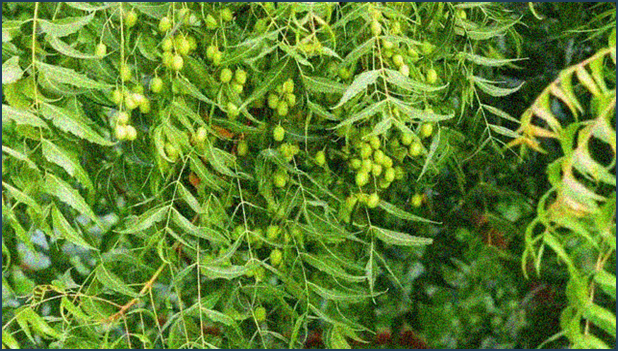
Neem (Azadirachta indica, syn. Melia azadirachta L., Antelaea azadirachta (L.) Adelb.) is a tree in the mahogany family Meliaceae. It is one of two species in the genus Azadirachta, and is native to India, Myanmar, Bangladesh, and Pakistan growing in tropical and semi-tropical regions. Other vernacular names include Nimba (Sanskrit), DogonYaro (Nigerian), Margosa, Nimtree, Vepu, Vempu, Vepa (Telugu), Bevu in Kannada, Vempu in (Tamil), arya veppu in Malayalam and Indian-lilac. In East Africa it is also known as Mwarobaini (Swahili), which means the tree of the 40; it is said to treat 40 different diseases.
MACROSCOPY
The trunk is relatively short, straight and may reach a diameter of 1.2 m (about 4 feet). The bark is hard, fissured or scaly, and whitish-grey to reddish-brown. The sapwood is greyish-white and the heartwood reddish when first exposed to the air becoming reddish-brown after exposure. The root system consists of a strong taproot and welldeveloped lateral roots.
The alternate, pinnate leaves are 20-40 cm (8 to 16 in.) long, with 20 to 31 medium to dark green leaflets about 3-8 cm (1 to 3 in.) long. The terminal leaflet is often missing. The petioles are short. Very young leaves are reddish to purplish in colour. The shape of mature leaflets is more or less asymmetric and their margins are dentate with the exception of the base of their basiscopal half, which is normally very strongly reduced and cuneate or wedge-shaped.
The (white and fragrant) flowers are arranged axillary, normally in more-or-less drooping panicles which are up to 25 cm (10 in.)long. The inflorescences, which branch up to the third degree, bear from 150 to 250 flowers. An individual flower is 5-6 mm long and 8-11 mm wide. Protandrous, bisexual flowers and male flowers exist on the same individual.
The fruit is a smooth (glabrous) olive-like drupe which varies in shape from elongate oval to nearly roundish, and when ripe are 1.4-2.8 x 1.0-1.5 cm. The fruit skin (exocarp) is thin and the bitter-sweet pulp (mesocarp) is yellowish-white and very fibrous. The mesocarp is 0.3-0.5 cm thick. The white, hard inner shell (endocarp) of the fruit encloses one, rarely two or three, elongated seeds (kernels) having a brown seed coat. Commercial plantations of the trees are not considered profitable. The neem tree is very similar in appearance to the Chinaberry, all parts of which are extremely poisonous.
Chemical compounds
The active principles of the plant were brought to the attention of scientists in 1942 while working at the Scientific and Industrial Research Laboratory at Delhi University, for the first time extracted three bitter compounds from neem oil, which he provisionally named as nimbin, nimbinin, and nimbidin respectively. The seeds contain an extremely complex secondary metabolite azadirachtin.
Uses:
In India, the tree is variously known as "Divine Tree," "Heal All," "Nature's Drugstore," "Village Pharmacy" and "Panacea for all diseases." Products made from neem have proven medicinal properties, being anthelmintic, antifungal, antidiabetic, antibacterial, antiviral, anti-fertility, and sedative. It is considered a major component in Ayurvedic medicine and is particularly prescribed for skin disease.
Medical uses and remedies:
Anthelmintic (parasites and worms) Arthritis
Antipyretic Bronchitis
Antiseptic Cough
Diabetes Nausea
Diuretic Obesity
Erysipelas (a kind of acute Streptococcus infection) Rheumatism Skin diseases
Fever Syphilis
Jaundice Tetanus
Leukorrhea Thirst
Lice Tumors
Malaria Vomiting
Biological activity of some Neem compounds
Nimbidin, a major crude bitter principle extracted from the oil of seed kernels of A. indica demonstrated several biological activities. From this crude principle some tetranortriterpenes, including nimbin, nimbinin, nimbidinin, nimbolide and nimbidic acid have been isolated.
Biological activity of Neem compounds
Anti-inflammatory; Antiarthritic; Antipyretic; Hypoglycaemic; Antigastric ulcer; Spermicidal; Antifungal; Antibacterial; Diuretic; Antimalarial; Antitumour; Immunomodulatory etc.
Medicinal Uses
Immunostimulant activity
The aqueous extract of neem bark and leaf also possesses anticomplement and immunostimulant activity. Neem oil has been shown to possess activity by selectively activating the cell-mediated immune mechanisms to elicit an enhanced response to subsequent mitogenic or antigenic challenge.
Hypoglycaemic activity
Aqueous extract of neem leaves significantly decreases blood sugar level and prevents adrenaline as well as glucose-induced hyperglycaemia. Recently, hypoglycaemic effect was observed with leaf extract and seed oil, in normal as well as alloxan-induced diabetic rabbits.
Antiulcer effect
Neem leaf and bark aqueous extracts produce highly potent antiacid secretory and antiulcer activity.
Antifertility effect
Intra-vaginal application of neem oil, prior to coitus, can prevent pregnancy. It could be a novel method of contraception.
Antimalarial activity
Neem seed and leaf extracts are effective against both choroquin-resistant and sensitive strain malarial parasites.
Antifungal activity
Extracts of neem leaf, neem oil seed kernels are effective against certain fungi including Trichophyton, Epidermophyton, Microspor Trichosporon, Geotricum and Candida.
Antibacterial activity
Oil from the leaves, seed and bark possesses a wide spectrum of antibacterial action against Gram-negative and Gram-positive microorganisms, including M. tuberculosis and streptomycin resistant strains. In vitro, it inhibits Vibrio cholerae Klebsiella pneumoniae, M. tuberculosis and M. pyogenes. Antimicrobial effects of neem extract have been demonstrated against Streptococcus mutans and S. faecalis.
Antiviral activity
Aqueous leaf extract offers antiviral activity against Vaccinia virus, Chikungemya and measles virus.
Anticancer activity
Neem leaf aqueous extract effectively suppresses oral squamous cell carcinoma induced by 7, 12-dimethylbenz[a] anthracene (DMBA), as revealed by reduced incidence of neoplasm. Neem may exert its chemopreventive effect in the oral mucosa by modulation of glutathione and its metabolizing enzymes.
Antioxidant activity
The antioxidant activity of neem seed extract has been demonstrated in vivo during horsegrain germination.
Effect on central nervous system
Varying degrees of central nervous system (CNS) depressant activity in mice was observed with the leaf extract. Fractions of acetone extract of leaf showed significant CNS depressant activity.
Common name
Anantamool/Sariva.
Phytoconstituents
The preliminary phytochemical screening of the root extract showed the presence of alkaloids, glycosides,steroids, triterpenoids, carbohydrates,polyphenols, and saponins.
Pharmacological activities
The roots of H. indicus are commonly employed as blood purifier and for treating skin diseases, venereal diseases, and snake and scorpion string bites. It is also employed as antirheumatic, diuretic, and anti- inflammatory agent.
S. lappa
Common name
Kushta/Chengaluva.
Phytoconstituents
Phytochemical evaluation on root extracts of S. lappa revealed the presence of alkaloids, flavonoids, carbohydrates, glycosides, phenolic compounds, saponins, and tannins.
Pharmacological activities
The roots of S. lappa are used in the treatment of dysentery, ulcers, stomach ache, quartan malaria, leprosy, typhoid fever, and asthma and skin disorders. It is also employed as anti- inflammatory, hepatoprotective, and anticancer. Immuno modulant, hypolipidaemic, hypoglycaemic, antimicrobial and central nervous system depressant.
C. rotundus
Common name
Mustaka/Nagarmotha.
Phytoconstituents
The preliminary phytochemical screening of C. rotundus revealed the presence of alkaloids, carbohydrates, glycosides, steroids, flavonoids, saponins, tannins, and phenols.
Pharmacological activities
The rhizomes of C. rotundus are commonly employed as astringents, diaphoretics, carminatives, antitussives, and stimulants. It also shows anti-inflammatory, antipyretic, analgesic, hepatoprotective, and anti- spastic, antiemetic, and anticonvulsant activities.
Tyrosinase inhibitory activity
Several natural products are known to possess anti-tyrosinase properties, such as arbutin, a naturally occurring glucopyranoside of hydroquinone, catechins, hydroquinone, and resveratrol. Even though tyrosinase inhibitory properties were proved with a number of benzaldehyde derivatives, none of them were considered to be safe in terms of practical use due to their lower activity and serious side effects. The root extracts of H. indicus demonstrated that more tyrosinase inhibition can be used directly as a potent tyrosinaseinhibiting agent. Moreover, root extract of H. indicus was also shown to protect DNA from radiation-induced strand breakage. The root extracts of S. lappa showed moderate tyrosinase inhibition and C. rotundus rhizome extract showed no tyrosinase inhibition but excellent antioxidant activity that suggests its utility in future skin whitening cosmetic products. The objective of the present study was to make soap with ethanolic extracts of H. indicus, S. lappa, and C. rotundus and to evaluate the physicochemical characters of the formulated soap so that it can be further standardized and produced on a commercial scale.
METHODOLOGY
Acquisition of samples
Authenticated samples of Neem and H. indicus, S. lappa, and C. rotundus were purchased from the local herb dealer and were again authenticated by the Department of Botany, Andhra University, Visakhapatnam. Coconutoil, palm oil, and castor oil were purchased locally.
Preparation of extracts
The roots of Neem and H. indicus and S. lappa and rhizomes of C. rotundus were dried and powdered to #40 mesh size and stored. The powder was then extracted with ethanol. The extracts were concentrated and stored for further use.
Formulation of herbal soap
Saponification values of three oil samples were determined as perstandard protocol. 166.5 g coconut oil, 166.5 g palm oil, and 145.2 g castor oil were taken in a beaker and mixed together. In another beaker, 70.8 g lye was dissolved in 166.5 g of water. The lye solution was then transferred to the beaker of oils. After stirring for a while, add three ethanolic extracts of Neem and H. indicus (1 g), S. lappa (0.5 g), and C. rotundus (0.5 g). Then, the beaker was heated on low heat and stirred well for about 20–30 min where the smell of oil disappears and a homogenous solution is formed. The mixture was poured into the soap molds and allowed to solidify at room temperature.
Assessment of physicochemical properties of the formulated soap Various physicochemical parameters were tested to confirm the qualityof the formulated soap
Determination of clarity, color, and odor
Color and clarity were checked against a white background by naked eyes and odor was checked by smelling.
pH
The pH of the prepared soap was assessed by touching a pH strip to thefreshly formulated soap and conjointly by dissolving 1 g in 10 ml waterwith the help of digital pH meter.
Determination of percentage free alkali
About 5 g of sample was added to 50 ml of neutralized alcohol and was boiled for 30 min under reflux on a water bath, then cooled andto it 1 ml of phenolphthalein solution was added. It was then titrated immediately with 0.1 N HCl.
Foam height
0.5 g of sample of soap was dispersed in 25 ml distilled water. Then, transferred it into 100 ml measuring cylinder and the volume was made up to 50 ml with water. Twenty-five strokes were given and allowed tostand till aqueous volume measured up to 50 ml and the foam height above the aqueous volume was measured.
Foam retention
About 1% soap solution was prepared and from this, 25 ml was taken in a 100 ml measuring cylinder. The cylinder was covered with hand and shaken for 10 min. The volume of foam at 1 min intervals for 4 min wasrecorded.
Alcohol-insoluble matter
In a conical flask, 5 g of sample was taken. To this, 50 ml of warm ethanolwas added and it was shaken vigorously, until the sample was dissolvedcompletely. The solution was filtered through a tared filter paper alongwith 20 ml warm ethanol and dried it at 105°C for 1 h. The weight of dried paper was noted.
Total fatty matter (TFM)
TFM was estimated by reacting soap with acid in the presence of hot water and calculating the fatty acids obtained [21]. 10 g of the formulated soap was dissolved in 150 ml distilled water and heated.To this, 20 ml of 15% H2SO4 added while heating until a clear solution was obtained. Fatty acids that are present on the surface of the resulting solution are solidified by adding 7 g beeswax and heated again. Then, it was allowed to cake. Cake was removed and blotted to dry and weighedto obtain the TFM using the formula.
% TFM=(Weight of the cake–Weight of the wax) in g/Weight of the soap in g×100.
Moisture content
The moisture content was used to estimate the percentage of water in the soap by drying the soap to a constant weight. The soap was weighedand recorded as “wet weight of sample” and was dried from 100 to 115°C using a dryer. The sample was cooled and weighed to find the “dry weight of sample.” The moisture content was determined using the formula :
% Moisture content=Initial weight–Final weight/Final weight × 100
Cleaning efficiency by thumb impression test
Thumbs of hands exposed to environments were placed gently placed on a sterile nutrient agar medium plate by maintaining proper distance. Then, the impression of one thumb washed with the medicinal soap and the other thumb washed with the control soap was placed on the same nutrient agar medium plate separately and carefully without convergence of thumbprints. The behavior of microbial growth on the plates was observed after an incubation period of 24 h at 37°C.
RESULT
The physicochemical parameters such as color, odor, appearance, and pH were tested. The pH of the soap was found to be 8 with pH strip and 9 with pH meter. Remaining parameters such as foam height, foam retention, percentage free alkali, TFM, moisture content, and alcoholinsoluble matter were also determined. In addition, thumb impression test was carried out to investigate the effectiveness of the formulated soap taking a commercial soap as standard. Color was determined by comparing with standard color charts, odor by smelling, and remaining parameters as per standard methods.
The present work is concerned with the formulation of soap using ethanolic extracts of ayurvedic varnya, namely, Neem and H. indicus, S. lappa, and C.rotundus. The formulated soap was a dry, stable solid showing no color change and good appearance and is foamy in nature without any addedsurfactants. It showed good skin compatibility and causes no irritationwhen tested on 10 volunteers. Results revealed that the bacterial colonies formed on the unwashed thumbprints are higher than those formed on the washed thumbprints. The formulated herbal soap showed better efficiency in cleaning microbes from washed thumbs which is evident by the reduced number of colonies formed on the agar plate.
Organoleptic Characteristics
A natural substance's organoleptic quality refers to its appearance, aroma, color, and taste. The first stage of the study is to characterize these properties, which aids in the primary identification of the natural substance as well as determining the possibility of patient acceptability of the raw materials' aroma, taste, and color, as well as their likely inclusion in the final dose form. Changes in the color and odor of a formulation's raw material might sometimes signal that the formulation's stability has deteriorated (other identical conditions). As a result, a soap with a mixture of surfactants is required.
Solubility
Solubility is defined as a substance's capacity to dissolve in a solvent. One gramme of powder is precisely weighed and added to a beaker containing 100 milliliters of water. To boost the solubility, this was well shaken and warmed. The residue thus obtained is weighed and noted after it has been cooled and filtered.
CONCLUSION
The formulated soap showed considerable antibacterial activity as the commercial standard and all the other parameters were good, and hence, it can be concluded that the formulated herbal soap must be standardized and can be used as a promising alternative to commercialchemical containing skin whitening soaps.
REFERENCES

Vinay Panagar, Rohit Baidh, Nutan Sahu, Dr. Gyanesh Kumar Sahu, Development and Stability Assessment of Neem Herbal Soap, Int. J. of Pharm. Sci., 2026, Vol 4, Issue 3, 3358-3367, https://doi.org/10.5281/zenodo.19234752
 10.5281/zenodo.19234752
