View Article

Abstract

Cancer is the world’s top cause of death. Numerous cytotoxic immunotherapies and traditional treatments have been created and introduced to the market. The development of a viable immunotherapy that targets cancers at both the cellular and genetic levels is necessary due to the complicated behaviour of tumours and the involvement of multiple genetic and cellular variables in tumorigenesis and metastasis. The major histocompatibility complex is not involved in these; instead, the tumour antigen is directly identified. CAR T Cell therapy is a revolutionary new pillar in cancer treatment. CAR-T cell therapy is a groundbreaking cancer treatment that reprograms T cells to recognize and attack cancer cells. It involves extracting T cells from a patient's blood, genetically modifying them to produce chimeric antigen receptors (CARs) that target specific cancer cells, and reinfusing them into the body. The car T cells are work by T cells are collected from the patient's blood and genetically modified to produce CARs that bind to specific antigens on cancer cells. The modified T cells are then infused back into the patient's bloodstream, where they target and kill cancer cells. CAR-T cells can keep multiplying in the body, producing lasting anticancer results. Types of Cancer Treated by car T cell therapy is Blood cancers, such as leukaemia, lymphoma, and multiple myeloma. Specific types of lymphoma, including diffuse large B-cell lymphoma, follicular lymphoma, and mantle cell lymphoma. Next-generation CAR-T cell therapies are being developed to improve efficacy and safety. This review discusses current challenges, future directions, applications, structure, evolution of chimeric antigen receptors and finally working and production of CAR T Cells.

Keywords

CAR T Cell therapy, Cancer, Evolution, Current challenges, Future directions, Lymphoma, Multiple myeloma.

Introduction

Chimeric antigen receptor T-cell therapy (CAR-T cell therapy) is a novel immunotherapy with promising results in the treatment of relapsed or refractory B cell malignancies.[1]

Chimeric antigen receptor (CAR) is a modular fusion protein comprising extracellular target binding domain usually derived from the single-chain variable fragment (scFv) of antibody, spacer domain, transmembrane domain, and intracellular signalling domain containing CD3z linked with zero or one or two costimulatory molecules such as CD28, CD137, and CD134. [2]

Chimeric antigen receptors (CARs) are receptor protein’s that have been modified to allow T cells to target a particular antigen. They are also referred to as chimeric immune receptors, chimeric T cell receptors, or artificial T cell receptors in the field of biology. The receptors are chimeric, combining into a single receptor the ability to attach to antigen and activate T cells.[3]

A CAR T cell product defined by the structure of the CAR protein expressed, the viral vector that mediates gene transfer, and elements of the cell culture process used to grow the number of cells ex vivo before reinfusion into the patient.[4]

Generic CAR T cell products generally have names with 2 words: the first indicates the gene component and the second describes the cell component.[4]

BACKGROUND:

Chimeric antigen receptors (CARs) are engineered receptors that provide immune effector cells (T cells) with a customised specificity.[5]

CARs consist of three components: an extracellular domain for antigen recognition derived from a single-chain variable fragment (scFv) of antibody, a transmembrane segment, and an intracellular T cell activation domain known as CD3.[6]

The purpose of CAR T cell therapy is to guide a patient’s or donor’s T cells to precisely locate and eliminate cancer cells. This approach holds significant potential for treating hematologic cancers as well as solid tumours, without being restricted by major histocompatibility complex.[7]

Immunotherapy has revolutionized cancer treatment, offering a flash of hope to patients facing late-stage metastatic tumours. science magazine acknowledged its impact, designating it as the “Breakthrough of the Year” in 2019. [8]

HISTORY OF CAR T CELL:[9]

Year

Achievement

1989

Production of effector T cells that express the receptor for chimeric T cells

1993

CAR T cells from the first generation are not therapeutically effective

2002

The first CAR T cells that are efficient against the prostate cancer antigen in the lab

2003

Second generation CARs: CD19 directed CAR T cells have the ability to eradicate mice leukaemia cells

2009

Relapsed or resistant leukaemia is treated using CD19 CAR

2011

Patients with chronic lymphocytic leukaemia using CD19 CAR

2013

Paediatric acute lymphoblastic leukaemia using CD19 CAR T cells

2013

Cancer immunotherapy was named the “Breakthrough of the year” by science magazine

2014

Inducible caspase-9 suicide gene system as a “safety switch” to reduce on-target, off-tumour toxicities in third-generation CAR T cells

2015

Fourth-generation CARs that generate different compounds being explored for ovarian cancer, such as armoured CARs or TRUCKs (CAR redirected T cells that deliver a transgenic product to the targeted tumour tissue)

2015

The CAR-NK cell concept

2017

Clustered regularly interspaced short palindromic repeats (CRISPR) used to optimize CAR placement in T cells

2017


For children and young adults with relapsed or resistant acute lymphoblastic leukaemia, the FDA has approved CD19-CAR-T cells

2017

FDA approves CD19-CAR-T cells for adult DLBCL patients with relapses or resistance

2018

For relapsed or resistant acute lymphoblastic leukaemia in children and young adults as well as relapsed or resistant DCBCL in adults, the EMA has approved CD19-CAR-T cell

2019

In both adults and children with acute lymphoblastic leukaemia, dual CD19/CD22 CAR T cells are present

2023

CDSCO made nexCAR19, India’s first approved CAR T cell therapy

EVOLUTION:

Based on the endodomain’s structure, CAR T cells can be categorized into four generations since the first creation of CARs in 1989. A great illustration of how fundamental research can be clinic is the development of CAR treatment.[10]
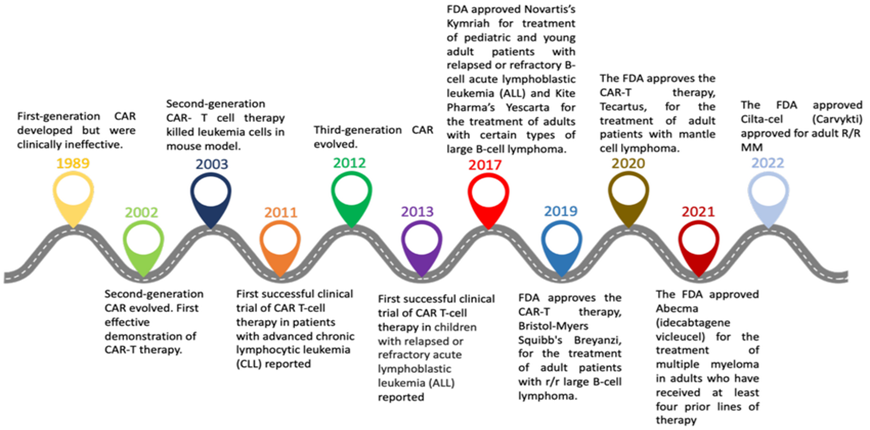
[11]
  • First generation: In the first generation of CARs, signals from the endogenous T cell receptor (TCR) were primarily transmitted by a single structure derived from the CD3 chain or FceRIy from the intracellular domain.[10]
  • Second generation: T cell activation is commonly described as a process requiring two signals. This process involves three primary types of receptors: co-stimulatory receptors, cytokine receptor, and T-cell antigen receptors. The initial signal is generated when the T-cell receptor (TCR) recognizes the antigenic peptide-MHC complex present on antigen-presenting cells. The secondary signal comes from co-stimulatory molecule, such as CD28/B7, which promotes the production of IL-2, crucial for completing T cell activation and preventing cell death.[12]
  • Third generation: To enhance potency through increased cytokine production and improved killing capabilities, various signalling domains combined to develop third generation CARs.[13]
  • Fourth generation: T cell redirected for universal cytokine-mediated killing (TRUCKs) refers to the fourth generation CARs developed by integrating IL-12 into the foundational design of second-generation constructs.[14]

NEED OF CAR T CELL THERAPY:

  • Targeted cancer treatment: Effective for relapsed/refractory B-cell malignancies, ALL, some lymphomas
  • Limited options: When chemo, transplant aren’t viable
  • High response rates: In patients with limited alternatives
  • Potential cure: For some patients with aggressive cancers
  • Ongoing challenges: Solid tumours, toxicities, accessibility

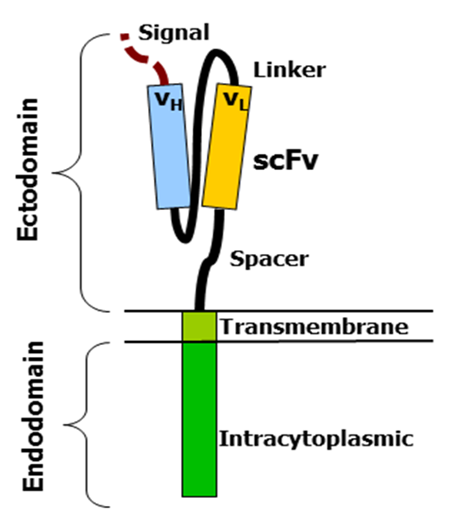
STRUCTURE OF CAR-T CELL:

[15]

   CARs involves mainly;

  • Ectodomain
  •  Transmembrane domain
  • Endodomain[16]
  • Ectodomain: The segment of a membrane protein that is exposed to the outside environment and not located within the cytoplasm is referred to as the ectodomain. In this instance, the signal peptide, the antigen recognition area, and the spacer constitute the ectodomain.[16]
  • Transmembrane domain: The transmembrane domain, consisting of a hydrophobic alpha helix that extends across the membrane, represents the closest portion of the endodomain to the membrane.[16]
  • Endodomain: The most commonly found component of the endodomain, which is the operational end of the receptor, is CD3, which includes three immunoreceptor tyrosine-based activation motifs (ITAMs).[16]

   MECHANISM OF CAR-T CELLS

[17]
  • The antigen used for CAR-T cells is a primary design consideration.
  • Typically, CAR T cell therapies target tumor-specific antigens or tumor-associated antigens that are unregulated on the surface of cancer cells or only on tumor cells.
  • The CART cell recognizes and binds to the target antigen, which is usually a specific protein or glycoprotein unregulated on the surface of cancer cells, through a single-chain variant antibody(scFv) on the CAR protein.
  • The scFv is able to bind tightly to the target antigen, enabling specific recognition by the CAR T cell.[18]
  • Once CAR T cells recognize the target antigen, signalling domains within the CAR, such as CD3, will be activated, triggering an intracellular signalling cascade.
  • This process is similar to the activation of a normal T cell receptor upon binding to an antigen.
  • The activated CAR T then target tumor cells expressing the target antigen for killing through a variety of mechanisms, including:
  1. Direct cytotoxins release where activated CAR T cells release cytotoxins, such as perform and targeting enzymes, which directly lead to tumor cell lysis and apoptosis;
  2. cytokine release where activated CAR T cells secrete cytokines, such as interferon ? and tumor necrosis factor α, to further stimulate immune cell activation and inflammatory response
  3. Immune cell alliance where activated CAR T cells can activate and recruit other immune cells, such as natural killer (NK) cells and macrophages, to form an immune cell alliance to jointly attack tumor cells.[19]

 PRODUCTION OF CAR-T CELL:

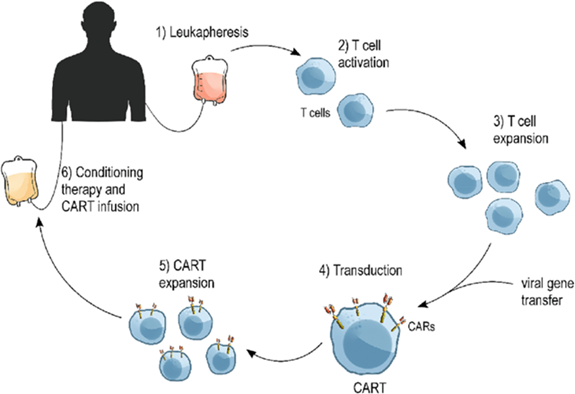
[20]

Steps involved in the Production of CAR T cell:[20]

  1. Leukapheresis
  2. T cell activation
  3. T cell expansion   
  4. Transduction
  5. CAR T expansion
  6. Conditioning therapy and CART infusion
  • CAR T cells are created by isolating T cells from human blood, either from the patient’s own blood (autologous treatment) or clinical trials often use CAR T cells from the CD3+ population, but research shows specific T cell subsets like naïve, memory stem cells and central memory may have functional advantages.
  • Clinical-scale procedures for growth, transduction, and selection have been developed for these subsets.
  • Identifying the best therapeutic benefit and a healthy donor (allogenic treatment).
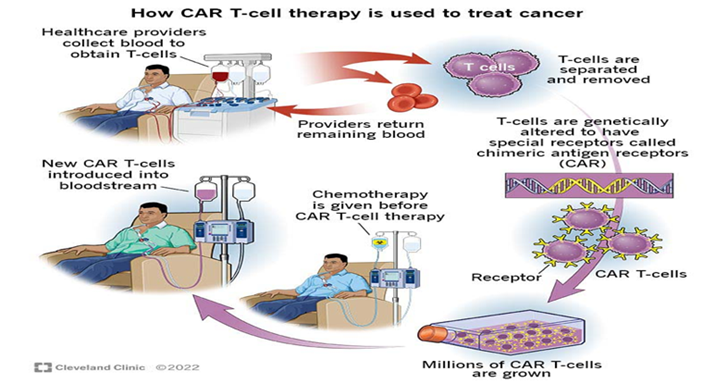
  • The process involves leukocyte apheresis, which separates PBMCs, and then being sent to a cell processing facility.
  • T cells are stimulated by cytokine interleukin 2(IL-2) and anti-CD3 antibodies.
  • The enlarged T cells are purified and transduced with a modified CAR gene, such as integrated gamma-retrovirus (RV) or lentiviral vector.
  • CRISPR/Cas9, a gene editing technique, is used to integrate the CAR gene into specific regions.
  • Before the engineered CAR T cells are introduced, the patient undergoes lymphodepletion chemotherapy, which increases cytokine production and reduces resource competition, promoting the proliferation of the altered CAR T cells.[21]

PROCEDURE FOR CAR-T CELL THERAPY:[22]

  • Preparation and conditions:

patients frequently go through a conditioning programme prior to receiving a CAR T cell injection. Chemotherapy or other therapies to get the body ready for the injection of T cells that have been changed may be part of this. The conditioning regimen aids in fostering an environment that is more conductive to the proliferation and assault of cancer cells by the modified t cell.

  • CAR T cell infusion:

The keystone of the process is the CAR T cell infusion. The patient receives the altered T cells intravenously. These cells are designed to express chimeric antigen receptors (CARs) on their surface. Typically, the infusion happens in a hospital environment so that the patient may be continuously watched for any negative responses.

  • Monitoring:

Patients are constantly watched for any adverse responses or acute side effects following the infusion. Vital signs are monitored often, and the patient’s health is continuously watched for indications of neurotoxicity or cytokine release syndrome (CRS), two possible side effects of CAR T cell treatment.

  • Hospitalization:

Depending on their unique response and any potential consequences, patients usually stay in the hospital for a while after receiving a CAR T cell infusion. This duration might range from a few days to a few weeks. They get expert attention and supervision throughout this period to handle any negative effects and guarantee their safety.

  • Supportive treatment:

patients get supportive treatment to manage side effects and maximise their comfort and well-being during the surgery and hospital stay. This might involve supportive therapy to address certain issues like CRS or neurotoxicity, as well as drugs to reduce symptoms like fever, nausea, and discomfort.

  • Follow up:

patients undergo CAR T cell therapy, a complex procedure requiring careful monitoring and supportive care to optimize outcomes. The treatment is tailored to each patient’s individual needs, aiming to achieve a durable, effective anti-cancer response while minimizing risks and complications.

WORKING OF CAR T CELL:
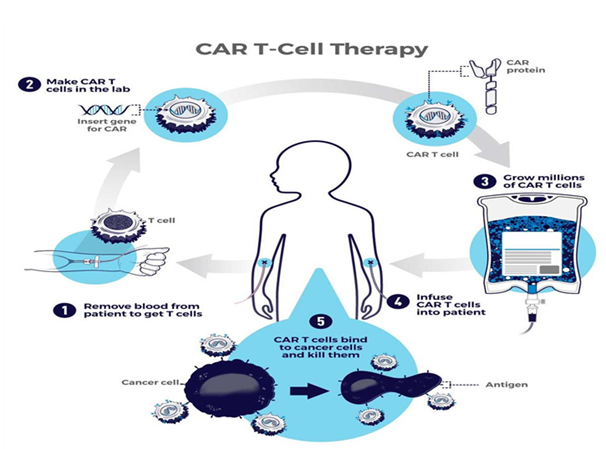
[23]

  • T cells are white blood cells in our immune system. The immune system monitors our body for intruders, including cancer, by tracking protein’s called antigens on the surface of intruder cells.
  • T cells have their own surface protein’s called receptors.
  • These receptors can recognize cells that have abnormal antigens.
  • T cells act as a surveillance system for abnormal cells, becoming active when a receptor recognizes an abnormal cell.
  • The activated T cell goes to work, destroying the abnormal cell and activating other parts of the immune system to come help find and destroy abnormal cells.
  • The T cell receptors don’t always detect cancerous cells.
  • Enter CAR T cells, the own T cells that are changed so they recognize a specific antigen on the surface of cancer cells.
  • Scientists change the T cells by adding a lab made gene for a chimeric antigen receptor.
  • Next, they make the new CAR T cells grow and multiply until there are enough cells to target cancerous cells effectively.
  • Once in the bloodstream, CAR T cell receptors detect and destroy cancerous cells.
  • The cells also keep on multiplying so they have a long-term supply of CAR T cells targeting the cancer cells.
  • That long-term supply is why researchers and healthcare providers call CAR T cell therapy a type of “living drug”.[24]

CURRENT CHALLENGES IN THE CAR-T CELL THERAPY:[25]

  • The major challenges in the field of CAR T Cell therapy are to improve the in-vivo persistence of CAR T cells and identify ways to mitigate therapeutic toxicity.
  • In addition, many unknown in the field remain to be investigated, such as the mechanism of target-cell death, optimal dose needed for maximum efficacy, duration of ex-vivo T cells expansion, and efficacy of single vs multiple infusions of CAR T cells.
  • CAR T cells must persist and remain functional for long time to prevent relapse. Long term persistence of anti-CD19 CAR T-cells has been demonstrated in patients for many years after infusion.
  • The limiting factors for in vivo CAR T-cell persistence may include ex vivo condition in which T cell expansion occurs, stability of transgene expression, and immune responses developed against with transgene. Similarly, severe toxicities associated with CAR T-cell therapy may be due to the disease burden, high-dose chemotherapy regimen, high-dose CAR T cell infusion, and as peak levels of serum cytokines and C-reactive protein.
  • Determining the mechanism underlying target cell death, which may be caused by signalling domains associated with antigens or TCR complex chain, is crucial.
  • The fate of the residual natural TCR remains unclear. cells can also mediate target-cell death via enzyme release, cytokine release, and other immune effectors.
  • Responses to different doses of CAR T cell therapy vary on a patient-by-patient basis. Some patients can greatly benefit from small doses, while others may not show any effect after infusion of large dose. Therefore, it is challenging to determine the optimal T cells dose for individual patients.
  • Other important factors that may modulate this response are disease burden and toxicity levels.
  • A few studies recommend infusion of less than 108 CAR T Cells following lymphodepletion in clinical trials to achieve a higher complete response rate.
  • Although infusion of multiple small doses of CAR T cells has not shown any toxicity, it is still unknown whether single or multiple infusions lead to optimal efficacy remains unknown.
  • The duration for which T cells need to be expanded in culture before infusion remains unclear. Since a less differentiated and more proliferative phenotype (such as T memory stem cells) is associated with better responses in preclinical models, long-term ex vivo T cell expansion may not yield optimal results.
  • Several crucial details regarding T cell trafficking of molecules on tumor vessels play a key role in modulating T cell recruitment into the tumor micro-environment, thereby influencing the response in patients.

FUTURE PERSPECTIVES:[26]

CD19-expressing blood cancers are most suitable for CAR T cell therapy due to their high tumour expression, easy access, and tolerability of B cell aplasia. However, only 5%   of new cancer diagnosis are CD19-targetable by licensed products. Innovative strategies to improve tumour killing efficacy, CAR T cell persistence, and activity control are being pursued to bring CAR T cell therapies to other diseases.

The future of CAR T cell therapy is promising, with ongoing research and development aimed at overcoming current challenges and enhancing its therapeutic potential. Some potential prospects for CAR T cell treatment include:

  • Advancements in target identification: researchers are discovering new tumour-specific antigens for CAR T cell therapy, expanding the target repertoire to treat a wider range of malignancies and reducing antigen escape.
  • Next-generation CAR designs: Future CAR designs may enhance T- cell persistence, invasion, and specificity by developing dual-targeted and switchable CARs that target multiple antigens simultaneously.
  • Allogenic CAR T cells: off-the-shelf universal CAR T cells from healthy donors may address manufacturing issues in patient-specific treatment, while strategies to reduce graft versus-host disease risk and improve allogenic CAR T cell durability are being developed.
  • Gene editing technologies: Advances in gene editing technologies like CRISPR-Cas9 show promise for enhancing the functionality and safety of CAR T cells by disrupting fatigue-related genes or boosting T-cell activity.
  • Combination treatments: CAR T cell therapy is being combined with other therapeutic options like check point inhibitors, targeted treatments, and chemotherapy to prevent resistance, enhance antitumor immunity, and enhance treatment outcomes.
  • Expanded applications beyond oncology: CAR T cell therapy, primarily used in cancer treatment, is gaining interest for potential applications in autoimmune, infectious and transplantation diseases, despite challenges and promising therapeutic innovation.
  • Personalized medicine approaches: advances in biomarker identification and patient classification may enable more personalized CAR T cell treatment, focusing on specific patient features like tumour genetics, immunology, and microenvironmental variables.
  • Improved manufacturing and accessibility: The CAR T Cell treatment manufacturing process is being improved through automation, closed-system production platforms, and alternative cell sources to reduce costs, enhances calabilty, and enhance patient access.

CAR T-cell therapy’s future is marked by continuous innovation, with potential to transform cancer treatment and expand its use to other diseases.

Collaboration between academics, industry, and regulatory authorities is needed.

CLINICAL SUCCESS OF CAR-T CELL THERAPY:[27]

A patient at NCI suffering from advanced follicular lymphoma and patients at MSKCC with refractory CLL and relapsed B-cell ALL both demonstrated progress following second-generation CAR T cell therapy. A retroviral vector named MSGV was utilized to deliver a CD19 specific CAR as part of the treatment at NCI. This CAR was designed to target the CD19 protein found on the surface of B-lineage cells, using an anti-CD19 scFv derived from the murine monoclonal antibody FMC63. It incorporated both a CD3z endodomain and CD28 costimulatory endodomain. Following lymphodepletion, the patient two infusions of CAR T cells and eight doses of IL-2. As a result of this therapy, patient underwent selective elimination of B-lineage cells and achieved a partial remission of the lymphoma. Autologous CD19-targeted CAR T cells featuring the second-generation CAR (19-28z) were evaluated for safety and long-lasting effects in patients with B-ALL and CLL that had either relapsed or were resistant to chemotherapy in the MSKCC phase 1 trial. Patients who had previously received cyclophosphamide training exhibited a partial response, whereas those who had not been trained showed no measurable reactions to their disease.

When Dr. Carl June and his team at university of pennsykvania shared their findings that three adult patients suffering from advanced chronic lymphocytic leukaemia (CLL) achieved either complete or partial remission after undergoing CD19-specific CAR T cell therapy, it represented a major breakthrough in the application of CAR T cell therapy.

The construct utilized in this trial included the 4-1BB costimulatory endodomain, the CD3z signalling endodomain, and an anti-CD19 scFv derived from FMC63. An EF1-a promoter-driven lentiviral vector was employed to express this construct. Following injection, the CAR T cell counts in patients increased significantly, often by a factor of 1,000. These results enabled the treatment of advanced cases of CLL and other B-cell malignancies using second-generation CAR T cell therapy.

The outcomes of these clinical studies revealed that lymphodepletion prior to treatment-specifically a type of chemotherapy that reduces the immune cell count is essential for the success of CAR T cell therapy. Conversely, it appears that IL-2 is not necessary. Dr. steven Rosenberg’s team was the first to demonstrate that lymphodepleting chemotherapy is effective. They found that the combination of cyclophosphamide and fludarabine led to the in vivo growth and movement of injected tumour-reactive T cells toward tumour locations. The process of lymphodepletion might include reducing the count of native lymphocytes that compete with the infused T cells and increasing the circulating levels of T cell growth factors such as IL-15. This would promote more effective growth of the administered T cells within the host’s body.

FDA APPROVED CAR T CELLS THERAPIES:[28]

The US food and drug administration (FDA) has authorized CAR T-cell therapy for the treatment of multiple myeloma and certain types of leukaemia and lymphomas. Usually, CAR T-cell therapy is employed following the failure of conventional forms of treatment. Currently authorized CAR T-cell treatment include the following:

Generic Name

Brand Name

Target Antigen

Targeted

Disease

Patient Population

Tisagenlecleucel

Kymriah

CD19

B-cell acute lymphoblastic leukaemia (ALL)


B-cell non-Hodgkin lymphoma (NHL)

Children and young adults with refractory or relapsed B-cell ALL


Adults with refractory or relapsed B-cell NHL

Axicabtagene ciloleucel

Yescarta

CD19

B-cell non-Hodgkin lymphoma (NHL)


Follicular lymphoma

Adults with refractory or relapsed B-cell NHL

Adults with refractory or relapsed follicular lymphoma

Brexucabtagene autoleucel

Tecartus

CD19

Mantle cell lymphoma (MCL)


B-cell acute lymphoblastic leukaemia (ALL)

Adults with refractory or relapsed MCL


Adults with refractory or relapsed B-Cell ALL

Lisocabtagene maraleucel

Breyanzi

CD19

B-cell non-Hodgkin lymphoma (NHL)

Adults with refractory or relapsed B-cell NHL

Idecabtagene vicleucel

Abecma

BCMA

Multiple myeloma

Adults with refractory or relapsed multiple myeloma

Ciltacabtagene autoleucel

carvykti

BCMA

Multiple myeloma

Adults with refractory or relapsed multiple myeloma

DIFFERENT TYPES OF CANCER ON WHICH CAR T CELL THERAPY ACTS:[29]

Since the U.S food and drug administration (FDA) initially authorized CAR T Cell therapy in 2017, the treatment has become accessible. Six iterations of CAR T cell therapy have been authorized by the FDA thus far to treat various forms of blood cancer, including:

  • Leukaemia acute lymphoblastic- acute lymphoblastic leukaemia (ALL) occurs when white blood cells lymphoid progenitors’ aggregates in the bone marrow. T-cells and B-cells are two sub types of lymphoid cells, are involved in ALL. B-cells are often linked to ALL and work to keep the body free of pathogen and illness by eliminating diseased cells.
  • Multiple myeloma: multiple myeloma is a blood cancer that originates from the bone marrow’s plasma cells which produce antibody protein to aid the body’s immune system in fighting infections. As the cancer’s spreads, an overabundance of aberrant plasma cells forms, causing tumours to develop throughout the bone marrow, affecting the formation of healthy red blood cells and weakening the body’s defence against infection. This type of cancer is usually uncontrollable and develops into multiple tumours, often not being detected until it as spread.
  • Hodgkin lymphoma- non-Hodgkin lymphoma is a cancer that develops in the lymph system, which transports immune cells and filters waste and poisons. It affects areas other then lymph nodes, such as the stomach, waldeyer ring, central nervous system, lung, bone and skin. the disease can also affects the spleen. B-cells and T-cells are affected by lymphoma, which helps produce antibodies against pathogens. CAR T cell therapy targets specific cancer cell types, allowing treatment for follicular lymphoma, high-grade B-cell lymphoma, and mediastinal large B-cell lymphoma.

APPLICATIONS OF CAR-T CELL THERAPY:[30]

Chimeric antigen receptor T-cell therapy (CAR T Cell therapy) is an immunotherapy method that uses the patient’s immune system to target and eliminate cancer cells. It requires genetic modification to express chimeric antigen receptors on cancer cells surface. CAR T cell therapy has shown remarkable results in treating certain cancers, particularly those with haematological malignancies. The following are some important clinical uses:

  • Acute lymphoblastic leukaemia (ALL): CAR T cells are used in treating haematological malignancies
  • Chronic lymphocytic leukaemia (CLL): The use of CD19 as a target for CLL treatment has shown promising results in patients with complete remission and minimal residual disease.
  • Non-Hodgkin lymphoma (NHL): Anti-CD19 CAR-T cells have shown success in treating chemo-resistant lymphomas, while CD22 has shown promising results in patients with diffuse large B-cell lymphoma.
  • Multiple myeloma: Syndecan 1(CD138) was used as a target for MM treatment, but it caused “on-target-off-tumour” toxicity.
  • Solid tumours: CAR T cell therapies targeting specific antigens have shown poor results in solid tumour, despite the unmet clinical need for these therapies.
  • HIV- infection:
  • Targeting HIV reservoirs: CAR T lymphocytes serves as a viral reservoir, which allow the virus to survive despite antiretroviral treatment.
  • HIV Entry inhibition: CAR T cells prevent HIV entry into host cells.
  • Boosting immune reactions: Modifying CAR T cells can enhance body defence against HIV-positive cells by targeting viral antigens or co-stimulatory.

CONCLUSION:

CAR T Cell therapy is an FDA approved therapy that has Improved progression free survival for multiple myeloma, improved overall survival for large B-cell lymphoma and attained high rates of cancer remission for other hematologic malignancies such as ALL, Follicular lymphomas and mantle cell lymphoma

CAR T Cell therapy (Chimeric antigen receptor T-cell therapy) is a form of immunotherapy that involves modifying a patient’s T cells to attack cancer cells.

CAR T treatment for patients with tumors has shown promising outcomes, however many remaining challenges need to be considered.

CAR T Cell therapy shows breakthrough in cancer treatment like effective for certain hematologic malignancies and challenges such as toxicities (CRS, neurotoxicity), relapses, solid tumor, efficacy, accessibility and cost.

CAR T Cell therapy reveals ongoing efforts such as improving safety, expanding indications, enhancing efficacy, addressing manufacturing complexities and shows future directions like next-gen CAR’s, combination therapies, allogenic CAR T, solid tumor and showing potential impact on improving outcomes and focusing key areas such as mitigating toxicities, improving response durability, broadening patient access.

The future of CAR T cell therapy is bright, with continuing research and development targeted at overcoming present obstacles and increasing therapeutic potential and long term safety requires future study.

REFERENCES

  1. Gabrielle haeusler, lynette chee, karinthursky, monica slavin & Benjamin Teh: CAR-T cell therapy and infection. 2021; 19:749-758
  2. Eshhar Z. The T-body approach: redirecting T cells with antibody specificity. Handb Exp Pharmacol. 2008; 181:329-42.
  3. Dardamani DG. Modern biotechnological approaches in diagnosis and Treatment of Lung cancer. 2024;14(6):274-286
  4. Loizides U, Dominici M, Manderson T, et al. The harmonization of World Health organization International Non-proprietary Names definitions for cell and cell-based gene therapy substances: when a name is not enough. Cytotherapy. 2021;23(5):357-366. Doi: 10.1016/j.jcyt.2021.02.114[PubMed: 33820700]
  5. Zhang C, Liu j, Zhong JF, ZhangX, Engineering CAR-T cells, Biomark Res. 2017 Dec24;5(1):22.
  6. Ramos CA, Dotti G, Chimeric antigen receptor (CAR)- engineered lymphocytes for cancer therapy. Expert opin Biol Ther. 2011 Jul 4; 11(7);855-73
  7. Lipowska. Bhalla G, Giham DE, Hawkins RE, Rothwell DG, Targeted immunotherapy of cancer with CAR T cells: achievements and challenges. Cancer immunology, immunotherapy. 2012 Jul 22; 61(7):953-62.
  8. Mitra A, Barua A, Huang L, Ganguly S, Feng Q, He B, From bench to bedside: the history and progress of CAR T cell therapy. Front Immunol. 2023 May 15;14.
  9. Rathi D, Patel N, satapathy T, Chimeric antigen receptor T cells (CAR T-Cells): An Engineered Targeted Therapy for Treatment of cancer, Journal of Drug Delivery and Therapeutics. 2024;14(6):274-286.
  10. Gross G, Waks T, Eshhar Z, Generation of effector T-cell receptor chimeric molecules as functional receptors with antibody-type specificity. Proceedings of the National Academy of Sciences. 1989 Dec;86(24):10024-8.
  11. Google link: https://share.google/BCVRSGNcJORlgbH81 16/1/2026
  12. Park TS, Rosenberg SA, Morgan RA. Treating cancer with genetically engineered T cells. Trends Biotechnol. 2011 Nov;29(11):550-7
  13. Marin V, Pizzitola I, Agostoni V, Attianese GMPG, Finney H, et al. cytokine-induced killer cells for cell thaerapy of acute myeloid leukemia: improvement of their immune activity by expression of CD33-specific chimeric receptors. Haematogica.2010 Dec 1; 95(12):2144-52.
  14. Chmielewski M, Anken H. TRUCKs: the fourth generation of CARs. Expert opin Biol Ther.2015 Aug 3;15(8):1145-54.
  15. Google link: https://share.google/Yd7LxrwEFGTfDncoy 16/1/2026
  16. Liu J, Zhang Jf, Zhang X, Zhang C. Allogenic CD19-CAR-T cell infusion after allogenic hematopoietic stem cell transplantation in B cell malignancies. J Hematol Oncol. 2017 Dec 31;10(1):35.
  17. Google link: https://share.google/wtgaRIKoOh3uutYn7 16/1/2026
  18. Zhu H, Fang x, Tuhin IJ, Tan J, Ye J, et al: CAR T cells equipped with a fully human scFv targeting Trop2 can be used to treat pancreatic cancer.J cancer Res Clin Oncol 148: 2261-2274,2022.
  19. Cohen AD, Garfall AL, Stadtmauer EA et al: B cell maturation antigen-specific CAR T cells are clinically active in multiple myeloma. J Clin Invest 129: 2210-2221,2019.
  20. Google link: https://share.google/qNTL4AZdOh149omwW 16/1/2026
  21. Hartmann J, Bondanza A, Buchholz CJ. clinical development of CAR T cells-challenges and opportunities in translating innovative treatment concepts. EMBO molecular medicine. 2017Sep;9(9):1183-97.
  22. Google link: https://share.google/eFDuili71o2k3wWKU 16/1/2026
  23. Google link: https://my.clevelandclinic.org/health/treatments/17726-car-t-cell-therapy 16/1/2026
  24. Craddock JA, Lu A, Bear A, Pule M et al: Enhanced tumour trafficking of GD2 chimeric antigen receptor T cells by expression of the chemokine receptor CCR2b. Immunother (2010) 33:780-8.
  25. Churchill MJ, Deeks SG, Margolis DM, siliciano RF, et al. what, where and how to target them. Nature Reviews microbiology.2016 jan;14(1):55-60.
  26. Kim Y, Anderson JL, Lewin SR. Getting the “kill” into “shock and kill”: strategies to eliminate latent HIV. cell host & amp; microbe.2018Jan 10;23(1):14-26.
  27. Rosenberg SA, Restifo NP. Adoptive cell transfer as personalized immunotherapy for human cancer. Science (1979).2015 Apr 3; 348(6230):62-8.
  28. Google link: https://www.cancer.gov/about-cancer/treatment/research/car-t-cells 16/1/2026
  29. Satapathy T, Kaushik S, Netam AK, Prasad J, et al: NANO DELIVERY: A SMART CARRIER FOR TREATMENT OF OVARIAN CANCER. 2024;14(6):274-286.
  30. Nanda BL, Antioxidant and anticancer activity of edible flowers, Journal of Drug Delivery and Therapeutics: 2019;9(3-s)290-295. 

Reference

  1. Gabrielle haeusler, lynette chee, karinthursky, monica slavin & Benjamin Teh: CAR-T cell therapy and infection. 2021; 19:749-758
  2. Eshhar Z. The T-body approach: redirecting T cells with antibody specificity. Handb Exp Pharmacol. 2008; 181:329-42.
  3. Dardamani DG. Modern biotechnological approaches in diagnosis and Treatment of Lung cancer. 2024;14(6):274-286
  4. Loizides U, Dominici M, Manderson T, et al. The harmonization of World Health organization International Non-proprietary Names definitions for cell and cell-based gene therapy substances: when a name is not enough. Cytotherapy. 2021;23(5):357-366. Doi: 10.1016/j.jcyt.2021.02.114[PubMed: 33820700]
  5. Zhang C, Liu j, Zhong JF, ZhangX, Engineering CAR-T cells, Biomark Res. 2017 Dec24;5(1):22.
  6. Ramos CA, Dotti G, Chimeric antigen receptor (CAR)- engineered lymphocytes for cancer therapy. Expert opin Biol Ther. 2011 Jul 4; 11(7);855-73
  7. Lipowska. Bhalla G, Giham DE, Hawkins RE, Rothwell DG, Targeted immunotherapy of cancer with CAR T cells: achievements and challenges. Cancer immunology, immunotherapy. 2012 Jul 22; 61(7):953-62.
  8. Mitra A, Barua A, Huang L, Ganguly S, Feng Q, He B, From bench to bedside: the history and progress of CAR T cell therapy. Front Immunol. 2023 May 15;14.
  9. Rathi D, Patel N, satapathy T, Chimeric antigen receptor T cells (CAR T-Cells): An Engineered Targeted Therapy for Treatment of cancer, Journal of Drug Delivery and Therapeutics. 2024;14(6):274-286.
  10. Gross G, Waks T, Eshhar Z, Generation of effector T-cell receptor chimeric molecules as functional receptors with antibody-type specificity. Proceedings of the National Academy of Sciences. 1989 Dec;86(24):10024-8.
  11. Google link: https://share.google/BCVRSGNcJORlgbH81 16/1/2026
  12. Park TS, Rosenberg SA, Morgan RA. Treating cancer with genetically engineered T cells. Trends Biotechnol. 2011 Nov;29(11):550-7
  13. Marin V, Pizzitola I, Agostoni V, Attianese GMPG, Finney H, et al. cytokine-induced killer cells for cell thaerapy of acute myeloid leukemia: improvement of their immune activity by expression of CD33-specific chimeric receptors. Haematogica.2010 Dec 1; 95(12):2144-52.
  14. Chmielewski M, Anken H. TRUCKs: the fourth generation of CARs. Expert opin Biol Ther.2015 Aug 3;15(8):1145-54.
  15. Google link: https://share.google/Yd7LxrwEFGTfDncoy 16/1/2026
  16. Liu J, Zhang Jf, Zhang X, Zhang C. Allogenic CD19-CAR-T cell infusion after allogenic hematopoietic stem cell transplantation in B cell malignancies. J Hematol Oncol. 2017 Dec 31;10(1):35.
  17. Google link: https://share.google/wtgaRIKoOh3uutYn7 16/1/2026
  18. Zhu H, Fang x, Tuhin IJ, Tan J, Ye J, et al: CAR T cells equipped with a fully human scFv targeting Trop2 can be used to treat pancreatic cancer.J cancer Res Clin Oncol 148: 2261-2274,2022.
  19. Cohen AD, Garfall AL, Stadtmauer EA et al: B cell maturation antigen-specific CAR T cells are clinically active in multiple myeloma. J Clin Invest 129: 2210-2221,2019.
  20. Google link: https://share.google/qNTL4AZdOh149omwW 16/1/2026
  21. Hartmann J, Bondanza A, Buchholz CJ. clinical development of CAR T cells-challenges and opportunities in translating innovative treatment concepts. EMBO molecular medicine. 2017Sep;9(9):1183-97.
  22. Google link: https://share.google/eFDuili71o2k3wWKU 16/1/2026
  23. Google link: https://my.clevelandclinic.org/health/treatments/17726-car-t-cell-therapy 16/1/2026
  24. Craddock JA, Lu A, Bear A, Pule M et al: Enhanced tumour trafficking of GD2 chimeric antigen receptor T cells by expression of the chemokine receptor CCR2b. Immunother (2010) 33:780-8.
  25. Churchill MJ, Deeks SG, Margolis DM, siliciano RF, et al. what, where and how to target them. Nature Reviews microbiology.2016 jan;14(1):55-60.
  26. Kim Y, Anderson JL, Lewin SR. Getting the “kill” into “shock and kill”: strategies to eliminate latent HIV. cell host & amp; microbe.2018Jan 10;23(1):14-26.
  27. Rosenberg SA, Restifo NP. Adoptive cell transfer as personalized immunotherapy for human cancer. Science (1979).2015 Apr 3; 348(6230):62-8.
  28. Google link: https://www.cancer.gov/about-cancer/treatment/research/car-t-cells 16/1/2026
  29. Satapathy T, Kaushik S, Netam AK, Prasad J, et al: NANO DELIVERY: A SMART CARRIER FOR TREATMENT OF OVARIAN CANCER. 2024;14(6):274-286.
  30. Nanda BL, Antioxidant and anticancer activity of edible flowers, Journal of Drug Delivery and Therapeutics: 2019;9(3-s)290-295. 

Photo
Dr. Nagarjuna D
Corresponding author

Assistant Professor, Department of Pharmacy Practice, Akshaya Institute of Pharmacy, Tumkur, Karnataka, India

Photo
Dr. R. S Meghasri
Co-author

Assistant Professor, Department of Pharmacy Practice, Akshaya Institute of Pharmacy, Tumkur, Karnataka, India

Photo
Dr. Shivaraj D. R
Co-author

Assistant Professor, Department of Pharmacy Practice, Akshaya Institute of Pharmacy, Tumkur, Karnataka, India

Photo
Shrinivas Patil
Co-author

Akshaya Institute of Pharmacy, Tumkur, Karnataka, India

Photo
Kavyashree D
Co-author

Akshaya Institute of Pharmacy, Tumkur, Karnataka, India

Photo
Manu S. T
Co-author

Akshaya Institute of Pharmacy, Tumkur, Karnataka, India

Dr. Nagarjuna D, Dr. R. S Meghasri, Dr. Shivaraj D. R, Shrinivas Patil, Kavyashree D, Manu S. T, CAR T Cell Therapy: Current Challenges and Future Direction, Int. J. of Pharm. Sci., 2026, Vol 4, Issue 2, 3920-3934. https://doi.org/10.5281/zenodo.18761526

More related articles
A Review of the Cosmetic and Exfoliating Propertie...
Pooja Pagar, Mayuri Pol, Dr. Sunil Mahajan, ...
Strategic Insights into Drug Regulatory Affairs: D...
Rutanshi Patel, Gargi Patel, Dr. Maitreyi N. Zaveri, Zuki Patel, ...
Development And Validation of The HPTLC Method For...
Dr. Hina Bagada, Janvi Chauhan , ...
Melatonin Loaded Nanocarriers...
Raslamol K., Saranya K. G., Amayasree Suresh, Archa Ani, A. S. Athira, Febiya Joy, Gayathri Prasad, ...
Therapeutic Potential of REV-ERB Circadian Transcription Factors in Cardiac Func...
Amit Sharma, Dr. Sayyed Mateen, Aafreen Qureshi, Vikas Gupta, ...
Development And Assessment Of A Poly-Herbal Facial Scrub...
Tejaswini S. Selwate, Kalyani M. Dongarwar, Sahil Langde, Jagdish Baheti, ...
Related Articles
Formulation and Evaluation of Anti-Fungal Activity of Chamomile Silver Nanoparti...
Kruthika S G, Manohar Reddy, Madhushree R, Kruthic Revanth G, Iyswarya G M, Krishna R, ...
The Role of Artificial Intelligence in Revolutionizing Infertility Diagnosis and...
Amruta Rajput , Shivprasad Deokar , Dr. Kawade Rajendra, ...
Exploring Probiotic Loaded Gastroprotective Microgel Strategy for Gut Health and...
Akshay Kumar, Mohd. Zubair Arshad, Ankush Maurya, Shreya Chaurasiya, Atul Verma, Vipul Samrat, ...