
1Department of Research & Development, Clinivance Labs, New Delhi
2Centrix Healthcare Limited, Mumbai
3METs Institute of Pharmacy, Nashik
4Gurugram University, Gurugram, Haryana
5Gurugram University, Gurugram, Haryana
6Maharani Lakshmi Ammani College for Women, Bangalore
7VVPF’s College of Pharmacy, Ahilya Nagar, Maharashtra
Artificial intelligence (AI) has emerged as a dominant epistemic and operational force within pharmaceutical research, fundamentally restructuring the mechanisms through which therapeutic hypotheses are generated, validated, and translated into clinically actionable interventions. The unprecedented expansion of biomedical data—spanning genomics, proteomics, cheminformatics, imaging, electronic health records, and real-world evidence—has rendered traditional analytical methodologies increasingly inadequate for extracting mechanistic insight and predictive value. In response, machine learning, deep neural networks, and generative artificial intelligence systems have been incorporated across the pharmaceutical value chain, enabling algorithmic discovery of molecular targets, in silico synthesis of novel chemical entities, computational prediction of pharmacokinetic and toxicological profiles, and adaptive optimization of clinical trial design. Despite these transformative capabilities, the deployment of AI introduces profound scientific, ethical, and regulatory challenges. Model opacity, algorithmic bias, data heterogeneity, reproducibility, and governance deficiencies pose significant risks to patient safety and regulatory credibility. This review critically examines the integration of artificial intelligence into pharmaceutical research, with particular emphasis on its mechanistic contributions to drug discovery and development, its methodological limitations, and the evolving regulatory frameworks required to ensure its responsible and scientifically defensible application.
Pharmaceutical research is undergoing a paradigmatic transition driven by the convergence of computational science, large-scale biomedical data, and artificial intelligence. For much of its history, drug development has been governed by a reductionist experimental paradigm in which disease states were attributed to discrete molecular aberrations, and therapeutic interventions were designed through incremental chemical modification and empirical biological testing. While this paradigm has yielded a substantial pharmacopeia of effective medicines, it has proven increasingly misaligned with the multifactorial, network-driven etiology of contemporary diseases. Pathologies such as cancer, neurodegeneration, autoimmune disorders, and cardiometabolic syndromes are not the product of single molecular defects but rather emerge from complex, non-linear interactions among genomic variants, regulatory networks, environmental exposures, and stochastic biological processes.The escalating complexity of disease biology has been accompanied by a parallel explosion in the volume and dimensionality of biomedical data. High-throughput sequencing, multiplexed imaging, real-time physiological monitoring, and digitized clinical records have generated data streams that exceed the capacity of traditional statistical frameworks to analyze in a comprehensive or mechanistically coherent manner. Consequently, pharmaceutical research has encountered a methodological bottleneck: the capacity to generate data has vastly outpaced the capacity to extract actionable knowledge from it.Artificial intelligence offers a computational framework uniquely suited to overcoming this bottleneck. Unlike conventional bioinformatics tools that rely on predefined models and linear assumptions, AI systems learn directly from data, constructing high-dimensional representations that capture complex, non-linear relationships among biological variables. Through machine learning and deep learning, these systems identify latent structures, predictive features, and mechanistic correlations that remain inaccessible to human investigators and classical statistical techniques.The incorporation of AI into pharmaceutical research has therefore not merely accelerated existing workflows; it has altered the epistemological foundations of the discipline. Drug discovery is increasingly guided by probabilistic inference rather than hypothesis-driven experimentation alone, and therapeutic design is shifting from heuristic medicinal chemistry toward algorithmically optimized molecular engineering. In this emerging paradigm, AI functions not as an auxiliary analytical tool but as an integral component of scientific reasoning, shaping how disease is conceptualized, how drug candidates are prioritized, and how clinical outcomes are predicted.
COMPUTATIONAL AND THEORETICAL FOUNDATIONS OF AI IN PHARMACEUTICAL SCIENCE
Artificial intelligence in pharmaceutical research encompasses a constellation of computational methodologies that enable machines to perform tasks traditionally associated with human cognition, including pattern recognition, abstraction, prediction, and decision-making. At its core, AI in this domain is grounded in machine learning, a statistical learning framework in which algorithms infer relationships between variables by optimizing performance against empirical data rather than through explicit programming.Supervised learning constitutes one of the most widely applied paradigms in pharmaceutical AI. In this approach, algorithms are trained on labeled datasets, such as chemical structures annotated with biological activity or clinical records annotated with therapeutic outcomes. By learning the mapping between input features and output labels, supervised models can predict properties such as target affinity, toxicity, or patient response for previously unseen compounds or individuals. These predictive capacities are central to virtual screening, ADMET modeling, and clinical risk stratification.Unsupervised learning, by contrast, seeks to uncover intrinsic structure within data without reference to predefined labels. Clustering, dimensionality reduction, and manifold learning techniques are employed to identify molecular families, disease subtypes, or patient phenotypes that may not be apparent through conventional classification schemes. In pharmaceutical research, unsupervised learning enables the discovery of novel biological patterns, facilitating target discovery and biomarker identification.Reinforcement learning introduces a decision-theoretic framework in which an artificial agent interacts with a simulated environment, receiving rewards or penalties based on its actions. In molecular design, reinforcement learning algorithms iteratively modify chemical structures, receiving feedback based on predicted pharmacological properties, thereby converging toward molecules that optimize multiple therapeutic objectives simultaneously.Deep learning, implemented through multi-layered artificial neural networks, has emerged as the dominant architecture underlying contemporary pharmaceutical AI. These networks are capable of learning hierarchical representations of data, capturing subtle and abstract features that correlate with biological function. Transformer-based models, originally developed for natural language processing, have been adapted to analyze protein sequences, chemical structures, and clinical text, enabling the integration of heterogeneous data modalities into unified predictive frameworks.
The convergence of these computational paradigms has produced an AI ecosystem capable of ingesting vast, heterogeneous biomedical datasets and generating predictions with direct translational relevance to drug discovery and development. Importantly, this ecosystem does not operate in isolation; it is embedded within an iterative experimental cycle in which algorithmic predictions guide laboratory validation, and experimental outcomes are fed back into model retraining, producing a continuously evolving, data-driven research infrastructure.
ARTIFICIAL INTELLIGENCE IN DRUG DISCOVERY
Limitations of Conventional Drug Discovery ParadigmsThe classical drug discovery pipeline is characterized by a sequential and labor-intensive progression from target identification to hit discovery, lead optimization, and preclinical validation. This process is notoriously inefficient, with attrition rates exceeding 90 percent and development timelines often extending beyond a decade. A principal source of failure lies in the inability to accurately predict, at early stages, whether modulation of a given biological target will translate into clinical efficacy and acceptable safety.Traditional target discovery relies heavily on reductionist biological models, wherein individual genes or proteins are studied in isolation and extrapolated to disease states. Such models fail to capture the emergent properties of biological networks, in which redundancy, feedback loops, and cross-pathway interactions frequently compensate for single-target perturbations. As a result, many drug candidates that appear promising in vitro or in animal models ultimately fail in human trials due to unforeseen mechanisms of resistance or toxicity.
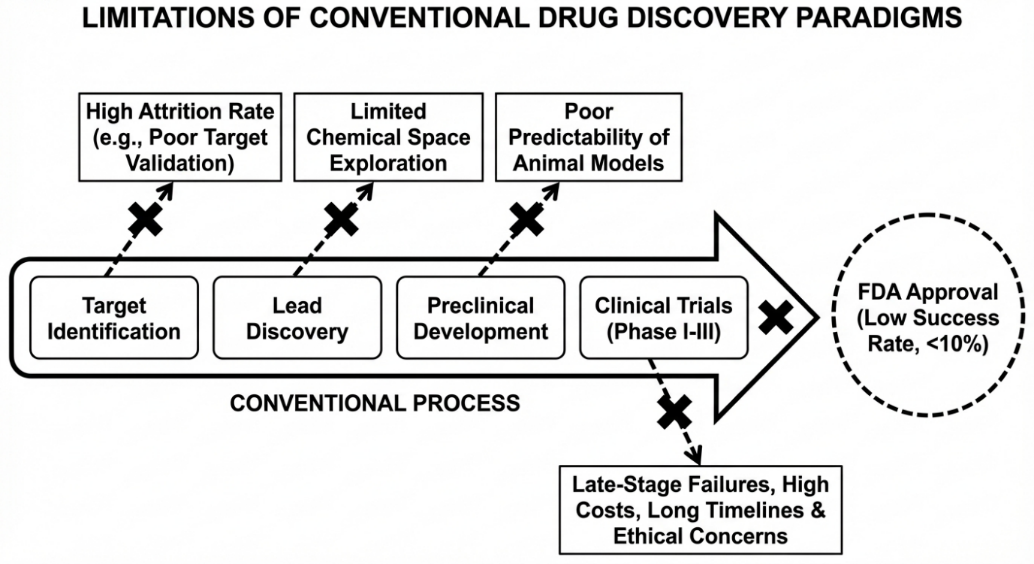
Fig 1: Limitations of Conventional Drug Discovery Paradigms
Furthermore, conventional screening methods are constrained by the physical limitations of wet-lab experimentation. High-throughput screening platforms, while capable of testing hundreds of thousands of compounds, still explore only a minute fraction of the astronomically large chemical space that encompasses all synthetically feasible drug-like molecules. This severe sampling bias restricts the diversity of chemical scaffolds entering the development pipeline and limits the probability of discovering truly optimal therapeutic agents. Artificial intelligence addresses these limitations by introducing computational scalability, systems-level biological modeling, and algorithmic exploration of chemical space, thereby redefining the conceptual and practical boundaries of drug discovery.
AI-Driven Target Identification and Validation
In contemporary pharmaceutical research, AI has become a central instrument for identifying and validating therapeutic targets. By integrating multi-omic datasets—including genomic variants, transcriptomic profiles, proteomic interactions, and metabolomic fluxes—AI systems construct high-dimensional representations of disease biology that reveal functional dependencies and regulatory hierarchies within biological networks.Graph-based neural networks model these systems as interconnected nodes and edges, enabling the identification of molecular hubs that exert disproportionate influence over disease-relevant pathways. Unlike traditional statistical association studies, which merely correlate gene expression with disease phenotypes, these models infer causative relationships and predict the downstream consequences of target modulation. This allows researchers to prioritize targets not only on the basis of statistical significance but also on mechanistic relevance and therapeutic tractability.Moreover, AI-based target validation frameworks incorporate information on druggability, tissue specificity, and evolutionary conservation, enabling early assessment of whether a given target can be safely and effectively modulated by small molecules or biologics. In doing so, AI reduces the likelihood of pursuing targets that are biologically interesting but pharmacologically impractical.
Virtual Screening and Hit Identification
Once a target has been computationally prioritized, artificial intelligence enables the rapid identification of chemical entities capable of modulating its activity. Deep learning models trained on extensive structure–activity relationship datasets predict the binding affinity of millions of compounds to a target protein in silico. These predictions account for three-dimensional molecular geometry, electronic distribution, and conformational flexibility, surpassing the predictive power of traditional docking algorithms.By performing virtual screening at scale, AI drastically reduces the number of compounds that must be synthesized and tested experimentally, thereby conserving resources and accelerating the early phases of drug discovery. Furthermore, by simultaneously evaluating off-target interactions and physicochemical properties, these models enable a more holistic assessment of compound quality than conventional single-metric screening approaches.
Generative Artificial Intelligence and De Novo Molecular Design
Perhaps the most transformative application of AI in drug discovery is de novo molecular generation. Generative models, including variational autoencoders and reinforcement learning systems, treat chemical structures as navigable spaces in which each molecule represents a point defined by a vector of pharmacological properties. By optimizing these vectors against predefined objectives, such as potency, solubility, metabolic stability, and toxicity, AI systems synthesize novel molecular structures that satisfy complex, multi-dimensional constraints.These models are not limited to recombining known chemical fragments; they explore regions of chemical space that have never been experimentally sampled, producing structurally novel compounds with optimized therapeutic profiles. In this sense, AI functions as an autonomous medicinal chemist, capable of proposing candidate molecules that embody trade-offs among competing pharmacological objectives in ways that exceed human intuition.
ARTIFICIAL INTELLIGENCE IN PRECLINICAL DEVELOPMENT
The transition from hit identification to a development-ready lead represents one of the most failure-prone phases of pharmaceutical research. Although many compounds demonstrate high in vitro potency against their intended biological targets, only a small fraction possess the pharmacokinetic, metabolic, and toxicological profiles required for in vivo efficacy and human safety. Historically, these liabilities were discovered only after extensive animal testing and late-stage clinical failure, resulting in enormous economic and ethical costs. Artificial intelligence has introduced a paradigm shift in this domain by enabling early-stage, in silico prediction of absorption, distribution, metabolism, excretion, and toxicity (ADMET) properties, thereby transforming preclinical development from a largely empirical process into a predictive, data-driven discipline.Deep learning models trained on curated toxicological and pharmacokinetic datasets are now capable of estimating molecular behavior in biological systems with remarkable accuracy. These models analyze structural motifs, electronic features, and molecular dynamics to predict oral bioavailability, plasma protein binding, blood–brain barrier permeability, cytochrome P450 interactions, and metabolic stability. By integrating these predictions into the lead optimization process, researchers can iteratively refine molecular structures before synthesis, prioritizing compounds with favorable in vivo profiles and eliminating candidates that are likely to fail due to poor pharmacokinetics or unacceptable toxicity.
In silico toxicology represents one of the most impactful applications of AI in preclinical research. Traditional toxicological assessment relies heavily on animal models, which are expensive, time-consuming, and often poorly predictive of human outcomes. AI models trained on historical toxicity data, including hepatotoxicity, cardiotoxicity, genotoxicity, and developmental toxicity, can identify structural and physicochemical features associated with adverse biological effects. These models enable the early detection of safety liabilities that might otherwise remain hidden until late-stage testing, thereby reducing both attrition and animal usage.Importantly, AI-based preclinical models are increasingly capable of integrating mechanistic biological information rather than relying solely on statistical correlations. By combining chemical structure analysis with pathway-level biological data, these systems can infer how a compound interacts with cellular signaling networks, enabling more nuanced predictions of both efficacy and toxicity. This mechanistic integration is critical for advancing AI from a screening tool to a genuine scientific instrument capable of informing rational drug design.
ARTIFICIAL INTELLIGENCE IN CLINICAL DEVELOPMENT
Clinical trials constitute the most resource-intensive and failure-prone phase of pharmaceutical research. Despite extensive preclinical validation, a majority of drug candidates fail during human testing due to lack of efficacy, unforeseen safety issues, or inadequate trial design. Artificial intelligence has begun to fundamentally reshape clinical development by enabling predictive modeling of patient response, optimizing trial design, and facilitating real-time monitoring of trial performance.
One of the most significant contributions of AI to clinical research lies in patient stratification. Human populations exhibit enormous genetic, physiological, and environmental heterogeneity, leading to wide variation in drug response. Traditional clinical trials often treat patient populations as homogeneous cohorts, masking therapeutic effects that may be present only in specific subgroups. Machine learning models trained on electronic health records, genomic data, imaging studies, and biomarker profiles can identify latent patient subpopulations with distinct response patterns. This enables the design of precision trials in which therapies are tested in those individuals most likely to benefit, thereby increasing statistical power and reducing sample size requirements.AI is also being used to optimize patient recruitment and retention. Predictive algorithms analyze demographic, geographic, and clinical data to identify sites with high recruitment potential and patients who are most likely to meet eligibility criteria. Furthermore, machine learning models can predict dropout risk based on behavioral and clinical indicators, allowing trial sponsors to intervene proactively to improve adherence. These capabilities address one of the most common causes of trial failure: inadequate enrollment and high attrition.Adaptive trial design represents another domain in which AI exerts profound influence. Traditional clinical trials are governed by rigid protocols that specify fixed dosing regimens, cohort sizes, and endpoints. AI-enabled adaptive designs, by contrast, use real-time data analysis to modify trial parameters dynamically in response to emerging efficacy and safety signals. Reinforcement learning algorithms can optimize dose selection, cohort allocation, and stopping rules, enabling more efficient exploration of the therapeutic landscape while maintaining statistical and ethical rigor.
ARTIFICIAL INTELLIGENCE IN PHARMACOVIGILANCE AND REAL-WORLD EVIDENCE
The approval of a drug marks the beginning, rather than the end, of its safety and efficacy evaluation. Once a therapy enters widespread clinical use, rare adverse events, long-term effects, and off-label outcomes may emerge that were not detectable in controlled clinical trials. Pharmacovigilance and real-world evidence analysis are therefore essential components of the drug life cycle. Artificial intelligence has dramatically expanded the scope and sensitivity of post-marketing surveillance by enabling automated analysis of vast, unstructured data sources.Natural language processing models are now routinely applied to adverse event reports, clinical narratives, social media posts, and patient forums to identify safety signals that might otherwise go unnoticed. These systems can detect subtle patterns of symptom co-occurrence, temporal trends, and drug–drug interactions, providing early warnings of emerging risks. Compared with manual review processes, AI-driven pharmacovigilance operates at greater scale and speed, enabling more timely regulatory and clinical interventions.Real-world evidence derived from electronic health records, insurance claims, and patient registries provides a complementary perspective on drug performance outside the controlled environment of clinical trials. Machine learning models analyze these data to assess comparative effectiveness, long-term safety, and population-level outcomes. By integrating real-world evidence into regulatory decision-making and post-marketing risk management, AI supports a more continuous and evidence-based approach to therapeutic oversight.
LIMITATIONS AND METHODOLOGICAL CHALLENGES OF AI IN PHARMACEUTICAL RESEARCH
Artificial intelligence represents a profound methodological shift in pharmaceutical research; however, it is not a panacea. The deployment of AI in drug discovery and development encounters numerous constraints that are both technical and epistemological. A principal limitation arises from the quality, heterogeneity, and representativeness of biomedical data. Datasets in pharmaceutical research are inherently fragmented, collected across multiple laboratories, platforms, and patient populations. High-throughput screening outputs, electronic health records, omics datasets, and real-world evidence repositories vary in scale, resolution, and annotation standards. These disparities introduce systematic noise and bias into AI models, resulting in predictions that may lack robustness or reproducibility when applied to independent datasets. Moreover, datasets may contain latent historical biases; for example, pharmacogenomic data disproportionately represent populations of European descent, leading to predictive models that fail to generalize to other ethnic groups. This not only limits scientific validity but also raises ethical concerns regarding equitable access to precision medicine.Another fundamental challenge is the opacity of contemporary AI architectures, particularly deep neural networks and transformer-based models. These systems often achieve superior predictive performance but at the expense of interpretability. In pharmaceutical research, where predictions may guide decisions with direct implications for patient safety, the inability to trace model reasoning is a significant barrier. Explainable AI (XAI) techniques—such as feature attribution, attention mechanisms, and model distillation—are currently being developed to mitigate this issue, but these approaches themselves introduce additional complexity and may not fully resolve the epistemic opacity inherent in highly non-linear, high-dimensional models. Without mechanistic transparency, regulatory agencies and clinical practitioners may be hesitant to rely on AI-generated recommendations, constraining adoption and slowing integration into critical workflows.Reproducibility and generalizability constitute additional methodological limitations. AI models often overfit to specific datasets or experimental conditions, yielding predictions that fail when tested under novel contexts. This is particularly salient in the context of preclinical-to-clinical translation, where molecular behavior observed in vitro or in animal models does not consistently reflect human physiology. Covariate shifts, batch effects, and environmental variability exacerbate these issues, emphasizing the need for rigorous cross-validation across independent datasets and populations. Furthermore, there is a risk of “automation bias,” wherein researchers may over-rely on model outputs without adequate experimental corroboration, compounding errors in decision-making and potentially jeopardizing clinical outcomes.The integration of AI with experimental biology presents both opportunity and limitation. While AI excels at detecting correlations and complex patterns, it does not inherently generate mechanistic explanations. Understanding cellular signaling networks, metabolic fluxes, or tissue-specific effects remains largely dependent on traditional experimental and systems biology approaches. Consequently, AI should be conceived not as a replacement for biological experimentation but as a complementary tool that guides hypothesis generation, prioritizes experimental targets, and accelerates iterative cycles of design, test, and refinement. Failure to maintain this symbiosis may lead to overconfidence in AI outputs and misinterpretation of probabilistic predictions as causal certainties.
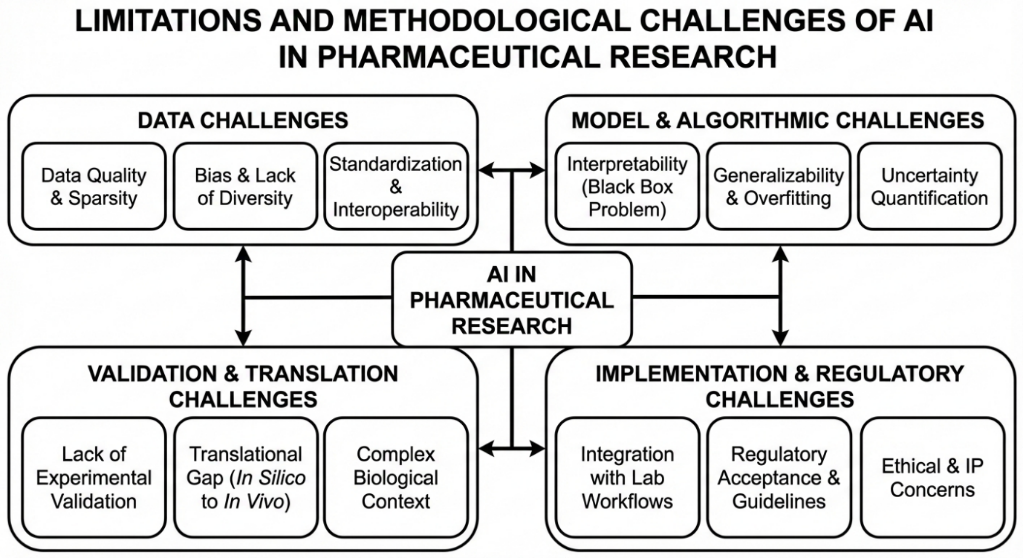
Fig 2: Limitations and Methodological Challenges Of Ai In Pharmaceutical Research
Finally, computational and infrastructural constraints cannot be ignored. The development and deployment of sophisticated AI models require substantial computational resources, high-performance GPUs, and large, curated datasets. Smaller research organizations and academic laboratories may lack these resources, creating disparities in access and slowing democratization of AI-driven innovation. Additionally, standardization of data formats, interoperability between platforms, and integration with laboratory information management systems (LIMS) remain unresolved operational challenges that complicate adoption at scale.
REGULATORY FRAMEWORKS FOR AI IN PHARMACEUTICAL RESEARCH
The regulatory landscape governing AI in pharmaceutical research is both nascent and evolving. Regulatory agencies recognize the transformative potential of AI but emphasize that compliance, transparency, and patient safety must remain paramount. AI applications in drug discovery, clinical development, and post-marketing surveillance are regulated not only as scientific tools but, increasingly, as components of Software as a Medical Device (SaMD), particularly when predictions directly influence clinical decision-making.In the United States, the Food and Drug Administration (FDA) has developed frameworks specifically addressing AI/ML-enabled SaMD. The agency mandates rigorous validation of AI models against predefined performance metrics, comprehensive documentation of model architecture and training data, and robust mechanisms for managing iterative model updates. A particularly challenging area is the governance of continuously learning AI systems: regulators require pre-specified change control plans to ensure that modifications do not compromise safety or efficacy. Additionally, the FDA emphasizes the need for transparency and explainability; developers must demonstrate not only predictive accuracy but also provide sufficient documentation for reviewers to understand the model’s reasoning.In Europe, the European Medicines Agency (EMA) and International Council for Harmonisation (ICH) provide complementary guidance emphasizing a risk-based approach. AI models deployed in clinical trials, preclinical prediction, or pharmacovigilance must demonstrate robust performance across diverse populations and scenarios. The European regulatory environment additionally mandates compliance with the General Data Protection Regulation (GDPR), which enforces stringent rules on patient data privacy, algorithmic accountability, and informed consent. For instance, AI systems that analyze genomic or electronic health record data must ensure that personal identifiers are removed, and model outputs cannot be traced back to identifiable individuals without explicit consent.
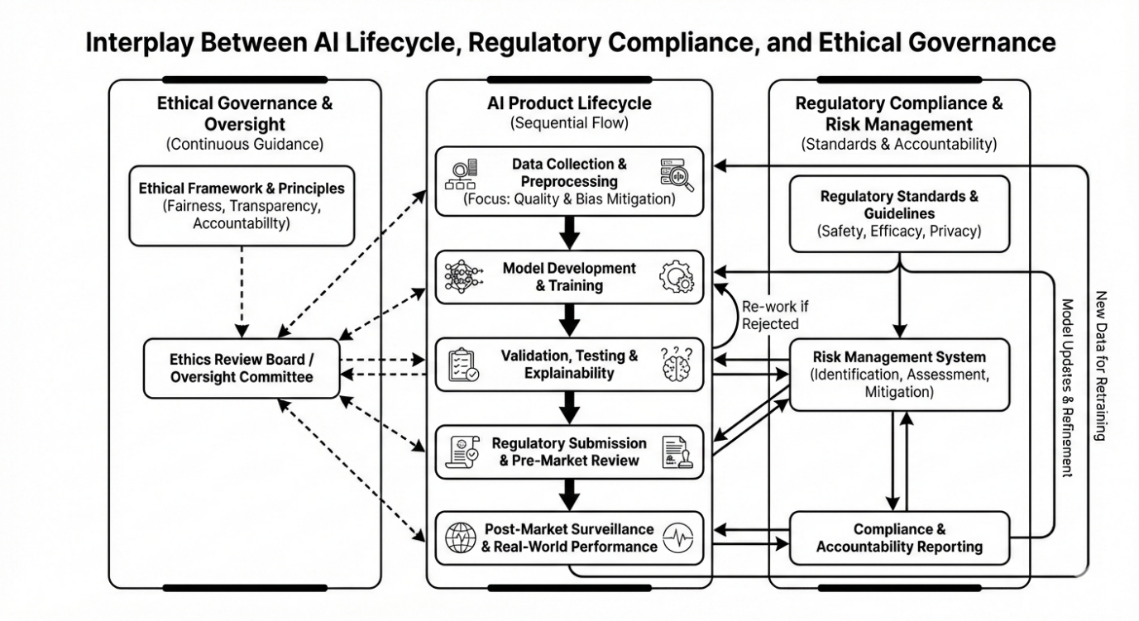
Fig 3: Interplay Between AI Lifecycle, Regulatory Compliance and Ethical Governance
The concept of Good Machine Learning Practice (GMLP) has emerged as an international standard for AI in regulated environments. GMLP principles emphasize data provenance, model robustness, reproducibility, transparency, risk-based validation, and post-deployment monitoring. By codifying these principles, regulatory agencies seek to align AI development with existing Good Laboratory Practice (GLP) and Good Clinical Practice (GCP) requirements, ensuring that AI-derived insights meet the evidentiary standards necessary for clinical translation.Despite these frameworks, regulatory adoption of AI remains uneven. Agencies are grappling with questions of liability, validation, and standardization. For example, when an AI system identifies a novel drug target that later proves clinically irrelevant, determining accountability—between algorithm developers, pharmaceutical sponsors, and clinical investigators—remains unresolved. Similarly, regulators must balance the need for iterative model improvements with the requirement for reproducibility and traceability, creating tension between innovation and compliance.
ETHICAL, GOVERNANCE, AND IMPLEMENTATION CHALLENGES
The integration of AI into pharmaceutical research raises profound ethical considerations that extend beyond regulatory compliance. Algorithmic fairness is paramount; models trained on biased datasets risk exacerbating health disparities, disproportionately benefiting well-represented populations while marginalizing underrepresented groups. Ethical deployment requires rigorous evaluation of demographic representativeness, validation across diverse cohorts, and proactive bias mitigation strategies.Patient privacy represents a parallel concern. The vast data repositories required for AI—encompassing genomic sequences, electronic health records, and post-marketing surveillance—necessitate sophisticated de-identification, encryption, and access controls. Breaches in data security not only violate legal mandates but can also erode public trust, undermining the social license necessary for clinical research.Transparency and informed consent are similarly critical. Patients participating in clinical trials or whose data are used to train predictive models must understand the role of AI, including its potential risks and uncertainties. This requires clear communication strategies that bridge the technical complexity of AI with the ethical imperative for patient autonomy.Accountability represents a further challenge. The delegation of decision-making to AI systems complicates traditional frameworks of professional responsibility. When AI recommendations influence clinical dosing, trial enrollment, or pharmacovigilance alerts, it is essential to delineate the roles and liabilities of algorithm developers, clinical investigators, and regulatory bodies. Governance frameworks should incorporate ethics review boards, audit trails, and risk management protocols to ensure that responsibility is clearly assigned and that errors can be traced and corrected.Finally, operationalization of AI within pharmaceutical pipelines requires harmonization across data infrastructures, laboratory systems, and organizational cultures. AI adoption is contingent on interdisciplinary collaboration among computational scientists, chemists, biologists, clinicians, and regulatory specialists. Without robust governance structures, iterative training pipelines, and integration with experimental workflows, AI risks remaining a theoretical tool rather than a fully operationalized driver of pharmaceutical innovation.
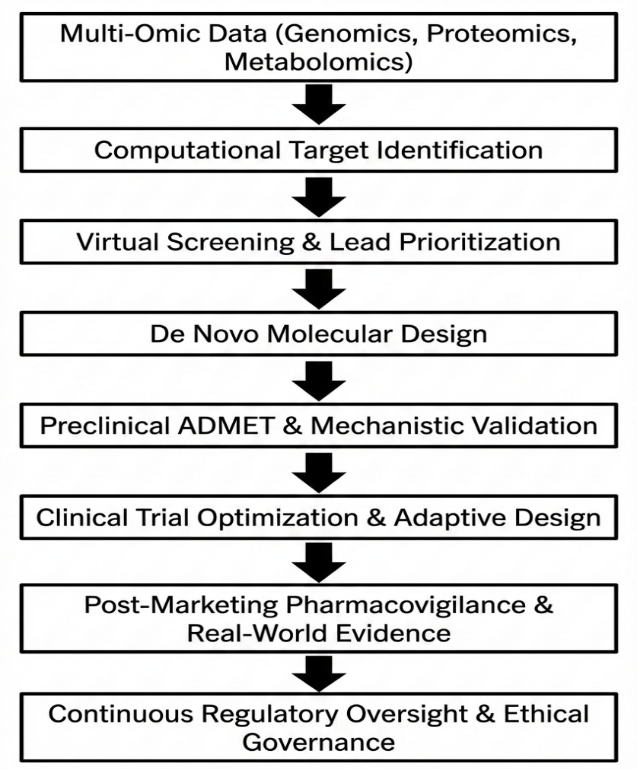
CONCEPTUAL FRAMEWORKS FOR AI INTEGRATION
FUTURE PERSPECTIVES AND EMERGING AI TECHNOLOGIES IN PHARMACEUTICAL RESEARCH
The trajectory of artificial intelligence in pharmaceutical research is poised for exponential evolution. Current applications, while transformative, represent only the initial phase of a broader technological paradigm in which AI will assume increasingly integrative and autonomous roles. Emerging technologies, particularly large language models (LLMs), multimodal AI, reinforcement learning frameworks, and hybrid mechanistic-statistical models, are anticipated to reshape every phase of drug discovery, development, and post-marketing surveillance.Large language models exemplify the frontier of AI in biomedical knowledge synthesis. These models are trained on vast corpora encompassing scientific literature, clinical trial registries, patent databases, and chemical ontologies, enabling automated extraction, summarization, and hypothesis generation. In pharmaceutical research, LLMs can assimilate multi-source data to propose novel therapeutic strategies, identify potential off-target effects, and generate mechanistic interpretations of complex biological phenomena. For example, a GPT-based system can analyze thousands of publications on kinase inhibitors, correlate molecular motifs with clinical outcomes, and suggest chemical modifications to optimize efficacy and minimize toxicity. Importantly, LLMs can also facilitate natural language interfaces, allowing interdisciplinary teams—medicinal chemists, pharmacologists, and clinical researchers—to query complex datasets without requiring advanced programming expertise.Multimodal AI represents another frontier, integrating heterogeneous data types, including genomics, proteomics, metabolomics, imaging, and clinical narratives, into unified predictive frameworks. By capturing the full spectrum of biological complexity, multimodal architectures allow simultaneous analysis of molecular structures, pathway interactions, cellular phenotypes, and patient-level clinical outcomes. For instance, a system combining three-dimensional protein structure data, chemical descriptors, and transcriptomic profiles can predict binding affinity, pharmacokinetics, and off-target toxicity in a single computational pipeline. Such integrative capacity surpasses the capabilities of conventional, modality-specific models, enabling holistic drug discovery strategies that consider the multi-layered complexity of human biology.Reinforcement learning, when coupled with generative molecular design, enables autonomous optimization of multi-objective drug candidates. Unlike traditional generative AI that optimizes single or linear objectives, reinforcement learning agents can navigate chemical space iteratively, balancing potency, selectivity, solubility, metabolic stability, and safety. In silico, these systems function as autonomous medicinal chemists capable of generating molecular candidates that satisfy conflicting pharmacological constraints. Importantly, the incorporation of mechanistic biological priors into reinforcement learning frameworks improves interpretability and facilitates regulatory acceptance by linking predicted outcomes to plausible biochemical pathways.Hybrid mechanistic-statistical models represent a critical evolution in AI for pharmaceuticals. Whereas purely data-driven models excel at prediction, they often lack mechanistic transparency. By integrating mechanistic simulations—such as physiologically based pharmacokinetic (PBPK) modeling, systems pharmacology networks, and cellular pathway simulations—with statistical learning, researchers can leverage both predictive accuracy and biological plausibility. These hybrid approaches provide interpretable outputs, allowing AI-driven hypotheses to be tested in preclinical systems with higher confidence, and supporting regulatory submissions with robust mechanistic evidence.
INTEGRATION OF AI ACROSS THE PHARMACEUTICAL R&D PIPELINE
AI is now moving beyond isolated applications into fully integrated pharmaceutical R&D ecosystems. In early-stage discovery, AI-driven target identification is seamlessly linked to virtual screening, generative design, and predictive toxicology, creating a closed-loop, data-driven design–test–learn cycle. Leads identified computationally are immediately evaluated using ADMET prediction algorithms, and results are fed back into model retraining, accelerating lead optimization without extensive iterative wet-lab experimentation.
During clinical development, AI facilitates adaptive trial design, patient stratification, and predictive monitoring. Algorithms can dynamically adjust cohort composition based on real-time outcomes, optimize dosing schedules, and predict adverse events before they occur. Post-trial, AI-powered pharmacovigilance tools automatically monitor adverse event reports, EHRs, and social media, enabling near real-time identification of safety signals. This integration allows pharmaceutical companies to maintain continuous oversight of drug safety and efficacy throughout the product life cycle.Moreover, AI is enabling cross-functional collaboration within organizations. By providing a unified interface for chemical, biological, clinical, and regulatory data, AI reduces silos and accelerates decision-making. Teams can leverage AI-generated insights to prioritize targets, design molecules, forecast clinical outcomes, and manage regulatory submissions, creating a cohesive R&D strategy that is both efficient and scientifically rigorous.
TRANSFORMATIVE IMPACT OF AI ON GLOBAL DRUG DEVELOPMENT
The transformative potential of AI in pharmaceuticals extends beyond efficiency gains. By enabling predictive modeling, algorithmic optimization, and mechanistic inference, AI can fundamentally reduce attrition rates, shorten development timelines, and lower costs associated with late-stage clinical failure. This has direct implications for global healthcare systems, enabling faster delivery of novel therapies for rare diseases, oncology, infectious diseases, and neurodegenerative disorders.AI also democratizes access to knowledge. Cloud-based AI platforms, open-source datasets, and collaborative computational frameworks allow smaller academic laboratories, startups, and developing-world institutions to participate in drug discovery, potentially diversifying the global innovation ecosystem. In combination with regulatory frameworks like GMLP and international data-sharing consortia, AI could accelerate the development of regionally relevant therapies while maintaining rigorous standards of safety, efficacy, and ethics.Furthermore, AI enables personalized therapeutics at scale. By integrating genomic, transcriptomic, proteomic, and clinical data, AI can guide precision dosing, predict adverse events in specific patient subgroups, and optimize treatment regimens. This precision medicine paradigm not only improves patient outcomes but also reduces healthcare costs associated with trial-and-error treatment strategies.
CHALLENGES AND FUTURE CONSIDERATIONS
Despite the promise of AI, several challenges remain. Regulatory uncertainty, algorithmic bias, reproducibility, interpretability, and data heterogeneity continue to limit widespread adoption. Ethical considerations, including patient privacy, consent, fairness, and accountability, require ongoing attention. The continuous evolution of AI systems further complicates regulatory compliance; models that self-update or retrain may drift from validated performance unless rigorously monitored.
To overcome these challenges, future research should prioritize:
CONCLUSION
Artificial intelligence is reshaping the epistemology, methodology, and operational structure of pharmaceutical research. From target identification and virtual screening to clinical trial optimization and pharmacovigilance, AI enables unprecedented predictive capacity, scalability, and integration across the drug development lifecycle. Emerging technologies, including large language models, multimodal AI, reinforcement learning, and hybrid mechanistic-statistical frameworks, are expanding both the depth and breadth of AI’s impact, offering the potential for truly transformative advances in therapeutic innovation.However, these opportunities are contingent upon rigorous attention to methodological limitations, ethical considerations, and regulatory compliance. Data quality, algorithmic transparency, reproducibility, bias mitigation, and governance remain critical determinants of AI’s successful deployment. By integrating AI into robust, ethically guided, and scientifically rigorous frameworks, pharmaceutical research can achieve faster, safer, and more precise drug development, ultimately improving patient outcomes and addressing global healthcare challenges.
|
Phase |
Traditional Approach |
AI-Enhanced Approach |
|
Target Discovery |
Single-gene focus, reductionist |
Multi-omic integration, network-level prioritization |
|
Hit Screening |
Wet-lab high-throughput |
Virtual screening, deep learning-based prediction |
|
Lead Optimization |
Medicinal chemistry heuristics |
Generative AI, reinforcement learning, multi-objective optimization |
|
Preclinical Evaluation |
In vitro/in vivo assays |
Predictive ADMET, in silico toxicology, mechanistic modeling |
|
Clinical Trials |
Fixed design, homogeneous cohorts |
Adaptive design, patient stratification, predictive monitoring |
|
Post-Marketing Surveillance |
Manual reporting |
NLP-based monitoring, real-world evidence, automated signal detection |
REFERENCES







Shifa Siddiqui*1, Aamir Patel2, Vanshika Arvind Gujral3, Tushar4, Kiran Grewal5, Deeksha D Ghatge6, Ojaswi H Salunke7, Artificial Intelligence in Pharmaceutical Research: Current Applications, Limitations, and Regulatory Concerns, Int. J. of Pharm. Sci., 2026, Vol 4, Issue 1, 2828-2843. https://doi.org/10.5281/zenodo.18365165
 10.5281/zenodo.18365165
