We use cookies to make sure that our website works properly, as well as some ‘optional’ cookies to personalise content and advertising, provide social media features and analyse how people use our site. Further information can be found in our Cookies policy
Dark circles are a prevalent cosmetic concern affecting individuals of all ages. The study "Formulation and Evaluation of Under Eye Patch for Dark Circles" explores the causes, pathophysiology, and various treatment modalities for dark circles, emphasizing the development of an effective under-eye patch formulation. This review paper consolidates findings on the composition, pharmacokinetics, evaluation, and future directions of under-eye patches, highlighting their potential in providing a non-invasive solution for dark circles.Dark circles under the eyes are a common cosmetic concern affecting individuals due to factors like aging, genetics, lack of sleep, dehydration, and pigmentation. Various treatments, including topical creams and lifestyle changes, provide temporary relief but often fail to address the underlying causes effectively. This study focuses on the formulation and evaluation of an under-eye patch designed to reduce dark circles using natural ingredients.Key ingredients include caffeine, which constricts blood vessels to reduce puffiness; honey, known for its hydrating and antioxidant properties; potato extract, which lightens pigmentation; and hyaluronic acid, which enhances skin hydration. Agar-agar is used as a gelling agent to provide structural integrity to the patch. The formulation process involved ingredient selection, mixture preparation, molding, and refrigeration to achieve a gel-based under-eye patch.The evaluation phase assessed the pH balance, hydration efficacy, and stability of the formulation. Results indicated that the patches significantly improved skin hydration, reduced pigmentation, and minimized puffiness, providing an effective alternative to conventional treatments. The natural composition ensures minimal irritation, making the patches suitable for sensitive skin. Compared to existing solutions like creams and serums, these patches offer prolonged ingredient contact with the skin, enhancing absorption and effectiveness.
Keywords
Dark circles, under eye, patch, pigmentation, hydration.
Introduction
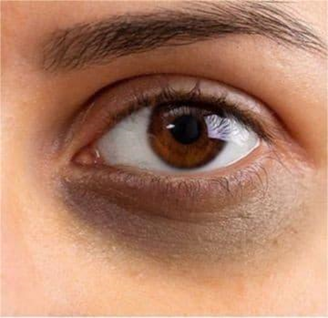
Dark circles under the eyes are a result of multiple factors, including genetics, aging, dehydration, poor circulation, and environmental influences. These darkened areas under the eyes can significantly impact an individual's confidence and perceived health. While numerous topical treatments, home remedies, and medical interventions exist, their effectiveness varies greatly. Conventional treatments such as topical creams, cold compresses, and laser therapies have shown limited efficacy in completely resolving the issue. The development of under-eye patches offers an innovative approach by providing localized delivery of active ingredients to target dark circles. These patches provide sustained release of therapeutic agents that improve hydration, reduce pigmentation, and enhance blood circulation, thus making them a more effective alternative to traditional treatments.
Fig: Dark Circle
Etiology and Pathophysiology Dark circles result from multiple physiological processes, including increased pigmentation (hyperpigmentation), vascular congestion, fluid retention, and structural changes in the skin. Genetic predisposition plays a significant role, as does aging, which leads to collagen loss and increased visibility of underlying blood vessels. Additionally, dehydration, poor sleep, and sun exposure exacerbate the condition. Lifestyle factors such as excessive screen time, stress, and nutritional deficiencies also contribute to the persistence of dark circles. Addressing these factors requires a formulation that hydrates, improves circulation, and reduces pigmentation while being gentle on the delicate under-eye skin.
Objectives
Formulation of an Effective Under-Eye Patch: Develop an under-eye patch specifically designed to reduce dark circles, hyperpigmentation, and puffiness while improving skin hydration and firmness.
Use of Natural and Safe Ingredients: Incorporate bioactive ingredients such as caffeine, honey, potato extract, and hyaluronic acid to ensure skin compatibility and minimize irritation.
Evaluation of Formulation Efficiency: Assess the pH balance, hydration retention, and stability of the patch to ensure safety and effectiveness.
Comparison with Conventional Treatments: Compare the under-eye patch with traditional creams, gels, and serums to highlight advantages such as enhanced absorption and prolonged contact time.
Development of a Non-Invasive and Cost-Effective Solution: Create a user-friendly, non-invasive, and affordable alternative to cosmetic treatments like laser therapy and chemical peels.
Formulation of Under-Eye Patch The study proposes an under-eye patch formulated with natural active ingredients, each selected for its specific dermatological benefits. The key ingredients include:
Caffeine: Known for its vasoconstrictive properties, caffeine reduces puffiness by constricting blood vessels, thereby minimizing vascular dark circles. It also has antioxidant properties that protect the skin from oxidative stress.
Fig: Caffeine
Honey: Acts as a natural humectant, drawing moisture into the skin, locking in hydration, and promoting skin healing. It has anti-inflammatory and antimicrobial properties, which help soothe and protect the delicate under-eye area.
Fig: Honey
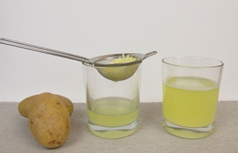
Potato Extract: Contains natural enzymes, vitamin C, and antioxidants that lighten pigmentation, reduce inflammation, and improve skin tone. Its cooling effect also helps soothe tired and puffy eyes.
Fig: Potato Juice Extract
Hyaluronic Acid: Enhances hydration, restores skin elasticity, and plumps the skin, reducing the appearance of fine lines and wrinkles. It strengthens the skin barrier, making it more resilient to external stressors.
Agar-Agar: A natural gelling agent derived from seaweed, agar-agar provides the structural base for the patch while ensuring better adhesion and prolonged contact with the skin.
Pharmacokinetics and Evaluation Under-eye patches deliver active ingredients through localized absorption, ensuring prolonged contact with the affected area. The pharmacokinetics of the formulation was assessed through multiple parameters:
Absorption: The thin and delicate nature of the under-eye skin allows for effective penetration of active ingredients. The occlusive nature of the patch enhances absorption by preventing evaporation and maximizing the interaction between the skin and the therapeutic agents.
Distribution: The active ingredients remain localized in the epidermal and dermal layers, targeting pigmentation and vascular dark circles directly without systemic circulation.
Metabolism: Since the ingredients do not enter systemic circulation, metabolism primarily occurs in the skin through enzymatic activity, ensuring localized efficacy.
Excretion: The remnants of the active ingredients are naturally shed with skin turnover or removed during regular cleansing routines.
The efficacy of the formulation was assessed through various evaluation methods:
pH Testing: The pH was measured to ensure skin compatibility. The formulation maintained an optimal pH range of 4.5-5.5, which is ideal for sensitive under-eye skin.
Hydration Assessment: The skin moisture levels before and after patch application were measured using a corneometer, confirming significant improvement in hydration.
Stability Studies: The patches were stored under different temperature conditions (4°C, 10°C, and 15°C) for one month, and periodic evaluations confirmed stability in terms of texture, efficacy, and pH balance.
Comparison with Conventional Treatments Compared to traditional topical applications, under-eye patches provide several advantages:
Enhanced Penetration: The occlusive nature of patches increases the absorption of active ingredients compared to traditional creams and serums.
Prolonged Contact Time: Unlike creams that can be rubbed off or absorbed quickly, patches remain in place, allowing for extended release and sustained effects.
Non-Greasy Application: Patches eliminate the mess associated with creams, providing a cleaner and more convenient option.
Studies indicate that under-eye patches deliver faster and more noticeable improvements in dark circle reduction than conventional skincare products.
Future Directions Advancements in skincare technology could further enhance the efficacy of under-eye patches through:
Nanotechnology: The use of nano-encapsulated ingredients could improve penetration and provide sustained release for prolonged effects.
Smart Patches: Wearable technology integrated with sensors could monitor hydration levels and adjust ingredient release in real-time for personalized treatment.
Sustainable Materials: Biodegradable and eco-friendly formulations could improve the environmental footprint of under-eye patches, making them more sustainable.
Personalized Formulations: AI-driven diagnostics could allow for customized patches tailored to individual skin concerns, optimizing treatment efficacy.
CONCLUSION
The formulation and evaluation of under-eye patches for dark circles present a promising solution for individuals seeking an effective and non-invasive treatment. By utilizing natural ingredients and innovative delivery mechanisms, these patches offer superior hydration, pigmentation reduction, and improved skin health. The findings of this study demonstrate that under-eye patches made from ingredients like caffeine, honey, and potato extract can significantly reduce dark circles, alleviate puffiness, and improve overall skin texture. Further research and clinical trials can refine these formulations, ensuring broader applicability and long-term benefits.
REFERENCES
Sareena Jawad, A REVIEW ON NOVEL APPROACH OF DRUG DELIVERY – HYDROGELS, Online, World Journal of Pharmaceutical Research, Volume 9, Issue 6, 791- 800, DOI: 10.20959/wjpr20206-17601
Mohammad Ali Nilforoushzadeh MD1 | Mohammad Amir Amirkhani MD, PhD1 | Payam Zarrintaj PhD2 | Abolfazl Salehi Moghaddam MS2 | Tina Mehrabi MS1 | Shiva Alavi MD1 | Mahsa Mollapour Sisakht PhD1, Skincare and rejuvenation by cosmeceutical facial patch, REVIEW ARTICLE, WILEY Journal of Cosmetic Dermatology, Page no. 1, NILFOROUSHZADEH ET AL., DOI: 10.1111/jocd.12730.
Naziha Chirani1, L’Hocine Yahia1, Lukas Gritsch1,2, Federico Leonardo Motta1,2, Soumia Chirani3 and Silvia Faré2, History and Applications of Hydrogels, Review Article, 2015, Journal of Biomedical Sciences ISSN 2254-609X, Vol. 4 No. 2:13, DOI: 10.4172/2254- 609X.100013.
SILVIA SURINI*, ANNISA AULIYYA, FORMULATION OF AN ANTI-WRINKLE HYDROGEL FACE PATCH CONTAINING ETHANOL EXTRACT OF NONI FRUIT (MORINDA CITRIFOLIA L) FOR USE AS A NUTRACOSMECEUTICAL PRODUCT, 2017, INTERNATIONAL JOURNAL OF APPLIED PHARMACEUTICS, Research Article.
INTEGRATED UNDER - EYE PATCH AND MAKEUP CAPTURE DEVICE, Patent application Publications, George et al, Pub No. US 2018 / 0027949 A1, Feb 1, 2018.
YOGESH POUNIKAR*, PUSHPENDRA JAIN, NAVNEET KHURANA, L. K. OMRAY, S. PATIL, ASMITA GAJBHIYE, FORMULATION AND CHARACTERIZATION OF ALOE VERA COSMETIC HERBAL HYDROGEL, Research Article, International Journal of Pharmacy and Pharmaceutical Sciences, ISSN- 0975-1491, Vol 4, Supplement 4, 2012
Prashant S. Malpure*, Shital S. Patil, Yashpal M. More, Priti P. Nikam, A Review OnHydrogel, REVIEW ARTICLE,American Journal Of Pharmatech Research, 2018, ISSN: 22493387, Malpure et. al.
Hirano, T., Shoji, Y., Yamamoto, T., & Dürst, M. J. (2023). Buy Eye-Mask Instead of Alarm Clock!: Graph-Based Approach to Identify Functionally Equal Alternative Products. In International Conference on Information Integration and Web Intelligence (pp. 265-279). Springer, Cham.
?engörb, E. P. ?. Ç. K. (2022). The Effect of Earplugs and Eye Masks Usage in the Intensive Care Unit on Sleep Quality: Systematic Review.
Kennedy, I. (1997). Managing measles. Crystal violet and eye pads should not be recommended. BMJ: British Medical Journal, 314(7095), 1692.
Xu, L., Wu, Y., Song, Y., Zhang, Q., Qin, G., Yang, L., ... & He, W. (2022). Comparison between heated eye mask and intense pulsed light treatment for contact lens-related dry eye. Photobiomodulation, Photomedicine, and Laser Surgery, 40(3), 189-197.
Turlure, C., Schtickzelle, N., Van Dyck, H., Seymoure, B., & Rutowski, R. (2016). Flight morphology, compound eye structure and dispersal in the bog and the cranberry fritillary butterflies: an inter-and intraspecific comparison. PLoS One, 11(6), e0158073.
Iwata, Y., Handa, T., & Ishikawa, H. (2022). Comparison of Amblyopia Treatment Effect with Dichoptic Method Using Polarizing Film and Occlusion Therapy Using an Eye Patch. Children, 9(9), 1285.
Mahanama, B., Jayawardana, Y., Rengarajan, S., Jayawardena, G., Chukoskie, L., Snider, J., & Jayarathna, S. (2022). Eye movement and pupil measures: A review. frontiers in Computer Science, 3, 733531.
Kang, D., Li, Y., Dai, X., Li, Z., Cheng, K., Song, W., & Yu, D. G. (2024). A Soothing Lavender-Scented Electrospun Fibrous Eye Mask. Molecules, 29(22), 5461.
Zhou, K. (2024). Unmasking the Mask: A Comprehensive Exploration of Sleep Masks and their Impact on Sleep Quality. Journal of Student Research, 13(1).
Jiang, Y., Lin, Y., Wang, Y., Li, T., Ke, B., & Ni, B. (2024). Learning Unsupervised Gaze Representation via Eye Mask Driven Information Bottleneck. arXiv preprint arXiv:2407.00315.
Chaudhary, A., Kumari, V., & Neetu, N. (2020). Research Article Sleep Promotion among Critically Ill Patients: Earplugs/Eye Mask versus Ocean Sound—A Randomized Controlled Trial Study.
Hong, J. G. S., Vimaladevi, A., Razif, N. A., Omar, S. Z., & Tan, P. C. (2023). Eye-masks and earplugs compared to headband in nulliparas on increasing spontaneous vaginal delivery: a randomized trial. BMC Pregnancy and Childbirth, 23(1), 378.
Rostami, F., Yekrang, J., Gholamshahbazi, N., Ramyar, M., & Dehghanniri, P. (2023). Under-eye patch based on PVA-gelatin nanocomposite nanofiber as a potential skin care product for fast delivery of the coenzyme Q10 anti-aging agent: in vitro and in vivo studies. Emergent Materials, 6(6), 1903-1921.
Reference
Sareena Jawad, A REVIEW ON NOVEL APPROACH OF DRUG DELIVERY – HYDROGELS, Online, World Journal of Pharmaceutical Research, Volume 9, Issue 6, 791- 800, DOI: 10.20959/wjpr20206-17601
Mohammad Ali Nilforoushzadeh MD1 | Mohammad Amir Amirkhani MD, PhD1 | Payam Zarrintaj PhD2 | Abolfazl Salehi Moghaddam MS2 | Tina Mehrabi MS1 | Shiva Alavi MD1 | Mahsa Mollapour Sisakht PhD1, Skincare and rejuvenation by cosmeceutical facial patch, REVIEW ARTICLE, WILEY Journal of Cosmetic Dermatology, Page no. 1, NILFOROUSHZADEH ET AL., DOI: 10.1111/jocd.12730.
Naziha Chirani1, L’Hocine Yahia1, Lukas Gritsch1,2, Federico Leonardo Motta1,2, Soumia Chirani3 and Silvia Faré2, History and Applications of Hydrogels, Review Article, 2015, Journal of Biomedical Sciences ISSN 2254-609X, Vol. 4 No. 2:13, DOI: 10.4172/2254- 609X.100013.
SILVIA SURINI*, ANNISA AULIYYA, FORMULATION OF AN ANTI-WRINKLE HYDROGEL FACE PATCH CONTAINING ETHANOL EXTRACT OF NONI FRUIT (MORINDA CITRIFOLIA L) FOR USE AS A NUTRACOSMECEUTICAL PRODUCT, 2017, INTERNATIONAL JOURNAL OF APPLIED PHARMACEUTICS, Research Article.
INTEGRATED UNDER - EYE PATCH AND MAKEUP CAPTURE DEVICE, Patent application Publications, George et al, Pub No. US 2018 / 0027949 A1, Feb 1, 2018.
YOGESH POUNIKAR*, PUSHPENDRA JAIN, NAVNEET KHURANA, L. K. OMRAY, S. PATIL, ASMITA GAJBHIYE, FORMULATION AND CHARACTERIZATION OF ALOE VERA COSMETIC HERBAL HYDROGEL, Research Article, International Journal of Pharmacy and Pharmaceutical Sciences, ISSN- 0975-1491, Vol 4, Supplement 4, 2012
Prashant S. Malpure*, Shital S. Patil, Yashpal M. More, Priti P. Nikam, A Review OnHydrogel, REVIEW ARTICLE,American Journal Of Pharmatech Research, 2018, ISSN: 22493387, Malpure et. al.
Hirano, T., Shoji, Y., Yamamoto, T., & Dürst, M. J. (2023). Buy Eye-Mask Instead of Alarm Clock!: Graph-Based Approach to Identify Functionally Equal Alternative Products. In International Conference on Information Integration and Web Intelligence (pp. 265-279). Springer, Cham.
?engörb, E. P. ?. Ç. K. (2022). The Effect of Earplugs and Eye Masks Usage in the Intensive Care Unit on Sleep Quality: Systematic Review.
Kennedy, I. (1997). Managing measles. Crystal violet and eye pads should not be recommended. BMJ: British Medical Journal, 314(7095), 1692.
Xu, L., Wu, Y., Song, Y., Zhang, Q., Qin, G., Yang, L., ... & He, W. (2022). Comparison between heated eye mask and intense pulsed light treatment for contact lens-related dry eye. Photobiomodulation, Photomedicine, and Laser Surgery, 40(3), 189-197.
Turlure, C., Schtickzelle, N., Van Dyck, H., Seymoure, B., & Rutowski, R. (2016). Flight morphology, compound eye structure and dispersal in the bog and the cranberry fritillary butterflies: an inter-and intraspecific comparison. PLoS One, 11(6), e0158073.
Iwata, Y., Handa, T., & Ishikawa, H. (2022). Comparison of Amblyopia Treatment Effect with Dichoptic Method Using Polarizing Film and Occlusion Therapy Using an Eye Patch. Children, 9(9), 1285.
Mahanama, B., Jayawardana, Y., Rengarajan, S., Jayawardena, G., Chukoskie, L., Snider, J., & Jayarathna, S. (2022). Eye movement and pupil measures: A review. frontiers in Computer Science, 3, 733531.
Kang, D., Li, Y., Dai, X., Li, Z., Cheng, K., Song, W., & Yu, D. G. (2024). A Soothing Lavender-Scented Electrospun Fibrous Eye Mask. Molecules, 29(22), 5461.
Zhou, K. (2024). Unmasking the Mask: A Comprehensive Exploration of Sleep Masks and their Impact on Sleep Quality. Journal of Student Research, 13(1).
Jiang, Y., Lin, Y., Wang, Y., Li, T., Ke, B., & Ni, B. (2024). Learning Unsupervised Gaze Representation via Eye Mask Driven Information Bottleneck. arXiv preprint arXiv:2407.00315.
Chaudhary, A., Kumari, V., & Neetu, N. (2020). Research Article Sleep Promotion among Critically Ill Patients: Earplugs/Eye Mask versus Ocean Sound—A Randomized Controlled Trial Study.
Hong, J. G. S., Vimaladevi, A., Razif, N. A., Omar, S. Z., & Tan, P. C. (2023). Eye-masks and earplugs compared to headband in nulliparas on increasing spontaneous vaginal delivery: a randomized trial. BMC Pregnancy and Childbirth, 23(1), 378.
Rostami, F., Yekrang, J., Gholamshahbazi, N., Ramyar, M., & Dehghanniri, P. (2023). Under-eye patch based on PVA-gelatin nanocomposite nanofiber as a potential skin care product for fast delivery of the coenzyme Q10 anti-aging agent: in vitro and in vivo studies. Emergent Materials, 6(6), 1903-1921.
Shobha Sahu
Corresponding author
Rungta institute pf pharmaceutical sciences and research
Rungta institute of pharmaceutical sciences and research
Kapil sahu
Co-author
Rungta institute of pharmaceutical sciences and research
Gyanesh kumar sahu
Co-author
Rungta institute of pharmaceutical sciences and research
Rajesh kumar nema
Co-author
Rungta institute of pharmaceutical sciences and research
Rahul Thawait, Tarun Verma, Kapil Sahu, Shobha Sahu*, Gyanesh Kumar Sahu, Rajesh Kumar Nema, A Review on Formulation and Evaluation of Under Eye Patch for Dark Circles, Int. J. of Pharm. Sci., 2025, Vol 3, Issue 6, 1414-1419. https://doi.org/10.5281/zenodo.15614272




 10.5281/zenodo.15614272
