
Arihant College of Pharmacy, Ahilyanagar
Inflammation is a complex, biological response accompanying most of the chronic disorders, such as arthritis, cardiovascular diseases, diabetes, and neurodegenerative conditions. Due to the adverse effects associated with long-term use of synthetic anti-inflammatory drugs, increasing attention has shifted toward natural resources as safer and multi-targeted therapeutic alternatives. Many plants, animals, and microorganisms provide bioactive compounds, including curcumin, gingerols, boswellic acids, resveratrol, omega-3 fatty acids, and microbial peptides, which modulate key inflammatory pathways such as NF-?B, COX/LOX enzymes, cytokine production, and oxidative stress. These natural agents have great pharmacological potential, as supported by traditional uses and an ever-growing body of modern evidence, but their clinical application is still hindered by problems such as poor bioavailability, variability in the composition, and lack of standardization. Recent advances in nanotechnology, molecular screening, and formulation techniques are improving their therapeutic efficacy and opening their way for future drug development. Overall, natural anti-inflammatory agents continue to be an important source of novel therapeutics with promising applications in integrative and evidence-based medicine.
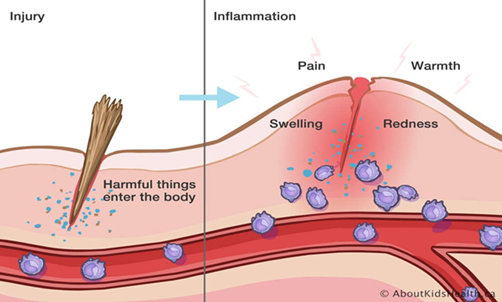
The inflammation is a process of defense of the body, a biological reaction of the immune system to harmful stimuli. The inflammation can be caused by various pathogens (viruses, bacteria) toxins, toxic compounds, tissue injury [1]. These harmful stimuli begin a cascade of chemical signaling that activates leukocytes that then produce and release inflammatory cytokines [2], such as interleukin-1β (IL-1β), interleukin-6 tumor necrosis factor-α (TNF-α). These cytokines have an interaction with and activate receptors (IL-6R, TNFR-1, TNFR-2, TLR4 GM-CSFR etc.) [3]
Types of inflammation
It has a rapid onset in minutes or hours, typically resolves within days, has classic signs and symptoms with cellular infiltrate primarily consisting of neutrophils.[4] The acute inflammation is a protective mechanism that removes injurious stimuli to initiate healing processes for restoring homeostasis in the organism [5]. Controlled acute inflammation can become chronic and thus be the basis for various serious chronic diseases (tumors various neurogenerative diseases like Alzheimer disease Parkinson diseasemultiple sclerosis lateral sclerosis autoimmune diseases diabetes cardiovascular diseases fibrosis etc.) [6–8].
Chronic inflammation may result from persistent infections with mycobacteria, viruses, fungi, and parasites that elicit delayed-type hypersensitivity reactions which can lead to granulomatous responses or from unresolved acute inflammation progressing into a state of chronicity. [9]
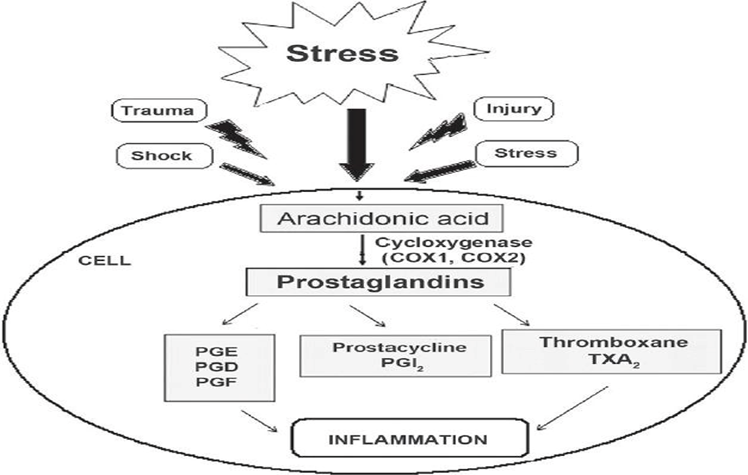
Mediators and Biomarkers of Inflammation include Reactive oxygen species (ROS), reactive nitrogen oxide species (RNOS), Formation of DNA adducts, Cytokines such interleukin-6 (IL-6), tumor necrosis factor-alpha, chemokines Acute-phase proteins, C-reactive protein or CRP Prostaglandins Cyclooxygenase COX-related metabolites, Inflammation-related growth factors, and transcription factors such as NF-kappaB Major immune cell types.[10]
There are various drugs available for the management and control of inflammatory crisis; steroids, nonsteroid anti-inflammatory drugs, and immunosuppressant are the practical examples of these drugs which have side effects in use. The goal in practice is to use the minimum effective dose with maximum efficacy and minimum side effects. Therefore, we need to utilize natural anti-inflammatory agents along with pharmacotherapy to enhance pharmacological response and reduce the degree of undesirable side effects to the lowest possible level [11,12].
Plants have been used since time immemorial in the care of human health. In an adaptation against attacking pathogen and environmental stress, plants produce several substances that exert biological activities. These small organic molecules come from secondary metabolism and have several biological activities. Among the diverse functions, anti-inflammatory actions are highlighted [13,14].
NATURAL ANTI-INFLAMMATORY AGENTS
Plant Derived Anti-Inflammatory Agents
Curcumin inhibits NF-κB, COX-2 and reduces TNF-α, IL-6. [15]
Ginger Suppresses NO, PGE?, and inflammatory cytokines. [16]
Boswellia Strong 5-LOX inhibitor; useful in arthritis and chronic inflammation. [17]
Willow Bark Natural precursor to salicylic acid; reduces pain and inflammation. [18]
Green Tea Suppresses NF-κB and oxidative stress-driven inflammation. [19]
Garlic Shows immunomodulatory and anti-inflammatory effects. [16]
Cinnamon Reduces IL-1β, TNF-α, and NF-κB activation. [16]
Neem Demonstrates inhibition of inflammatory enzymes and cytokines. [17]
Licorice Reduces COX-2, ROS, and inflammatory cytokine release. [18]
Clove Decreases prostaglandins and leukotrienes. [16]
Black Pepper gives Anti-inflammatory action also enhances the bioavailability of other phytochemicals. [19]
Aloe vera Reduces inflammation in skin and gastrointestinal tissues. [18]
Tulsi Exhibits antioxidant and anti-inflammatory activities. [17]
Grape / Red WineSuppresses COX-2, iNOS and cytokines. [15]
Andrographis is a Potent inhibitor of NF-κB and multiple inflammatory mediators. [19]
Marine Derived Anti-Inflammatory Agents
It is a sulfated polysaccharide that inhibits NF-κB, COX-2, TNF-α and reduces leukocyte adhesion. [20,21]
Marine polyphenols that suppress NO, iNOS, COX-2 and MAPK inflammatory pathways. [20,21]
It is Potent antioxidant carotenoid, lowers TNF-α, IL-1β, and NF-κB activation. [20,22]
It lowers the pathways of COX/LOX, reduce TNF-α, IL-6, and promote anti-inflammatory lipid mediators. [21,22]
Sulfated galactans exhibiting immunomodulatory activity and suppression of inflammatory mediators. [20]
The diterpene glycosides inhibit leukocyte activation and production of eicosanoids. [20]
Irreversible PLA? inhibitor, decreasing the formation of prostaglandins and leukotrienes. [20]
Inhibit NO, prostaglandins, and cytokine release; act on PLA? and COX pathways. [20,21]
PKC modulators with anti-inflammatory and immunoregulatory actions. [20]
Inhibit NF-κB, cytokines, and oxidative inflammatory responses. [21]
Animal Derived Anti-Inflammatory Agents
Found in bovine/tracheal cartilage; reduces joint inflammation by inhibiting NF-κB and preventing cartilage degradation. [23]
Extracted from crab/shrimp shells; reduces inflammatory mediators in osteoarthritis and promotes cartilage repair. [23]
From cold-water fish (salmon, tuna); reduce IL-1β, TNF-α and leukotriene synthesis; widely used in arthritis and cardiovascular inflammation. [24]
Biopolymers showing inhibition of pro-inflammatory cytokines and NO release in macrophages. [25]
Anti-inflammatory through suppression of TNF-α and MMPs; promotes joint and connective-tissue healing. [23]
Contain flavonoids and peptides with strong anti-inflammatory effects, which reduce COX-2 and oxidative stress. [25]
Certain venom peptides have anti-inflammatory and immunomodulatory activities by modulating the bradykinin pathway. [24]
Used experimentally for anti-inflammatory and anti-angiogenic effects; modulates cytokines. [23]
PHARMACOLOGICAL EVALUATION
The pharmacological evaluation of natural anti-inflammatory agents involves a thorough phytochemical profiling using HPTLC, HPLC, LC-MS/MS, and NMR to define bioactive classes, apart from ensuring extract standardization [26,28]. Bioassay-guided fractionation is an approach in which chromatographic separation and iterative screening enable tracing of activity down to specific fractions and molecules [26,28].
In vitro evaluation includes enzyme assays like COX-1/COX-2 and 5-LOX inhibition, supplemented by cell-based assays in LPS-stimulated macrophage models assessing NO, iNOS, TNF-α, IL-6, and IL-1β, and reporter systems for NF-κB and AP-1 [26,27]. Mechanistic studies using western blotting, qPCR, ELISA, and sometimes proteomics/metabolomics help define actions on MAPK signalling, NF-κB translocation, Nrf2 activation, and inflammasome regulation [26,27,28].
In vivo validation is performed with acute models, such as carrageenan paw edema, the formalin test, and the writhing test, and chronic models, including adjuvant arthritis, colitis, and granuloma formation, which are supported by decreases in cytokines, oxidative stress, and histopathological damages [26,28]. Further evaluation involves pharmacokinetics, particularly for low orally bioavailable compounds, and safety studies like acute/subchronic toxicity and CYP inhibition profiling [26,28]. Isolated single molecules undergo SAR studies in order to enhance potency, stability, and COX-2 selectivity [26,27].
Single-constituent botanical extracts require strict standardization to marker compounds and validated potency assays, while multiconstituent extracts require the same to ensure consistent therapeutic performance [26,27]. Overall, natural anti-inflammatory agents have NF-κB and MAPK suppression, COX/LOX inhibition, Nrf2-ARE activation, JAK/STAT modulation, and inflammasome inhibition as common pathways that support their potential for development into optimized derivatives, standardized botanicals, and safe nutraceuticals through proper pharmacological and regulatory evaluation [26,27,28].
MECHANISM OF ACTION:
Plant-derived anti-inflammatory agents work through many molecular pathways, thus giving them a broader therapeutic effect compared to synthetic drugs with single targets. A major mechanism involves the inhibition of the NF-κB pathway, where phytochemicals such as curcumin, quercetin, resveratrol, and berberine prevent NF-κB nuclear translocation and thereby reduce the transcription of inflammatory mediators including COX-2, iNOS, and pro-inflammatory cytokines [29].
These agents also modulate the MAPK pathway (ERK, JNK, p38), generally suppressing kinase phosphorylation and interrupting inflammatory signal transmission. Another important mechanism is the activation of the Nrf2-Keap1 antioxidant pathway, which increases the expression of cytoprotective genes such as HO-1 and NQO1 and reduces oxidative stress-driven inflammation.
Many phytochemicals also suppress the activity of important inflammatory enzymes like COX-2, 5-LOX, PLA2, as well as mast-cell degranulation, T-cell proliferation, macrophage activation, and neutrophil migration. They also decrease nitric oxide levels by suppression of iNOS and stabilize lysosomal membranes to prevent the release of proteases responsible for tissue damage.
Safety assessment is imperative, and acute/sub-chronic toxicity studies performed according to OECD guidelines review LD??, histology of organs, and biochemical markers. While a large number of extracts possess extensive margins of safety, high-dose administration of certain constituents results in hepato-, nephro-, or cytotoxicity. Pharmacokinetic-ADME assessment aids in ascertaining the bioavailability, and nanotechnology-based formulations, including nanoparticles, liposomes, and phytosomes, are being used to enhance the therapeutic delivery. In summary, MoA and pharmacology understanding forms the scientific basis for translating natural anti-inflammatory agents into validated therapeutic products [29].
LIMITATIONS OF NATURAL ANTI-INFLAMMATORY AGENTS
Poor absorption, rapid metabolism, and limited systemic availability of bioactive phytochemicals (for example, curcumin, resveratrol) are common.[30]
Natural products can vary due to soil, climate, method of harvesting, extraction techniques, and maturity of the plant, producing variable potency.[31]
Many herbal preparations are not standardized in their dosage, and therefore, pharmacological activity is often unpredictable and cannot be reliably reproduced.[31]
In general, natural agents exert mild-to-moderate effects compared to synthetic NSAIDs and must be taken continuously over an extended period to achieve clinical benefits.[32]
Botanical and animal-derived products may contain pesticides, heavy metals, microbial contamination, or adulterants.[31]
Whereas most of the studies are in vitro or animal-based, high-quality randomized clinical trials are still limited for many natural compounds.[32]
Compounds such as St. John’s wort, garlic, and ginkgo may interfere with anticoagulants, antidiabetics, or cardiovascular drugs.[30]
FUTURE PROSPECTS OF NATURAL ANTI-INFLAMMATORY AGENTS
Advancing nanotechnology will highly increase the bioavailability of nano-curcumin, nano-resveratrol, liposomes, phytosomes, enhance stability, and assure targeted delivery. [33]
New anti-inflammatory phytochemicals, peptides, and microbial metabolites will be identified with the help of modern techniques such as metabolomics, proteomics, and high-throughput screening. [34]
Future research will be directed at developing reproducible extraction, processing, and standardization protocols that can help to ensure consistent potency and safety. [35]
The role of natural agents in integrative therapy will be increasingly employed, combining herbal formulations with synthetic drugs to reduce side effects and enhance the therapeutic outcome. [34]
Genomics and pharmacogenomics will allow for the tailoring of natural anti-inflammatory therapies to individual metabolic profiles and disease patterns. [33]
High-quality clinical trials will be driven by increasing global interest and will help more natural products achieve not only regulatory acceptance but also global market expansion. [35]
CONCLUSION
Natural anti-inflammatory agents, sourced from plants, animals, and microorganisms, may offer a safer alternative to conventional synthetic drugs due to their multitarget mechanisms, antioxidant properties, and generally lower incidence of adverse effects. The ability of a wide array of bioactive compounds, including curcumin, gingerols, boswellic acids, omega-3 fatty acids, and microbial-derived metabolites, to modulate key inflammatory pathways, such as NF-κB, COX/LOX enzymes, cytokine release, and oxidative stress, is quite significant. However, despite their therapeutic potential, several challenges remain, including poor bioavailability, variability in composition, lack of standardization, and limited large-scale clinical evidence. Advances in formulation technology, natural product screening, molecular pharmacology, and integrative medicine are expected to enhance the efficacy, safety, and clinical acceptance of these agents. Overall, natural anti-inflammatory compounds remain a vital source for drug discovery and possess strong potential for future development into safe, effective, and evidence-based therapeutic options.
REFERENCES







Falguni Kulthi, Sneha Kanase, Suruchi Bedmutha, Archana Garudkar, Gayatri Gadve, Shambhuraje Raut, Angat Lahudkar, A Review on Anti-Inflammatory Agents obtained from Natural Sources, Int. J. of Pharm. Sci., 2025, Vol 3, Issue 12, 3154-3163. https://doi.org/10.5281/zenodo.18001838
 10.5281/zenodo.18001838
