
Sigma Institute of Pharmacy, Sigma University, Vadodara, Gujarat, India 390019.
Solubility, or the phenomenon of a solute dissolving in a solvent under specific conditions to generate a homogenous system, is one of the most important elements in attaining the right drug concentration in the systemic circulation for the intended pharmacological reaction. The primary objective of this review was to improve the solubility of BCS Class-II drugs due to their low solubility and dissolving rate. In order to guarantee that the drug molecule has good therapeutic effect at the target site, solubility and bioavailability are essential. To improve patient adherence to medication, pharmaceutical technology must therefore develop in tandem with breakthroughs in chemical research. The purpose of this article is to outline several methods for improving solubility in order to attain efficient absorption and enhanced bioavailability. PH adjustment, micronization, homogenization, salt production, lyophilization, hot melt extrusion, solvent evaporation, melt-son crystallization, prodrug approach, and other conventional and innovative methods are included in these procedures.
The most preferred method of delivering the dose form is orally. The bioavailability of the active ingredient is the main issue encountered with oral administration. The maximum amount of solute that may dissolve in a specific volume of solution or solvent at a specific temperature is known as solubility. Bioavailability rises with increasing solubility. The volume and speed of absorption, as well as the drug's bioavailability, are largely determined by the solubility of the drug, the solution, and its gastrointestinal permeability. When it comes to encouraging the redevelopment of commercialized refractory medications and expediting the introduction of exploratory drugs, formulation design is more important. Adding solubilizers, hydrotropes, cosolvents, pro-drugs, modifying the pH and salt, micronization, cyclodextrin (CD) inclusion, and solid dispersions (SDs) are examples of conventional solubilization techniques. Cosolvents are diluted with the danger of vascular occlusion, long-term usage of surfactants can be hazardous, and salt modification necessitates that medications contain ionizable groups. One essential pre-formulation property that controls the intended medication concentration in the systemic circulation is solubility. Low bioavailability results from the low solubility of the majority of recently identified chemical entities. Since it affects the drug's release, absorption, rate of dissolution, and eventually its bioavailability, its solubility is an essential property. As a result, processing is necessary to improve the drug's dissolution and water solubility.
Table 1: USP and BP Expression for Approximate solubility [8]
|
Defining Words |
Milliliters of the approximate solvent volume for each gram of solute. |
|
Very Soluble |
Less than 1 |
|
Freely Soluble |
From 1 to 10 |
|
Soluble |
From 10 to 30 |
|
Sparingly Soluble |
From 30 to 100 |
|
Slightly Soluble |
From 100 to 1000 |
|
Very Slightly Soluble |
From 1000 to 10000 |
|
Insoluble or partially insoluble |
More than 10000 |
A number of novel approaches, such as drug delivery systems (DDSs), ionic liquids (ILs), and crystallization techniques, have been created in response to the aforementioned limitations. Both cocrystals and nano crystals, which are carrier-free DDSs, are the focus of the crystallization technique. High drug loading and safety, ease of industrial production, and suitability for nearly all PWSDs are characteristics of nanocrystals. The maximum amount of solute that may dissolve in a specific volume of solvent is known as solubility. It can be described both qualitatively and mathematically. It is exactly defined quantitatively as the concentration of the solute at a specific temperature in a saturated solution. The natural propensity of two or more compounds to combine to form a homogenous mixture is known as solubility.
2. Biopharmaceutics Classification System (BCS) [9]
The Biopharmaceutics Classification System (BCS) was developed by the US Food and Drug Administration (FDA). divides medications into four groups based on their permeability and solubility properties. In Classes II and IV of the system, where dissolution is the rate-limiting step of the drug absorption process, low solubility results in a soluble impediment. The Biopharmaceutical Classification System (BCS) classifies the medications based on their intrinsic solubility and intestinal permeability. A drug's high bioavailability is influenced by its intestinal permeability and solubility. Drugs with limited solubility and permeability have varying levels of bioavailability depending on their respective solubility and permeability. Today's pharmaceutical business produces most of its drugs with poor solubility. Numerous solubility augmentation techniques have been successful in addressing poor solubility.
Table 2: BCS Classification System of drugs
|
Sr No. |
BCS Class |
Solubility |
Permeability |
Absorption Pattern |
Rate limiting step in the absorption |
Example |
|
1 |
Class I |
High |
High |
Well Absorbed |
Gastric Emptying |
Metoprolol |
|
2 |
Class II |
Low |
High |
Variable |
Dissolution |
Ibuprofen |
|
3 |
Class III |
High |
Low |
Variable |
Permeability |
Cimetidine |
|
4 |
Class IV |
Low |
Low |
Poorly Absorbed |
Case by case |
Nelfinavir |
3. Importance of Solubility [10]
A number of factors affect oral bioavailability, including the drug's water solubility, ability to cross membranes, rate of dissolution, metabolism prior to entering the bloodstream, and susceptibility to bodily elimination processes. Low oral bioavailability is mostly caused by poor solubility and insufficient permeability. For several kinds of dosage forms, including parenteral formulations, solubility is also important. Solubility is a crucial factor in achieving the right drug concentration in the systemic circulation and eliciting the necessary pharmacological response. After oral usage, medications that are not properly soluble may require higher dosages to reach therapeutic levels in the bloodstream. The poor solubility in water is the main obstacle in creating new chemical entities and generic medications. The presence of a watery solution at the site of absorption is necessary for the absorption of a medication. Water is the best solvent for medicinal compositions that are liquid. Since most medications are either moderately acidic or faintly basic, they are not very soluble in water. Since most medications are either moderately acidic or faintly basic, they are not very soluble in water.
3.1. Factors affecting solubility
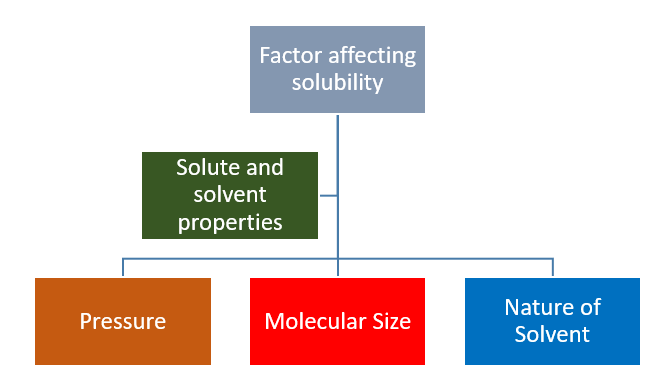
Fig: Various Factors affecting solubility
3.2. Techniques for Solubility Enhancement [11-14]
Limited bioavailability and poor water solubility are major issues for many pharmaceutical companies. When administered orally, pharmaceutical substances with high solubility have favorable absorption, which results in increased bioavailability. Enhancing drug solubility is the most important phase of drug research, particularly for oral treatments.
Increasing a drug's solubility and, thus, its oral bioavailability can be extremely challenging when creating new drugs, particularly for oral drug delivery systems. To increase the solubility of medications with low water solubility, a number of techniques have been reported in the literature. The quality of the chosen excipients, the kind of the intended dosage form, and the properties of the medication under consideration are some of the specific aspects that influence the processes that are chosen. Only when oral drugs have good bioavailability and are sufficiently soluble in the stomach can they be fully absorbed. One important consideration in the manufacturing of pharmaceutical products is the drug's solubility. The bioavailability of medications is decreased by their poor water solubility. The solubility issue has been addressed in a variety of ways, but costly and advanced technology has not been able to increase the appropriate bioavailability of medications with poor solubility.
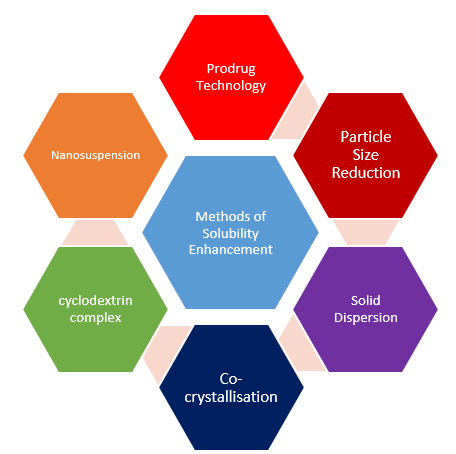
Fig: Various methods of Solubility Enhancement
4. Chemical Modification [15]
Polar functional groups like amines, ketones, and carboxylic acids can be added to a molecule to increase its solubility. This is achieved by improving interaction with water and fortifying hydrogen bonds. At the forefront of developments in biopharmaceutics and biological imaging is the chemical modification. Salt formation, co-crystallization, co-solvency, hydrotropy, the use of innovative solubilizers, and nanotechnology are some of the several techniques for chemical changes.
4.1. Salt formation[16-17]
The most common and effective method for increasing the solubility and dissolution rates of both basic and acidic medicinal substances is the creation of salt. A number of factors influence the final result, such as pH, pKa, Ksp (solubility product), S0 (intrinsic solubility), and pH max (pH of maximum solubility).
Many times, various instability issues prevent the development of an active pharmaceutical ingredient (API) in its original form. This causes them to change into solid forms such solvates, hydrates, salts, co-crystals, and polymorphs. Each of these characteristics improves the medication's overall performance attributes by having a unique effect on its stability, bioavailability, purity, and manufacturability. For many years, the process of creating salts from weak acids and bases has been employed to increase the solubility of drug candidates that are not very soluble.
Ionization of a chemical in a solution is the process that creates salts. This technique is efficient for parenteral and other liquid formulations as well as solid dosage forms. A salt version that is more soluble than the original drug is created from an acidic or basic medication. Progesterone is a steroid that is not soluble in water but can dissolve in peanut oil, making it an example of this approach. Aspirin, theophylline, and barbiturates are a few more examples.
4.2. Co-crystallization[18]
A co-crystal is a multicomponent crystal that forms between two solid materials in ambient settings, where at least one of the constituents is a suitable ion or molecule. An API with an equivalent amount of a co-crystal former that is approved for use in medicines make up co-crystals. These complexes are supramolecular and nonionic in nature.
They address issues with physical characteristics like solubility, stability, and bioavailability in pharmaceutical research. Crucially, they accomplish this without changing the API's chemical composition. An API's many physical, chemical, or physiological constraints are lessened via co-crystallization.
Co-crystallization is an excellent technique for maximizing therapeutic properties since it alters the molecular interactions and composition of medicinal compounds. Regardless of whether an API is ionizable, basic, or acidic, co-crystals offer an alternate pathway for co-crystallization.
4.2.1. Different techniques for co crystallization
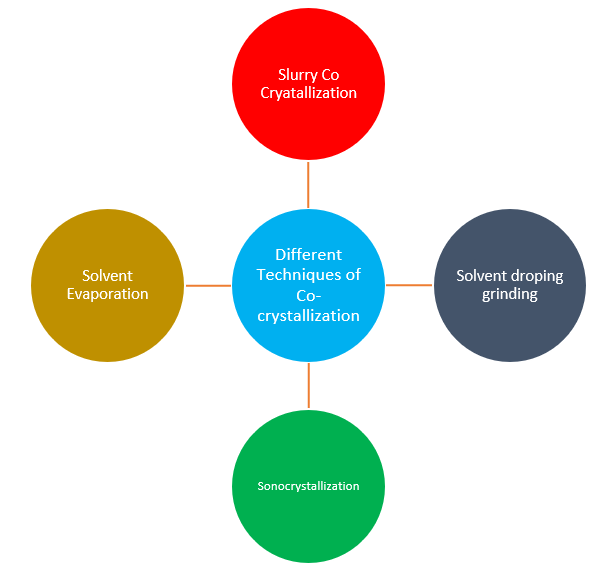
Fig: Different types of techniques used in Co-Crystallization
5. Physical Modifications
5.1 Complexation [19-20]
The electrostatic complexation of proteins and polysaccharides, as well as the functional properties of the resultant complexes, are significantly influenced by the geometry of protein aggregates. The development of new dietary components greatly benefits from these interactions .
For drugs to be effective whether taken orally or administered topically to the eye, they must be soluble in water. In order to be manufactured as aqueous solutions for techniques like parenteral distribution, medicines must also be soluble. Pharmaceuticals with low water solubility can be made more soluble using a variety of methods, one of which is the use of solubilizing complexing agents. Numerous complexes exist, each with a different level of water solubility.
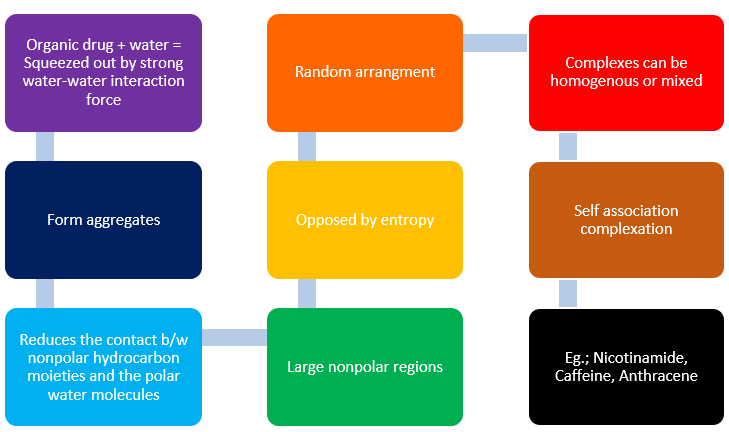
Fig: Process of Complexation
5.2. Solubilization by surfactants [21-23]
Low amounts of surface tension can be reduced by surfactants, which can result in emulsification, foaming, wetting, and solubilization. By turning phospholipids into mixed micelles, surfactants that generate micelles in water-based solutions are highly efficient at dissolving them.
Numerous parameters, including the number of aggregations (Nagg), binding constant (K1), micelle-water partition coefficient (Kmc), molar solubilization ratio (MSR), critical micellar concentration (CMC), Stern-Volmer constant (Ksv), and number of aggregation (Nagg), were evaluated as part of the solubilization capability assessment.
For the transportation of drugs that are poorly soluble in water, the concept of micellar solubilization is essential.
5.2.1. Microemulsions[23-26]
By adding a sufficient amount of an amphiphilic material, such soap or detergent, water and oil can become completely miscible. Because of its historical significance, stable homogeneous solutions are referred to as "microemulsions".
Water, oil, surfactants, and cosurfactants combine to form a thermodynamically stable solution known as a microemulsion. Since it aids in lowering the interfacial tension at the contact, a cosurfactant is usually required to aid in the creation of microemulsions. The transparency of microemulsions is caused by their minuscule droplet diameter. In stable microemulsions, the droplet size usually ranges from 10 to 140 nanometers. Triangular phase diagrams, in which each corner of the triangle represents a distinct component, visually depict microemulsions as areas of stability.
It is true that microemulsions are quaternary (pseudoternary) systems. Microemulsions were discovered by Jack H. Schulman, and the use of microemulsion systems in numerous scientific and industrial activities has advanced significantly. Microemulsions are optically isotropic, homogenous systems made up of water, oil, and an amphiphile. The thermodynamic stability, optical transparency, ease of synthesis, and enhanced diffusion and absorption rates of these complexes make them advantageous.
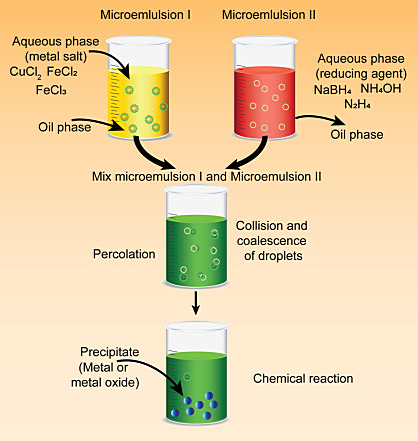
Fig: A flowchart represents the microemulsion process
6. CONCLUSION
Furthermore, a key component of contemporary medication research is the incorporation of computer approaches for forecasting and refining solubility augmentation strategies. Pharmaceutical formulation decisions could be made more effectively and intelligently if experimental and computational methods work together. It is evident that solubility improvement is still a dynamic and developing topic as we investigate new methods including co-crystallization, ionic liquids, and supercritical fluid technologies. Technological developments, interdisciplinary partnerships, and a better comprehension of the intricate relationships influencing drug solubility will probably influence future developments.
REFERENCES



Nirmit Patel*, Siddharth Siddhpura, Yaksh Gandhi, Kavita Rana, Dr. Priyanka Patil, A Review of Solubility Enhancement Techniques, Int. J. of Pharm. Sci., 2025, Vol 3, Issue 10, 1795-1803 https://doi.org/10.5281/zenodo.17374380
 10.5281/zenodo.17374380
