
View Article

  • A Comprehensive Review of Impurity Profiling and Nitrosamine Control Strategies in API Manufacturing

  • Priyadarshini JL College of Pharmacy Nagpur Maharashtra India.

Abstract

N-Nitrosamine impurities have emerged as critical genotoxic contaminants in pharmaceutical substances and finished products. This review summarizes the sources, mechanisms of formation, and major factors contributing to nitrosamine contamination in active pharmaceutical ingredients (APIs). Recent advancements in analytical methodologies—including LC-MS/MS, GC-MS, high-resolution mass spectrometry, and improved sample-preparation techniques—have significantly enhanced sensitivity for detection at nanogram levels. Global regulatory agencies such as the FDA, EMA, EDQM, ICH, Health Canada, ANVISA, NMPA, TGA, and MHRA have established guidelines and acceptable intake limits to support effective risk assessment and control strategies. Despite substantial progress, challenges remain in predicting nitrosamine generation, detecting diverse nitrosamine drug related impurities (NDSRIs), and achieving consistent international regulatory alignment. Future progress depends on improved toxicological evaluation, predictive computational modelling, enhanced process understanding, and real-time monitoring technologies. This review provides a scientific foundation for developing more effective strategies to detect, prevent, and control nitrosamine impurities in pharmaceutical manufacturing.

Keywords

FDA, EMA, EDQM, ICH, Health Canada, ANVISA, NMPA, TGA, and MHRA

Introduction

1.1 What Are N-Nitrosamine Impurities?

N-Nitrosamines are a class of organic compounds characterized by the presence of a nitroso (–N=O) functional group attached to an amine. They follow the general structural formula R?N(–R?)–N=O, as shown in Fig. 1 [1]. These compounds occur naturally in the environment and have been detected in air, drinking water, and soil [2]. Nitrosamines may also form in several matrices including food, beverages, tobacco products, and cosmetic formulations [3].
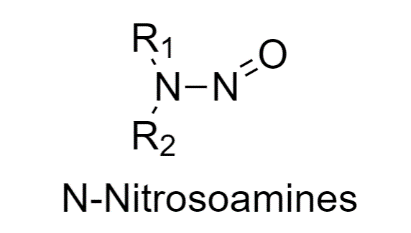
Fig. 1

In the pharmaceutical industry, nitrosamines are recognized as genotoxic impurities formed mainly through reactions of secondary or tertiary amines with nitrosating agents. Their recent detection in drug substances and finished products has generated global regulatory concern due to their confirmed carcinogenic potential in humans and animals [4]. Nitrosamines can form readily through interactions involving secondary/tertiary amines, amides, carbamates, and urea derivatives in the presence of nitrites or other nitrogen-containing species [5].

Even at very low concentrations, nitrosamine impurities exhibit high mutagenic and carcinogenic activity, causing DNA damage and increasing cancer risk [6]. Due to this significant toxicological concern, nitrosamines are included in the “cohort of concern” as defined in the ICH M7 (R2) guideline, necessitating stringent control strategies in pharmaceutical manufacturing [7].

1.2. Historical Background of Nitrosamines

The history of nitrosamines dates back to 1874, when German chemist Otto N. Witt first identified these compounds during experiments involving the reaction of nitrous acid with secondary and tertiary amines. Witt observed the formation of condensation products containing the nitroso (–N=O) functional group attached to a secondary amine, and he subsequently named this new class of compounds “nitrosamines” [8].
The carcinogenic nature of nitrosamines was established much later in 1956, when British scientists John Barnes and Peter Magee demonstrated that dimethylnitrosamine induced liver tumours in rats, marking the first clear evidence of their potent carcinogenicity [9].

The pharmaceutical concern regarding N-nitrosamine impurities emerged prominently in June 2018, following the detection of elevated levels of N-nitrosodimethylamine (NDMA) in valsartan-containing medicinal products. Valsartan, an angiotensin II receptor blocker (ARB) widely used in the management of hypertension and chronic heart failure, became the center of attention after multiple batches were found to contain unacceptable NDMA levels [10].
Regulatory authorities in the European Union and the U.S. Food and Drug Administration (FDA) traced the contamination to the active pharmaceutical ingredient (API) manufactured by Zhejiang Huahai Pharmaceutical Co., Ltd., China [11,12]. Investigations revealed that the impurity originated from process-related changes introduced during the tetrazole ring-forming step, which inadvertently facilitated NDMA formation.
Further assessments identified additional N-nitrosamines, including N-nitrosodiethylamine (NDEA) and N-nitroso-N-methyl-4-aminobutyric acid (NMBA), in several ARB products containing tetrazole ring systems, such as losartan and irbesartan [13]. This discovery triggered a major global regulatory response and initiated comprehensive reviews of nitrosamine risks across pharmaceutical manufacturing.

1.3. General Root Causes for the Presence of Nitrosamine Impurities in APIs

Nitrosamine impurities may arise at multiple stages of API development, including chemical synthesis, intermediate processing, raw material handling, and even during final formulation. Their presence is often attributed to nitrosation reactions between amines and nitrosating agents under favorable conditions. Regulatory agencies such as the EMA, FDA, and ICH have highlighted that seemingly minor process changes can significantly increase nitrosamine risk in APIs and drug products [14–18].
The major root causes are described below:

1. Reaction Conditions

The reaction condition which uses sodium nitrite under acidic conditions along with secondary, tertiary, or quaternary amines leads to the formation of nitrosamine impurity.[8]Uncontrolled reaction parameters—such as acidic pH, elevated temperature, excess nitrite, or long reaction duration—can enhance nitrosation reactions. Nitrosamines form most readily under acidic conditions (pH < 5), especially when nitrites or other nitrogen oxides are present [14,15].

2. Use of Secondary, Tertiary, or Quaternary Amines (or Their Sources)

Secondary, tertiary, and quaternary amines are commonly employed in pharmaceutical manufacturing for various functional purposes, including their use as catalysts, reagents, bases, or intermediates during synthesis. Their widespread application across multiple reaction steps increases the potential for unintended nitrosamine formation when compation nitrosating conditions are present  Even trace amine impurities in raw materials can serve as nitrosamine precursors [14, 16].

3. Contamination in Raw Materials from Vendors

Nitrosamine impurities may also enter the process unintentionally through contaminated vendor-supplied materials. These can include key starting materials (KSMs), raw materials, solvents, catalysts, or processing aids that contain residual nitrites, secondary/tertiary amines, or other precursors capable of forming nitrosamines during synthesis or storage. These contaminants can carry over into the synthesis pathway, especially when quality control testing is inadequate [14] Solvents may become contaminated with nitrosamines during transfer if tanks or lines contain residual nitrites or amines. Raw materials may contain secondary or tertiary amines that react with nitrites to form nitrosamines. [15] Vendor-supplied intermediates or KSMs can also introduce nitrosamine contamination due to cross-contamination during manufacturing Solvents may become contaminated with nitrosamines during transfer if tanks or lines contain residual nitrites or amines. [16]

4. Use of Recovered or Recycled Solvents, Catalysts, and Reagents

Recovered solvents may accumulate low-level nitrite or amine contaminants over repeated use. If recovery systems are not adequately controlled or validated, nitrosamines may form in subsequent batches [17].

5. Work-Up or Quenching Processes

Quenching steps involving sodium nitrite, nitric acid, or nitrogen oxides can unintentionally create conditions favorable for nitrosation. Incomplete washing or neutralization also allows nitrite ions to remain in the reaction mixture [18].

6. Lack of Impurity Control During Process Optimization

Process changes—such as switching solvents, altering reaction steps, adjusting pH, or modifying reagents—can unintentionally introduce new nitrosation pathways. Many nitrosamines discovered in ARBs were linked to unassessed process modifications [11, 19].

7. Absence of Sensitive and Validated Analytical Methods

Traditional analytical tools are often not sensitive enough to detect nitrosamines at trace levels (ng/g). Lack of validated methods like GC-MS/MS or LC-HRMS creates blind spots in impurity monitoring [20]

8. Improperly Cleaned Reactors or Production Equipment

Residues of amines, nitrites, or nitrosamines in equipment from previous batches can cross-contaminate new production cycles. This is especially problematic in multipurpose facilities [18].

9. Side Reactions or Degradation of APIs or Intermediates

Certain APIs may degrade or rearrange into reactive amine intermediates that undergo nitrosation. Examples include degradation pathways in ranitidine, metformin, and some tetrazole-containing ARBs [19, 20].

10. Nitrosamine Formation During Drug Product Manufacturing

Nitrosamines can also form during formulation due to:

  • nitrite impurities in excipients (e.g., microcrystalline cellulose, starch, talc)
  • interaction with primary/secondary amine APIs
  • high-temperature processing steps
  • packaging interactions (e.g., nitrosamine migration from closures)

This has been widely observed in metformin, ranitidine, and rifampicin products [20]

2. Analytical Techniques for Enhanced Detection of Nitrosamine Impurities

 Nitrosamine impurities have been detected in pharmaceutical products for many years, yet several drug substances and formulations remain insufficiently evaluated. The recent escalation in global product recalls due to nitrosamine contamination has intensified regulatory scrutiny. In response, agencies such as the U.S. FDA, EMA, and WHO have issued stringent directives requiring comprehensive identification, assessment, and reporting of nitrosamine impurities. They further emphasize the need for highly sensitive analytical methods—particularly advanced gas and liquid chromatographic techniques—capable of quantifying nitrosamines at extremely low LOQ levels to ensure reliable detection in raw materials, process intermediates, and finished drug products.

However, developing such sensitive analytical methods presents significant scientific and technical challenges. Factors such as poor ionization efficiency, matrix interference, and the structural diversity of nitrosamine drug substance–related impurities (NDSRIs) complicate method development. For NDSRIs, additional difficulties arise from their low molecular weights, complex chemical structures, and limited availability of certified reference standards. Achieving the required sensitivity often necessitates the use of sophisticated and costly instrumentation, including LC–MS/MS and GC–MS/MS systems, further increasing the complexity of routine monitoring.

LC–MS/MS and GC–MS are the primary analytical techniques used for nitrosamine determination because they provide high sensitivity, enabling detection at nanogram levels. High-resolution mass analyzers such as Orbitrap and quadrupole time-of-flight (Q-TOF) instruments are particularly valuable for trace-level identification. The USP initiative “Nitrosamines Exchange” further supports the analytical community by offering updated technical guidance and expert discussions on chromatographic advancements for nitrosamine monitoring. A suitably validated method is expected to quantify each nitrosamine impurity in API or drug product matrices down to 10% of its acceptable intake (AI) limit. [21]

GC–MS/MS is especially advantageous for the detection of volatile and semi-volatile nitrosamines. When used with chemical ionization, GC–MS/MS provides enhanced specificity and sensitivity compared with electron impact ionization.[22] Common stationary phases applied in GC-MS/MS nitrosamine analyses include polyethylene glycol (PEG)-coated capillary columns,[23-27] cyanopropylphenyl dimethylpolysiloxane, [28] and phenyl methylpolysiloxane.[29] Various detectors—such as flame ionization (FID), [29] nitrogen–phosphorus detectors (NPD),[30-34] and chemiluminescence detectors[31–34]—have also been employed for nitrosamine determination.

GC–MS/MS analysis may suffer from interference caused by residual solvents or excipients, which can compromise method sensitivity and robustness.[22] A well-documented example is the interference of dimethylformamide (DMF) in NDMA analysis for metformin products.[35-36] Matrix-related challenges can be mitigated through additional sample clean-up procedures, including solid-phase extraction (SPE),[28] liquid–liquid extraction (LLE), [30-37] and the use of stable isotope-labeled internal standards.[25] Preventing co-elution is essential to avoid false positives, column fouling, and contamination of the mass spectrometer.[38] Headspace (HS) injection can minimize such matrix interferences,[24–26] although it is not suitable for their molabile compounds such as metformin and ranitidine.[24,26,29]

Several alternative GC–MS/MS strategies have been developed to enhance sensitivity and reduce reliance on costly isotopically labeled internal standards. Techniques such as solvent-free headspace GC–MS, [26] and full-evaporation headspace GC–MS, which provides superior sensitivity compared with conventional HS-GC–MS, [36] are commonly employed. Additional sample-introduction approaches—including HS-GC/MS, [24] HS-SPME-GC/MS [25] dispersive liquid–liquid microextraction (DLLME) followed by GC–MS,[29] and full-evaporation static headspace GC with nitrogen–phosphorus detection[36]—offer reliable detection without the need for isotopic internal standards.

LC–MS/MS remains the preferred analytical platform for detecting polar, non-polar, and non-volatile nitrosamine impurities. [39] According to Lee et al.,[40] atmospheric pressure chemical ionization (APCI) provides higher sensitivity for nitrosamine analysis than electrospray ionization (ESI). Nevertheless, ESI has been shown to be particularly suitable for the determination of N-nitrosodipropylamine (NDPA). [41, 42]

Matrix interference can be reduced effectively through the use of atmospheric pressure photoionization (APPI) [40]. While the positive ionization mode is generally suitable for most nitrosamines, the negative ionization mode is preferred specifically for NMBA analysis [43-45]. Deuterated isotopic standards are widely employed in LC-MS/MS analysis to enhance accuracy and reliability. Sample preparation is an essential component of this technique, with liquid–liquid extraction (LLE) offering a more cost-effective alternative to solid-phase extraction (SPE) [38]. Dichloromethane is commonly selected.

In this systematic review, we provide a detailed summary of recent advancements in analytical methodologies, with a particular focus on gas and liquid chromatographic techniques used for the detection of nitrosamines in APIs and finished drug products. This consolidated overview is intended to support researchers in developing highly sensitive approaches for nitrosamine analysis across various pharmaceutical substances.  [25, 28 ,43–45-49] compiles LC-MS/MS, GC-MS/MS, and HPLC methods recommended by regulatory authorities, independent investigators, and industry professionals for nitrosamine evaluation.

3.REGULATORY GUIDELINES FOR NITROSAMINE IMPURITIES

Regulatory authorities worldwide have established structured guidance frameworks to mitigate the presence of harmful N-nitrosamine impurities in pharmaceuticals. Most agencies employ a three-step approach that requires drug manufacturers to:

  1. Conduct Comprehensive Risk Assessments For N-Nitrosamine Impurities in Apis and Finished Products,
  2. Perform Confirmatory Testing When Potential Risks Are Identified, And
  3. Report Confirmed Findings to the Regulatory Body.[50]

Following the detection of N-nitrosamine impurities in sartan products, the United States Food and Drug Administration (US FDA) introduced extensive guidance applicable to both prescription and over-the-counter medicines. These guidelines outline acceptable intake (AI) limits and provide recommendations for predicting, identifying, and controlling N-nitrosamine drug substance-related impurities (NDSRIs). Subsequent FDA publications, including Control of Nitrosamine Impurities in Human Drugs and Recommended Acceptable Intake Limits for NDSRIs, further strengthened the regulatory framework.[51,52] The agency continues to refine and update these documents to ensure patient safety and effective risk mitigation.

Similarly, the European Medicines Agency (EMA) has issued detailed guidance for marketing authorization holders to prevent N-nitrosamine formation or contamination during manufacturing. [53,54,55] In July 2023, the EMA introduced major updates incorporating the Carcinogenic Potency Categorization Approach (CPCA) and the Enhanced Ames Test (EAT) to refine acceptable intake limits. The European Directorate for the Quality of Medicines & HealthCare (EDQM) also released updated scientific recommendations and a dedicated appendix listing N-nitrosamines with established AIs by the EMA Nonclinical Working Party (NcWP).[56,57]

N-Nitrosamines are classified as Class 1 mutagenic carcinogens under the ICH M7(R1) guideline and are designated as Group 2A probable carcinogens by the International Agency for Research on Cancer (IARC). [58-63] The United States Pharmacopeia (USP) has aligned with these frameworks through General Chapter <1469> on N-nitrosamine impurities. [64]

In addition, several international regulatory bodies have implemented their own guidelines. These include Health Canada, which provides detailed recommendations for assessing and managing N-nitrosamine risks in pharmaceutical, biological, and radiopharmaceutical products [65,66] Brazil’s ANVISA has issued guidance for controlling N-nitrosamine impurities in APIs and drug products, while the China National Medical Products Administration (NMPA) released technical guidelines in 2020 that outline sources, analytical approaches, and lifecycle risk-control strategies.[67-69] Other agencies, such as Australia’s Therapeutic Goods Administration (TGA) and the United Kingdom’s Medicines and Healthcare Products Regulatory Agency (MHRA), continue to collaborate globally to address and prevent nitrosamine contamination in medicines.[70]

4.Future Recommendations

The current understanding and control strategies for nitrosamine impurities have significantly improved; however, several gaps and challenges remain. Future research, regulatory efforts, and technological advancements should focus on the following key areas:

1. Development of More Robust Predictive Models
Future work should include the development of advanced predictive tools using machine learning and reaction-mechanism modelling. These tools can better forecast nitrosamine formation by integrating raw-material contributions, process variables, and degradation pathways.

2. Expansion of Toxicological Databases
There is limited carcinogenicity and mutagenicity data available for many nitrosamine drug-substance-related impurities (NDSRIs). Expanded long-term toxicity studies, QSAR refinement, and harmonized global databases are required to establish accurate acceptable intake (AI) limits.

3. Advancement in Ultra-Trace Analytical Techniques
Although LC-MS/MS and GC-MS are widely used, future improvements should emphasize higher-resolution mass spectrometry, ion mobility spectrometry, and improved APPI sources to minimize matrix interference and enable detection at ultra-trace levels.

4. Standardized Global Regulatory Framework
Harmonization of nitrosamine regulations across agencies such as the FDA, EMA, Health Canada, ANVISA, TGA, and NMPA is needed to ensure consistency in AI limits, risk assessment templates, and regulatory submissions for international manufacturers.

5. Improved Control of Raw Materials and Reagents
Further investigation is required to understand nitrite and amine contamination in solvents, excipients, catalysts, and reagents. Strengthening supplier qualification, implementing nitrite monitoring, and improving raw-material specifications will enhance control.

6. Adoption of Green Chemistry Approaches
Preventive measures should be prioritized by adopting greener synthetic pathways, nitrite-free reagents, and catalytic alternatives that avoid secondary or tertiary amines. This approach minimizes nitrosamine formation at the source.

7. Integration of Real-Time Process Analytical Technology (PAT)
Future strategies should include real-time PAT tools for monitoring nitrosation precursors, reaction intermediates, and hotspots during manufacturing. This will support proactive control rather than relying solely on end-product testing.

8. Strengthening Control Strategies for NDSRIs
To address the structural diversity of NDSRIs, future work should focus on universal classification systems, validated analytical libraries, and API-specific mitigation templates to streamline risk evaluation and testing approaches.

9.Enhanced Stability Studies
More research is needed to evaluate nitrosamine formation during storage, including the role of drug–excipient interactions, packaging materials, humidity, and temperature. This will support improved shelf-life predictions and packaging strategies.

10. Integration of Pharmacovigilance and Real-World Evidence
Post-marketing surveillance data, environmental monitoring, and patient-exposure assessments should be integrated into regulatory decision-making to ensure long-term safety related to nitrosamine exposure.

5.CONCLUSION

N-Nitrosamine impurities remain a major concern for pharmaceutical quality, safety, and regulatory compliance. Their presence can arise from multiple sources, including raw materials, manufacturing processes, and storage conditions. Although significant progress has been made in understanding nitrosamine formation and improving analytical tools for ultra-trace detection, several challenges persist. These include the identification of complex N-nitrosamine drug-substance-related impurities (NDSRIs), prediction of formation pathways, and ensuring harmonized global regulatory requirements. Strengthening analytical capabilities, improving process design, and maintaining strict control of starting materials are essential for minimizing nitrosamine risks. Continued scientific research, regulatory collaboration, and the adoption of innovative monitoring techniques will play an important role in ensuring long-term patient safety and maintaining the integrity of pharmaceutical products.

REFERENCES

  1. U.S. Food & Drug Administration. Control of nitrosamine impurities in human drugs: Guidance for industry. Revision 2. 2024.
  2. Beard JC, Swager TM. An organic chemist’s guide to N-nitrosamines: their structure, reactivity, and role as contaminants. J Org Chem. 2021;86(3):2037–2057.
  3. Park JE, Seo JE, Lee JY, Kwon H. Distribution of seven N-nitrosamines in food. Toxicol Res. 2015;31(3):279–288. doi:10.5487/TR.2015.31.3.279
  4. Ravnum S, Rundén-Pran E, Fjellsbø LM, Dusinska M. Human health risk assessment of nitrosamines and nitramines: an analysis of their carcinogenic potential. Basic Clin Pharmacol Toxicol. 2014;115(1):2–12.
  5. Akkaraju H, Tatia R, Mane SS, Khade AB, Dengale SJ. A comprehensive review of sources of nitrosamine contamination of pharmaceutical substances and products. Regul Toxicol Pharmacol. 2023;139:105355.
  6. Kay JE, Corrigan JJ, Armijo AL, et al. Excision of mutagenic replication-blocking lesions suppresses cancer but promotes cytotoxicity and lethality in nitrosamine-exposed mice. Cell Rep. 2021;34:108864.
  7. International Council for Harmonisation of Technical Requirements for Pharmaceuticals for Human Use (ICH). ICH M7(R2): Assessment and control of DNA reactive (mutagenic) impurities in pharmaceuticals to limit potential carcinogenic risk. 2023.
  8. Witt, O. N. XXIII On aromatic nitrosamines. J. Chem. Soc.,Trans. 1878, 33, 202−211.
  9. Advances in Agronomy. Academic Press. 2013-01-08. p. 159. ISBN 978-0-12-407798-0.
  10. J. Martin, H. Krum, Role of valsartan and other angiotensin receptor blocking agents in the management of cardiovascular disease, Pharmacol. Res. 46 (2002) 203–212, https://doi.org/10.1016/S1043-6618(02)00092-0.
  11. European Medicines Agency, Assessment Report – Referral Under Article 31 of Directive 2001/83/EC Angiotensin-II-receptor Antagonists (Sartans) Containing a Tetrazole Group, 2019.
  12. U.S. Food & Drug Administration. FDA Statement on FDAs Ongoing Investigation Into Valsartan Impurities and Recalls and an Update on FDAs Current Findings, 2018 (?https://www.fda.gov/news-events/press-announce ments/fda-statement-fdas-ongoing-investigation-valsartan-impurities-and-reca lls-and-update-fdas-current? (Accessed 13 November 2024)).
  13. U.S. Food & Drug Administration. FDA Updates and Press Announcements on Angiotensin II Receptor Blocker (ARB) Recalls (Valsartan, Losartan, and Irbesartan), 2019 (?https://www.fda.gov/drugs/drug-safety-and-availability/fda -updates-and-press-announcements-angiotensin-ii-receptor-blocker-arb-recalls-valsartan-losartan?
  14. European Medicines Agency (EMA). Information on nitrosamines for marketing authorisation holders. 2019.
  15. Akkaraju H, Tatia R, Mane SS, Khade AB, Dengale SJ. Regul Toxicol Pharmacol.    2023;139:105355.
  16. US FDA. Control of Nitrosamine Impurities in Human Drugs. Guidance for Industry. 2024.
  17. U.S. Food & Drug Administration (FDA). Control of nitrosamine impurities in human drugs: Guidance for industry. 2024.
  18. Akkaraju H, Tatia R, Mane SS, Khade AB, Dengale SJ. A comprehensive review of sources of nitrosamine contamination of pharmaceutical substances and products. Regul Toxicol Pharmacol. 2023;139:105355.
  19. European Medicines Agency (EMA). Assessment report—Referral under Article 31 of Directive 001/83/EC: Sartans with a tetrazole ring. 2019.
  20. ICH. ICH M7(R2): Assessment and control of DNA reactive (mutagenic) impurities in pharmaceuticals to limit potential carcinogenic risk. 2023.
  21. Schlingemann J, Burns MJ, Ponting DJ, et al. The landscape of potential small and drug substance–related nitrosamines in pharmaceuticals. J Pharm Sci. 2023;112:1287-1304.
  22. Parr MK, Joseph JF. NDMA impurity in valsartan and other pharmaceutical products: analytical methods for the determination of N-nitrosamines. J Pharm Biomed Anal. 2019;164:536-549.
  23. U.S. Food and Drug Administration. Combined N-Nitrosodimethylamine (NDMA) and N-Nitrosodiethylamine (NDEA) impurity assay by GC/MS-Headspace. Available from: https://www.fda.gov/media/117843/download
  24. Wichitnithad W, Sudtanon O, Srisunak P, et al. Development of a sensitive headspace GC-MS method for simultaneous determination of nitrosamines in losartan APIs. ACS Omega. 2021;6:11048-11058.
  25. Alshehri YM, Alghamdi TS, Aldawsari FS. HS-SPME-GC-MS as an alternative method for NDMA analysis in ranitidine products. J Pharm Biomed Anal. 2020;191:113582.
  26. Lee DH, Hwang SH, Park S, et al. A solvent-free headspace GC/MS method for sensitive screening of N-nitrosodimethylamine in drug products. Anal Methods. 2021;13:3402-3409.
  27. Chang S-H, Ho H-Y, Zang C-Z, et al. Screening of nitrosamine impurities in sartan pharmaceuticals by GC-MS/MS. Mass Spectrom Lett. 2021;12:31-40.
  28. Lim HH, Oh YS, Shin HS. Determination of NDMA and N-nitrosomethylethylamine in drug substances and products by precipitation, SPE, and GC-MS/MS. J Pharm Biomed Anal. 2020;189:113460.
  29. Giménez-Campillo C, Pastor-Belda M, Campillo N, et al. Determination of N-nitrosamine impurities in ranitidine pharmaceuticals using microextraction and GC-MS. Talanta. 2021;223:121659.
  30. Takatsuki K, Kikuchi T. Determination of NDMA in fish products using GC with nitrogen-phosphorus detection. J Chromatogr. 1990;508:357-362.
  31. Grebel JE, Suffet IHM. Nitrogen-phosphorus and nitrogen chemiluminescence detection of volatile nitrosamines in water: optimization and comparison. J Chromatogr A. 2007;1175:141-144.
  32. Grebel JE, Young CC, Suffet IH. Solid-phase microextraction of N-nitrosamines. J Chromatogr A. 2006;1117:11-18.
  33. Jurado-Sánchez B, Ballesteros E, Gallego M. Sensitivity comparison of seven N-nitrosamines using automated preconcentration and GC with various detectors. J Chromatogr A. 2007;1154:66-73.
  34. Zheng J, Kirkpatrick CL, Lee D, et al. Full-evaporation static headspace GC with NPD for ultrasensitive analysis of semi-volatile nitrosamines. AAPS J. 2022;24:23.
  35. Zmys?owski A, Ksi??ek I, Szterk A. NDMA contamination in metformin finished products. Molecules. 2020;25:5304.
  36. Yang J, Marzan TA, Ye W, et al. Quantitative LC-HRMS procedures for NDMA in metformin: a cautionary note. AAPS J. 2020;22:89.
  37. Al-Kaseem M, Al-Assaf Z, Karabeet F. Development and validation of GC-FID for volatile N-nitrosamines in meat. Int J Pharm Sci Rev Res. 2014;25:59-64.
  38. Wichitnithad W, Nantaphol S, Noppakhunsomboon K, et al. Current status and prospects for analytical methods determining nitrosamine and N-nitroso impurities in pharmaceuticals. Talanta. 2023;254:124102.
  39. Banerjee S, Mazumdar S. Electrospray ionization mass spectrometry: beyond molecular weight. Int J Anal Chem. 2012;2012:282574.
  40. Lee JH, Lee SU, Oh JE. Analysis of nine nitrosamines in water using automated SPE and HPLC-APCI-MS/MS. Int J Environ Anal Chem. 2013;93:1261-1273.
  41. Chang S, Chang CC, Wang L, et al. Multi-analyte LC-MS/MS for screening and quantifying nitrosamines in sartans. J Food Drug Anal. 2020;28:292-301.
  42. Kim H, Sung D, Yu H, et al. Comparison of EI-GC-MS/MS, APCI-LC-MS/MS, and ESI-LC-MS/MS for nine nitrosamines eluted from resins into artificial saliva. Toxics. 2021;9:230.
  43. European Directorate for the Quality of Medicines & HealthCare. LC-MS/MS method “190321 NMBA APCI POS waste” (Shimadzu HPLC + Sciex QTrap 5500). Available from: https://www.edqm.eu/en/ad-hoc-projects-of-the-omcl-network. Accessed 13 Feb 2023.
  44. European Directorate for the Quality of Medicines & HealthCare. OMCLs release three methods for NDMA determination in sartans. Available from: https://www.edqm.eu. Accessed 24 Jun 2022.
  45. U.S. Food and Drug Administration. LC-HRMS method for determining six nitrosamine impurities in ARB drugs. Available from: https://www.fda.gov/media/125478/downloa.
  46. Cárdenes L, Ayala JH, González V, et al. Fast microwave-assisted dansylation of N-nitrosamines: Analysis by high-performance liquid chromatography with fluorescence detection. J Chromatogr A. 2002;946:133-140.
  47. Kokotou MG, Mantzourani C, Bourboula A, et al. A liquid chromatography–high-resolution mass spectrometry (LC-HRMS) method for the determination of free hydroxy fatty acids in cow and goat milk. Molecules. 2020;25:3947.
  48. Mutsuga M, Yamaguchi M, Kawamura Y. Analysis of N-nitrosamine migration from rubber teats and soothers. Am J Anal Chem. 2013;4:277-285.
  49. U.S. Food and Drug Administration. Liquid chromatography-high resolution mass spectrometry (LC-HRMS) method for the determination of NDMA in ranitidine drug substance and drug product. Available from: https://www.fda.gov/media/130801/download
  50. U.S. Food and Drug Administration. Recommended acceptable intake limits for nitrosamine drug substance-related impurities. Available from: https://www.fda.gov/regulatory-information/search-fda-guidance-documents/recommended-acceptable-intake-limits-nitrosamine-drug-substance-related-impurities..
  51. U.S. Food and Drug Administration. Control of nitrosamine impurities in human drugs: Guidance for industry. Silver Spring, MD: FDA; 2021.
  52. U.S. Food and Drug Administration. Recommended acceptable intake limits for nitrosamine drug substance-related impurities. Available from: https://www.fda.gov/regulatory-information/search-fda-guidance-documents/recommended-acceptable-intake-limits-nitrosamine-drug-substance-related-impurities.
  53. Shaikh T. Nitrosamine impurities in drug substances and drug products. MAT Journals. 2020. doi:10.5281/zenodo.3629095.
  54. European Medicines Agency. Nitrosamine impurities. Available from: https://www.ema.europa.eu/en/human-regulatory-overview/post authorisation/pharmacovigilance-post-authorisation/referral-procedures-human- medicines/nitrosamine-impurities.
  55. Li X, Le Y, Seo JE, Guo X, Li Y, Chen S, et al. Revisiting the mutagenicity and genotoxicity of N-nitroso propranolol in bacterial and human in vitro assays. Regul Toxicol Pharmacol. 2023;141:105410.
  56. European Directorate for the Quality of Medicines & HealthCare. N-nitrosamine contamination in brief. Available from: https://www.edqm.eu/en/n-nitrosamine-contamination-in-brief.
  57. European Directorate for the Quality of Medicines & HealthCare. Important update on N-nitrosamine impurities in substances covered by CEPs. Available from: https://www.edqm.eu/en/-/important-update-on-n-nitrosamine-impurities-in-substances-covered-by-ceps.
  58. ICH. Assessment and control of DNA reactive (mutagenic) impurities in pharmaceuticals to limit potential carcinogenic risk M7. Geneva: International Council for Harmonisation; 2014. Available from: https://www.pharmadj.com/upload/ueditor/file/20190213/1550070299185081121.pdf.
  59. Manchuri KM, Shaik MA, Gopireddy VSRA. A novel UHPLC–MS/MS method development and validation for identification and quantification of genotoxic impurity bis(2-chloroethyl)amine in aripiprazole drug substance. Chromatographia. 2022;85(2):137–46.
  60. Moorthy MK, Ali SM, Reddy GVS. Development and validation of LC-QTOF-MS/MS method for the identification and determination of low levels of a genotoxic impurity, 4,6-dichloro-5-nitro-2-(propylthio)pyrimidine in ticagrelor API. Biomed Chromatogr. 2022;36(4). doi:10.1002/bmc.5336.
  61. Ogilvie R. ICH M7 principles: Impurity identification and control. Session 3: Prevention Part 1. Available from: https://www.ema.europa.eu/en/documents/presentation/presentation-ich-m7-principles-impurity-identification-and-control-r-ogilvie_en.pdf. Published 2019.
  62. Shaik MA, Manchuri KM, Nayakanti D. A novel UHPLC–MS/MS method for trace level identification and quantification of genotoxic impurity 2-(2-chloroethoxy)ethanol in quetiapine fumarate. J Liq Chromatogr Relat Technol. 2023;46(16–20):325–34.
  63. Moorthy MK, Ali SM, Reddy GVS. A new LC–QTOF–MS/MS method development and validation for identification and ultra-trace quantification of genotoxic impurity 1,3-diacetoxy-2-(acetoxymethoxy)propane in valganciclovir hydrochloride API. Sep Sci Plus. 2022;5(3–4):84–92.
  64. Biba E. General chapter: Nitrosamine impurities. In: USP: The Standard of Trust. Rockville, MD: United States Pharmacopeia; 2010.
  65. Health Canada. Nitrosamine impurities in medications: Guidance. Available from: https://www.canada.ca/en/health-canada/services/drugs-health-products/compliance-enforcement/information-health-product/drugs/nitrosamine-impurities/medications-guidance.html.
  66. Health Canada. Guidance on nitrosamine impurities in medications. Available from: https://publications.gc.ca/collections/collection_2022/sc-hc/H164-327-2022-eng.pdf. Published 2022.
  67. ANVISA. Brazil released a new guidance on nitrosamines. Available from: https://www.scribd.com/document/653201953/ANVISA-Brazil-Released-a-New-Guidance-on-Nitrosamines-VinaGMP.
  68. West Pharmaceutical Services. Guideline for nitrosamine impurities in China. Available from: https://www.westpharma.com/blog/2020/december/guideline-for-nitrosamine-impurities-in-china.
  69. Therapeutic Goods Administration (TGA). Nitrosamine impurities in medicines. Available from: https://www.tga.gov.au/how-we-regulate/monitoring-safety-and-shortages/industry-information-about-specific-safety-alerts-recalls-and-shortages/nitrosamine-impurities-medicines.
  70. GOV.UK. Nitrosamines impurities in medicines. Available from: https://www.gov.uk/government/publications/nitrosamines-impurities-in-medicines/nitrosamines-impurities-in-medicines. Published 2023.

Reference

  1. U.S. Food & Drug Administration. Control of nitrosamine impurities in human drugs: Guidance for industry. Revision 2. 2024.
  2. Beard JC, Swager TM. An organic chemist’s guide to N-nitrosamines: their structure, reactivity, and role as contaminants. J Org Chem. 2021;86(3):2037–2057.
  3. Park JE, Seo JE, Lee JY, Kwon H. Distribution of seven N-nitrosamines in food. Toxicol Res. 2015;31(3):279–288. doi:10.5487/TR.2015.31.3.279
  4. Ravnum S, Rundén-Pran E, Fjellsbø LM, Dusinska M. Human health risk assessment of nitrosamines and nitramines: an analysis of their carcinogenic potential. Basic Clin Pharmacol Toxicol. 2014;115(1):2–12.
  5. Akkaraju H, Tatia R, Mane SS, Khade AB, Dengale SJ. A comprehensive review of sources of nitrosamine contamination of pharmaceutical substances and products. Regul Toxicol Pharmacol. 2023;139:105355.
  6. Kay JE, Corrigan JJ, Armijo AL, et al. Excision of mutagenic replication-blocking lesions suppresses cancer but promotes cytotoxicity and lethality in nitrosamine-exposed mice. Cell Rep. 2021;34:108864.
  7. International Council for Harmonisation of Technical Requirements for Pharmaceuticals for Human Use (ICH). ICH M7(R2): Assessment and control of DNA reactive (mutagenic) impurities in pharmaceuticals to limit potential carcinogenic risk. 2023.
  8. Witt, O. N. XXIII On aromatic nitrosamines. J. Chem. Soc.,Trans. 1878, 33, 202−211.
  9. Advances in Agronomy. Academic Press. 2013-01-08. p. 159. ISBN 978-0-12-407798-0.
  10. J. Martin, H. Krum, Role of valsartan and other angiotensin receptor blocking agents in the management of cardiovascular disease, Pharmacol. Res. 46 (2002) 203–212, https://doi.org/10.1016/S1043-6618(02)00092-0.
  11. European Medicines Agency, Assessment Report – Referral Under Article 31 of Directive 2001/83/EC Angiotensin-II-receptor Antagonists (Sartans) Containing a Tetrazole Group, 2019.
  12. U.S. Food & Drug Administration. FDA Statement on FDAs Ongoing Investigation Into Valsartan Impurities and Recalls and an Update on FDAs Current Findings, 2018 (?https://www.fda.gov/news-events/press-announce ments/fda-statement-fdas-ongoing-investigation-valsartan-impurities-and-reca lls-and-update-fdas-current? (Accessed 13 November 2024)).
  13. U.S. Food & Drug Administration. FDA Updates and Press Announcements on Angiotensin II Receptor Blocker (ARB) Recalls (Valsartan, Losartan, and Irbesartan), 2019 (?https://www.fda.gov/drugs/drug-safety-and-availability/fda -updates-and-press-announcements-angiotensin-ii-receptor-blocker-arb-recalls-valsartan-losartan?
  14. European Medicines Agency (EMA). Information on nitrosamines for marketing authorisation holders. 2019.
  15. Akkaraju H, Tatia R, Mane SS, Khade AB, Dengale SJ. Regul Toxicol Pharmacol.    2023;139:105355.
  16. US FDA. Control of Nitrosamine Impurities in Human Drugs. Guidance for Industry. 2024.
  17. U.S. Food & Drug Administration (FDA). Control of nitrosamine impurities in human drugs: Guidance for industry. 2024.
  18. Akkaraju H, Tatia R, Mane SS, Khade AB, Dengale SJ. A comprehensive review of sources of nitrosamine contamination of pharmaceutical substances and products. Regul Toxicol Pharmacol. 2023;139:105355.
  19. European Medicines Agency (EMA). Assessment report—Referral under Article 31 of Directive 001/83/EC: Sartans with a tetrazole ring. 2019.
  20. ICH. ICH M7(R2): Assessment and control of DNA reactive (mutagenic) impurities in pharmaceuticals to limit potential carcinogenic risk. 2023.
  21. Schlingemann J, Burns MJ, Ponting DJ, et al. The landscape of potential small and drug substance–related nitrosamines in pharmaceuticals. J Pharm Sci. 2023;112:1287-1304.
  22. Parr MK, Joseph JF. NDMA impurity in valsartan and other pharmaceutical products: analytical methods for the determination of N-nitrosamines. J Pharm Biomed Anal. 2019;164:536-549.
  23. U.S. Food and Drug Administration. Combined N-Nitrosodimethylamine (NDMA) and N-Nitrosodiethylamine (NDEA) impurity assay by GC/MS-Headspace. Available from: https://www.fda.gov/media/117843/download
  24. Wichitnithad W, Sudtanon O, Srisunak P, et al. Development of a sensitive headspace GC-MS method for simultaneous determination of nitrosamines in losartan APIs. ACS Omega. 2021;6:11048-11058.
  25. Alshehri YM, Alghamdi TS, Aldawsari FS. HS-SPME-GC-MS as an alternative method for NDMA analysis in ranitidine products. J Pharm Biomed Anal. 2020;191:113582.
  26. Lee DH, Hwang SH, Park S, et al. A solvent-free headspace GC/MS method for sensitive screening of N-nitrosodimethylamine in drug products. Anal Methods. 2021;13:3402-3409.
  27. Chang S-H, Ho H-Y, Zang C-Z, et al. Screening of nitrosamine impurities in sartan pharmaceuticals by GC-MS/MS. Mass Spectrom Lett. 2021;12:31-40.
  28. Lim HH, Oh YS, Shin HS. Determination of NDMA and N-nitrosomethylethylamine in drug substances and products by precipitation, SPE, and GC-MS/MS. J Pharm Biomed Anal. 2020;189:113460.
  29. Giménez-Campillo C, Pastor-Belda M, Campillo N, et al. Determination of N-nitrosamine impurities in ranitidine pharmaceuticals using microextraction and GC-MS. Talanta. 2021;223:121659.
  30. Takatsuki K, Kikuchi T. Determination of NDMA in fish products using GC with nitrogen-phosphorus detection. J Chromatogr. 1990;508:357-362.
  31. Grebel JE, Suffet IHM. Nitrogen-phosphorus and nitrogen chemiluminescence detection of volatile nitrosamines in water: optimization and comparison. J Chromatogr A. 2007;1175:141-144.
  32. Grebel JE, Young CC, Suffet IH. Solid-phase microextraction of N-nitrosamines. J Chromatogr A. 2006;1117:11-18.
  33. Jurado-Sánchez B, Ballesteros E, Gallego M. Sensitivity comparison of seven N-nitrosamines using automated preconcentration and GC with various detectors. J Chromatogr A. 2007;1154:66-73.
  34. Zheng J, Kirkpatrick CL, Lee D, et al. Full-evaporation static headspace GC with NPD for ultrasensitive analysis of semi-volatile nitrosamines. AAPS J. 2022;24:23.
  35. Zmys?owski A, Ksi??ek I, Szterk A. NDMA contamination in metformin finished products. Molecules. 2020;25:5304.
  36. Yang J, Marzan TA, Ye W, et al. Quantitative LC-HRMS procedures for NDMA in metformin: a cautionary note. AAPS J. 2020;22:89.
  37. Al-Kaseem M, Al-Assaf Z, Karabeet F. Development and validation of GC-FID for volatile N-nitrosamines in meat. Int J Pharm Sci Rev Res. 2014;25:59-64.
  38. Wichitnithad W, Nantaphol S, Noppakhunsomboon K, et al. Current status and prospects for analytical methods determining nitrosamine and N-nitroso impurities in pharmaceuticals. Talanta. 2023;254:124102.
  39. Banerjee S, Mazumdar S. Electrospray ionization mass spectrometry: beyond molecular weight. Int J Anal Chem. 2012;2012:282574.
  40. Lee JH, Lee SU, Oh JE. Analysis of nine nitrosamines in water using automated SPE and HPLC-APCI-MS/MS. Int J Environ Anal Chem. 2013;93:1261-1273.
  41. Chang S, Chang CC, Wang L, et al. Multi-analyte LC-MS/MS for screening and quantifying nitrosamines in sartans. J Food Drug Anal. 2020;28:292-301.
  42. Kim H, Sung D, Yu H, et al. Comparison of EI-GC-MS/MS, APCI-LC-MS/MS, and ESI-LC-MS/MS for nine nitrosamines eluted from resins into artificial saliva. Toxics. 2021;9:230.
  43. European Directorate for the Quality of Medicines & HealthCare. LC-MS/MS method “190321 NMBA APCI POS waste” (Shimadzu HPLC + Sciex QTrap 5500). Available from: https://www.edqm.eu/en/ad-hoc-projects-of-the-omcl-network. Accessed 13 Feb 2023.
  44. European Directorate for the Quality of Medicines & HealthCare. OMCLs release three methods for NDMA determination in sartans. Available from: https://www.edqm.eu. Accessed 24 Jun 2022.
  45. U.S. Food and Drug Administration. LC-HRMS method for determining six nitrosamine impurities in ARB drugs. Available from: https://www.fda.gov/media/125478/downloa.
  46. Cárdenes L, Ayala JH, González V, et al. Fast microwave-assisted dansylation of N-nitrosamines: Analysis by high-performance liquid chromatography with fluorescence detection. J Chromatogr A. 2002;946:133-140.
  47. Kokotou MG, Mantzourani C, Bourboula A, et al. A liquid chromatography–high-resolution mass spectrometry (LC-HRMS) method for the determination of free hydroxy fatty acids in cow and goat milk. Molecules. 2020;25:3947.
  48. Mutsuga M, Yamaguchi M, Kawamura Y. Analysis of N-nitrosamine migration from rubber teats and soothers. Am J Anal Chem. 2013;4:277-285.
  49. U.S. Food and Drug Administration. Liquid chromatography-high resolution mass spectrometry (LC-HRMS) method for the determination of NDMA in ranitidine drug substance and drug product. Available from: https://www.fda.gov/media/130801/download
  50. U.S. Food and Drug Administration. Recommended acceptable intake limits for nitrosamine drug substance-related impurities. Available from: https://www.fda.gov/regulatory-information/search-fda-guidance-documents/recommended-acceptable-intake-limits-nitrosamine-drug-substance-related-impurities..
  51. U.S. Food and Drug Administration. Control of nitrosamine impurities in human drugs: Guidance for industry. Silver Spring, MD: FDA; 2021.
  52. U.S. Food and Drug Administration. Recommended acceptable intake limits for nitrosamine drug substance-related impurities. Available from: https://www.fda.gov/regulatory-information/search-fda-guidance-documents/recommended-acceptable-intake-limits-nitrosamine-drug-substance-related-impurities.
  53. Shaikh T. Nitrosamine impurities in drug substances and drug products. MAT Journals. 2020. doi:10.5281/zenodo.3629095.
  54. European Medicines Agency. Nitrosamine impurities. Available from: https://www.ema.europa.eu/en/human-regulatory-overview/post authorisation/pharmacovigilance-post-authorisation/referral-procedures-human- medicines/nitrosamine-impurities.
  55. Li X, Le Y, Seo JE, Guo X, Li Y, Chen S, et al. Revisiting the mutagenicity and genotoxicity of N-nitroso propranolol in bacterial and human in vitro assays. Regul Toxicol Pharmacol. 2023;141:105410.
  56. European Directorate for the Quality of Medicines & HealthCare. N-nitrosamine contamination in brief. Available from: https://www.edqm.eu/en/n-nitrosamine-contamination-in-brief.
  57. European Directorate for the Quality of Medicines & HealthCare. Important update on N-nitrosamine impurities in substances covered by CEPs. Available from: https://www.edqm.eu/en/-/important-update-on-n-nitrosamine-impurities-in-substances-covered-by-ceps.
  58. ICH. Assessment and control of DNA reactive (mutagenic) impurities in pharmaceuticals to limit potential carcinogenic risk M7. Geneva: International Council for Harmonisation; 2014. Available from: https://www.pharmadj.com/upload/ueditor/file/20190213/1550070299185081121.pdf.
  59. Manchuri KM, Shaik MA, Gopireddy VSRA. A novel UHPLC–MS/MS method development and validation for identification and quantification of genotoxic impurity bis(2-chloroethyl)amine in aripiprazole drug substance. Chromatographia. 2022;85(2):137–46.
  60. Moorthy MK, Ali SM, Reddy GVS. Development and validation of LC-QTOF-MS/MS method for the identification and determination of low levels of a genotoxic impurity, 4,6-dichloro-5-nitro-2-(propylthio)pyrimidine in ticagrelor API. Biomed Chromatogr. 2022;36(4). doi:10.1002/bmc.5336.
  61. Ogilvie R. ICH M7 principles: Impurity identification and control. Session 3: Prevention Part 1. Available from: https://www.ema.europa.eu/en/documents/presentation/presentation-ich-m7-principles-impurity-identification-and-control-r-ogilvie_en.pdf. Published 2019.
  62. Shaik MA, Manchuri KM, Nayakanti D. A novel UHPLC–MS/MS method for trace level identification and quantification of genotoxic impurity 2-(2-chloroethoxy)ethanol in quetiapine fumarate. J Liq Chromatogr Relat Technol. 2023;46(16–20):325–34.
  63. Moorthy MK, Ali SM, Reddy GVS. A new LC–QTOF–MS/MS method development and validation for identification and ultra-trace quantification of genotoxic impurity 1,3-diacetoxy-2-(acetoxymethoxy)propane in valganciclovir hydrochloride API. Sep Sci Plus. 2022;5(3–4):84–92.
  64. Biba E. General chapter: Nitrosamine impurities. In: USP: The Standard of Trust. Rockville, MD: United States Pharmacopeia; 2010.
  65. Health Canada. Nitrosamine impurities in medications: Guidance. Available from: https://www.canada.ca/en/health-canada/services/drugs-health-products/compliance-enforcement/information-health-product/drugs/nitrosamine-impurities/medications-guidance.html.
  66. Health Canada. Guidance on nitrosamine impurities in medications. Available from: https://publications.gc.ca/collections/collection_2022/sc-hc/H164-327-2022-eng.pdf. Published 2022.
  67. ANVISA. Brazil released a new guidance on nitrosamines. Available from: https://www.scribd.com/document/653201953/ANVISA-Brazil-Released-a-New-Guidance-on-Nitrosamines-VinaGMP.
  68. West Pharmaceutical Services. Guideline for nitrosamine impurities in China. Available from: https://www.westpharma.com/blog/2020/december/guideline-for-nitrosamine-impurities-in-china.
  69. Therapeutic Goods Administration (TGA). Nitrosamine impurities in medicines. Available from: https://www.tga.gov.au/how-we-regulate/monitoring-safety-and-shortages/industry-information-about-specific-safety-alerts-recalls-and-shortages/nitrosamine-impurities-medicines.
  70. GOV.UK. Nitrosamines impurities in medicines. Available from: https://www.gov.uk/government/publications/nitrosamines-impurities-in-medicines/nitrosamines-impurities-in-medicines. Published 2023.

Photo
Sharayu Mehare
Corresponding author

Priyadarshini JL college of pharmacy Nagpur Maharashtra India.

Sharayu Mehare*, A Comprehensive Review of Impurity Profiling and Nitrosamine Control Strategies in API Manufacturing, Int. J. of Pharm. Sci., 2025, Vol 3, Issue 12, 2267-2278 https://doi.org/10.5281/zenodo.17919797

More related articles
Dual GIP/GLP-1 Receptor Agonism in Diabetes and Ob...
Dr. R. Subashini, R. Mounisha , R. Preethi, N. Preethika, S. Pri...
A Review on Medicinal Plants Used in Treatment of ...
Abhishek Gaikwad, Kalyani Deshmukh, Apeksha Fulsundar, Viraj Shel...
A Comprehensive Review of Diabetes: Clinical Featu...
Vivek Parab, Kashish Kazi, Jatin Surve, Dattaram Parab, Chaitanya...
Reviews on New Pharmacological Interventions for Redefining COPD Management ...
R Subashini, Vidhya Sri S, Sri Vaishnavi P, Sushmitha S, Swasamathi S, Theja Sree S, ...
A Review on Role of Nanoparticles in Targeted Drug Delivery Systems ...
Komal Pawar, Suchita Lathi, Pallavi Shnide, Vaishnavi Shinde, ...
Related Articles
Review on Phytochemical Profiling and Antidiabetic Potential of Artocarpus heter...
Sukanya Kamane, Mugdha Joshi, Vilasini Pandav, Manisha Kasar, Prajwal Nimkarde, ...
Non-Pharmacological Strategies for Drug-Resistant Epilepsy: A Comparative Review...
Angel Ajith, Ann Maria John, Pooja Bab, Lincy George, ...
Comparative Efficacy of Inositols and Quercetin in the Management of Polycystic ...
Yadunandan R., Dr. T. Haribabu, Dr. Manjunatha PM, Abhijeet Pandey Jamuna Prasad, Dr. Uday Raj Sharm...
Dual GIP/GLP-1 Receptor Agonism in Diabetes and Obesity: A Review of Tirzepatide...
Dr. R. Subashini, R. Mounisha , R. Preethi, N. Preethika, S. Priyadharshini, T. Manisha, Dr. S. Art...
More related articles
Dual GIP/GLP-1 Receptor Agonism in Diabetes and Obesity: A Review of Tirzepatide...
Dr. R. Subashini, R. Mounisha , R. Preethi, N. Preethika, S. Priyadharshini, T. Manisha, Dr. S. Art...
A Review on Medicinal Plants Used in Treatment of Kidney Stone...
Abhishek Gaikwad, Kalyani Deshmukh, Apeksha Fulsundar, Viraj Shelke, ...
A Comprehensive Review of Diabetes: Clinical Features, Causes, Treatment Strateg...
Vivek Parab, Kashish Kazi, Jatin Surve, Dattaram Parab, Chaitanya Pawar, Sahil Sathe, Omkar Shinde, ...
Dual GIP/GLP-1 Receptor Agonism in Diabetes and Obesity: A Review of Tirzepatide...
Dr. R. Subashini, R. Mounisha , R. Preethi, N. Preethika, S. Priyadharshini, T. Manisha, Dr. S. Art...
A Review on Medicinal Plants Used in Treatment of Kidney Stone...
Abhishek Gaikwad, Kalyani Deshmukh, Apeksha Fulsundar, Viraj Shelke, ...
A Comprehensive Review of Diabetes: Clinical Features, Causes, Treatment Strateg...
Vivek Parab, Kashish Kazi, Jatin Surve, Dattaram Parab, Chaitanya Pawar, Sahil Sathe, Omkar Shinde, ...